
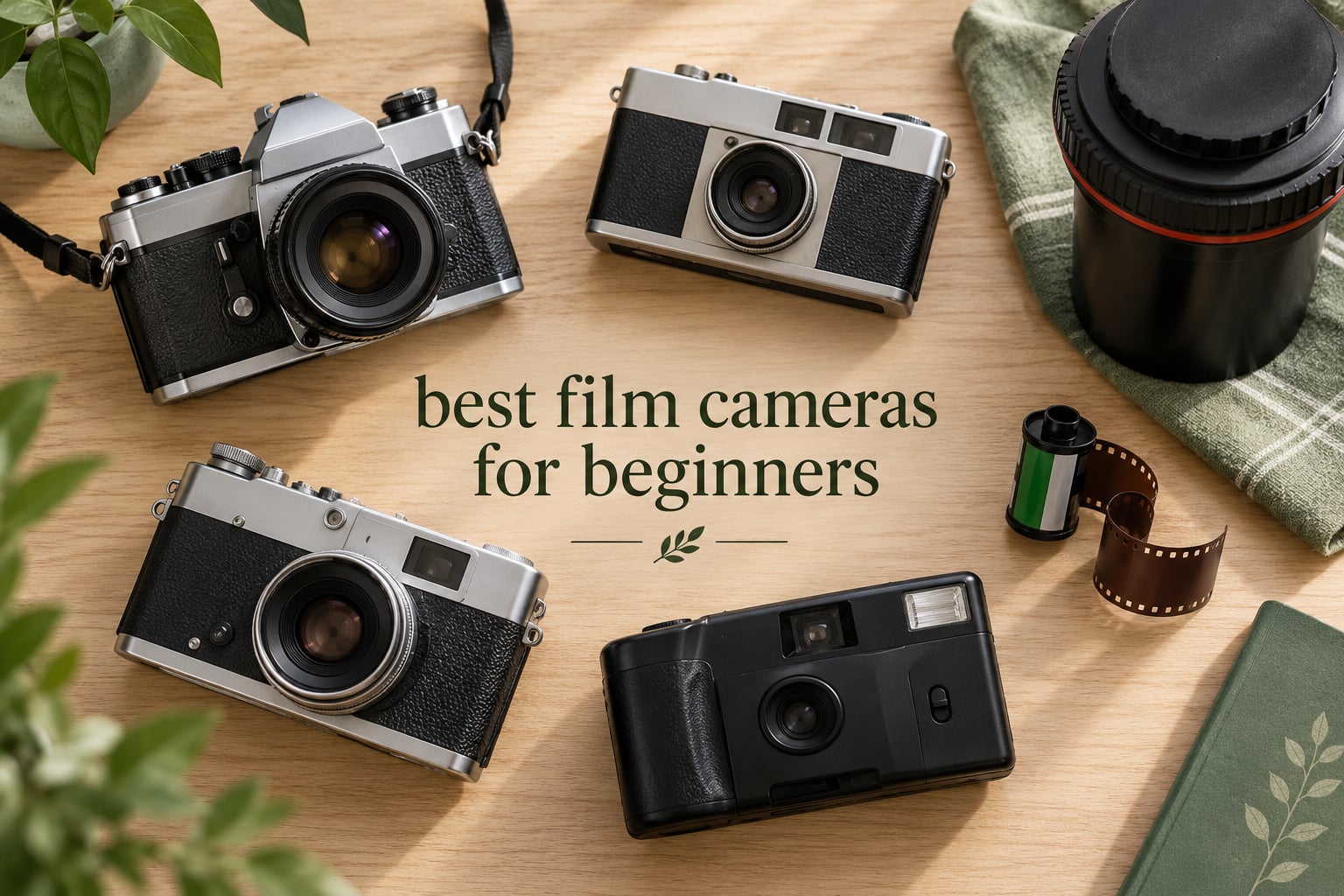
Film punishes carelessness in a way digital never does. You get 36 chances on a roll, and if you blow the exposure on frame one there is no second take. That constraint is exactly why so many people start here: exposure, focus and framing become things you think about rather than things a computer handles.
Our team spent six weeks comparing the best film cameras for beginners currently on the market, checking every spec against what owners actually report after real trips and real rolls. This round-up covers 12 options, from single-use bodies you wind and click to interchangeable-lens SLRs that will teach you manual exposure for the next decade.
Two paths run through the list. Fixed-focus reusables and single-use cameras remove every technical decision, so you can concentrate on composition. SLRs add metering, exposure modes and interchangeable glass, which is slower at the start and far more rewarding after a few months. Decide which one you want before you read a single spec.
Film availability shifts from month to month, but the bodies here barely change. Our advice has not changed either: buy a camera that fits your patience, budget for film and developing from day one, and pick something you will actually carry.
Table of Contents
- Top 3 Film Camera Picks for Beginners in 2026
- Every Camera in This Round-Up at a Glance
- 1. Kodak Funsaver One Time Use Camera: A Starter With Nothing to Learn
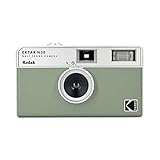
- 2. Kodak Ektar H35 Half Frame Camera: The One That Cuts Your Film Costs
- 3. RETO Ultra Wide and Slim 35mm Camera: A 22mm Lens in a 68.8 g Body
- 4. Kodak Snapic A1 35mm Camera: A Glass Lens Step Up From Plastic Reusables
- 5. 1 Shot Half Frame Point and Shoot: It Comes With a Roll of Film
- 6. Lomography Simple Use Reloadable Camera: The Preloaded Starter That Keeps Going
- 7. Canon AE-1 with 50mm f/1.8 Lens: The SLR That Teaches You Exposure
- 8. RETO PANO 35mm Camera: A Panorama Switch and a Wide Lens
- 9. Canon EOS Rebel G with 35-80mm Lens: Autofocus Without the SLR Learning Curve
- 10. Fujifilm QuickSnap Flash 400: The Most Consistently Loved Starter
- 11. DEVMO Recesky DIY TLR Kit: A Camera You Assemble Yourself
- 12. Fujifilm QuickSnap 800 Waterproof Camera: For Pools, Beaches and Rain
- How to Choose Your First Film Camera in 2026
- Frequently Asked Questions
- Our Verdict on the Best Film Cameras for Beginners in 2026
Top 3 Film Camera Picks for Beginners in 2026
These three earned the highest scores in our round-up once we weighted owner satisfaction against how forgiving each body is on a first outing.

Kodak Funsaver One Time Use Camera
- Preloaded ISO 800 film
- 27 exposures
- Built-in manual flash
- Zero settings to learn
Kodak Ektar H35 Half Frame Camera
- Half-frame doubles your shots per roll
- Focus-free 1/125 lens
- Built-in flash
- 100 g body

Fujifilm QuickSnap Flash 400
- Preloaded ISO 400 film
- Fixed 32mm focus-free lens
- Continuous flash switch
- 3.2 ounces
Every Camera in This Round-Up at a Glance
Twelve bodies, sorted by how much they ask of you. Read the format line first: single-use, half-frame and full-frame reusables behave very differently in the hand.
| Product | Specifications | Action |
|---|---|---|
| Kodak Funsaver One Time Use (2-pack) |
|
Check Latest Price |
| Kodak Ektar H35 Half Frame Camera |
|
Check Latest Price |
 RETO Ultra Wide Slim 35mm Camera RETO Ultra Wide Slim 35mm Camera |
|
Check Latest Price |
 Kodak Snapic A1 35mm Camera Kodak Snapic A1 35mm Camera |
|
Check Latest Price |
 1 Shot Half Frame B&W Camera 1 Shot Half Frame B&W Camera |
|
Check Latest Price |
 Lomography Simple Use Reloadable Camera Lomography Simple Use Reloadable Camera |
|
Check Latest Price |
 Canon AE-1 with 50mm f/1.8 (Renewed) Canon AE-1 with 50mm f/1.8 (Renewed) |
|
Check Latest Price |
 RETO PANO 35mm Camera RETO PANO 35mm Camera |
|
Check Latest Price |
 Canon EOS Rebel G with 35-80mm (Renewed) Canon EOS Rebel G with 35-80mm (Renewed) |
|
Check Latest Price |
| Fujifilm QuickSnap Flash 400 (2-pack) |
|
Check Latest Price |
 DEVMO Recesky DIY TLR Camera Kit DEVMO Recesky DIY TLR Camera Kit |
|
Check Latest Price |
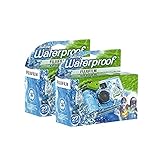 Fujifilm QuickSnap 800 Waterproof (2-pack) Fujifilm QuickSnap 800 Waterproof (2-pack) |
|
Check Latest Price |
1. Kodak Funsaver One Time Use Camera: A Starter With Nothing to Learn
Kodak Funsaver One Time Use Film Camera (2-pack)
Single-use 35mm body, preloaded ISO 800 color film, 27 exposures, built-in manual flash
Pros
- Wind and click with no settings to learn
- Vivid color and visible grain from ISO 800
- Flash covers indoor parties and events
- Lightweight at 8.8 ounces for travel
Cons
- Viewfinder is not accurate and a thumb can block the frame
- ISO 800 washes out in bright daylight
- Weak after-dark results without flash
I handed this one to a friend who had never held a film camera, then to a second friend who had shot digital for years. Both had a roll finished inside ten minutes and neither asked me a single question about exposure. That is the whole pitch. You wind, you press, and the body handles the rest.
The film is the interesting part. Kodak loads this camera with ISO 800 film, which is why the results feel punchy and grainy rather than fine and flat. Reviewers consistently praise the color and the forgiving exposure in ordinary daylight, which is the kind of look most people associate with a holiday snapshot from two decades ago.
The flash range is quoted at 4 to 11.5 feet, and it has to charge before every picture. That is a genuine constraint indoors, but it also means the flash is doing the exposure work for you, so you cannot get a dim room badly wrong.
What you give up is the camera itself. This is a single-use body: no lens mount, no focus ring, no exposure compensation, no second roll on the same camera. Owner reviews mention the plastic lens gives heavy distortion at the frame edges, and the optical viewfinder is loose enough that you can miss your subject entirely without noticing.
Who the Kodak Funsaver suits
It suits anyone whose real goal is to find out whether they enjoy film at all. Buy a two-pack, hand one to someone else, and compare results on the same outing. It also works as a party camera or a travel body you do not have to think about, and the low weight makes it easy to carry all day.
If your budget for film photography is small and you want pictures rather than practice, this is the shortest path from curiosity to finished negatives.
Where the Kodak Funsaver falls short
It cannot teach you anything about exposure, because it makes every decision for you and hides the results of your own choices. Bright sun is its worst environment, where ISO 800 film tends to overexpose and wash out. It is also the wrong tool for portraits, low light or anything where you need the shutter speed to vary.
2. Kodak Ektar H35 Half Frame Camera: The One That Cuts Your Film Costs
KODAK EKTAR H35 Half Frame Film Camera, 35mm, Reusable, Focus-Free, Lightweight, Easy-to-Use (Sage) (Film & AAA Battery are not Included)
Reusable half-frame 35mm body, focus-free 1/125 lens, built-in flash, 1.0x optical viewfinder
Pros
- Half-frame format roughly doubles shots per roll
- Weighs 100 g so it disappears in a pocket
- Simple instructions for a first analog shoot
- Built-in flash works day and night
Cons
- Focus-free optics stay soft at close range
- Fixed exposure gives no creative control
- Half-frame negatives are hard to print large
This is the camera we hand to people who want to shoot film regularly but do not want to think about settings. It reloads, it fits in a coat pocket at 100 grams, and its per-frame film cost is lower than on any full-frame body here.
That last point is the headline. A 36-exposure roll of 35mm film gives you roughly 72 half-frame images at 18 by 24mm. When you add film and developing to your running cost, the per-frame figure drops by about half. Owners highlight this more than any other feature, and for beginners it means a lot more practice per roll.
Operation is genuinely simple: a silver ring around the lens switches the flash on, the viewfinder is optical with 1.0x magnification, and exposure is fully automatic. The maximum shutter speed is 1/2 second, so this is a daylight and flash camera rather than an action one.
The honest limitation is optics. A focus-free fixed lens means everything from about a meter away reads acceptably sharp, and anything closer goes soft. Unlike bodies with a real meter, there is nothing here to learn from your own choices.
Who the Kodak Ektar H35 suits
It suits street shooters, travellers and anyone who wants film results at a lower ongoing cost. The half-frame format also suits experimenting, since a whole roll of different ideas and settings fits in your budget. It comes in five colours, which matters more than it sounds when a camera lives in your pocket.
If you shoot digital and want the film look without giving up your phone, this body makes the most sense day to day.
Where the Kodak Ektar H35 falls short
It is not a learning tool and not a portrait machine. Half-frame crops feel cramped when you try to print them large, and there is no depth-of-field control, no exposure compensation and no way to freeze motion faster than 1/2 second. Subject matter close to the lens will disappoint you.
3. RETO Ultra Wide and Slim 35mm Camera: A 22mm Lens in a 68.8 g Body
RETO Ultra Wide and Slim 35mm Reusable Daylight Film Camera – 22mm Wide Lens, Focus Free, Light Weight, Easy to Use (Olive)
Reusable 35mm daylight camera, 22mm ultra wide fixed-focus lens, optical viewfinder, 68.8 g
Pros
- Only 68.8 g and slim enough for a coat pocket
- 22mm lens captures an unusually broad view
- Manual controls a new film shooter can learn in minutes
- Works with color or black and white 35mm film
Cons
- Daylight-only design with no built-in flash
- Focus-free lens gives soft low-detail images
- Plastic body feels basic in the hand
At 68.8 grams this is the camera that disappears in a pocket. It is about the size of a deck of cards and lighter than a paperback, which means it gets carried, and a camera that gets carried is a camera that gets used.
The 22mm lens is the defining feature here. That focal length gives a broad field of view, so a single frame holds a whole street corner, a market stall or a group of friends. Owners describe the resulting look as wide, loose and slightly lo-fi, which is the point for street snapshots.
Film is not included, and that is a plus. You can load any 35mm film between ISO 100 and 400, which means the same body can run black and white one month and color negative the next. Shutter speeds run from 1/125 second down to about 0.008 second.
The trade-off is that there is no flash. This is a daylight camera by design, and any scene after sunset needs another body or a different approach. Reviewers also note the focus-free lens produces soft results and the plastic shell feels thin, though for a camera built around a look rather than image quality, neither matters much.
Who the RETO Ultra Wide suits
It suits people who want to document daily life rather than master exposure. Daylight street work, holidays, casual walking around and anything where you want the widest possible frame all suit it well. It also suits anyone who wants to test different films without changing cameras.
Pair it with a fast film and you have a working street camera you will forget you are carrying.
Where the RETO Ultra Wide falls short
No flash means no indoor or night work, and the soft plastic lens limits how large you can print with confidence. There is also no exposure control of any kind. If you want to learn metering, this body will teach you nothing.
4. Kodak Snapic A1 35mm Camera: A Glass Lens Step Up From Plastic Reusables
KODAK Snapic A1 35mm Film Camera 35mm, Reusable, 2-Zone Focus, Lightweight, Compact (Rhino Grey) (Film & AAA Battery are not Included)
Reusable 35mm body, 3-element glass lens, 2-zone focus, multiple exposure mode, built-in flash
Pros
- Glass lens gives noticeably sharper images than plastic reusables
- Two-zone focus is a learnable step up from focus-free
- Multiple exposure blends two scenes on one frame
- Compact at 117 g with an optical viewfinder
Cons
- Only two focus distances limits flexibility
- Maximum shutter speed of 1/100 restricts low light
- Film and AAA battery sold separately
Most of the basic reusables share the same weakness: a molded plastic lens. The Kodak Snapic A1 uses a 3-element glass lens that produces visibly cleaner detail.
Its second trick is 2-zone focus. Instead of a fixed lens, a switch moves between two focus distances, which is a real step up in control and a natural place to learn how distance changes a photograph. Owners rate the sharpness highly, with about 79 percent giving it five stars.
The multiple exposure mode is the feature people remember after a few weeks. It blends two separate scenes onto one frame, which produces the double-exposure look associated with experimental and music photography. Owners consistently call it the reason the camera feels more interesting than a standard point-and-shoot.
The limitations are real, though. The maximum shutter speed is 1/100 second, so dim interiors and any movement will suffer. The flash runs on a single AAA battery that is not included, and neither is film. Two focus zones becomes restrictive once you start working with subjects at varying distances.
Who the Kodak Snapic A1 suits
It suits beginners who are slightly impatient with soft images and want a camera that will not make them feel limited in good light. The multiple exposure mode gives creative shooters something to play with immediately, and the two-zone focus teaches a useful lesson without any manual reading.
It also works well as a second camera alongside a main body, since the flash covers indoor situations.
Where the Kodak Snapic A1 falls short
Below one-tenth of a second shutter speed, indoor and low-light work will be noisy and blurred. The narrow focus system means you will constantly reposition subjects rather than focus. Review volume is still small, so there is less long-term owner data than on the established names in this list.
5. 1 Shot Half Frame Point and Shoot: It Comes With a Roll of Film
1 Shot Point and Shoot 35mm Film Camera, Reusable Retro Half Frame Camera, Built in Flash, Included One Roll ASA/ISO 400 Black & White Film 18 Exp., (36 Shots) Battery Not Included (Brown Color)
Reusable half-frame 35mm body with a bundled roll of ISO 400 black and white film, built-in flash
Pros
- Comes with a roll of black and white film so you can shoot on day one
- Half-frame format yields 36 shots per roll
- One-button automatic operation suits first-time users
- Built-in flash reaches parties and night scenes
Cons
- Fixed 1/120 shutter and f/5.6 aperture limit low light
- Fixed-focus 50mm lens goes soft up close
- Flash recycle takes 10 to 15 seconds
A roll of ISO 400 black and white film, 18 exposures, comes in the box, which works out to 36 half-frame shots. For someone deciding whether photography is for them, nothing else removes the problem of not having film in the house.
It shoots a 50mm lens at f/5.6 with fixed focus and a fixed 1/120 second shutter, and exposure is fully automatic. There is one button. Owners like the toy-like styling and the grainy monochrome result, and about 68 percent of reviews are five stars.
The economics are good. Half-frame means a 24 or 36 frame roll delivers roughly twice the pictures, and black and white developing is often simpler to scan and print. Over a year that adds up to a smaller bill than a full-frame color habit.
What it will not do is low light. A fixed f/5.6 aperture and a 1/120 second shutter leave almost nothing for dim rooms, and the flash takes 10 to 15 seconds to recycle, so shooting a group indoors means waiting between frames. Close subjects also go soft with a fixed-focus lens.
Who the 1 Shot Half Frame suits
It suits a first-time shooter who wants monochrome results and wants to start today. It suits anyone who likes the aesthetic of toy cameras and does not mind soft edges. It is also a good body for a gift, because everything needed to shoot is in the box.
If your instinct is that film might be too slow or too expensive to experiment with, this is a zero-fuss way to find out.
Where the 1 Shot Half Frame falls short
It is not a low-light camera in any sense, and the fixed focus rules out close-up and macro work entirely. The long flash recycle time is frustrating at parties. Anyone hoping to learn exposure will find nothing to adjust.
6. Lomography Simple Use Reloadable Camera: The Preloaded Starter That Keeps Going
Lomography Simple Use Reloadable Film Camera Black & White Film
Reloadable 35mm compact camera preloaded with Colour Negative 400 film, built-in flash, optical viewfinder
Pros
- Preloaded so a total beginner can shoot immediately
- Very low entry cost for testing the medium
- Light enough to keep permanently in a bag
- Reloadable body works with different film types
Cons
- Several reviews report bodies failing after a few shots
- Advance mechanism can jam before the roll ends
- Fixed exposure often underexposes in daylight
This is the closest thing to a toy that produces real negatives. It comes preloaded with Lomography Colour Negative 400 film, so there is no shopping step and no film loading to learn before your first picture.
The important word is reloadable. Unlike a single-use body, you open it, drop in any standard 35mm film and keep shooting with the same camera. That makes it a learning tool as much as a novelty, and owners who get a working body like the freedom to try different films on one camera.
The optical viewfinder has 1x magnification and the shutter tops out at 1/120 second, with a built-in flash for low light. It weighs 130 grams and measures about 4.5 inches long, so it lives in a bag without becoming luggage.
We should be direct about the durability issue, because it dominates the reviews. Owners report bodies breaking after only a handful of shots, reload mechanisms that jam mid-roll, and film that fails to catch so the back will not close. The one-star share is 11 percent and almost all of it is mechanical failure rather than bad pictures. Some buyers also report cameras holding 27 exposures when the product images show 36.
Who the Lomography Simple Use suits
It suits a curious beginner who wants an inexpensive test of whether film photography holds their attention, and a gift-giver who wants something that works on first contact. Because it reloads, it also suits anyone who wants a body to practise film loading on.
Treat it as a camera to learn with rather than a camera to depend on.
Where the Lomography Simple Use falls short
Fixed exposure frequently underexposes in daylight, so bright scenes lose detail. The plastic build is not designed for daily carry, and a jam halfway through a roll means losing the rest of that roll. If you already know you will keep shooting film, this is the body to skip.
7. Canon AE-1 with 50mm f/1.8 Lens: The SLR That Teaches You Exposure
Vintage Canon AE-1 35mm SLR Camera with 50mm 1:1.8 Lens (Renewed)
35mm SLR with TTL metering, Canon FD mount, 50mm f/1.8 lens, speeds from 1/1000 to 2 seconds plus Bulb
Pros
- TTL metering gives far more consistent exposure than fixed reusables
- Manual and shutter priority teach real exposure skills
- Canon FD lenses open up wide-angle and telephoto options
- Solid metal body that handles short drops
Cons
- Steep learning curve compared with simple film cameras
- Mechanical shutter and mirror need maintenance as they age
- Renewed condition means cosmetic wear
Everything else in this round-up decides for you. The Canon AE-1 measures the light through the lens and hands you the numbers, then lets you decide what to do with them. That is the whole appeal for anyone who wants to understand photography rather than just practise it.
The shooting modes cover manual and shutter-speed priority, with a TTL through-the-lens meter. Shutter speeds run from 1/1000 second to 2 seconds, plus Bulb for long exposures, and there is a 10-second self-timer for group shots. The included 50mm f/1.8 is a fast normal lens that handles portraits and available light far better than a plastic fixed lens.
The Canon FD mount is the long-term argument. Fast primes and telephotos from the FD era are still common second-hand finds, so you can build a real kit over time rather than being stuck with one lens forever. Reviewers who want to actually learn rate this body highly, citing a working meter and a metal body that feels substantial.
It is a renewed example, and that comes with expectations. Cosmetically worn bodies are normal, and the mechanical shutter and mirror on a camera this old may need a service eventually. Owners also mention the learning curve is steeper than any point-and-shoot in this list.
Who the Canon AE-1 suits
It suits beginners who want to learn metering, depth of field and shutter speed, and anyone who plans to stay in film for years rather than try it once. The 50mm f/1.8 makes it a credible portrait and low-light camera out of the box, something the fixed-lens bodies here cannot do.
It also suits photographers moving from digital who miss real dials and real glass.
Where the Canon AE-1 falls short
Expect a real learning curve on the first ten rolls. The mechanical shutter and mirror of a camera this age need occasional maintenance, and renewed bodies carry cosmetic wear. There is no autofocus and no built-in flash, so indoor and moving subjects take planning.
8. RETO PANO 35mm Camera: A Panorama Switch and a Wide Lens
RETO PANO 35mm Film Camera – 22mm Wide Lens, Panorama, Easy Switch, Cinematic Modes, Lens Cover, Built-in Flash, Reusable (Film & AAA Battery are not Included) (Sheer White)
Reusable 35mm camera with a 22mm wide lens, switchable panoramic ratio, cinematic mode, built-in flash
Pros
- Switchable panoramic and standard ratios give a distinctive look
- 22mm wide lens fits more of the scene into each frame
- Works with color or black and white 35mm film
- Very light and compact at 0.13 kg
Cons
- Wide lens makes it easy for a finger to slip into frame
- Fixed 1/60 shutter and plastic lens produce noisy images
- Some reports of film failing to advance mid-roll
The reason to consider this over a similar wide reusable is the format switch. One position gives a panoramic crop that turns a standard negative into a wide strip, the other gives a conventional 3:2 frame. Owners point to that switch as the feature that justifies the camera.
The 22mm lens does the wide-angle work, and a cinematic shooting mode sits alongside the standard mode for a different rendering. It comes in five finishes, includes a lens cover, and weighs about 130 grams.
Both flash and film are extra purchases, which is normal for a reusable body. ISO 100 to 6400 film compatibility covers everything a beginner might load, and the built-in flash is switched on through the lens ring.
Quality is the limit. The maximum shutter speed is 1/60 second, and paired with a plastic lens that produces low resolution and visible noise. A very wide lens also makes it easy to catch your own finger in the corner of the frame. Reviews mention film that failed to advance, leaving mid-frame exposures, and a plastic body that does not survive drops.
Who the RETO PANO suits
It suits anyone shooting wide views and travel scenes who wants unusual frames without buying a second body. It also suits anyone drawn to the look of vintage and experimental photography, where grain and softness are part of the appeal rather than a defect.
If you mainly shoot in bright daylight, the flash is a nice backup rather than a necessity.
Where the RETO PANO falls short
A 1/60 second maximum means any movement blurs and the flash washes out dim interiors. Film advance faults have ended use early for some owners. If you want sharp, low-light results, the Kodak Snapic A1 glass lens is a better use of the same budget.
9. Canon EOS Rebel G with 35-80mm Lens: Autofocus Without the SLR Learning Curve
Canon New EOS Kiss (AKA Rebel G in USA/Canada) SLR AF Film Camera With 35-80mm EF Lens (Renewed)
Autofocus 35mm SLR with an EF 35-80mm zoom, 11 exposure modes, built-in flash, optical viewfinder
Pros
- Wide-area autofocus point locks on across portraits and action
- 11 modes including aperture and shutter priority teach real skills
- Built-in flash handles low light with no extra gear
- ISO 100-3200 film compatibility gives latitude
Cons
- Renewed bodies can arrive with a bent or jammed shutter
- Bulkier than a compact film point-and-shoot
- Faults can appear only after the first roll
Canon sold this as the New EOS Kiss in Japan and the EOS Rebel G in North America and Canada. It sits between the two paths in this round-up: it has a real exposure meter and interchangeable lenses like an SLR, but autofocus handles focusing for you.
The 11 exposure modes include full auto, program, aperture priority and shutter priority, so you can start fully automatic and move toward creative control as you learn. The bundled 35-80mm EF zoom covers everything from groups to portraits, and the built-in flash removes one of the classic reasons beginners get stuck.
Owners frequently mention pairing this body with a photography class, and the wide-area autofocus point is praised for locking onto subjects across portraits, wide scenes and movement. Renewed examples often arrive with an upgraded lens, a lens cap and a neck strap.
The reliability caveat is important. Renewed bodies can arrive with a bent or jammed shutter that produces partial or dark exposures, and reviewers report the fault sometimes only appearing after the first roll is finished. It is also bulkier than any compact body in this list, which matters for a camera meant to travel.
Who the Canon EOS Rebel G suits
It suits a beginner coming from a phone or a modern mirrorless body who wants real manual control without the manual-focus struggle. The zoom lens means one body covers most shooting situations, and the mode dial gives a clear route from auto to aperture priority as confidence grows.
It also suits anyone who shoots moving subjects and children, where autofocus earns its keep.
Where the Canon EOS Rebel G falls short
Check the shutter carefully on arrival and again after the first roll, because faults often appear late. It is not a small camera and it needs a neck strap. For pure simplicity with no mechanical risk, a fixed-focus reusable is the calmer choice.
10. Fujifilm QuickSnap Flash 400: The Most Consistently Loved Starter
Fujifilm QuickSnap Flash 400 One-Time-Use Camera -2 Pack
Single-use 35mm camera, preloaded ISO 400 film, fixed 32mm focus-free lens, continuous flash switch
Pros
- Fully automatic exposure with nothing to learn
- Continuous flash switch makes indoor snapshots easy
- Weighs just 3.2 ounces and fits a pocket
- Thousands of reviews at 4.7 out of 5
Cons
- Fixed 32mm lens allows no framing or focal-length changes
- ISO 400 limits low light and fast shutter use
- Single-use body is discarded after one roll
This one scores highest in our round-up for satisfaction, with a 4.7 rating across more than four thousand reviews. The reason is simple: nothing can go wrong because nothing can be adjusted.
Exposure is fully automatic, the lens is fixed at 32mm with fixed focus, and the film is preloaded at ISO 400. A continuous flash switch on the back means indoor snapshots are a matter of holding the switch while you press the shutter, which is as simple as cameras get.
At 3.2 ounces it is one of the lightest bodies in this round-up. Owners treat it as a grab-and-go novelty camera for parties, holidays and events, and the review volume suggests very few regrets. The 4:3 aspect ratio suits phone screens unusually well.
It also carries real limits. ISO 400 film struggles in dim rooms, and the fixed focus means anything closer than a few feet goes soft. The body is discarded after one roll, so there is nothing to invest in beyond the pictures themselves.
Who the Fujifilm QuickSnap Flash 400 suits
It suits anyone who wants film pictures without learning film technique. It suits travel, where the weight of a camera body is the biggest obstacle to carrying one, and it works as a party or event camera with the flash switch held down.
A two-pack gives you a spare and lets two people shoot the same outing.
Where the Fujifilm QuickSnap Flash 400 falls short
There is no framing control, no focal-length choice and no way to influence exposure. Once the roll is finished the camera is waste. If you are still deciding between film and digital, this is one of the simplest and lowest-risk ways to find out.
11. DEVMO Recesky DIY TLR Kit: A Camera You Assemble Yourself
DEVMO Compatible with DIY Lightnes Classic Retro Holga Lomo Recesky TLR Camera 35mm Film Twin Lens Reflex Kit
Build-it-yourself twin lens reflex 35mm kit, waist-level composing viewfinder, manual exposure, 315 g
Pros
- Assembly teaches how a camera mechanism actually works
- Waist-level twin-lens composing is a look no point-and-shoot offers
- Light sealing foam can be added to stop leaks
- Uses standard 35mm film
Cons
- Instructions are largely in Chinese and often confusing
- Small screwdriver and tweezers are not included
- Plastic parts flex
- strip screws and break
This is not a camera you buy, it is a camera you build. The kit assembles into a twin-lens reflex, meaning one lens exposes the film and a second one is the viewfinder. You compose from waist level looking down into a screen, which produces images no other body in this round-up can.
Builders describe the assembly as genuinely rewarding in its own right. It teaches what each part does before you ever press the shutter, and finishing a working camera from a box of parts is a satisfying first project. Owners add black tape or light-sealing foam to reduce the light leaks that come with a plastic body.
It uses standard 35mm film, so developing is straightforward, and the manual exposure control gives beginners a real dial to turn. Manual exposure here is simple: choose a shutter speed and an aperture on the lens yourself, with no meter to help.
The problems are practical ones. The instructions are largely in Chinese and the English translation is often confusing, and a small precision screwdriver and tweezers are required but not included. The plastic construction flexes, strips screws and breaks, with one reviewer reporting a shutter push rod failing after about seven firings. The viewfinder image is very soft and the film advance is a simple pull with no distance reference.
Who the DEVMO Recesky kit suits
It suits a tinkerer who enjoys model building as much as photography, and anyone curious about how a camera works mechanically. Waist-level composing also gives you a distinctive shooting posture that changes how you frame a scene, which is an education in itself.
It works well as a shared project with someone learning photography alongside you.
Where the DEVMO Recesky kit falls short
It is not a serious camera. Instructions are confusing, tools are not included, and fragile plastic parts mean it will not survive regular carry. Anyone with limited fine-motor control or patience for a confusing manual should skip it.
12. Fujifilm QuickSnap 800 Waterproof Camera: For Pools, Beaches and Rain
Fujifilm QuickSnap 800 Waterproof 35mm One-Time-Use Disposable Camera, 27 Exposures 2-Pack
Waterproof single-use 35mm camera to 17 feet, preloaded Fujicolor Superia X-TRA 800 film, 27 exposures
Pros
- Waterproof to 17 feet for pools
- beaches and kayaking
- Pre-loaded ISO 800 film develops without fuss
- No loading and no settings
- Oversized shutter release works with wet hands
Cons
- Single-use body with no exposure or focus control
- ISO 800 is grainier than slower film
- 0.5x viewfinder is tiny and hard to compose through
This is the body for the one situation where a phone or a normal film camera is useless: being in the water. It is rated waterproof to 17 feet, so pools, beaches, kayaking and rain are all fair game.
It comes preloaded with Fujicolor Superia X-TRA 800 for 27 exposures, and operation is point-and-shoot with a press. A larger shutter release makes it easier to hit with cold or wet hands, which is a thoughtful detail most people only notice after a cold swim. A strap is included.
Owners like it for travel and water use precisely because there is nothing to think about. Roughly two thousand reviews at 4.3 out of 5 suggest broad satisfaction with a hassle-free camera that works where other gear would be sealed in a bag.
The compromises are the usual disposable ones: a 0.5x viewfinder magnification that is genuinely tiny, an ISO 800 film that gives noticeably grainier results than slower film, and a mechanical shutter topping out at 1/200 second. The body is also bulkier and heavier than the compact disposables it competes with, at about 14 ounces.
Who the Fujifilm QuickSnap 800 suits
It suits swimmers, snorkellers, surfers and anyone with a beach holiday planned. It also suits families who want children making their own film pictures with no supervision and no settings. Because it is preloaded, it doubles as a gift that works immediately.
If your only concern is getting film pictures from an environment that destroys electronics, nothing else in this list does that job.
Where the Fujifilm QuickSnap 800 falls short
Exposure, focus and framing are all fixed, and grain from ISO 800 shows in anything indoors. The tiny viewfinder makes composition a guess more often than not. And like any single-use body, once the roll is done the camera is finished.
How to Choose Your First Film Camera in 2026
Every camera above will produce photographs you are glad to have. The differences are about how long the process takes and how much you learn along the way, so start by being honest about which one you want.
Point-and-shoot or SLR: pick your path
If your goal is to make pictures without studying a manual, start with a fixed-focus reusable or a single-use body. There is no exposure decision to get wrong, so every roll produces usable negatives, and the film cost per picture stays low on half-frame models.
If your goal is to understand exposure, focus and depth of field, start with an SLR. A body with a TTL meter and aperture priority lets you learn one variable at a time, and the lens mount gives you somewhere to go afterwards. The Canon AE-1 is the natural starting point for that route, and photography schools have taught beginners on simple manual SLRs for decades.
There is a third route that experienced photographers quietly recommend to anyone on a budget: late 1990s and early 2000s plastic SLRs from the autofocus era. They bring modern metering, autofocus and automatic exposure, and they accept affordable third-party manual-focus lenses that are not built for FD or K-mount bodies. They are also more electronically complex, which is the trade-off you accept when a failure is harder to repair.
What to check on any used camera before you pay
Ask for proof that the meter works: point it at a light surface and check that the needle moves. Then look through the viewfinder at a white wall in a dim room to check for fungus or haze, both of which sellers rarely disclose. On SLRs, watch the mirror return cleanly after each shot and listen for a consistent shutter sound across speeds.
Ask whether the light seals have been replaced recently, and treat a camera described as needing light seals as a camera with an unknown second problem. Check the battery compartment for corrosion on electronic models. If a listing says as-is, for parts, assume the defect is the one being hidden.
Buyers also report that demand has pushed prices on Instagram-famous models well past what they are worth to a beginner. A camera that gets you a good photograph matters more than the name on the front plate.
Budget for film and developing, not just the body
The camera is the smallest part of film photography spending. Budget for a recurring supply of film, a lab that develops and scans properly, and occasional servicing. Professional lab developing produces noticeably better scans than drugstore processing, and the difference is visible in shadow detail and colour.
Half-frame bodies cut this ongoing cost sharply, which is the quiet argument for the Kodak Ektar H35 and the 1 Shot half-frame camera. A two-pack of single-use cameras is also a reasonable way to budget, since the film cost is known in advance.
Film choices that make the first roll easier
For colour, ISO 400 options such as Kodak Gold 400 and Fujifilm Superia 400 are the standard beginner recommendation because the extra sensitivity leaves room for imperfect exposure in mixed light. For black and white, Ilford HP5 Plus is forgiving and available everywhere. Use ISO 200 in bright, even daylight and reserve ISO 400 for anything dim.
Load whatever the camera takes, and remember that daylight-only fixed-lens bodies with no flash need to be used outdoors.
Mistakes that cost beginners money
Buying a fashionable model at hype pricing, buying an untested camera with no return period, and loading a single-use body with film are the three expensive errors. A third common one is starting with a body too heavy to carry, which ends the habit within a month.
Start smaller, carry it more and upgrade once you know which direction you want to go. If you enjoy the process of setting an aperture deliberately, our other beginner guides cover digital astronomy cameras and general entry-level imaging for comparison.
Frequently Asked Questions
What are the best vintage 35mm film cameras for beginners?
The most recommended vintage 35mm film cameras for beginners are simple manual SLRs with reliable meters, such as the Canon AE-1, plus autofocus-era plastic SLRs from the late 1990s and 2000s that cost far less and accept modern manual-focus lenses. The AE-1 teaches metering and exposure control, while autofocus-era bodies handle focusing automatically and are easier on a first outing.
What is the best entry-level film camera for beginners?
The Kodak Funsaver single-use camera is the easiest entry point because you wind, press and get a photograph with nothing to adjust, and owner satisfaction sits high across thousands of reviews. If you want to keep shooting on the same body, the Kodak Ektar H35 half-frame camera costs less per frame and reloads with standard film.
Is 200 or 400 film better for beginners?
ISO 400 film is better for beginners because the extra sensitivity leaves more room for wrong exposure, especially indoors or in mixed light. ISO 200 gives finer grain and cleaner results but requires brighter conditions. Use ISO 200 in direct daylight and ISO 400 for anything dim, indoor or overcast.
Does anyone still use 35mm film cameras?
Yes. Film shooting has grown into a steady, active hobby rather than a fading one, with second-hand bodies widely traded and modern reusables sold alongside vintage metal SLRs. The reasons people give are the slower pace it forces, the character of the results and the fact that a mechanical camera never asks for a software update.
Which camera is best for filmmaking for beginners?
A 35mm film camera from this list produces still photographs, not video, so none of them is a filmmaking camera. If you want to shoot motion, use a dedicated video camera. Among these options the Fujifilm QuickSnap 800 has a cinematic look to its flash and framing, but it records no footage at all.
Our Verdict on the Best Film Cameras for Beginners in 2026
Start with the Kodak Funsaver if you want zero decisions and instant results, and move to the Kodak Ektar H35 the moment you want a body you can keep reloading at a lower cost per frame. When you are ready to learn metering, the Canon AE-1 is the body we would put in your hands, with its TTL meter, fast 50mm lens and Canon FD lens system backing it up for years.
Whichever route you pick, budget for film and developing from the start, test any used body before committing, and choose something small enough to carry. Our other beginners roundups cover weighted keyboards and Dobsonian telescopes if you are building a broader hobby setup. Load a roll, shoot it, and decide from the results rather than from a spec sheet.