

If you want the short answer, the Celestron AstroMaster 130EQ is the best telescope for deep sky viewing for most people, and the Sky-Watcher Classic 200 Dobsonian is the one to buy if you want the biggest image per dollar. The reason both work is the same single fact: aperture decides everything, and these two put a 5-inch and an 8-inch mirror in front of you at entry-level money, with the rest of your budget still free for eyepieces and a dark-site trip.
Deep sky objects are everything outside the Solar System: galaxies, emission nebulae, planetary nebulae, open and globular clusters. They are faint, spread over large areas of sky, and the eye sees almost no colour in them. Before you shop, one rule matters more than the other nine specs combined. Light-gathering power scales with the square of aperture, so a 6-inch scope shows roughly twice what a 4.5-inch shows and an 8-inch roughly four times what a 4.5-inch shows. It is the dullest rule in astronomy and the one that matters most.
We spent weeks going through owner reviews on all ten scopes below, checking aperture, focal length, mount behaviour and what people actually complained about after a few months of use. A few patterns showed up again and again, and they shape this list. Box eyepieces are the weakest part of almost every budget reflector. Newtonian mirrors need collimating. Equatorial mounts have a learning curve that trips up nearly every beginner. And the forums keep repeating the same advice from r/telescopes and Cloudy Nights: buy the largest aperture your budget and your back situation allow.
Table of Contents
- Top 3 Picks for Deep Sky Viewing in 2026
- Best Telescopes for Deep Sky Viewing Compared in 2026
- 1. Celestron AstroMaster 130EQ Review: Our Overall Best Deep Sky Telescope
- 2. Celestron NexStar 8SE Review: Best for Beginners Who Hate Setup
- 3. Sky-Watcher Classic 200 Dobsonian Review: Best Aperture for the Money
- 4. Celestron PowerSeeker 127EQ Review: Best Value Deep Sky Telescope
- 5. SOLOMARK 130EQ Review: Best All-in-One Accessory Bundle
- 6. Gskyer 130EQ Review: Fast Wide-Field Starter
- 7. MEEZAA 150EQ Review: Best for Large Open Clusters
- 8. ZWO Seestar S30 Pro Review: Best Smart Telescope for Astrophotography
- 9. Sky-Watcher Heritage 150 Review: Best Tabletop Dobsonian
- 10. Koolpte 130EQ Review: Highest Rated Budget Starter
- How to Choose a Deep Sky Telescope in 2026
- Aperture is the only spec you cannot compromise on
- What you can expect at each aperture class
- Focal length and focal ratio change the field, not the reach
- GoTo or star hopping: pick your frustration
- Mount stability matters more than buyers expect
- Budget for eyepieces, filters and collimation tools
- Collimation, light pollution and realistic expectations
- Frequently Asked Questions
- What is the best telescope for viewing deep sky objects?
- What size telescope do I need to see galaxies?
- Is a Dobsonian a good telescope for deep sky?
- What eyepiece is best for deep sky viewing?
- Can you see colour in deep space objects with a telescope?
- What is the best telescope for deep sky astrophotography?
- Conclusion: The Best Telescopes for Deep Sky Viewing in 2026
Top 3 Picks for Deep Sky Viewing in 2026

Best Telescopes for Deep Sky Viewing Compared in 2026
| Product | Specifications | Action |
|---|---|---|
| Celestron AstroMaster 130EQ |
|
Check Latest Price |
 Celestron NexStar 8SE Celestron NexStar 8SE |
|
Check Latest Price |
 Sky-Watcher Classic 200 Dobsonian Sky-Watcher Classic 200 Dobsonian |
|
Check Latest Price |
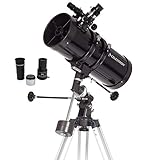 Celestron PowerSeeker 127EQ Celestron PowerSeeker 127EQ |
|
Check Latest Price |
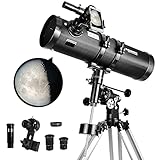 SOLOMARK 130EQ Newtonian SOLOMARK 130EQ Newtonian |
|
Check Latest Price |
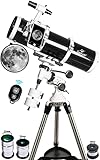 Gskyer 130EQ Reflector Gskyer 130EQ Reflector |
|
Check Latest Price |
 MEEZAA 150EQ Newtonian MEEZAA 150EQ Newtonian |
|
Check Latest Price |
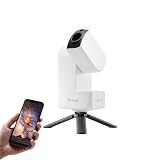 ZWO Seestar S30 Pro ZWO Seestar S30 Pro |
|
Check Latest Price |
 Sky-Watcher Heritage 150 Tabletop Sky-Watcher Heritage 150 Tabletop |
|
Check Latest Price |
 Koolpte 130EQ Reflector Koolpte 130EQ Reflector |
|
Check Latest Price |
1. Celestron AstroMaster 130EQ Review: Our Overall Best Deep Sky Telescope
Celestron AstroMaster 130EQ Telescope for Deep-Sky Beginners
130mm aperture
650mm focal length
German EQ mount
17 pounds
Two-year warranty
Pros
- Coated mirrors give bright views of the Moon and nearby deep-sky objects
- Slow-motion controls make tracking smooth once polar aligned
- Tool-free assembly and adjustable tripod
- Includes 20mm and 10mm eyepieces plus red dot finder
- Strong owner rating across a very large review base
Cons
- Equatorial mount and polar alignment have a real learning curve
- Light steel tripod shakes at full height
- Red dot finder is awkward to align
- Newtonian mirrors need periodic collimation
I put the AstroMaster 130EQ first because it does not ask you to choose between aperture and stability. The 130mm mirror sits on a German equatorial mount, which means once you have polar aligned it, you nudge the object along with two cables instead of dragging the whole tube across the sky. That matters more for deep sky than most people expect, because faint targets drift out of a wide field while you are still finding them.
Out of the box the views are honest for a 5-inch. The Moon shows crisp crater rims, Jupiter’s four moons are obvious, Once you are dark-adapted, owners report the Virgo cluster resolving into individual galaxies. Reviewers name the same bright globular and nebula targets this aperture should reach, which tells you the scope delivers what the spec sheet implies and no more.
The two components that get criticised most are the tripod and the finder. The steel tripod is fine for seated observing at a patio table and frustrating at full extension, especially if you nudge the tube to change magnification. The StarPointer red dot finder also takes practice: align it on a mid-sized star, not a bright one, or the glare washes the target out.
Collimation is the other learning step. The 130mm mirrors can arrive slightly out of alignment, which makes stars look like small comets. A 25mm eyepiece and daylight focus, or a cheap collimation cap, will sort it in a few minutes. Our advice from forum threads is to do this before dark rather than in the field.
One honest limit: this is a visual scope. Reviewers consistently describe it as unsuitable for astrophotography without significant modification, which is normal for a German equatorial mount of this class. If you want photographs, look at a tracking mount later, not now.
Is the AstroMaster 130EQ too small for galaxies?
No, but know what you are getting. At 130mm you will see the bright spiral structure of the Andromeda Galaxy and the brighter members of the Virgo cluster. Very faint, low surface brightness galaxies will be a grey wash, and if you expect the Whirlpool Galaxy to show spiral arms, a larger aperture or darker sky is needed.
Because the mount can track by hand, faint objects stay in the field long enough to study. That tracking ability is what lets a 5-inch scope reach targets a comparable 5-inch Dobsonian makes awkward to keep centred at high power.
Where the AstroMaster 130EQ falls short
The learning curve is the real cost. Polar alignment takes practice, and if you skip it the slow-motion controls work far less smoothly than you expect. The light tripod also becomes the limiting factor at higher power, where vibration shows up as a shimmer.
Buy it if you want a capable first deep sky telescope with real tracking. Skip it if you would rather avoid the setup ritual entirely, because there are simpler options further down this list.
2. Celestron NexStar 8SE Review: Best for Beginners Who Hate Setup
Celestron NexStar 8SE Computerized Telescope – Schmidt-Cassegrain
8 inch aperture
2032mm focal length
GoTo 40000 plus objects
StarBright XLT coating
2 year warranty
Pros
- 8 inch aperture reveals fine lunar detail and globular clusters
- GoTo mount points at targets without star charts
- SkyAlign gets it ready in minutes with three stars
- Compact tube is far easier to carry than a Dobsonian
- Easily upgraded with Celestron accessories
Cons
- One of the higher costs in this category
- Fork arm and battery power limit long unattended sessions
- Needs AA batteries or a PowerTank for extended use
- Single 25mm eyepiece is limited on small objects
The NexStar 8SE answers a complaint that comes up again and again on observing forums: a faint galaxy took half an hour to find. The 40,000-plus object database and SkyAlign alignment mean you centre two or three bright stars, tap the target, and wait while the fork swings around. For a first deep sky telescope that removes more frustration than any optical upgrade would.
Optically it is a Schmidt-Cassegrain: an 8-inch aperture in a tube about 43cm long, with a 2032mm focal length. That is a long, narrow view, which makes it excellent for small targets like globular clusters and the Ring Nebula, and less generous on wide nebulae. The Dawes limit of 0.57 arc seconds is a real number here, and the fork mount holds a long tube steady without the wobble a cheap tripod would give.
What surprised us most is how little maintenance it needs compared with a Newtonian. There is no collimation to do after every trip, and the sealed optical tube is a genuine advantage if you observe from a damp garden or haul the scope to a field. The single fork arm also makes it far easier to carry than a 45-pound Dobsonian base.
Reviewers do raise the same two points. The included 25mm eyepiece gives about 81x on an 8-inch scope, which frames large objects but leaves small ones small, so budget for a 10mm or 12mm. And the mount runs on eight AA batteries, which is fine for an evening and thin for a whole night unless you add a permanent power supply.
Be realistic about magnification here. The stated 16x zoom figure is marketing shorthand; the practical useful range on an 8-inch catadioptric is roughly 40x to 200x, with the best deep sky detail usually between 80x and 150x.
Is a Schmidt-Cassegrain better than a Dobsonian for deep sky?
Not optically. At equal aperture a Dobsonian usually shows more contrast for the same outlay, because the money goes into the mirror rather than the mount. What the 8SE wins is convenience, portability and the fact that it never needs collimating.
If you are willing to learn star hopping and want maximum light for the money, a Dobsonian is the better buy. If finding objects is the part that stops you observing, the GoTo mount is worth the premium.
Where the NexStar 8SE falls short
Cost is the first constraint, and it is the main reason this sits at number two rather than first. The second is physical: a fork arm and a battery pack make long unattended sessions awkward, and the accessory tray is the first thing to check before a night of imaging.
It is also a long tube, so a large extended object like the Veil Nebula will not fit the field. Owners who chase big nebulae often pair it with a shorter wide-field optic later.
3. Sky-Watcher Classic 200 Dobsonian Review: Best Aperture for the Money
Sky-Watcher Classic 200 Dobsonian 8-inch Telescope – Solid-Tube – Simple, Traditional Design – Easy to Use, Perfect for Beginners, White (S11610)
8 inch aperture
1200mm focal length
Magnitude 14.2 limit
94 percent reflectivity
2 inch focuser
Pros
- Large 8 inch aperture gives bright high-contrast views of faint objects
- Patented tension control handles make steering smooth
- Multi-coated borosilicate mirrors rated at 94 percent reflectivity
- Teflon bearings give smooth azimuth movement
- Comes with 2 inch focuser and two eyepieces
Cons
- 45 pounds assembled is not portable
- Hand-steered only with no motorized tracking
- Needs a sturdy surface or stand to sit on
This is the scope the forums keep recommending, and for a straightforward reason: an 8-inch Dobsonian gathers more light than anything else in this guide, and the base is so simple that almost nothing can go wrong. The rocker design has no counterweights, no gears to backlash and no polar alignment. You point the tube, you lean into the handles, you look.
At 1200mm focal length the Classic 200 gives a wide, bright image that suits the big deep sky targets. Globular clusters start to break into grains of stars at the edge. Bright nebulae show obvious structure rather than a uniform glow. The listed faintest stellar magnitude of 14.2 tells you how much faint light the 8-inch mirror can pull off the sky background.
The patented tension control handles are a small thing that changes everything. Instead of hunting for the perfect balance point, you grip the handles and let the friction damping hold the tube wherever you leave it. The Teflon azimuth bearings mean the tube moves smoothly in one plane without a stiff spot, which makes hopping between targets quick.
The catch is stated plainly on the box and in the reviews: this is 45 pounds fully assembled, split as a 20 pound tube and a 25 pound base. That is a patio instrument, not a car boot one. Reviewers describe it as a stationary scope that two people can carry in two pieces, and it needs a level surface at a height you can actually look into.
Because the mirrors are parabolic and multi-coated, collimation takes a little practice after transport but the coatings hold up well. Buy a 25mm eyepiece, a 10mm, and something in between; the two included eyepieces are entry level and the difference on faint targets is obvious.
How much can an 8-inch Dobsonian actually show?
Enough that galaxies stop being smudges. An 8-inch will show spiral arm structure in the brighter Whirlpool and Andromeda, layered detail in the Ring and Dumbbell planetary nebulae, and hundreds of resolved stars in the Hercules and M13 globulars. Fainter galaxies still need a dark site.
It also gives you the range to do double duty. The same aperture handles the Moon and planets at high power, so you are not buying a deep sky scope and a planetary scope separately.
Where the Classic 200 falls short
Portability and tracking. There is no motorized tracking, so a faint target near the meridian will drift out of a high-power field within a few minutes. And at 45 pounds, if your observing site is anything other than your own garden, you will end up not using it.
The included focuser is the other detail to check. This scope ships with a 2-inch Crayford-style focuser and a 1.25-inch adapter, and the 2-inch version is the one to rely on if you add wide-field eyepieces later.
4. Celestron PowerSeeker 127EQ Review: Best Value Deep Sky Telescope
Celestron PowerSeeker 127EQ Reflector Telescope for Home Astronomy
127mm aperture
1000mm focal length
Manual German EQ mount
13 pounds
Two-year warranty
Pros
- 127mm aperture shows the Orion Nebula and Andromeda
- Compact and light at 13 pounds for a full EQ setup
- Slow-motion rod allows smooth manual tracking
- Very high review volume from a long-running model
- Good low-cost entry into faint objects
Cons
- Often arrives misaligned and needs collimation
- Included finder is cheap and hard to align
- Mount and base have backlash and plastic parts
- 4mm eyepiece is close to unusable
With more than 9,000 owner reviews on record, the PowerSeeker 127EQ has one of the most documented track records in this whole category, and the pattern in those reviews is remarkably consistent. Once it is collimated, the 127mm mirror shows the Orion Nebula, M13, M8, M17 and the Andromeda Galaxy. The complaints are about the mechanics, not the optics.
It is also among the easiest to carry in this guide. Thirteen pounds with a tripod included means you can load it into a car on your own and set up at a dark site. The 1000mm focal length gives a wider field than the 650mm scopes, which helps when you are sweeping for a faint galaxy rather than sitting on one object.
Here is the honest part. Factory collimation on this model is frequently reported as poor out of the box, and a misaligned 127mm Newtonian makes everything look soft until you fix it. Nearly every experienced owner recommends buying a collimation tool or at minimum a centre mark for the primary. Budget twenty minutes for it before your first night.
The supplied finder is the other recurring complaint. Several owners replaced it outright with a simple red dot unit. The mount and base are the weakest structural parts, with backlash and plastic components that make fine guiding less pleasant than the price suggests. The 4mm eyepiece in the box is a paper stop; treat it as a placeholder and replace it.
Set against that, this scope has a two-year US warranty, US-based support and a very large, experienced owner base. For a first deep sky telescope, that combination is hard to beat.
Is 127mm enough aperture for deep sky viewing?
It is enough for the classic beginner targets: the Orion Nebula shows a distinct shape with a visible core, the Andromeda Galaxy is obvious, and the brightest globular clusters start to granulate. What 127mm will not do is reach the very faint, very low surface brightness galaxies that reward a bigger mirror.
Forum consensus treats 8 inch as the realistic minimum for serious galaxy structure, and 127mm as the sensible first step that you grow out of in a year or two.
Where the PowerSeeker 127EQ falls short
The supplied components. Bad factory collimation, a weak finder, a near-useless 4mm eyepiece and a mount with backlash mean the box is not complete, however complete it looks. Owners who add a 25mm Plossl, a 10mm and a collimation cap rate the scope far higher than 4.1 suggests.
It is also not an imaging platform. Without tracking capability, this is a visual-only instrument, and treating it otherwise is the most common regret reported in its reviews.
5. SOLOMARK 130EQ Review: Best All-in-One Accessory Bundle
Telescope 130EQ Newtonian Reflector Telescopes for Adults, Professional Telescopes for Adults Astronomy, Comes with 1.5X Barlow Lens Smartphone Adapter & 13% T Moon Filter
130mm aperture
650mm focal length
German EQ mount
1.5x Barlow and moon filter
Carbon fibre covered tube
Pros
- 130mm coated optics show the Orion Nebula and Uranus
- EQ mount with dials and fine-tuning cables aids manual tracking
- Carbon fibre covered tube looks and feels premium
- Generous bundle with two eyepieces and a moon filter
- Stable adjustable aluminium tripod with accessory tray
Cons
- Included finder is cheap plastic and hard to align
- No collimation tool or centre mark supplied
- Listed eyepieces are Kellner rather than advertised Plossl
- Instructions are vague on collimation
The SOLOMARK 130EQ is the scope to pick if you want the longest list of parts in the box. Two eyepieces, a 1.5x erecting Barlow, a 1.25-inch 13 percent transmission moon filter, a cellphone adapter, dials and fine-tuning cables on the equatorial head. Very few budget Newtonians ship that much.
Optically it is a standard 130mm Newtonian on a 650mm focal length, a good deep sky combination: a bright image, a wide field, and a tube short enough to be manageable. Reviewers report clear views of Jupiter and its moons, the Orion Nebula, and even Uranus from suburban skies.
The recurring gripes are consistent across reviews, and the most important one is collimation. No collimation tool is included and there is no centre mark on the primary, so first-time alignment is genuinely hard. Owners solve it by buying a laser collimator or adding a centre mark themselves. Plan for that before your first night rather than discovering it under stars.
The most replaced component in this category is the finder, and this scope is no exception. Several owners swapped it. The eyepieces are described as Kellner rather than the advertised Plossl, which is a mild but real difference in sharpness.
One practical note: several buyers reported equatorial base parts missing from the box, and the instructions are thin. Assemble it in daylight with the parts laid out, and check the base hardware before you head out.
Is the included accessory bundle worth judging a telescope on?
To judge a telescope on included accessories, look at the essentials. A moon filter and a spare eyepiece earn their place on a first night, and a second eyepiece saves you a shop trip. But eyepieces are the part of a telescope where budget build quality shows most, and the finder and collimation tooling are where a modest extra spend genuinely changes the experience.
We would spend any extra money on a 25mm and 10mm pair and a collimation cap rather than on the phone adapter, which is fiddly to attach in the dark.
Where the SOLOMARK 130EQ falls short
Collimation support is the main gap, followed by documentation. The carbon fibre covering looks premium but does not change the optics underneath, which are a straightforward coated 130mm design that will show you bright nebulae and not much beyond them.
At 130mm on a German equatorial mount, the tube is long enough that steady guiding takes some getting used to. If manual tracking frustrates you, this is not the scope to learn it on.
6. Gskyer 130EQ Review: Fast Wide-Field Starter
Gskyer 130EQ Professional Astronomical Reflector Telescope
130mm aperture
650mm focal length at f/5
German EQ-130 mount
Bluetooth remote
1 year warranty
Pros
- All-glass multi-coated optics rated highly for clarity
- Fast f/5 ratio gives bright wide-field views
- EQ-130 mount helps beginners locate and track targets
- Three eyepieces plus 3x Barlow in the box
- Bluetooth remote allows phone shots without touching the tube
Cons
- Stated 307x magnification is well beyond what 130mm can use
- Heavy at 30.1 pounds for a tabletop size
- Entry eyepieces limit detail on small targets
- Short tube still needs Newtonian collimation
The Gskyer 130EQ is one of the highest rated scopes we reviewed, and the reason is the fast f/5 focal ratio. A 650mm tube at f/5 produces a brighter, wider field than an f/8 design, which is exactly what you want when sweeping a star field or filling the eyepiece with a large open cluster.
Reviewers single out the German EQ-130 mount as the feature that makes this approachable. The setting dials let you centre an object and walk away, which removes the constant re-steering that makes small Newtonians tiring to use. Weights are included, so balance is a five-minute job rather than a guessing game.
There is a feature here we would use more than almost anything else: a Bluetooth remote for the shutter on your phone. You frame a target, step back, and shoot without touching the tube and shaking the image. It needs no app download, which is a genuine advantage over phone adapters that rely on software.
The honest problem is weight. At 30.1 pounds this is a hefty tabletop telescope, and reviewers consistently flag it as awkward to move between rooms or sites. The 24-inch tube is short, which helps, but the mount and tripod are what you carry.
Also read the magnification figure carefully. The listed 307x maximum is a theoretical number; a 130mm aperture gives a useful ceiling far below that, and reviewers call the marketing figure unrealistic. Use a 25mm and a 10mm and you will see the real performance.
Does a fast focal ratio matter for deep sky targets?
Yes, more than most spec comparisons suggest. An f/5 design gives a wider, brighter image for the same aperture, so open clusters and wide nebulae sit comfortably in the field and the view is less punishing on a night when transparency is mediocre.
It does not change how faint a galaxy you can reach; aperture still decides that. What focal ratio changes is the size and brightness of what you already see, which makes the f/5 ratio a comfort factor rather than a discovery tool.
Where the Gskyer 130EQ falls short
Portability and included eyepiece quality. Thirty pounds is heavy for a scope this size, and the three supplied eyepieces are entry level. Owners who add a pair of 82-degree field eyepieces report a much bigger jump in satisfaction than owners who add anything else.
It is also a one-year warranty, shorter than the two years on the Celestron and Sky-Watcher models here, so check the mount and tripod hardware carefully in the first few months.
7. MEEZAA 150EQ Review: Best for Large Open Clusters
MEEZAA Telescope, 150EQ Newtonian Reflector Telescope for Adults Astronomy Beginners, Professional Astronomical Telescopes with Equatorial Mount, Tripod, Phone Adapter, Moon Filter and Large Carry Bag
150mm aperture
650mm focal length
26x to 130x magnification
Carry bag included
German EQ mount
Pros
- A 150mm primary gives bright views of clusters and nebulae
- Buoyant images under light pollution
- Complete bundle with moon filter and 2x Barlow
- Sharp views of the Moon and planets
Cons
- Some buyers report a 130mm primary rather than 150mm
- Kellner eyepieces are entry level
- Plastic focuser and fiddly phone holder
- Complex assembly and heavier than smaller Newtonians
The MEEZAA 150EQ pairs a 150mm primary with a long accessory list, and the bundle is unusually complete: 25mm and 10mm eyepieces, a 2x Barlow, a red dot finder, a moon filter, a phone holder, an accessory tray, a stainless steel tripod and a large carry bag that fits everything.
At 150mm the image is noticeably brighter than a 130mm. That extra aperture is the difference between a globular cluster as a fuzzy ball and one that starts to granulate, and between a nebula that shows a shape and one that shows a bright core with visible wings. Reviewers report detailed Moon, Jupiter and Saturn views alongside faint deep-sky objects.
Two details stand out in the owner feedback. First, several buyers report a scope that needed no collimation adjustment at all, which is not typical for a budget Newtonian and saves an evening. Second, the mount uses precision setting dials plus slow-motion control knobs, so manual tracking is more precise than a plain slow-motion rod allows.
The documented complaint is about the aperture itself. A number of buyers report that the primary measures 130mm rather than the advertised 150mm. If that is the tube you receive, treat it as a very good 130mm, and check your own unit on arrival.
The plastic focuser and phone holder are minor, but the assembly has a lot of parts. Foam inserts and colour-printed instructions are the reason some owners report a painless setup and others report a long one.
Is 150mm worth stepping up from 130mm?
It is the first genuinely noticeable step in this list. Light-gathering power grows with the square of aperture, so 150mm gathers roughly a third more light than 130mm. On large, low surface brightness objects that difference shows up as structure rather than as brightness alone.
Our take: if the 150mm route is available to you, take it over another 130mm. If it is not, a 130mm plus better eyepieces beats a 150mm with Kellner optics.
Where the MEEZAA 150EQ falls short
Verify the primary size on arrival, and plan to upgrade the eyepieces. The included Kellners are serviceable, not sharp, and experienced owners in the reviews all replaced them.
The included carry bag is a real plus for anyone driving to a dark site, but this is still a full-size equatorial Newtonian, not a grab-and-go instrument.
8. ZWO Seestar S30 Pro Review: Best Smart Telescope for Astrophotography
ZWO Seestar S30 Pro Smart Telescope, App-Controlled Astrophotography
30mm aperture
160mm focal length
4.6 degree field
3.6 pounds
App controlled with two year warranty
Pros
- App driven GoTo and tracking works on a first night out
- Dual camera system produces finished deep-sky images
- Built in light pollution filters help in urban skies
- One tap modes for Milky Way
- nebulae
- galaxies and star trails
- Automatic stacking and mosaic stitching
- Only 3.6 pounds with anti-dew protection
Cons
- Built for imaging rather than visual eyepiece observing
- Must stay put during deep-sky imaging
- 30mm aperture suits wide targets rather than small faint ones
- Depends on a phone or tablet and the app
The Seestar S30 Pro earns its place because it solves a problem the other scopes here do not. If your interest in deep sky is partly about getting pictures, it stacks, processes and saves images automatically from a tripod-mounted 3.6-pound unit. One tap and it frames a target, tracks it, and stacks exposures while you sit back.
Optically it is a 160mm focal length apochromatic design with a 30mm aperture and a 4.6 degree field, which is wide. That wide field is the point: it is built for the North America Nebula, the Milky Way band, wide star clusters and night scene composites rather than for splitting a planetary nebula. Built-in light pollution filters and AI noise reduction are aimed squarely at the suburban observer.
Owners consistently report producing finished images from a suburban balcony, and the app workflow removes the raw stacking, calibration and processing steps that normally make astrophotography a weekend project. The equatorial mode and anti-dew protection make longer sessions possible than a bare alt-azimuth would allow.
Be clear about what it is not. There is no visual eyepiece workflow here, so it does not replace a Dobsonian for actually looking at M51. The 30mm aperture also means faint, small targets are out of reach compared with a 150mm mirror. Reviewers describe it as a complement to a visual scope rather than a substitute.
It also has to remain stationary while imaging, so it is not a travel-and-grab instrument for moving between targets, even at 3.6 pounds.
Is a smart telescope a substitute for a visual telescope?
Not for looking. There is no eyepiece view of a deep-sky object here; the output is an image file. For someone who wants to see the Whirlpool Galaxy for themselves, a Newtonian or Dobsonian is the right instrument and this is not.
For someone who wants deep-sky photographs without learning image processing, a smart telescope is a shortcut that visual gear cannot match. The best combination for many people is one of each, at different price tiers.
Where the Seestar S30 Pro falls short
It cannot show you faint small galaxies visually, and it is useless for planetary or lunar detail. Everything is dependent on an app and a phone or tablet, so if you dislike software, this is the wrong device.
It is also a different product category from the rest of this list, so do not compare its 30mm aperture directly against a 200mm Dobsonian aperture and expect a like-for-like result.
9. Sky-Watcher Heritage 150 Review: Best Tabletop Dobsonian
Sky-Watcher Heritage 150 Tabletop Dobsonian Telescope – Perfect for Beginners, Easy Setup, Portable, and Fun (S11710)
150mm aperture
750mm focal length at f/5
Collapsible tube
Tabletop mount with rubber feet
Two year warranty
Pros
- 150mm aperture gives crisp contrast-rich views of brighter deep-sky objects
- Fast f/5 ratio delivers wide bright fields
- Collapsible tube keeps collimation between sessions
- Tabletop format with rubber feet reduces vibration
- Simple intuitive setup suited to beginners
Cons
- Needs a sturdy table or stand at a comfortable height
- 23 pounds is heavy for a tabletop scope
- 1.25-inch helical focuser is less solid than a 2-inch Crayford
- No motorized tracking for long sessions
The Heritage 150 solves the biggest practical problem with large Dobsonians: you do not need a floor tripod or a tall base. It sits on any sturdy table, and the rubber feet damp the vibration that would otherwise ruin a high-power view. If you can get a table at roughly chest height in a garden or on a balcony, this works anywhere.
At 150mm and f/5 the image is bright and wide, which suits the Moon, planets and brighter deep-sky objects well. Reviewers describe crisp, contrast-rich views with a fast ratio that keeps images bright even when transparency is only moderate. The borosilicate parabolic primary with RAQ coating holds up well over time in our experience of the format.
The collapsible tube is the detail that changes ownership. Because the tube separates for storage, it survives being carried between sessions and rooms without needing collimation afterwards, which is not true of most table-mounted Newtonians. That means it genuinely gets used rather than sitting in a cupboard.
The compromises are honest ones. At 23 pounds it is a two-hand carry, and the 1.25-inch helical focuser is less smooth and less solid than the 2-inch Crayford unit on the Classic 200. There is no motorized tracking, so long sessions on a single target require occasional re-centring.
Our practical suggestion is to treat this as an indoor and garden scope, and to check what surface you will use it on before buying. A wobbly table at the wrong height is the one thing that will spoil the experience.
Is a tabletop Dobsonian as good as a floor-mounted one?
Optically, identical for the same aperture. A tabletop Dobsonian is not a lesser optical design; it is a different mounting arrangement. Vibration control depends on the table being solid, so a sturdy surface is the requirement, not a specific mount.
What you give up is capacity for growth. An 8-inch or 10-inch tube will not sit on a normal table, so this format naturally tops out around the 6-inch class.
Where the Heritage 150 falls short
The focuser and the lack of tracking. A 1.25-inch helical focuser limits you to standard 1.25-inch eyepieces and holds large cells less securely, and without tracking a faint target will drift during a long look.
It is also a tabletop design, so it does not suit a field site unless you have a proper stand. For dark-sky trips, a tripod-based equatorial or Dobsonian is the more honest choice.
10. Koolpte 130EQ Review: Highest Rated Budget Starter
Koolpte 130EQ Reflector Telescope, 130mm Aperture, EQ Mount
130mm aperture
650mm focal length
EQ mount with slow-motion cables
26x to 200x with Barlow
Phone adapter and remote
Pros
- 130mm aperture gathers good light for Moon
- planets and bright deep-sky objects
- Slow-motion cables allow manual tracking
- 25mm and 6.5mm eyepieces plus a 2x Barlow cover 26x to 200x
- Phone adapter and wireless remote included for Moon photos
- Easy to assemble and easy to move between sites
Cons
- Instruction manual is thin for assembly and calibration
- Secondary mirror may arrive loose and need collimation
- Counterweight is heavy and needs correct balancing
- Phone adapter struggles with focus and lighting
The Koolpte 130EQ carries the highest average rating of any product in this guide, and the owner comments give a clear reason: clarity. Reviewers report detailed Moon views with visible surface relief, Jupiter’s four moons, and Saturn’s rings after collimation, which is more than several competing 130mm scopes manage out of the box.
Fully multi-coated XLT optics at 130mm with a 650mm focal length is a sensible, conventional deep sky combination, and the included 25mm and 6.5mm eyepieces with a 2x Barlow give you 26x, 100x, 52x and 200x before you buy anything else. That covers both wide sweeping and reasonably high power.
The consensus advice in the reviews is practical rather than glowing: budget time for assembly, watch a calibration video before you go out, and upgrade eyepieces later. That is exactly the pattern we see across the 130mm equatorial category, and treating it as normal makes the difference between a good first night and a frustrating one.
The two things worth preparing for are the thin instructions and the secondary mirror. Several owners found the secondary loose on arrival and needed to collimate before the view looked right. The counterweight is also heavier than expected, so balance it properly before you point the tube anywhere near the horizon.
The phone adapter and wireless remote are a nice extra for quick Moon photos, though owners report focus and lighting problems when a phone is attached. We would treat them as occasional extras rather than a feature to plan a night around.
Is a 130mm reflector good enough as a first deep sky telescope?
Yes, with the right expectations. You will see the Moon well, you will see the planets, and you will see the brightest nebulae and clusters as distinct shapes rather than smudges. Faint galaxies will be faint, and they will look grey, not colourful.
That last point deserves emphasis. Observers routinely ask whether their telescope is broken because a nebula looks like a fuzzy grey cloud. It is not broken. Human rod photoreceptors are almost colour-blind in low light, so deep-sky objects simply do not show colour to the eye, and no telescope changes that.
Where the Koolpte 130EQ falls short
Documentation and build consistency. The manual is the barest here, and a secondary that arrives loose means first-night collimation is effectively guaranteed. Neither is fatal, but both cost you an evening you could have spent observing.
Manual tracking on an equatorial mount also takes practice. Owners who are willing to spend that practice rate the scope very highly; owners who are not usually end up wishing they had chosen a simpler alt-azimuth mount.
How to Choose a Deep Sky Telescope in 2026
Aperture is the only spec you cannot compromise on
Light-gathering power scales with the square of aperture, so every step up in diameter is a real jump. A 90mm refractor shows the Moon, planets and the brightest clusters. A 127mm or 130mm reflector reaches the Orion Nebula, the Andromeda Galaxy and the brighter members of the Virgo cluster. A 150mm starts to show structure in large low surface brightness objects. An 8-inch Dobsonian is where galaxies stop being grey smudges.
Forum consensus from r/telescopes and Cloudy Nights is consistent on this: buy the largest aperture your budget and your ability to move the instrument allow. Everything else on the spec sheet is secondary.
What you can expect at each aperture class
At 90mm you are limited to the Moon, planets, open clusters and a handful of bright nebulae. At 127mm to 130mm, expect the Orion Nebula with a visible core, the Andromeda Galaxy, M13, M8, M17 and several Messier galaxies. At 150mm, expect those plus a real sense of shape in large nebulae and better granularity in globulars. At 203mm, expect spiral structure in the brighter galaxies, layered planetary nebulae and hundreds of resolved stars in the great globular clusters.
Remember that your sky matters as much as your aperture. A 150mm scope from a Bortle 8 suburban sky will struggle with objects an 8-inch reveals easily from a Bortle 3 site.
Focal length and focal ratio change the field, not the reach
Focal length is how far light travels inside the tube, and it determines how wide your view is. A short 400mm to 650mm focal length gives a wide field, which is right for sweeping large nebulae and open clusters. A long 1200mm to 2032mm focal length gives a narrow field, which is right for small targets like globular clusters and planetary nebulae.
Focal ratio is focal length divided by aperture. Fast ratios around f/4 to f/5 give brighter, wider images and suit wide-field work. Slower ratios around f/9 to f/10 are more forgiving on collimation and give steadier images on long tubes, but they are dimmer per square millimetre of aperture. Neither reaches fainter objects; only aperture does that.
GoTo or star hopping: pick your frustration
GoTo mounts solve finding, not seeing. If your sessions end early because you could not locate a faint galaxy in twenty minutes, a computerized mount such as the NexStar 8SE or an app-assisted scope is a genuine upgrade. If you enjoy the hunt, a manual Dobsonian costs less per millimetre of aperture.
Our honest read of the r/AskAstrophotography and stargazerslounge threads is that GoTo earns its keep for beginners and for people observing from unfamiliar sites. Star hopping wins on value once you know your way around the sky.
Mount stability matters more than buyers expect
Cheap equatorial mounts on long tubes flex and vibrate, and vibration destroys the faint low surface brightness detail that makes deep sky worth looking at. Light tripods are the worst offender, which is why the AstroMaster 130EQ and PowerSeeker 127EQ earn their best reviews with observing height adjusted rather than fully extended.
If you can feel the tube shake when you tap the eyepiece, you will not see the detail you paid for. A stable base is worth more than another eyepiece.
Budget for eyepieces, filters and collimation tools
Almost every owner in this list eventually buys the same three things. A pair of mid-range eyepieces, because supplied Plossls and Kellners soften faint detail. A collimation tool or centre mark, because Newtonian mirrors drift out of alignment and a misaligned scope looks worse than a small one. And, if you observe from a suburban sky, a UHC or O-III narrowband filter, which boosts contrast on emission nebulae and helps against light pollution.
Star hopping with a printed Messier chart or a red torch costs nothing and helps more than most people expect.
Collimation, light pollution and realistic expectations
Reflecting telescopes need their mirrors aligned. A collimation cap or a cheap laser collimator plus a centre mark gets you there in a few minutes, and it is normal maintenance rather than a fault. Cassegrains and refractors skip this step entirely.
On light pollution, the Bortle scale is the useful reference. Bortle 1 to 3 is a true dark site where faint galaxies show well. Bortle 4 to 5 is a decent rural or suburban sky where bright nebulae and clusters hold up. Above Bortle 6, faint galaxies need narrowband filters and a lot of patience, and travelling to a darker site becomes the single most effective upgrade you can make.
Expectation setting matters more than any accessory. Deep sky objects look grey and fuzzy to the human eye, not like photographs, and no telescope changes that. If you want the images, use a smart telescope. If you want the view, a large-aperture Dobsonian is the most reliable route.
Frequently Asked Questions
What is the best telescope for viewing deep sky objects?
For most people the Celestron AstroMaster 130EQ is the best telescope for deep sky viewing, because a 130mm aperture on a German equatorial mount balances light-gathering with the manual tracking that keeps faint targets centred. If your budget stretches further, the Sky-Watcher Classic 200 Dobsonian shows more with an 8-inch aperture and the simplest base design in the category. Pick aperture first, then everything else.
What size telescope do I need to see galaxies?
A 90mm refractor will show the Andromeda Galaxy and the Moon but little else. At 127mm to 130mm you reach the classic beginner targets including the Orion Nebula, M13, M8, M17 and several Messier galaxies. A 150mm scope starts to show shape in large nebulae, and an 8-inch Dobsonian is where spiral structure in the brighter galaxies becomes visible. Sky darkness matters as much as size.
Is a Dobsonian a good telescope for deep sky?
Yes. A Dobsonian is the standard recommendation for visual deep sky because the money goes into the mirror rather than the mount, so you get the largest aperture for the least cost. The trade-offs are no motorized tracking and, on larger models, real weight. Within this list the Sky-Watcher Classic 200 delivers an 8-inch aperture while the Sky-Watcher Heritage 150 does the same job in a portable tabletop format.
What eyepiece is best for deep sky viewing?
Start with a 25mm eyepiece for the widest, brightest view, then add a 10mm or 12mm for smaller objects. On an 8-inch scope the 25mm gives about 48x and the 10mm about 120x, which is a productive range. Supplied Plossls and Kellners soften faint detail, which is why owners of every scope in this list eventually replace them.
Can you see colour in deep space objects with a telescope?
Very little. In deep-sky observing the eye relies almost entirely on rod photoreceptors, which are close to colour-blind in low light, so emission nebulae and galaxies look grey. This is the most common reason beginners think their telescope is faulty. The only exception is when a filter or a very large aperture pushes a target bright enough to trigger cone response.
What is the best telescope for deep sky astrophotography?
For finished images with the least processing, the ZWO Seestar S30 Pro handles tracking, stacking and processing automatically from a phone app. For manual control you need a tracking equatorial mount, and owners consistently rate the mount as more important than the optical tube. None of the visual Newtonians in this list is designed for imaging as supplied.
Conclusion: The Best Telescopes for Deep Sky Viewing in 2026
After reading through thousands of owner reviews, the choice comes down to one honest ranking. The Celestron AstroMaster 130EQ is our pick for the best telescopes for deep sky viewing overall, because a 130mm aperture, a German equatorial mount and a stable two-year-supported package give you the most capability for a first serious scope. Collimate it, add a 25mm and 10mm eyepiece, and it will show you the Orion Nebula, the Andromeda Galaxy and the Virgo cluster for years.
If you can carry it, the Sky-Watcher Classic 200 Dobsonian shows more for the money and the simplicity of a hand-steered rocker base means nothing will stop working. If finding faint targets is what ends your sessions early, the Celestron NexStar 8SE removes that problem entirely. And if you want deep-sky photographs rather than views, the ZWO Seestar S30 Pro does in five minutes what a tracking mount takes an evening to produce.
Whatever you choose, buy the largest aperture you can move, spend a little of your budget on eyepieces and a collimation tool, and get away from city skyglow at least once. That last habit will improve your view more than any accessory on this page.