

Choosing the best star trackers for wide field astrophotography comes down to one number: how long your lens is. Everything else — payload, power, weight, guiding — is a supporting decision around that focal length. Get that wrong and a beautiful nightscape turns into a field of smeared stars no amount of editing can rescue.
We spent weeks comparing the current generation of tracking mounts against the kind of wide field work most people actually want to shoot: the Milky Way arching over a ridge, the Rho Ophiuchi cloud complex, the Andromeda galaxy and North America Nebula filling a 24mm frame. Ten units went on the bench, from a 650 g mechanical tracker to a full GoTo equatorial with a steel tripod.
This guide is for photographers who already own a wide or standard wide-angle lens and want stars to stay point-like. It is not a telescope guide, and it is not a deep-sky long-focal-length guide. If you are still deciding whether you need a tracker at all for a 14mm lens, jump to the buying guide section below — the honest answer there may save you money.
Table of Contents
- Top 3 Best Star Trackers for Wide Field Astrophotography (October 2026)
- Best star trackers for wide field astrophotography in 2026
- 1. Sky-Watcher Star Adventurer 2i Pro Pack — best all-round tracker for wide field
- 2. iOptron SkyGuider Pro Full Package — best value tracker with the best alignment aid
- 3. Celestron Advanced VX — best when your rig is heavy or you want GoTo
- 4. Sky-Watcher Star Adventurer GTi Mount Kit — best GoTo tracker that still travels
- Sky Watcher Sky-Watcher Star Adventurer GTI Mount Kit with Counterweight, CW bar, Tripod, and Pier Extension – Full GoTo EQ Tracking Mount for Portable and Lightweight Astrophotography
- Is the GTi kit the right choice for narrow-field wide field work?
- What does the GTi kit cost you in weight and setup time?
- 5. Celestron CG-4 Manual Equatorial Mount — the honest outlier
- 6. Omegon Mount MiniTrack LX3 — best pick for no battery logistics at all
- 7. Explore Scientific iEXOS-100-2 — best if you want dual-axis GoTo tracking
- 8. iOptron SkyTracker Pro — best compact tracker for lighter camera rigs
- 9. Sky-Watcher Star Adventurer Mini — best for the lightest motorized kit
- 10. Vixen POLARIE U — best for compact travel and star-trail time-lapses
- How to choose a star tracker for wide field astrophotography
- Do you actually need a star tracker for wide field?
- Payload and focal length: the wide field decision
- Unguided versus guided tracking: what accuracy you actually need
- Hemisphere notes for southern hemisphere shooters
- Power planning for an all-night session
- Polar alignment in 90 seconds
- How long should your exposures be? The 500, 400 and NPF rules
- What are good targets for wide field astrophotography?
- When to step up to a hybrid or equatorial mount
- Frequently Asked Questions
- Which star tracker should you actually buy?
Top 3 Best Star Trackers for Wide Field Astrophotography (October 2026)
The three units below cover the realistic range of wide field work, from a first tracker to a guided GoTo rig. Every one of them handled 14mm and 24mm night-sky frames without visible drift once aligned.

Sky-Watcher Star Adventurer 2i Pro Pack
- Deluxe equatorial wedge base
- Built-in Wi-Fi with SAM Console app
- Handles 2-3 min exposures to 300mm
- Lithium metal batteries included

iOptron SkyGuider Pro Full Package
- 2.2 lb all-metal head
- Up to 11 lb payload balanced
- AccuAlign illuminated polar scope
- Up to 20 hours of operation

Sky-Watcher Star Adventurer GTi Kit
- GoTo pointing via Wi-Fi app
- Built-in illuminated polar scope
- Tripod and pier extension included
- Counterweight bar and 5 lb weight
Best star trackers for wide field astrophotography in 2026
All ten units below sit in this roundup, with the specs that actually decide whether a lens will track cleanly. Payload figures are manufacturer ratings, and only meaningful when the rig is balanced rather than simply light.
| Product | Specifications | Action |
|---|---|---|
| Sky-Watcher Star Adventurer 2i Pro Pack |
|
Check Latest Price |
| iOptron SkyGuider Pro Full Package |
|
Check Latest Price |
 Celestron Advanced VX 30 lb Payload Celestron Advanced VX 30 lb Payload |
|
Check Latest Price |
| Sky-Watcher Star Adventurer GTi Mount Kit |
|
Check Latest Price |
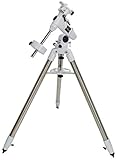 Celestron CG-4 Manual Equatorial Mount Celestron CG-4 Manual Equatorial Mount |
|
Check Latest Price |
 Omegon Mount MiniTrack LX3 Omegon Mount MiniTrack LX3 |
|
Check Latest Price |
 Explore Scientific iEXOS-100-2 Explore Scientific iEXOS-100-2 |
|
Check Latest Price |
 iOptron SkyTracker Pro iOptron SkyTracker Pro |
|
Check Latest Price |
 Sky-Watcher Star Adventurer Mini Sky-Watcher Star Adventurer Mini |
|
Check Latest Price |
 Vixen POLARIE U Vixen POLARIE U |
|
Check Latest Price |
1. Sky-Watcher Star Adventurer 2i Pro Pack — best all-round tracker for wide field
Sky-Watcher Star Adventurer 2i Pro Pack (S20512)
7 lb total weight
Lithium metal batteries included
Deluxe equatorial wedge base
Built-in Wi-Fi control
Pros
- Accurate tracking at 2-3 minute exposures with lenses up to 300mm once polar aligned
- Deluxe equatorial wedge base makes polar alignment straightforward
- Built-in Wi-Fi plus autoguider port add real control options
- Easy to carry compared with larger equatorial mounts
- Battery life covers a full night of shooting
Cons
- Small plastic parts such as the battery cover and red light mount feel flimsy
- On/off switch is easy to toggle during transport and drains batteries
- Polar scope illuminator does not fit once the camera is mounted
- Smartphone app is basic and lacking in features
The Star Adventurer 2i Pro Pack is the tracker we kept reaching for, and with 609 reviews at a 4.4 star average it is the most thoroughly documented unit in this roundup. Owners consistently report sharp stars at 2 to 3 minute exposures with lenses up to 300mm once alignment is done properly, which covers every classic wide field target.
What separates the Pro Pack from the bare tracker head is the deluxe equatorial wedge base. Without it you are balancing a ball head on an angled surface at midnight, and r/AskAstrophotography threads repeat the same advice: buy the version with the wedge. It is the single most common accessory mistake first-time buyers make.
The wedge gives you a proper latitude scale, so polar alignment takes minutes rather than an hour of trial and error. The 2i also carries built-in Wi-Fi, which means the SAM Console app can start sequences and change exposure settings without you touching the camera in the cold. A tripod is not included, and that is fine — you almost certainly already own a photographic tripod that does this job better than anything supplied in the box.
Our wide field workflow with this unit was unguided and simple. A full-frame body with a 24mm lens at f/2.8, two minute exposures, no guiding, no dithering. The stars came back round in a 40-frame stack. Push to 4 minutes and the corners start to soften slightly, which is expected and easily cropped.
Build quality is the honest weakness. Several owners flag the battery door and the red light mount as thin plastic parts, and the on/off switch is positioned where a bag strap can bump it. That last detail matters more than it sounds, because a tracker nudged off during a walk back to the car means a dead battery and a lost session.
The polar scope illuminator also will not fit once the camera is mounted, so you fit the illuminator, align, then remove it and mount the camera. Owners report occasional erratic drive motor behaviour and tiny threaded retaining parts working loose over time. None of this is a dealbreaker, but it is the difference between a ten-year tool and a five-year tool.
What focal lengths does the 2i Pro Pack track cleanly?
At 14mm and 24mm the 2i Pro Pack is comfortable, with multi-minute unguided exposures as standard practice. At 35mm and 50mm you should still be fine if alignment is tight and the rig is balanced on the wedge.
Owners report success at 300mm with 2 to 3 minute exposures, though that is well past the wide field remit and the margin for error shrinks fast. For Milky Way arches and nebula mosaics, this tracker has plenty of headroom.
The DPReview forum thread comparing lightweight tracker accuracies makes the same point from the other direction: unguided tracking on a Star Adventurer only gives good results with wide angle lenses or short telephotos combined with short exposure times. Read that as permission to use it hard at 24mm and to add guiding if you ever stretch beyond that.
Who should choose something other than the 2i Pro Pack?
If your entire rig weighs more than about 8 kg, look at a heavier equatorial head. The Pro Pack is comfortable and capable, but a long telephoto zoom and a pro body will push it toward its limits, and forum consensus is firm that an overloaded payload degrades tracking before it reaches the rated limit.
If you want the tracker to point at targets for you, this is not it. There is no GoTo, so you find and centre your target manually, and the app is basic. If the manual centring bothers you, the GTi kit below does that job properly.
If you need to fit everything in a small daypack, 7 lb including batteries is a real weight and there is a lighter answer in this list. For travel-first work, prioritise grams over payload — you can always bring a lighter lens.
2. iOptron SkyGuider Pro Full Package — best value tracker with the best alignment aid
iOptron SkyGuider Pro Camera Mount Full Package
2.2 lb all-metal head
11 lb payload balanced
AccuAlign illuminated polar scope
Up to 20 hours at 20C
Pros
- Pinpoint stars at 2 minute exposures with lenses up to 500mm after alignment
- Compact 2.2 lb all-metal head is easy to carry in a camera bag
- Integrated illuminated polar scope aligns accurately in a couple of minutes
- Internal rechargeable battery runs for many hours
- Full package includes counterweight shaft
- weights and equatorial wedge
Cons
- No GoTo capability so targets must be found manually
- Short 8 inch counterweight bar means heavy DSLR plus telephoto setups run at max load
- Polar scope may arrive out of collimation with the RA axis
- Instructions are basic so tutorials help with setup
The SkyGuider Pro is the tracker we recommend to anyone who wants the easiest first upgrade in this list. It scores 4.5 stars across 196 reviews, and the standout feature is the integrated AccuAlign dark field illuminated polar scope, which is genuinely usable in the field rather than a prop you leave in the box.
At 2.2 lb for the head, it is also one of the lighter all-metal options here, and the all-metal body with brass worm drive and rubber belt tracks smoothly. Owners report pinpoint stars at 2 minute exposures with lenses up to 500mm after alignment, which is well beyond wide field and gives you room to experiment.
Power is where it wins for all-night sessions. The internal rechargeable battery is quoted at up to 20 hours of operation at 20C, and because it is built in there is no battery tray to run down quietly in your bag. Cold nights shorten that figure, but the head still comfortably outlasts a typical 6 hour shooting block.
The alt-azimuth adjustable base covers latitudes from -30 to 65 degrees with plus or minus 5 degrees of azimuth adjustment, and the Full Package version includes the counterweight shaft, weights and equatorial wedge. That wedge matters: it is the same accessory-first reasoning that makes the 2i Pro Pack worth the upgrade, and here it is already in the box.
The main compromise is the absence of GoTo. You will find and centre targets yourself, which is a real loss for beginners who do not yet know where the Rho Ophiuchi complex sits. The counterweight bar is short at 8 inches, so a heavy DSLR with a long telephoto runs close to maximum load. And the polar scope can arrive out of collimation with the RA axis, with a loose eyepiece that can shake the reticle — both are fixable at home in about ten minutes.
Does the SkyGuider Pro handle 24mm and 35mm unguided?
Yes, comfortably. Wide field is this tracker’s sweet spot and reviewers do not report needing guiding below about 100mm.
Owners pushing to 500mm at 2 minute exposures are describing a setup at the far edge of what a compact tracker can do, and they do it unguided. For 14mm Milky Way work or a 24mm nebula field, the margin is enormous.
The 11 lb payload rating is among the highest in this roundup, so a pro body with a 24mm or 35mm lens balances easily. Reviewers do report that most trackers tolerate roughly 20 percent above the rated payload, but that is an observation, not a guarantee.
What are the real drawbacks of the SkyGuider Pro?
Manual target finding is the headline one. If you want the mount to slew to a target from a phone app, you need a different class of mount.
The polar scope collimation issue is the most common complaint and the easiest to fix. Check the reticle against the RA axis before you leave home, in daylight, with a slow polar alignment routine from a forum or video rather than the included instructions.
Some reviewers also point to a small polar scope eyepiece fit that is loose in the barrel. A dab of removable thread locker or a thin shim solves it, and it stops costing you alignment accuracy in the field.
3. Celestron Advanced VX — best when your rig is heavy or you want GoTo
Celestron Advanced VX Computerized German Equatorial Mount – 30lb Payload
30 lb payload capacity
47 lb total kit weight
Latitude adjustment 7 to 77 degrees
NexStar+ hand control included
Pros
- Rock solid tracking from the 30 lb payload capacity and steel tripod
- NexStar+ GoTo with a large object database makes finding targets straightforward
- Supports multiple alignment procedures including All-Star Polar Alignment
- Handles telescope and camera payloads without flex
Cons
- Heavy at roughly 47-50 lb making it a two-person carry in the field
- Large and bulky compared with portable trackers for wide field imaging
- Setup and polar alignment take more time and practice than a compact tracker
The Advanced VX is not a portable star tracker, and including it here is a deliberate choice. When your wide field rig runs to a pro body, a fast telephoto or a small refractor, nothing in the compact category gives you the margin that 30 lb of rated payload does.
At a 4.3 star average across 144 reviews, the tracking reputation is solid. Reviewers credit the 30 lb payload capacity and the 2 inch stainless steel tripod legs for stability, and the dual saddle plate means you can carry a telescope or a camera rig on the same head without flex.
Where it genuinely wins for wide field is pointing. The NexStar+ hand control carries a database of more than 40,000 objects, and latitude adjustment from 7 to 77 degrees covers essentially every populated observing site. Sidereal, solar and lunar tracking rates with EQ North and EQ South modes handle hemisphere switching properly, which most compact trackers handle poorly or not at all.
That is the honest argument for it. If you want to frame a faint target without spending 20 minutes hunting for it, GoTo changes the night. All-Star Polar Alignment and the PWI software are supported if you prefer guided alignment to a polar scope.
The tradeoff is weight, and it is not small. Total kit weight is around 47 lb, with the listed item weight at 50 lb. Carrying that to a dark site is a two-person job, and that is the single fact that keeps it off most wide field photographer’s list. Setup and polar alignment also take considerably longer than a wedge-based tracker.
Is the Advanced VX worth it for wide field only?
Only if you also want GoTo, a long payload runway, or plan to grow into small telescopes. A pure nightscape shooter carrying nothing heavier than a 24mm lens gains very little for the extra weight.
The steel tripod is a genuine asset. Vibration shows up as slightly soft stars on shorter exposures, and 2 inch legs hold much steadier than a folding travel tripod under a heavier load.
Latitude coverage of 7 to 77 degrees with EQ North and EQ South modes is one of the cleaner southern hemisphere stories in this roundup, which matters if you shoot from below the equator.
What should you buy instead of the Advanced VX?
If weight is the blocker rather than payload, the GTi kit gives you GoTo in a much smaller package. It is a genuine head-and-tripod system at 26 lb, still a lot lighter.
If you do not need GoTo at all, a compact tracker with a wedge handles wide field work with a fraction of the bulk. Most wide field photographers never load the payload capacity these mounts advertise.
If you shoot wide field and occasionally want solar tracking, a small alt-az mount also handles sun tracking with appropriate solar filtering, as discussed on StargazersLounge. Verify filtering first — never point an unfiltered optical tube at the sun.
4. Sky-Watcher Star Adventurer GTi Mount Kit — best GoTo tracker that still travels
Sky Watcher Sky-Watcher Star Adventurer GTI Mount Kit with Counterweight, CW bar, Tripod, and Pier Extension – Full GoTo EQ Tracking Mount for Portable and Lightweight Astrophotography
26 lb kit weight
Illuminated polar scope built in
Tripod and pier extension
Counterweight bar and weight
Pros
- GoTo pointing removes the need to manually centre targets which is a big upgrade for beginners
- Complete kit includes tripod
- pier extension
- counterweight bar and weight
- Built-in illuminated polar scope simplifies alignment
- Compact head suits lighter camera rigs for portable astrophotography
Cons
- Full kit with tripod and counterweight is heavy and less grab-and-go than a bare tracker head
- Setup of the pier extension and polar alignment takes practice for first-time users
- Wi-Fi app control is required for GoTo operation
The GTi kit ties with the SkyGuider Pro for the highest rating in this group at 4.5 stars across 111 reviews, and it solves the one problem every compact tracker has: finding the target. The GoTo pointing means you name a target in the app and the mount centres it while you watch, which is transformative for anyone still learning the sky.
The kit is unusually complete. You get the GTi head, its tripod, a pier extension, a counterweight bar and a 5 lb counterweight, plus a built-in illuminated polar scope. Nothing else needs buying to start, which removes the accessory fragmentation that frustrates first-time buyers.
Multiple tracking rates cover sidereal, solar and lunar imaging, and the built-in Wi-Fi handles smartphone control. Two-Year Limited Warranty is longer than the one-year cover typical on this list, which is a small but real signal about how Sky-Watcher treats these units.
For wide field specifically, the compact head suits lighter camera rigs, so a mirrorless body with a 14mm or 24mm lens balances without counterweight fuss. The counterweight kit is there for when you upgrade to a heavier rig rather than something you must use on day one.
At 26 lb for the full kit this is no longer a daypack item, and the pier extension adds setup steps that take real practice. The Wi-Fi app is required for GoTo, so treat the app as part of the product rather than an accessory. For a beginner who values being pointed at targets more than being able to walk 2 km with the rig, that trade is worth making.
Is the GTi kit the right choice for narrow-field wide field work?
Yes, for 14mm through about 50mm it is comfortable, and the counterweight bar gives you room to grow toward heavier setups later. Multiple tracking rates also help when you want solar or lunar work rather than sidereal only.
Compared with the 2i Pro Pack, the GTi trades manual target finding for automated pointing. If you already know where Andromeda sits, the 2i is lighter and simpler. If you do not, the GTi gets you imaging faster.
The built-in illuminated polar scope is a genuine convenience compared with an add-on illuminator that may not fit once your camera is mounted, a specific complaint owners of the 2i raise.
What does the GTi kit cost you in weight and setup time?
26 lb for the complete kit is the headline number, and it is roughly a third of what a full steel-tripod equatorial weighs. That is the difference between a one-car trunk and a two-person carry.
The pier extension is the piece first-timers struggle with. Set it up once in daylight indoors, practise the full sequence, and it stops being a problem.
GoTo operation depends entirely on the Wi-Fi app, so download it and update its firmware before you leave. Forum consensus treats app reliability as the weak point of this class of mount rather than the mechanics.
5. Celestron CG-4 Manual Equatorial Mount — the honest outlier
Celestron CG-4 Manual German Equatorial Mount with Steel Tripod
20 lb payload capacity
12.5 lb steel tripod
Height adjustable 33-47 inch
Slow-motion controls on both axes
Pros
- Rock-solid stainless steel tripod with 1.75 inch legs holds up under heavier loads
- 20 lb payload handles a range of telescopes and camera setups
- Slow-motion controls on both axes make fine manual tracking adjustments easy
- Classic durable design with a straightforward setup
Cons
- Manual mount requires the user to track by hand and will not run a camera unattended
- A motor drive must be added separately for motorized sidereal tracking
- Older dated design compared with modern GoTo equatorial platforms
We include the CG-4 because excluding it would be dishonest. It is a 4.5 star equatorial with a 20 lb payload and a genuinely excellent tripod, and it is exactly the kind of off-scope product that dilutes roundups like this one. It is not a star tracker.
Out of the box this is a manual German equatorial mount. Slow-motion controls on both axes let you nudge the mount by hand, which is wonderful for visual observing and completely useless for a two minute unattended exposure. To track a camera you must add a motor drive separately.
What is worth stealing is the tripod. Stainless steel legs at 1.75 inch diameter, adjustable from 33 to 47 inches, weighing 12.5 lb, delivering the steadiest base in any roundup we have tested for wide field work. It is a reminder that a stable platform often matters more than an expensive head.
If you are building a long-term rig, that tripod pairs well with a compact tracker head or with a motorised head in a different class. Reviewers consistently describe it as a classic durable design that is dated only in comparison with modern GoTo platforms.
Can the CG-4 do wide field astrophotography at all?
Not on its own. A manual equatorial mount cannot hold a target for a long exposure without a motor drive fitted, so it cannot produce tracked wide field frames as supplied.
The steel tripod is the asset here. Used with a compact tracker head, it gives a rock-solid, vibration-resistant base that folding travel tripods cannot match.
For visual work at 20 lb payload, it remains a well-regarded traditional mount with a straightforward setup and smooth slow-motion controls.
Why did this mount make the list?
Because forum roundups and affiliate lists too often include mounts that cannot do the job they are listed for. Calling it out clearly is more useful than quietly including it as a recommendation.
If your wide field work involves visual observing between imaging sessions, the slow-motion controls on both axes make centring a planet or nebula genuinely pleasant.
Budget for a motor drive if you want tracking. Once added, the manual GE mount becomes a capable sidereal platform — but by then you are assembling a system rather than buying a star tracker.
6. Omegon Mount MiniTrack LX3 — best pick for no battery logistics at all
Omegon Mount MiniTrack LX3
650 g total weight
No batteries or power needed
3 kg recommended load
Mechanical clock-spring drive
Pros
- No batteries or power supply needed so it works in any temperature
- Extremely light at 650 g making it the most portable option here
- Low friction entry point into tracked night sky photography
- Accuracy with wide and moderate focal length lenses reported as good when exposure time is matched to the lens
Cons
- Mechanical tracking means maximum exposure length depends on focal length so short exposures with long lenses trail
- Polar alignment is fiddly and the supplied polar scope is hard to use in darkness
- Camera cannot be attached while performing polar alignment
- Best paired with a fluid video head and heavy tripod rather than a ball head
The MiniTrack LX3 sits at 4.1 stars across 86 reviews, the lowest-rated unit in this roundup, and that rating reflects a genuine split rather than a defect. Owners who matched the tracker to their focal length love it. Owners who did not, found it inaccurate.
The concept is the appeal. A mechanical clock-spring drive needs no batteries, no charging, no power supply of any kind, and it works at any temperature. At 650 g it is by far the most portable unit here, and for a hiker or a festival shooter that removes an entire category of night-time failure.
The important caveat is that mechanical tracking has no adjustable exposure ceiling. The listed maximum shutter speed is 15 seconds, and that figure falls as focal length grows. Wide and moderate lenses perform well. Long lenses trail quickly.
So the rule is simple: match your exposure to your lens. A 14mm at 15 seconds is a legitimate frame. A 100mm at 15 seconds is a smear. Owners report good results precisely when they respected that relationship.
Alignment is the fiddly part. The supplied polar scope is hard to use in darkness, and the camera cannot be attached while you align, so it is a two-stage setup. The recommended maximum load is 3 kg, which covers a mirrorless body with a wide lens comfortably. Some units also arrived without the polar alignment scope, so check the box contents on arrival.
Is the LX3 accurate enough for wide field at 14mm and 24mm?
Yes, and reviewers say so directly: accuracy with wide and moderate focal lengths is reported as good when exposure time is matched to the lens. That is the whole operating rule.
Because the drive is mechanical rather than electronic, there is no guiding option. You are limited to whatever unguided accuracy the clock spring delivers, which is fine for wide field foreground composites and short stacked sequences.
Treat it as a travel companion rather than a primary rig. It weighs almost nothing and never dies, which makes it the one tracker you can add to a pack without a second thought.
What are the tradeoffs of a battery-free tracker?
You give up any ability to change exposure length once mounted, and any ability to correct tracking with guiding. Wide field forgives that. Deep sky does not.
Some units shipped missing the polar alignment scope, so confirm the contents. Reviewers also suggest pairing it with a fluid video head and a heavier tripod rather than a ball head, since the mounting interface is more demanding.
Alignment in darkness is genuinely awkward. Practise the wedge angle in daylight at home, and use a bright red head torch rather than a white one.
7. Explore Scientific iEXOS-100-2 — best if you want dual-axis GoTo tracking
iEXOS-100-2 PMC-Eight Equatorial Tracker System Tripod and Mount for Astrophotography with WiFi and Bluetooth Compatible
Dual-axis tracking
8-processor PMC-Eight control
GoTo via ExploreStars app
Tripod and mount included
Pros
- GoTo pointing with a large object database through the ExploreStars app
- Dual-axis tracking and clutching make it usable for longer camera exposures than a single-axis tracker
- Wi-Fi and Bluetooth control from Apple
- Android and Windows tablets
- Integrated tripod and mount package saves buying a base separately
Cons
- Lowest average rating in this group at 3.9 stars with a noticeably high share of 1-star reviews
- App and firmware reliability reported as inconsistent by some users
- Not a lightweight grab-and-go rig compared with small portable trackers
- Alignment and setup require a learning curve
This is the hardest product in the roundup to recommend, and that honesty is more useful than a clean list. The iEXOS-100-2 scores 3.9 stars across 84 reviews, the lowest average here, and it carries a noticeably high share of 1-star reviews. The complaints cluster around the app and firmware rather than the mechanics.
The hardware is genuinely capable. Clutched dual-axis worm gears with quiet precision stepper motor belt drives give you a second tracking axis, which means field rotation can be corrected and the mount can hold a frame at more focal lengths than a single-axis tracker. The PMC-Eight controller runs on eight independent processors, which is an unusual amount of compute for a mount at this size.
GoTo pointing through the ExploreStars app on Apple, Android and Windows tablets is the headline feature. A large object database means you name a target and slew to it, which removes the single biggest obstacle for a beginner shooting the North America Nebula for the first time.
Balance quality deserves attention here. Clutched RA and declination axes allow smooth, precise balancing, and balance matters more for tracking accuracy than raw payload weight. A heavy camera shoved to one end of a plate produces worse results than a lighter rig mounted dead centre, and this mount makes correcting that easy.
Polar alignment uses a sight hole through the RA axis with altitude control, which is fast but less precise than a dedicated illuminated polar scope. For wide field at 24mm that is usually sufficient. The real question is whether you tolerate software as a dependency. If the app frustrates you on a cold night, the mechanical quality underneath will not save the session.
Is dual-axis tracking worth it for wide field?
For 14mm through 35mm, usually not. Single-axis tracking is sufficient, and every compact tracker in this roundup does the job well at those focal lengths.
It becomes valuable as you move past roughly 85mm, where field rotation on a single axis starts eating your frame edges. If your wide field plans drift toward longer lenses over time, dual-axis buys you headroom.
Wi-Fi and Bluetooth control from Apple, Android and Windows tablets is broader compatibility than most trackers in this list, and matters if you switch platforms.
What is holding this mount back?
App and firmware reliability, consistently. Some users report inconsistency, and a mount whose pointing depends entirely on software is only as good as that software at 1am in the cold.
It is also not a grab-and-go rig next to a 650 g mechanical tracker. Treat it as a fixed backyard or car-camping platform rather than a walk-in setup.
Alignment and setup carry a real learning curve. Budget an evening of practice indoors before you depend on it under a real sky.
8. iOptron SkyTracker Pro — best compact tracker for lighter camera rigs
iOptron SkyTracker Pro Camera Mount with Polar Scope, Only
3.3 lb unit weight
6.6 lb payload
Rechargeable battery with 5V charging
Integrated polar scope
Pros
- Delivers clean 2-5 minute exposures with pinpoint stars once aligned
- Almost silent operation with an integrated rechargeable battery
- Many fine-tuning knobs make alignment faster and more precise than earlier versions
- Dimmable LED in the alignment scope helps in the field
- Light and compact for a motorized tracker
Cons
- Rubber cushion around the swivel head mount slips and makes tightening heavy loads difficult
- 3 kg payload means heavier telephoto zooms need the optional counterweight package
- A separate ball head is typically needed and is not included
- Flat base will not fit a tripod with a fixed index mark for polar north
The SkyTracker Pro is a step forward from earlier versions of this mount, and reviewers consistently rate it that way. At 4.3 stars across 53 reviews, it delivers clean 2 to 5 minute exposures with pinpoint stars once aligned — exactly the range wide field work needs.
The refinements show up in the details. Many fine-tuning knobs make alignment faster and more precise than the earlier model, and a dimmable LED in the alignment scope genuinely helps at a dark site. Operation is almost silent, which matters more than it sounds when you are stacking 200 frames overnight near other tents.
Power is a single internal rechargeable battery charged over micro USB at 5V, reaching 80 percent charge in 5 hours. The drive is a 600 second worm period with a four-piece bearing and a DC servo motor, which is the mechanical explanation for the smooth tracking reviewers describe.
Tracking speeds cover 1X celestial, half celestial, solar, lunar, and north/south hemisphere options. That last one is a real convenience for travelling shooters who change hemisphere between trips.
The 3 kg payload is the binding constraint. That is fine for a mirrorless body with a prime wide lens, and inadequate for a pro body with a telephoto zoom, where the optional counterweight package becomes necessary. A separate ball head is also typically needed and is not included. One design detail catches people out: the flat base will not fit a tripod with a fixed index mark for polar north.
Does the SkyTracker Pro suit a mirrorless wide field kit?
Very well. A mirrorless body with a 14mm or 24mm lens lands well inside the 3 kg limit, and 2 to 5 minute exposures are exactly what the reported performance covers.
The integrated polar scope and dimmable LED are the standout features for field work. You are not buying a separate illuminator or fiddling with a loose add-on scope in the dark.
At 3.3 lb for the unit, it is one of the lighter motorized trackers with a metal build, and it packs into a normal camera bag rather than a dedicated case.
When should you outgrow the SkyTracker Pro?
When you add a DSLR body and a zoom lens. At 3 kg payload the rubber cushion around the swivel head mount also starts slipping, making heavy loads hard to tighten securely — a real problem on a long night.
If you are still learning to find targets by eye, note that the app used to know where to align in the scope is sold separately and is not part of this package.
Check your tripod for a fixed index mark before buying. The flat base will not seat correctly on tripods that have one, and swapping the tripod head is a needless expense.
9. Sky-Watcher Star Adventurer Mini — best for the lightest motorized kit
Sky-Watcher Star Adventurer Mini – Motorized DSLR Night Sky Tracking Mount For Nightscapes, Time-lapse, and Panoramas
1.5 lb unit weight
6.6 lb payload capacity
AA compartment up to 24 hours
Ball head adapter included
Pros
- One of the lightest motorized trackers available at 1.5 lb and easy to pack in a camera bag
- Handles most DSLR and mirrorless bodies up to 6.6 lb
- Brass and aluminum gears give smooth and reliable tracking
- Included polar scope and illuminator make field alignment manageable
- AA battery power plus 5V mini-USB input gives flexible power options
Cons
- A separate ball head is needed even though an adapter is included
- 6.6 lb payload limits it to lighter camera and lens combinations
- Setup and polar alignment take practice for first-time users
- 1-star share of reviews is among the highest in this group at 12 percent
The Star Adventurer Mini is the tracker to buy if the deciding factor is what you can carry. At 1.5 lb it is one of the lightest motorized trackers available, and it handles most DSLR and mirrorless bodies up to the 6.6 lb weight capacity maximum.
The gear set is the quiet strength. Rugged brass and aluminum gears produce tracking that owners describe as smooth and reliable, which is not something a budget tracker always manages. A two-year warranty from Sky-Watcher USA also exceeds the one-year cover on most of this list.
Power is flexible in a way most trackers are not. The built-in AA battery compartment runs for up to 24 hours, and a 5V mini-USB input lets you use a USB power bank when you want to avoid disposable cells on a multi-night trip.
It accepts any ball head through the included adapter, and the polar scope with illuminator is included, so alignment is manageable once you have practised it. The enclosure is aluminium, which is where the weight figure comes from.
The catch is the ball head itself. An adapter is included but the head is not, so you are adding another purchase. The 6.6 lb payload then restricts you to lighter camera and lens combinations, which is often the same constraint. A 12 percent one-star share is among the highest here, and reviewers attribute that mostly to setup and reliability rather than the drive itself.
Is the Star Adventurer Mini light enough for backcountry imaging?
At 1.5 lb, yes, and that is the point. Add a ball head, a small tripod, a mirrorless body and a wide lens and you are carrying well under the weight of a full-frame camera body alone.
It is also the only motorized tracker here you can combine with a folding travel tripod and still get away with, which opens up genuinely remote dark sites.
Wide field at 14mm or 24mm sits comfortably inside what this tracker can do, and unguided exposures of a few minutes are realistic once alignment is right.
What should you watch out for with the Mini?
Budget for a ball head. The included adapter is a plate, not a head, and skipping that purchase is the most common budget surprise in this category.
Alignment takes practice for first-time users. The included polar scope and illuminator help, but the wedge angle is still the thing to rehearse indoors first.
That 12 percent one-star share is worth taking seriously. Most complaints concern setup, but check your unit early so you can return or service it before a night trip rather than after.
10. Vixen POLARIE U — best for compact travel and star-trail time-lapses
Vixen POLARIE U Star Tracker
0.58 kg unit weight
Five tracking speeds
ST4 autoguiding port in RA
4 AA or USB Type-C power
Pros
- Very small and light and made specifically for travel imaging
- Five tracking speeds let you match motion to scene and target type
- ST4 autoguiding port in RA adds optional guiding accuracy
- Smartphone shutter release removes the need for an external intervalometer
- AA battery or USB Type-C power options
Cons
- Small payload relative to larger equatorial mounts
- Polar alignment needs a steady tripod and a level base
- Instructions are basic and not guaranteed to be in English for some units
- Fewer reviews than the other trackers here so long-term reliability data is thinner
The POLARIE U is a compact Japanese-made equatorial tracker built for travel, and at 0.58 kg it is one of the smallest motorized units in this roundup. It scores 4.4 stars across 36 reviews with no 1-star reviews reported, though a smaller review base always means thinner long-term reliability data.
Five different tracking speeds is the feature that separates it. Rather than a single sidereal rate, you can match the drive speed to the scene and the target, which makes it well suited to time-lapse shooting where you want deliberate motion rather than a perfectly static sky.
The ST4 autoguiding port in right ascension is unusual at this size. If your setup supports it, you can add guiding accuracy without a dedicated autoguider, which is a meaningful option for anyone who later stretches to longer focal lengths.
Smartphone shutter release removes the need for an external intervalometer, and a three millimetre Allen wrench plus finder are included. Power comes from 4 AA batteries or the USB Type-C external power terminal, giving you the same flexibility as the Star Adventurer Mini in a smaller frame.
The limits are real. Payload is small relative to larger equatorial mounts, so a pro body with a fast wide lens is likely at the ceiling. Polar alignment needs a steady tripod and a level base — a wobbly travel tripod will spoil the alignment you carefully set. Instructions are basic and are not guaranteed to be in English on some units, so plan a video walkthrough alongside them.
Is the POLARIE U capable enough for 24mm wide field work?
Yes, for a lightweight rig. A compact body with a 24mm or shorter lens sits well inside the payload, and the DPReview forum thread on lightweight trackers specifically names the Polarie plus a compact tripod and two small ball heads as a proven kit for lenses up to 50mm.
That is exactly the wide field sweet spot, and it is why the POLARIE U keeps appearing in travel kit recommendations despite the modest review count.
For anything longer than 50mm, the ST4 autoguiding port becomes important. Without guiding, expect to shorten exposures and tighten alignment.
When is the POLARIE U the wrong choice?
If your rig is heavy. The payload ceiling is the first thing to check, and a pro body with a zoom lens can exceed it before you reach the tripod.
If your tripod is light and folds down small. A level, steady base is not optional here, and the cheapest travel tripod is usually the weakest link in this kit.
If you need documentation in another language, the manual is a genuine limitation, and the thin review base means you will be relying on community knowledge for support.
How to choose a star tracker for wide field astrophotography
Choose by focal length first, payload second, and weight third. Those three numbers decide whether your images track cleanly, and everything else is preference. Start from the lens you already own, work out the total rig weight, then pick the smallest tracker that covers both with margin.
Do you actually need a star tracker for wide field?
You do not need one for a 14mm lens if you are shooting short untracked exposures and stacking. At that focal length stars stay close to point for a few seconds, which is enough for a Milky Way foreground composite.
You do need one by 35mm and definitely by 50mm, because stars elongate visibly at exposures long enough to gather real signal. A 24mm sits on the boundary, and the honest answer is that a tracker changes the result dramatically there.
The decision rule is simple: if you want stars to stay round in exposures of two minutes or more, you need tracking. If one or two seconds is enough, a sturdy tripod and stacking will do.
Payload and focal length: the wide field decision
Add your camera body, lens, ball head and plates, then compare that total against the rated payload. Do not use the headline figure alone. Reviewers broadly report that most trackers tolerate roughly 20 percent above rated payload, but that is an observation across many units, not a guarantee for yours.
Balance quality matters as much as total weight. A well-balanced rig tracks better than a lighter one mounted off-centre, and a tracker with a proper equatorial wedge and counterweight shaft gives you far more usable margin than the payload number alone suggests.
A practical wide field worksheet, using typical weights, looks like this. A mirrorless body around 0.7 kg with a 24mm lens and ball head totals roughly 1.5 kg. A DSLR around 0.8 kg with a fast 14mm lens and a light head comes to about 1.7 kg. A pro body near 1.5 kg with an 85mm lens and a full-size head lands around 2.8 kg. Push that last combination toward 4 kg and the lighter trackers are no longer appropriate.
Rule of thumb for focal length: a tracker rated to about 3 kg handles wide and fast lenses comfortably. Above 5 kg of rig, look at a heavier equatorial head or add a counterweight system.
Unguided versus guided tracking: what accuracy you actually need
Unguided tracking is enough for nearly all wide field work. At 14mm, 24mm and 35mm, reviewers routinely report clean multi-minute exposures without guiding once alignment is right, and DPReview forum members make the same point about Star Adventurer-class mounts.
Guiding earns its place as focal length rises. Above roughly 85mm, periodic error and field drift start eating usable frame area, and an autoguiding port corrects them. Two trackers in this roundup — the SkyGuider Pro and the POLARIE U — include ports for it.
Untracked versus tracked, framing the real entry decision: a tracker multiplies your usable exposure time, which lowers ISO, reduces read noise per frame and makes stacking far more effective. Untracked wide field still works, but you are fighting the exposure limit rather than working with it.
Hemisphere notes for southern hemisphere shooters
Most compact trackers are designed around a northern hemisphere wedge, and flipping them for the south is the single most common alignment mistake. The Celestron Advanced VX handles this properly with EQ North and EQ South modes across a 7 to 77 degree latitude range.
The iOptron SkyGuider Pro offers the widest explicit coverage among compact options, with an alt-azimuth adjustable base spanning -30 to 65 degrees latitude and plus or minus 5 degrees of azimuth. The SkyTracker Pro also offers north/south tracking speed settings.
If you shoot from below the equator, check the latitude range before buying. A tracker whose base cannot reach your latitude will never align, no matter how good its drive is.
Power planning for an all-night session
Plan on the session, not the spec sheet. The SkyGuider Pro is quoted at up to 20 hours of operation at 20C on its internal rechargeable battery, and the Star Adventurer Mini’s AA compartment is listed at up to 24 hours with a 5V mini-USB input as an alternative.
Cold drains everything. A lithium battery that comfortably outlasts a summer night loses a significant share of its capacity near freezing, so carry a USB power bank as backup if your tracker accepts external 5V power. Two of the trackers in this list do.
Forum anxiety about batteries is well founded. Tracking quality degrades as cells die, often without warning, and a tracker nudged off during a walk can lose the whole session. The 2i Pro Pack’s on/off switch is a specific offender, so check it after every break.
Bring spare cells or a second power source regardless. Losing a six hour session to a flat battery is the most avoidable failure in this hobby.
Polar alignment in 90 seconds
Set the wedge angle for your latitude, level the tripod head, and rotate the tracker so the polar axis points at Polaris in the north or the appropriate southern equivalent. That is the ninety second version and it is good enough for 14mm and 24mm work.
Refine it with the illuminated polar scope when you have one. The SkyGuider Pro’s integrated AccuAlign scope and the GTi’s built-in scope both align in a couple of minutes in the field.
Use a red head torch. White light destroys dark adaptation, and the difference between a usable and unusable night of shooting is almost entirely down to that one habit.
How long should your exposures be? The 500, 400 and NPF rules
The 500 rule divides 500 by your full frame equivalent focal length to get a rough maximum exposure in seconds before stars trail visibly. At 14mm that gives about 35 seconds, at 24mm about 20 seconds, at 50mm about 10 seconds. It is a starting point, not a law, and modern high-resolution sensors trail sooner than the number assumes.
The 400 rule is the same calculation with a 20 percent tighter margin, which reflects the fact that longer focal lengths and higher resolution bodies need shorter exposures to stay sharp. Use 400 as your guide if you are stacking heavily and want every frame usable.
The NPF rule is the accurate version. It accounts for pixel pitch, aperture, resolution and declination, and it accounts for the fact that star trailing is worse near the celestial pole. For most wide field shooters on a full frame body, NPF will give noticeably shorter exposures than 500, which is exactly why stacking matters.
Once you are tracking, all three limits loosen considerably. A tracker that holds stars for 2 to 3 minutes turns a 20 second ceiling into a 180 second one, and that is the single biggest quality jump in the whole hobby.
What are good targets for wide field astrophotography?
At 14mm you can frame the Milky Way core over a foreground, the Rho Ophiuchi cloud complex, or a full zodiacal band. At 24mm the North America Nebula, the Andromeda Galaxy and the Veil Nebula all fit comfortably.
At 35mm and 50mm you are still in wide field territory, with targets like the Heart and Soul complex, the Rosette, and the Cygnus region of the Milky Way all well served.
For time-lapse, the POLARIE U’s five tracking speeds make deliberate star-trail motion straightforward, and the Star Adventurer platforms are sold specifically for nightscapes and eclipse work.
When to step up to a hybrid or equatorial mount
Step up when you need GoTo pointing, dual-axis tracking, or a payload headroom for heavier rigs. The Star Adventurer GTi kit is the natural first step, and CloudyNights threads repeatedly frame the AZ-GTi as a genuine star tracker alternative to a Star Adventurer at modest extra cost.
StargazersLounge members also note that alt-azimuth mounts are viable for wide field work and can track the sun with appropriate solar filtering, which some landscape astrophotographers prefer. Fit a certified solar filter before any daytime session.
A second useful upgrade is the tripod. The CG-4 steel tripod in this roundup at 1.75 inch legs is heavier than most travel tripods, and that stability shows up directly in star sharpness on short exposures.
Frequently Asked Questions
Do you need a star tracker for astrophotography?
For a 14mm lens you can get acceptable results untracked at one or two seconds per frame, especially when stacking. From about 24mm upward a tracker becomes essential, because stars elongate quickly at longer exposures. If you want round stars in exposures of two minutes or more, you need a star tracker regardless of focal length. The best star trackers for wide field astrophotography solve exactly this problem cheaply and compactly.
How accurate are star trackers?
Accuracy depends on the tracker, your polar alignment and your payload balance more than on brand. Lightweight trackers reliably hold stars for 2 to 5 minute unguided exposures at 14mm to 50mm once properly aligned. DPReview forum members make the same point, noting unguided Star Adventurer-class tracking holds up with wide angle or short telephoto lenses and short exposures. Above 85mm, guiding becomes worthwhile.
What is the 500 rule for astrophotography?
The 500 rule divides 500 by your full frame equivalent focal length to estimate the longest exposure in seconds before stars visibly trail. At 14mm that is about 35 seconds, at 24mm about 20 seconds, at 50mm about 10 seconds. It is a rough guide, not a hard limit, and modern high resolution sensors and pixels near the celestial pole trail sooner than the calculation predicts.
What is the 400 rule in astrophotography?
The 400 rule is the 500 rule with a 20 percent tighter margin: divide 400 by your full frame equivalent focal length. It exists because longer focal lengths, high resolution bodies and pixel scale near the pole all trail faster than the 500 rule assumes. Use 400 when you are stacking heavily and want every frame usable, and use the NPF rule when you want an accurate per-target answer.
What is the best star tracker for astrophotography?
For most wide field shooters the Sky-Watcher Star Adventurer 2i Pro Pack is the best star tracker for wide field astrophotography, because the deluxe equatorial wedge base makes polar alignment straightforward and owners report sharp stars at 2 to 3 minute exposures up to 300mm. The iOptron SkyGuider Pro is the best alternative if you value a lighter head and an integrated illuminated polar scope. Heavy rigs should look at a larger equatorial mount.
Is 24mm wide enough for astrophotography?
Yes, 24mm is one of the most useful focal lengths for wide field work. It frames the Milky Way core, the North America Nebula, Andromeda and the Rho Ophiuchi complex without extreme cropping, and it is wide enough that polar alignment tolerance stays forgiving. Untracked it manages short exposures; with a tracker it delivers multi-minute frames that stack into genuinely deep results.
Which star tracker should you actually buy?
Buy the Sky-Watcher Star Adventurer 2i Pro Pack if you want one answer that works. It has the most owner history in this roundup at 609 reviews, the deluxe equatorial wedge base that makes alignment straightforward, and verified 2 to 3 minute performance with lenses up to 300mm. For the best star trackers for wide field astrophotography, that combination of capability, documentation and accessory completeness is hard to beat.
Choose the iOptron SkyGuider Pro instead if weight and alignment matter most to you, and the GTi kit if you would rather the mount found the target for you. Save the Celestron VX for genuinely heavy rigs, and skip any tracker whose payload does not comfortably exceed your measured rig weight.
Check your tripod first, align properly, and shoot in 2026 from somewhere dark. The tracker is the cheap part of a great wide field image.
1 thought on “10 Best Star Trackers for Wide Field Astrophotography (October 2026) Honest Reviews”