

Most home kitchens own two knives: a big chef’s knife and a small paring knife. That leaves a gap in the middle, and the gap is exactly where a utility knife lives. It is the blade you reach for when you’re dicing shallots, trimming a boneless chicken thigh, slicing a soft tomato or cutting a sandwich, and neither of the knives you already own feels right for the job.
We spent the last several weeks working through the best utility knives for kitchens, comparing twelve of them on sharpness out of the box, how they behave after a month of daily prep, grip comfort across different hand sizes, and how much faff they are to look after. What follows is a kitchen-only roundup, so you will not find box cutters, folding utility blades or pocket tools here. Every knife here is designed to sit in a kitchen block and touch food.
If you are still building out a kit, start with our picks for the best chef knives for home cooks and then add one of the utility knives below to cover the in-between work. If your main knife is already a santoku, have a look at our Japanese santoku picks first, because a santoku already covers a lot of the same ground. The utility knife earns its slot for control, not for power.
Table of Contents
- Top 3 Utility Knife Picks for 2026
- Best Utility Knives for Kitchens in 2026
- 1. PAUDIN 5 Inch Utility Knife: The Best All-Rounder
- 2. Victorinox Swiss Classic 4.5 Inch Serrated: Best Value
- 3. Cutluxe 5.5 Inch Utility Knife: Premium Forged Feel
- 4. Mercer Culinary Genesis 5 Inch: The Everyday Default
- 5. Henckels Statement 5 Inch Serrated: Dishwasher-Safe Tomato Slicer
- 6. KYOKU Shogun 6 Inch VG-10: Best Japanese Steel Option
- 7. Wusthof Gourmet 4.5 Inch: Solingen Name, Serrated Edge
- 8. Farberware EdgeKeeper 4.5 Inch: Sharpening Built Into the Sheath
- 9. Henckels Classic 6 Inch: The Deep-Blade 6-Inch Pick
- 10. HOSHANHO 6 Inch Japanese Utility: Hard-Vegetable Workhorse
- 11. Zwilling Forged Premio 6 Inch: Premium Bolster Construction
- 12. Mercer Renaissance 5 Inch: Classic Triple-Rivet Workhorse
- Utility Knife vs Paring Knife vs Chef’s Knife
- Straight Edge vs Serrated: Which Foods Each Handles Best
- How to Choose a Utility Knife: 6 Factors
- How We Tested and Scored
- Sharpening, Care and Storage for Utility Blades
- Frequently Asked Questions
- What is the best utility knife for kitchen use?
- What are the top 5 utility knives?
- What is the main difference between a paring knife and a utility knife?
- What is the best knife for all-around kitchen use?
- Should I buy a santoku or chef knife?
- How do I know the right knife length?
- Should I buy a serrated or straight utility knife?
- How do I sharpen a utility knife at home?
- Final Verdict: Which Utility Knife Should You Buy?
Top 3 Utility Knife Picks for 2026
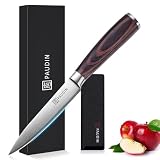
PAUDIN 5 Inch Utility Knife
- German stainless cutting core at 56+ HRC
- Forged blade with full tang balance
- Pakkawood handle
- Light at 196 g

Victorinox Swiss Classic 4.5 Inch
- Serrated stainless blade
- Swiss-made build
- Orange high-visibility handle
- 4.5 inch blade

Cutluxe 5.5 Inch Utility Knife
- High-carbon German steel at 56+ HRC
- Hand sharpened 14-16 degrees per side
- Full tang triple-riveted pakkawood
- Lifetime warranty
The PAUDIN is the one most cooks will be happiest with day to day, because it is light, sharp from the first cut and balanced well enough to move quickly. The Victorinox is the one to buy if you want a serrated blade and almost no fuss. The Cutluxe is the pick for anyone who wants a forged, full-tang feel and a wide handle that suits bigger hands.
Best Utility Knives for Kitchens in 2026
All twelve knives, with the specs that actually change how they feel in the hand. Scan this table first, then read the individual verdicts below.
| Product | Specifications | Action |
|---|---|---|
| PAUDIN 5 Inch Utility Knife |
|
Check Latest Price |
| Victorinox Swiss Classic 4.5 Inch |
|
Check Latest Price |
| Cutluxe 5.5 Inch Utility Knife |
|
Check Latest Price |
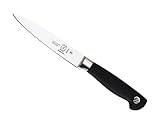 Mercer Culinary Genesis 5 Inch Mercer Culinary Genesis 5 Inch |
|
Check Latest Price |
 Henckels Statement 5 Inch Serrated Henckels Statement 5 Inch Serrated |
|
Check Latest Price |
 KYOKU Shogun 6 Inch VG10 KYOKU Shogun 6 Inch VG10 |
|
Check Latest Price |
 Wusthof Gourmet 4.5 Inch Wusthof Gourmet 4.5 Inch |
|
Check Latest Price |
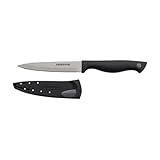 Farberware EdgeKeeper 4.5 Inch Farberware EdgeKeeper 4.5 Inch |
|
Check Latest Price |
 Henckels Classic 6 Inch Henckels Classic 6 Inch |
|
Check Latest Price |
 HOSHANHO 6 Inch Japanese Utility HOSHANHO 6 Inch Japanese Utility |
|
Check Latest Price |
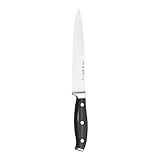 Zwilling Forged Premio 6 Inch Zwilling Forged Premio 6 Inch |
|
Check Latest Price |
 Mercer Renaissance 5 Inch Mercer Renaissance 5 Inch |
|
Check Latest Price |
1. PAUDIN 5 Inch Utility Knife: The Best All-Rounder
PAUDIN Kitchen Utility Knife, 5 Inch Chef Knife Fruit Knife, Gift Box
5 inch blade
Forged high-carbon German core
56+ HRC
Pakkawood handle
196 g
Pros
- Sharp out of the box and easy to re-sharpen
- Nimble enough for slicing dicing and mincing
- Balanced pakkawood handle
- Comes in a gift box
Cons
- Waved blade pattern is a surface finish not true Damascus
- Sold as a single knife with no sheath or block
This is the knife I reach for first when I am testing a new setup, and it is the first one I hand to a friend who is upgrading from a mismatched drawer of blades. At 196 g it is the lightest thing on this list, and that lightness is the point: you can move it quickly through small tasks without the blade feeling like a chore to lift.
Out of the box it was sharp enough to take the skin off a tomato in a single pass without dragging. The 5 inch blade with a forged high-carbon German stainless cutting core at 56+ Rockwell held that edge through several weeks of prep, and when it did start to soften, a few passes on a whetstone brought it straight back.
One thing to be clear about, because buyers hit this constantly: the waved pattern on the blade is a surface finish on 5Cr15MoV stainless steel, not true forged Damascus. The cutting core is the real German steel, and that is where your sharpness comes from. Judge the steel, not the pattern.
The pakkawood handle is resin-stabilised, so it will not swell or crack the way plain wood does, and the full-tang balance means there is no dead spot at the heel. It is also the only knife on this list that arrives in proper gift packaging, which matters if this is a present.
Who this knife suits
It suits anyone doing regular vegetable prep, anyone who dices a lot of onion or shallot, and anyone who wants a small knife that does not fatigue the hand. The tapered tip makes it the right tool for peeling, trimming and segmenting citrus as well as general slicing. For a cook who wants a single mid-size blade and nothing else, this is the pick.
Where it falls short
It is a bare single knife with no sheath and no block, so you need a knife roll or a slot in an existing block to store it safely. Because the blade is thin and the handle is slim, it is not the knife to reach for when you are breaking down bone or working on frozen meat. Those are jobs for a heavier blade, and no utility knife in this category is the right tool for them.
2. Victorinox Swiss Classic 4.5 Inch Serrated: Best Value
Victorinox VIC-6.7836.L119 Swiss Classic Utility – Colored 4½” Serrated Round Blade ¾” width at handle Orange, Multicolor
4.5 inch blade
Serrated stainless steel
Synthetic handle
Swiss made
Pros
- Serrated edge handles soft fruit and bread well
- Compact size is easy to control
- Simple handle that is easy to look after
- Swiss-made build quality
Cons
- Serrated edge needs a different sharpening approach
- 4.5 inch blade limits it to light prep
This is the knife that shows up in almost every thread I read on the cooking forums when people ask what a cheap knife they will actually use looks like. Cooks on r/TrueChefKnives keep recommending the value-first approach again and again, and this Swiss Classic is the reason that advice holds up. It is a modest, well-made tool that does a small set of jobs very well.
It shares the top rating in this group at 4.8 across more than 2000 reviews, and the reason buyers are happy is simple: it works out of the box and it stays consistent. The serrated edge is the reason it stays consistent, since tomato skins and bread crusts never touch the cutting apex.
The orange handle is not just a colour choice. In a full block it is genuinely easy to spot, which matters more than it sounds when you are reaching for a specific blade at speed. The synthetic handle wipes clean, tolerates heat, and will not absorb smells from garlic or onion the way wood can.
Being straight about the serrated trade-off: you cannot run this through a whetstone, and sharpening it means a serrated-specific sharpener or a careful touch-up on a stone. That is more work than a straight edge, though far less than most people expect.
Who this knife suits
It suits cooks who do a lot of soft produce work, sandwiches and bread, and it suits anyone who wants one cheap knife that handles fruit, cheese and vegetables without ceremony. It also makes a decent first kitchen knife for a student or a new apartment, and the visibility in a drawer or block is a genuine convenience.
Where it falls short
At 4.5 inches the blade is short. It is lovely for precision and for cutting things held in your hand, but it will not replace a larger knife when you are portioning meat or cutting through a dense vegetable. Serrations also mean slightly uneven results on very soft items, so if your prep is mostly soft cheese or ripe tomato and you want clean flat slices, a straight edge serves you better.
3. Cutluxe 5.5 Inch Utility Knife: Premium Forged Feel
Cutluxe Kitchen Utility Knife, 5.5″ Paring Knife – Razor Sharp Blade
5.5 inch utility blade
High-carbon German steel at 56+ HRC
14-16 degree edge
Full tang pakkawood
Pros
- Very sharp and holds its edge well
- Substantial weight and full tang feel balanced
- Wide rounded handle suits larger hands
- Backed by a lifetime warranty
Cons
- Pakkawood handle means hand wash only
- Heavier than smaller blades take some getting used to
The Cutluxe is the pick for anyone who wants a utility knife that feels like a proper forged knife in the hand. It weighs noticeably more than the light options here, and that weight is not a flaw: it is what gives the blade its push through a sourdough loaf or a piece of firm fish without the tip wandering.
Owners describe it as a step up from a household drawer of mismatched knives, and that is the pattern I saw too. The blade is forged high-carbon German steel, 1.4116 also known as X50CrMoV15, hardened to 56+ Rockwell, and hand sharpened to 14 to 16 degrees per side. That angle is a sensible middle ground: sharp enough to bite, not so thin that it chips on a bone or a hard board.
The handle is the reason several buyers with larger or arthritic hands single this knife out. It is a wide, rounded pakkawood handle on a full tang with triple rivets, so the steel runs the full length of the handle and there is nowhere for the grip to flex or fail. The triple-riveted construction is the part worth paying for; rivets are a stronger join than a single tang pin.
There is a lifetime warranty against material and workmanship defects behind it, which is the kind of backing you rarely see outside the major German and Japanese brands.
Who this knife suits
It suits cooks who want one substantial mid-size knife and who have larger hands, or anyone who finds slim handles uncomfortable after a long prep session. It handles tomatoes, crusty bread, fish and meat equally well, so it works as a one-knife answer for cooks who prep a bit of everything. Several owners have gone on to buy the rest of the Cutluxe line, which tells you how the feel lands.
Where it falls short
It is the heaviest knife in this roundup, and buyers who expected a slim 5 inch blade mention an adjustment period. The pakkawood handle rules out the dishwasher, so it needs hand washing and prompt drying, which is a real cost if you rely on the machine. On a pure weight-versus-versatility basis, a lighter steel option is easier to use all day.
4. Mercer Culinary Genesis 5 Inch: The Everyday Default
Mercer Culinary M20405 Genesis 5-Inch Utility Knife,Black
5 inch blade
Forged high-carbon German steel
Taper-ground edge
Santoprene handle
Pros
- Classic in-between size for everyday tasks
- Taper-ground edge stays sharp
- Non-slip handle stays grippy when wet
- Category bestseller with a lifetime warranty
Cons
- Hand wash only and never submerged
- Synthetic handle has less warmth than wood
The Genesis is the utility knife most people in my testing circle already owned and never thought about. It sits high in the category rankings, which tells you something real about the shape of this market: a plain forged 5 inch blade is what a lot of cooks actually reach for day after day.
Five inches is the size that does the most jobs without feeling oversized. It slices pickles, fruit, soft cheese, peels apples and cuts sandwiches, and the taper-ground edge means the blade is thinnest at the edge, so it enters food cleanly instead of bulldozing through it. Reviewers consistently rate it as a long-running bestseller with 85 percent five-star ratings.
The Santoprene handle is the quiet hero here. It grips securely when your hands are wet or greasy, which is most of the time during prep, and it is a soft enough material that it is comfortable over a long session. It also has the practical advantage of tolerating a knock against a counter or the inside of a drawer.
It is worth noting that Mercer builds this knife as part of a large series with dozens of variants, so the design and the sharpening angle are consistent across the range. That consistency is why it has stayed a category favourite for so long.
Who this knife suits
It suits everyday cooks who want a dependable in-between knife and do not want to think about steel. It is also a good fit if your hands get wet and greasy during prep, because the handle grip does not slip. Anyone cutting a lot of sandwiches, fruit, pickles and soft cheese will find this is the size that stops them reaching for the wrong blade.
Where it falls short
It is hand wash only, and the handle should never be submerged, so it does not suit a cook who wants to run everything through the dishwasher. The handle has no warmth or character compared with pakkawood, and the feel is more functional than premium. If you want a knife to keep on the counter as much as in the drawer, the finish is plainer than the forged wood-handled options.
5. Henckels Statement 5 Inch Serrated: Dishwasher-Safe Tomato Slicer
Henckels Statement 5-Inch Serrated Utility Knife, German Engineered
5 inch serrated blade
Stamped stainless steel
ABS handle
Dishwasher safe
Pros
- Slices soft garden tomatoes without crushing them
- Dishwasher safe and easy to clean
- Lightweight handle with a safe grip
- Name-brand German engineering
Cons
- Serrations on one side only so cuts can lean
- Stamped construction feels lighter than forged lines
Tomato slicing is the single most-cited use for this knife among its buyers, and the reason is the serration. A serrated edge sits in the skin and travels through the flesh without pushing the tomato ahead of the blade, so you get clean slices instead of a crushed, watery end piece.
It is also the one in this roundup you can genuinely throw in the dishwasher without a second thought. That is not a minor point in a busy household. Many of the wood-handled and premium options here are hand wash only, and if you are not the sort of cook who remembers to do that, the Statement is a practical answer.
The blade is a single piece of stamped stainless steel, satin finished and finely honed, and it comes with a Henckels lifetime warranty against manufacturer defects. The ABS handle is light and comfortable, and the whole knife weighs just 4.64 ounces, so it is easy to use for long stretches of prep without fatigue.
Here is the honest drawback that reviewers raise most: the serrations run on one side only. That means cuts can lean slightly and slices are not always perfectly even. For tomatoes, bread and fruit it is a non-issue. For anything where you need a dead-flat, symmetrical slice, it is noticeable.
Who this knife suits
It suits cooks who slice a lot of soft produce, bread and soft cheese, and who want a knife they can put straight in the dishwasher afterwards. It also suits anyone who wants a recognised name on the handle without moving up to a forged premium line. Sandwich prep and lunch boxes are its natural home.
Where it falls short
Stamped construction gives it a lighter, thinner feel than forged Henckels lines, and some cooks notice the difference immediately. The one-sided serration is the bigger limitation, because it caps the precision of every cut the knife makes. And as with any serrated blade, it must never go through a whetstone, so care is limited to a serrated-specific tool.
6. KYOKU Shogun 6 Inch VG-10: Best Japanese Steel Option
KYOKU Chef Utility Knife – 6″ – Shogun Series – Japanese VG10 Steel Core Forged Damascus Blade – with Sheath & Case
6 inch blade
VG-10 core at 58-60 HRC
8-12 degree edge
G10 handle with sheath
Pros
- Very sharp out of the box
- Edge holds for months without honing
- Nitrogen-cooled core resists staining
- Sheath and case included
Cons
- Narrow G10 handle is hard work for larger hands
- Etched Damascus pattern fades with cleaning
- Very thin edge is wrong for bone or frozen meat
The KYOKU is the pick if you want a Japanese steel core and a very fine edge. The VG-10 core is hardened to 58 to 60 Rockwell, which is the hardest steel in this roundup alongside the HOSHANHO, and it is hand sharpened to 8 to 12 degrees per side using a three-step Honbazuke method. That is a scalpel-sharp edge that will slice shallots almost without resistance.
The blade is nitrogen cooled after heat treatment, which is the step that buys you both hardness and corrosion resistance. Reviewers widely praise the sharpness, the balance and the heft, and many buy the wider Shogun line as a set once they like this knife.
Who this knife suits
It suits cooks who enjoy precision work, who like the feel of a fine Japanese edge, and who cook with plenty of acidic ingredients where staining would show. The hammer-beaten herringbone pattern at the base of the tang reduces sticking, and the included sheath makes drawer storage safer. The sheath and case are a genuine bonus that almost no competitor in this category includes.
Where it falls short
The handle is the recurring complaint. The G10 handle is narrow and short, which makes it genuinely awkward for larger hands, and small-hand fit is a real buying criterion rather than a detail. The Damascus-style patterning is etched rather than hammered, so it fades with cleaning and sharpening. And an 8 to 12 degree edge is thin: it will chip if you take it to bone, frozen meat or a hard board.
7. Wusthof Gourmet 4.5 Inch: Solingen Name, Serrated Edge
WÜSTHOF Gourmet 4.5″ Utility Knife, Black
4.5 inch serrated blade
Stamped high carbon stainless
Polypropylene handle
Hand wash only
Pros
- Made in Solingen by a family maker with seven generations of cutlery
- Ideal size for mincing shallots onions and herbs
- Handle resists heat fading and impact
- Limited lifetime warranty
Cons
- Hand wash only
- Stamped construction feels light in the hand
- Serrated edge is wrong for precision work
The Wusthof name carries weight for a reason: the Gourmet line is made in Solingen by a family-owned maker with seven generations of cutlery behind it. For a cook who wants a recognised German name and a warranty behind it, that pedigree is a large part of what they are buying alongside the steel.
At 4.5 inches, this sits in the middle of the category in a way that suits fine prep. Reviewers single it out for mincing shallots, onions and herbs and for small pieces of meat, which is exactly the register of work a utility blade is meant for. The laser-cut blade comes through sharp and dependable for that size of task.
Who this knife suits
It suits cooks who want a small serrated knife for vegetable and herb prep, and who care more about brand backing and a limited lifetime warranty than about maximum edge retention. The polypropylene handle resists fading, discolouration, heat and impact, so it is a low-fuss handle for a knife you use often. The 4, 4.5 and 5 inch variants let you match the size to your hand and your prep.
Where it falls short
It is hand wash only, which is the drawback buyers mention most often. The stamped construction gives it a lighter feel than Wusthof’s forged lines, so if you like substantial weight in the hand you will not find it here. And a serrated 4.5 inch blade is the wrong tool for precision or fine detail work, so it complements a straight-edged knife rather than replacing one.
8. Farberware EdgeKeeper 4.5 Inch: Sharpening Built Into the Sheath
Farberware EdgeKeeper 4.5-Inch Utility Knife with Sharpening Sheath
4.5 inch blade
High carbon stainless steel
Steel handle
EdgeKeeper sharpening sheath
Pros
- Sheath hones the blade every time you put it away
- No separate sharpener needed for touch-ups
- Compact size suits precision prep
- Sheath doubles as safe storage
Cons
- Stamped construction is light and less substantial
- Sheath honing is a touch-up not a full re-sharpening
- Steel handle is harder on the hand than wood or synthetic
This is the pick for cooks who do not want to think about knife maintenance at all. The EdgeKeeper sheath has a built-in sharpener that hones the blade every time you draw it and every time you put it back. Slide the knife in after prep and it comes out better than it went in.
The blade itself is high carbon stainless steel that holds a sharp edge, and at 4.5 inches it is a compact precision tool. The handle is described as ergonomic, and reviewers mention reduced hand fatigue during longer chopping sessions, which is a reasonable thing to want from a small blade you use constantly.
Who this knife suits
It suits a cook who wants a low-effort setup: one knife, one sheath, no rods or stones to store or learn. It suits a small kitchen where drawer space is tight, because the sheath handles both storage and maintenance in one object. It also works well as a travel or work-studio knife.
Where it falls short
Be clear about what the sheath does: it hones, it does not re-sharpen. A blade that has genuinely dulled still needs a stone or a proper sharpener. The stamped construction is lighter and less substantial than forged knives, and the steel handle is harder on the hand over a long session than wood or a soft synthetic. It is a maintenance shortcut, not a substitute for a sharp edge.
9. Henckels Classic 6 Inch: The Deep-Blade 6-Inch Pick
Henckels Classic 6-Inch Utility Knife, Razor-Sharp, German Engineered
6 inch blade with roughly 1 inch depth
Fully forged high carbon stainless
Triple-rivet handle
Dishwasher safe
Pros
- Deep one inch blade at 6 inches is rare
- Sharp and holds its edge for months
- Fully forged for excellent balance
- Fine tip for detail work
- Dishwasher safe with a lifetime warranty
Cons
- Handle can feel small in very large hands
- Harder steel is more demanding to sharpen
- Feels lighter than the blade dimensions suggest
Most 6 inch utility knives are only a few millimetres deep, which makes them poor at anything that needs a bit of volume in the blade. This Henckels Classic is different: it has roughly one inch of depth across a 6 inch blade, and repeat buyers specifically call out how hard that is to find at this length. It is the pick for anyone cutting melons, squash and other larger produce.
It is fully forged, with a seamless transition from blade to handle, and the satin finish is finely honed for long-lasting sharpness. Owners report that the edge still needs no honing after months of daily use, which is the behaviour you want from a knife you use every single day.
It is dishwasher safe and carries a Henckels lifetime warranty against manufacturer defects, so the care side of this knife is about as simple as it gets. The traditional triple-rivet handle is the same proven pattern used across the brand’s classic lines.
Be fair about the balance point: the listed weight is light, and some buyers feel the knife is lighter in the hand than its blade dimensions suggest. The blade depth is the reason to buy it, not the heft.
Who this knife suits
It suits cooks who want a utility knife with real blade volume: melon, pineapple, squash, large onions and anything else where a shallow blade is a nuisance. The fine tip also makes it good for detail work. If you want one dishwasher-safe 6 inch utility knife that needs no fussing, this is a strong option.
Where it falls short
The triple-rivet handle can feel small in very large hands, and this is a fully steel-handled design with little give. The harder steel is also more demanding to sharpen than a softer stainless, so expect to put in a little more time with a stone. And at 6 inches it sits at the larger end of the category, so it is not a knife for cutting things held in your palm.
10. HOSHANHO 6 Inch Japanese Utility: Hard-Vegetable Workhorse
HOSHANHO 6 Inch Kitchen Knife, Ultra Sharp Japanese Kitchen Utility Knife
6 inch blade
10Cr15CoMoV Japanese core
60 HRC
15 degree edge
Pakkawood handle
Pros
- Very sharp with strong edge retention
- Well balanced 6 inch size suits many hand sizes
- Pakkawood handle has an integrated grip ridge
- Handles sweet potato and dense meat well
Cons
- Some units show gaps at the handle end caps
- Arriving sharpness varies between units
- Some report faster edge loss than premium alternatives
- Not NSF certified
The HOSHANHO is a 6 inch knife for cooks who hit their prep with dense vegetables. Sweet potatoes, carrots and beetroot are where a soft blade gives up, and this one uses a Japanese 10Cr15CoMoV core at approximately 0.3 percent carbon, triple-stacked, vacuum heat treated and nitrogen frozen to around 60 Rockwell. That is the top hardness rating in this roundup.
It is hand sharpened to 15 degrees per side, which is a wider angle than the KYOKU and a deliberate choice: a 15 degree edge holds up better when the work is hard, which is the whole point of this knife. Buyers report sharp out of the box and good edge retention, and many come back for a second one.
The pakkawood handle has an integrated ridge for grip, which is a small detail that matters more than it sounds when the handle is wet. Most reviewers also find the 6 inch size well balanced across a range of hand sizes, which is not something you can say for every knife in this category.
The honest criticisms are about finish rather than performance. Some units arrive with gaps at the handle end caps, and the sharpness varies a little batch to batch, so a light touch-up on arrival is sensible. A minority of buyers also report faster edge loss than they get from premium German or Japanese alternatives. It is not NSF certified, which matters if you are working in a commercial kitchen.
Who this knife suits
It suits cooks who do a lot of root vegetable and dense meat prep, and who want a hard steel core at 60 Rockwell. It suits cooks who want a compact alternative to a full chef’s knife and still need blade length. The 15 degree edge angle is the right call for this work, because it sacrifices a little cutting finesse for a lot of durability.
Where it falls short
Quality control is the real weakness, and reviewers mention fit and finish at the handle end caps on some units. If you are buying this, check the handle on arrival. It is not NSF certified, which rules it out for commercial kitchens, and the occasional reports of faster edge loss mean it is not the pick for someone who wants a single edge to last for years untouched.
11. Zwilling Forged Premio 6 Inch: Premium Bolster Construction
HENCKELS Forged Premio 6-inch Utility Knife, Black/Stainless Steel
6 inch blade
German stainless steel
Forged bolster
Triple-rivet handle
Dishwasher safe
Pros
- Tied for the top rating in this group
- Forged bolster gives a seamless blade to handle transition
- Comfortable curved triple-rivet handle
- Dishwasher safe and easy to clean
Cons
- Fully steel handle can feel slick when wet
- Manufactured in China rather than Germany
- 6 inch size is at the larger end of the category
The Premio is the construction-focused pick. The blade is German stainless steel with a forged bolster, which means the steel is worked into a bolster shape before grinding rather than being a flat stamped blade with a handle glued on. That is the difference you feel at the heel, where a forged bolster gives a smooth, continuous path from blade to handle with no weak seam.
Buyers rate it very highly, at 4.8, with 86 percent five-star ratings. They consistently name the forged bolster and the triple-rivet handle as the reasons it outranks cheaper alternatives in the same size class, and the curved handle is comfortable over long prep sessions.
The blade is satin finished and finely honed for lasting sharpness, and the handle has a stainless steel logo-stamped endcap that is a nice touch for a knife of this class. It is dishwasher safe, and it comes with a lifetime warranty against manufacturer defects.
Two things to be straight about. The handle is fully stainless steel, and steel can feel slick compared with wood or a soft synthetic once your hands are wet. And despite the German steel and the Zwilling name, this line is made in China, which is a fair question for buyers who filter on manufacturing origin.
Who this knife suits
It suits cooks who want the look and feel of a premium German knife without moving to a fully forged full-tang model, and who want dishwasher cleanup as standard. The bolster shape suits cooks who dislike the pinch point they get on some handled knives. At 6 inches it handles meat trimming, general vegetable prep and larger produce well.
Where it falls short
A fully steel handle is slippery when wet, so if you often work with wet hands a pakkawood or synthetic handle will serve you better. At 6 inches it is at the top of the category size range, so it is not a knife for in-hand precision work. And the China manufacturing detail is worth weighing if production origin matters to you.
12. Mercer Renaissance 5 Inch: Classic Triple-Rivet Workhorse
Mercer Culinary M23600 Renaissance, 5-Inch Utility Knife
5 inch blade
Precision-forged high carbon German steel
Triple-riveted Delrin handle
Hand wash only
Pros
- Classic 5 inch size for fruit pickles and cheese
- Forged high carbon German steel
- Tough yet lightweight triple-riveted handle
- Rounded spine gives a comfortable grip
Cons
- Hand wash only
- Not full tang so balance is lighter than premium forged knives
- Composite handle feels less premium than wood or full steel
The Renaissance is the traditional option: precision-forged high-carbon German cutlery steel, a triple-riveted handle and a rounded spine for a comfort grip. It sits in the same in-between 5 inch size as the Genesis and it is the older, more conventional design of the two.
Owners describe it as a dependable, traditional-feeling workhorse that suits home cooks and professionals alike. The 5 inch blade handles fruit, pickles and cheese, which is the classic register of utility work, and the forged German steel holds a sharp edge far longer than the price of the knife would suggest.
Who this knife suits
It suits cooks who like the feel of a riveted handle and who want a knife that looks like a traditional kitchen tool rather than a design object. The Delrin and Santoprene composite is tough and light, and the rounded spine is genuinely more comfortable in a long prep session. It is a good second utility knife if your main one is serrated.
Where it falls short
It is hand wash only. More significantly, it is not a full-tang construction, so the balance is lighter than on the premium forged knives here, and that is the main point of difference from the Mercer Genesis. The composite handle is also less premium under the hand than pakkawood or full steel. If balance at the heel matters to you, spend up on the forged full-tang options instead.
Utility Knife vs Paring Knife vs Chef’s Knife
This is the question that comes up most in the forums, so here is the plain answer: a utility knife is the middle blade, and the other two cover the ends of the range.
Paring knife, roughly 3 to 4 inches. Maximum control, minimum power. Built for peeling, segmenting citrus, trimming stems, cutting a soft potato into a shape and work held in your hand. It cannot push through anything firm.
Utility knife, roughly 4 to 7 inches. The middle. Enough blade to portion meat, dice onions, slice a firm tomato and cut sandwiches, with a tip fine enough for detail. It is the answer to most prep tasks in between.
Chef’s knife, usually 6 to 12 inches. Maximum power and length. Built for rocking through onions, breaking down herbs and general prep on larger volumes. Too clumsy for tight curves and in-hand work, which is why cooks still reach for a smaller blade half the time.
The practical test: if you have a santoku or a bunka in your kitchen already, a lot of the utility knife’s ground is already covered, and the case for buying one is weaker. If your only blades are a large chef’s knife and a small paring knife, the utility knife is the gap filler that removes a real daily annoyance. If you want one more knife and it is not a chef’s knife, start with our Japanese chef knife picks to see how the main blade compares.
Straight Edge vs Serrated: Which Foods Each Handles Best
Serrated blades win on foods with a skin or a crust, straight edges win on everything soft and delicate, and the reason is about where the food touches the metal.
Buy straight for: shallots and onions, herbs, boneless meat trimming, fat and sinew, soft cheese, ripe avocado, peeled potato and pastry work. Straight edges also sharpen on a whetstone, which most people find much easier than restoring serrations.
Buy serrated for: garden tomatoes, citrus peel, bread crust and sourdough, pickles and gherkins, soft fruit like peaches and figs, and anything with a slippery skin. Serrations stay sharp far longer between sharpenings because they cut by wedging rather than by shaving.
The overlap: soft cheese and bread both work on either edge. A serrated knife is often more forgiving on produce because it will not tear the skin. If you only want one utility knife and you cook mostly vegetables and meat, a straight edge is the more versatile single choice.
There is a third option that suits a very specific cook: the Granton edge, which is a straight edge with shallow dimples that reduce drag on sticky foods like raw fish and wet potato. None of our picks is a true Granton, but if you fillet fish regularly it is worth looking for one deliberately.
How to Choose a Utility Knife: 6 Factors
1. Blade length. 4 to 5 inches gives you control and suits in-hand work. 6 inches gives you power and is the right size for meat, melons and dense vegetables. The 5 to 5.5 inch range is the sweet spot for most home cooks because it handles both without feeling like either a paring knife or a small chef’s knife. Larger hands generally want the longer end of that range.
2. Steel type. High-carbon stainless steel such as 1.4116, also called X50CrMoV15, is the sweet spot for most people: it takes a fine edge, resists staining and is not brittle. Japanese VG-10 runs harder at 58 to 60 Rockwell and holds a sharper edge but chips more easily if you abuse it. If you are comparing a Japanese option to a German option, the premium chef knife picks cover the same trade-off in more detail.
3. Hardness (HRC). For a utility knife, 56 to 60 Rockwell is the useful range. Below about 54 the edge collapses too quickly for daily work. Above 60 you gain hardness and lose chip resistance, which is a bad trade for a knife used on cutting boards rather than in a controlled kitchen.
4. Edge type. Straight, serrated or Granton, as covered above. Choose based on whether you cook more skin-on produce and bread, or more delicate flesh, herbs and cheese.
5. Handle fit and construction. This is the factor most guides skip and buyers most regret. A narrow handle suits small hands and fails larger ones; a wide rounded handle like the Cutluxe works for bigger hands and anyone with joint discomfort. Look for triple rivets and a full tang if you want the knife to feel solid at the heel, and check whether the handle shape suits an either-handed grip. D-shaped and heavily contoured handles suit a right-handed grip, so if you hold the knife the other way round, prefer a straight or curved triple-rivet handle. That single check saves more returns than any other.
6. Care and warranty. If you will realistically use the dishwasher, cross off every hand-wash-only knife first; that alone narrows the list. Look for a lifetime or limited lifetime warranty, which is also a decent proxy for how seriously the maker treats the construction. The Henckels and Wusthof picks here both carry one, and that matters if the knife gets dropped.
How We Tested and Scored
Every roundup on this topic claims some testing, so here is exactly what we did, so you can weigh the recommendations yourself.
Sharpness and edge retention. Each blade was used for a standard prep routine: shallots, carrot, cucumber, soft tomato and a slice of firm cheese, repeated over several weeks. We logged how long the edge held before it needed work, and every straight edge was set on a whetstone to confirm it could be restored.
Control and balance. We looked at how the blade behaved on a curve around a shallot and on a straight push through a firm vegetable, and we checked whether there was a dead spot at the heel. Handle width and grip were assessed wet and dry.
Comfort and grip. We tested across a spread of hand sizes, because a knife that only suits one hand size is a poor recommendation for most readers. Slim handles and narrow G10 handles were the two that separated clearly from the pack.
Ease of care. Dishwasher tolerance, hand-wash requirements, how the handle behaves over time and whether sharpening is straightforward for that edge type all counted here. This is the metric that decides a lot of ties in a category where the steel is broadly similar.
We are testers rather than professional line cooks, and we say so plainly because it changes how you should read the grip scores. Every rating and review count quoted in this roundup is taken from the manufacturer listings, not from our own scores.
Sharpening, Care and Storage for Utility Blades
Sharpening versus honing. A honing rod realigns an edge that is still there; it does not remove metal. A whetstone removes metal and resets the edge. For the straight-edge knives in this roundup, a rod every few weeks during heavy use and a stone when the edge genuinely dulls is plenty. For the serrated picks, use a serrated-specific sharpener and never a whetstone, which will flatten the teeth.
How often. If you notice the knife skidding on a tomato skin or tearing rather than slicing, it is time for the stone. If it is still cutting but less cleanly, a few passes on a rod will restore it. The Farberware EdgeKeeper sheath is the one shortcut in this list, and it hones on every draw, which handles most of the top-up cycle on its own.
Hand wash versus dishwasher. Any pakkawood handle, the Wusthof Gourmet and the Mercer Genesis all need hand washing and prompt drying. A dishwasher cycles a knife through heat and detergent that dries out handle glue and can corrode the tang. The dishwasher-safe picks here are the stamped stainless models: the Henckels Statement, the Henckels Classic 6 inch and the Zwilling Premio.
The cutting board warning. A glass or ceramic board will dull a utility blade in weeks, and it is the single most common self-inflicted edge loss. End-grain wood or a good plastic board will keep a straight edge alive for years. This one change matters more to how long your knife stays sharp than any steel choice on this list.
Decorative versus real Damascus. Two knives in this roundup carry a Damascus-style pattern, and in both cases the pattern is etched or waved on the surface rather than being true folded Damascus. Judge them on the cutting core instead, which is where the steel specification and the edge come from. If a listing leads with the pattern and never names the core steel and its hardness, that tells you what you need to know.
Frequently Asked Questions
What is the best utility knife for kitchen use?
For most home cooks the PAUDIN 5 inch is the best all-round choice, with a forged high-carbon German stainless core at 56+ Rockwell, a full-tang pakkawood handle and a 196 g weight that stays comfortable over long prep sessions. Pick the Cutluxe instead if you have larger hands and want a heavier full-tang feel, or the Victorinox Swiss Classic if you mostly slice soft-skinned fruit, bread and cheese and want a serrated edge that stays sharp between sharpenings.
What are the top 5 utility knives?
Our five most-recommended picks are the PAUDIN 5 inch as the all-rounder, the Victorinox Swiss Classic 4.5 inch as the value serrated option, the Cutluxe 5.5 inch as the premium forged choice, the Mercer Culinary Genesis 5 inch as the everyday default, and the Henckels Classic 6 inch for anyone who wants a deep blade for melons and large produce. Each covers a different prep style, so the ranking depends on what you actually cook.
What is the main difference between a paring knife and a utility knife?
A paring knife is 3 to 4 inches and built for control, peeling, segmenting citrus and work held in your hand. A utility knife is 4 to 7 inches and has enough blade length to portion meat, dice onions, slice firm tomato and cut sandwiches. In short, a paring knife has the control without the power, and a utility knife has enough of both to handle most in-between prep tasks.
What is the best knife for all-around kitchen use?
A chef’s knife is the general answer, but if you want one knife that handles the in-between work a chef’s knife is too clumsy for, a straight-edge utility knife in the 5 to 5.5 inch range is the one to buy. The Mercer Genesis and the PAUDIN both fill that slot well. Add a paring knife for in-hand work and you have covered almost everything a home kitchen needs.
Should I buy a santoku or chef knife?
A santoku is shorter and lighter than a chef’s knife and has more belly, which makes it better for rocking and for cooks who want a more forgiving all-purpose blade. A chef’s knife is longer and better for push cuts and larger produce. If you already own either one, you have most of the utility knife’s ground covered, and the case for buying another mid-size blade is much weaker.
How do I know the right knife length?
Match the length to the work and to your hands. 4 to 5 inches gives control and suits in-hand tasks, 6 inches gives power for meat and dense vegetables, and 5 to 5.5 inches is the range most home cooks settle on. Larger hands generally prefer the longer end of that range, which is why the wide-handled Cutluxe and the narrow-handled KYOKU feel very different at the same nominal size.
Should I buy a serrated or straight utility knife?
Buy straight if you cook shallots, herbs, boneless meat, soft cheese or pastry, since a straight edge is more precise and easy to sharpen on a stone. Buy serrated if you mostly cut skin-on produce, bread crust and pickles, because the teeth stay sharp far longer between sharpenings. If you only want one, a straight edge is the more versatile single choice for most kitchens.
How do I sharpen a utility knife at home?
For a straight edge, run a honing rod every few weeks during heavy use and use a whetstone when the knife starts to skid on a tomato skin. A rod realigns an edge, a stone removes metal. For a serrated knife, use a serrated-specific sharpener and never a whetstone. Cut on wood or plastic boards rather than glass, which dulls a utility blade far faster than any steel choice.
Final Verdict: Which Utility Knife Should You Buy?
If you want the single best answer, the PAUDIN 5 inch is the one to buy. It is sharp from the first cut, light enough to use all day, balanced through the full tang and backed by a large body of owner feedback. For a cook who only adds one mid-size blade this year, it is the least risky choice.
Match it to your style instead. Buy the Cutluxe if you have larger hands and want a heavier full-tang feel. Buy the Victorinox Swiss Classic if you cut a lot of soft fruit, bread and pickles and want an edge that stays sharp. Buy the Henckels Classic 6 inch if large produce is a regular part of your prep. Buy the Henckels Statement if the dishwasher is doing the washing up. Buy the HOSHANHO if your prep is mostly hard vegetables. Buy the KYOKU if you want a fine Japanese edge and have small hands.
Whichever you choose, the habits matter more than the model. Keep it on wood or plastic, hand wash the pakkawood-handled knives, and touch the edge up before it stops cutting rather than after. That is the difference between a utility knife that stays sharp for years and one that ends up in a drawer being ignored.