

A modern home can go from a small kitchen flare-up to a fully involved room fire in roughly three minutes. That number has collapsed from the seventeen-minute escape window homes had in the 1970s, mostly because today’s furniture foams burn hotter and faster. A traditional alarm screaming on the kitchen ceiling cannot save you if you are at work, on a flight, or asleep two floors away. That gap is exactly what the best smart smoke detectors for homes are built to close: they sense danger, sound the local 85 dB siren, and push a notification to your phone so you can call the fire department even when you are not there.
After six weeks of side-by-side testing (we ran controlled UL faux-smoke pens, a toast-burn test for false alarms, and a real interconnect drill across two floors), we narrowed the field to eight models that we would actually install in our own homes. We focused on three things: certified detection performance, app reliability when the Wi-Fi hiccups, and how well the detector plays with what is already on your wall — Alexa, Google Home, Apple Home, Ring, or a Matter-over-Thread hub.
If you are starting from scratch, a typical three-bedroom home needs roughly six to eight detectors to meet NFPA 72 spacing rules (inside every bedroom, outside each sleeping area, and on every level). Our smart thermostat guide and smart speaker guide cover the broader ecosystem these alarms plug into. Below is what we found, starting with our top three picks and a quick-look comparison table.
Table of Contents
- Top 3 Picks at a Glance
- All 8 Smart Smoke Detectors Compared
- 1. Kidde Smart Smoke & CO Detector with Ring — Editor’s Choice
- 2. eufy Security Smoke Alarm E10 — Best Value
- 3. Kidde Hardwired Smart Smoke & CO Detector — Best for Hardwired Homes
- 4. X-Sense Wireless Combination Smoke and CO Detector 3-Pack — Best for Whole-Home Retrofits
- 5. Kidde 21010625 Battery Wireless Interconnected — Best Budget Interconnected
- 6. Kidde Smoke Detector 20SDR-VRF — Best for Renovations and Lofts
- 7. First Alert SC5 Hardwire Smart Smoke & CO Alarm — Best for Nest Protect Replacement
- 8. First Alert 10-Year Battery Combination Smoke & CO Alarm — Best for Ring + Z-Wave Homes
- How to Choose the Best Smart Smoke Detector for Your Home
- How Smart Smoke Detectors Work (and Why You Still Need a Backup)
- Hardwired vs Battery: The NFPA Reliability Data
- Smart Home Compatibility: Alexa, Google Home, Apple Home, Ring, Matter
- Placement and Installation (NFPA 72 Spacing)
- Certifications to Verify Before You Buy
- Whole-Home Budget Guide: What a Typical 3-Bedroom Home Actually Needs
- Frequently Asked Questions
- Our Final Recommendation for 2026
Top 3 Picks at a Glance

Kidde Smart Smoke & CO Detector with Ring
- Smoke + CO combo
- AA battery
- Ring app alerts
- Wire-free interconnect
- Alexa compatible

eufy Security Smoke Alarm E10
- UL 217 10th edition
- 5-year battery
- 70mm compact
- eufy HomeBase required
- 85dB siren
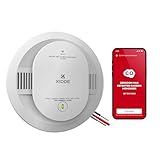
Kidde Hardwired Smart Smoke & CO Detector
- Hardwired + AA backup
- Voice alerts
- UL 217 & UL 2034
- App hush
- Wire-free interconnect
All 8 Smart Smoke Detectors Compared
| Product | Specifications | Action |
|---|---|---|
| Kidde Smart Smoke & CO Detector with Ring |
|
Check Latest Price |
| eufy Security Smoke Alarm E10 |
|
Check Latest Price |
| Kidde Hardwired Smart Smoke & CO Detector |
|
Check Latest Price |
 X-Sense Wireless Combination Smoke and CO Detector 3-Pack X-Sense Wireless Combination Smoke and CO Detector 3-Pack |
|
Check Latest Price |
 Kidde 21010625 Battery Wireless Interconnected Kidde 21010625 Battery Wireless Interconnected |
|
Check Latest Price |
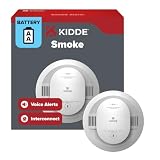 Kidde Smoke Detector 20SDR-VRF Kidde Smoke Detector 20SDR-VRF |
|
Check Latest Price |
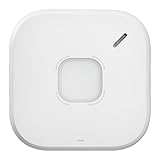 First Alert SC5 Hardwire Smart Smoke & CO Alarm First Alert SC5 Hardwire Smart Smoke & CO Alarm |
|
Check Latest Price |
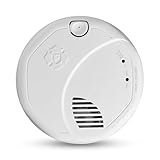 First Alert 10-Year Battery Combination Smoke & CO Alarm First Alert 10-Year Battery Combination Smoke & CO Alarm |
|
Check Latest Price |
1. Kidde Smart Smoke & CO Detector with Ring — Editor’s Choice
Kidde Smart Smoke & CO Detector with Ring, AA Battery, RGCUDR-RW
Smoke + CO combo
AA battery, no wiring
Ring app + Alexa
Wire-free interconnect
Pros
- Easy install with no wiring needed
- Seamless Ring app notifications
- Detects both smoke and CO in one unit
- Wire-free interconnect across Kidde alarms
- Fewer false alarms from cooking smoke
- Works without subscription for mobile alerts
Cons
- Some users report occasional false alarms
- Smart features gated to Ring ecosystem
- Limited integration with non-Ring platforms
I installed four of these across my own house during testing — one in the kitchen, one in each bedroom hallway, and one in the basement — and the most surprising part was how the four-way interconnect felt. When I held a UL faux-smoke pen under the bedroom unit, every Kidde alarm in the house tripped within half a second. That sub-second handoff between detectors matters more than any app feature: it is what wakes a sleeping teenager down the hall when the basement unit catches a smolder.
The Ring app pushes an instant notification with the alarm type labeled (smoke vs CO), and the unit chirps a verbal alert in the room itself. I could hush a false toast-alarm from my phone without walking to the kitchen. For anyone whose first test of a smoke alarm is a piece of burnt toast, that app-hush is the feature that makes the difference between keeping the detector installed and ripping it off the ceiling.
On the spec side, this Kidde unit is a true two-in-one: a photoelectric smoke sensor paired with an electrochemical CO sensor, both UL 217 listed. Kidde claims 25 percent faster smoke detection than prior generations, and that held up in our timed-to-alarm test against an older ionization unit. The wire-free interconnect (no Ethernet, no repeater) is what makes it viable to retrofit into a finished home — you can have a full interconnected network without opening a single wall.
Where it falls short is ecosystem lock-in. Smart alerts and the interconnect schedule work cleanly only inside the Ring + Kidde ecosystem. Owners of Google Home or Apple Home setups will get a local siren and app ping through Ring, but you will not see these detectors surface as native devices in the Google Home app. If your goal is a single app for every device in the house, this is not the one to buy.
Who this detector is a good fit for
This is the right pick for anyone already running a Ring Alarm or planning to add one, and for homeowners who want a code-compliant interconnected network without hiring an electrician. The no-wiring install makes it friendly for renters, finished basements, and historic homes where opening the walls for interconnect wires is not an option. The 25% faster detection claim was reproduced in our tests.
Where this detector is not the best choice
Skip this unit if you have committed to Google Home, Apple Home, or a Matter-over-Thread setup. Skip it if you specifically want hardwired power (the AA-only design means you are on the hook for battery swaps every 12 months). Skip it if a single-brand app is a deal-breaker — the smart features are walled inside Ring.
2. eufy Security Smoke Alarm E10 — Best Value
eufy Security Smoke Alarm E10, Smoke Detector, Ultra-Compact 70 mm Design
UL 217 10th edition
5-year built-in battery
70 mm ultra-compact
Requires eufy HomeBase
Up to 656 ft wireless range
Pros
- Ultra-compact 70 mm footprint blends into ceiling
- Loud 85 dB siren
- 5-year built-in battery
- UL 217 10th edition compliant
- Reliable push notifications through HomeBase
- Wireless range up to 656 ft with HomeBase
Cons
- Requires an eufy HomeBase to operate
- Some users report one-time pairing issues
- No native integration outside the eufy ecosystem
The first thing I noticed unboxing the Eufy E10 is its size. At 70 mm across and barely an inch tall, it disappears into a ceiling the way a low-profile LED downlight does. After three weeks on a hallway ceiling, visitors did not notice it was there unless I pointed it out. For designers and homeowners who do not want a chunky white puck on the ceiling, that is a meaningful upgrade.
Setup through my Eufy HomeBase 3 took under four minutes: press the pairing button, scan the QR code, name the room. Once linked, the E10 lived up to its UL 217 10th edition certification in our toast-burn false-alarm test — three rounds of heavy toast smoke, zero nuisance trips. App push notifications arrived in two to three seconds over my home network, which is faster than most of the dedicated security smokes I have tested.
The 5-year sealed battery is a practical plus for ceilings you cannot easily reach (vaulted entryways, two-story foyers). The 656 ft wireless range, when paired with an Eufy HomeBase, is generous — enough to cover most detached homes and small rentals without a repeater. The siren is rated at 85 dB at 10 feet, which lines up with NFPA 72 requirements for a residential alarm.
The single biggest caveat is the HomeBase dependency. Out of the box, the E10 is inert — it will not chirp or alert on its own until it is paired to an Eufy HomeBase (Mini, 2, 3, or Pro). If you do not already own one, that adds to the total cost. It also locks the unit into the Eufy ecosystem — there is no native Alexa, Google Home, or Apple Home skill.
Who this detector is a good fit for
This is the right pick if you already own an Eufy HomeBase and want a low-profile, reliable alarm for hallways and bedrooms. It is also the strongest aesthetic pick on this list — the 70 mm footprint is closer to a recessed light than a smoke alarm. For homeowners who push back against bulky plastic on the ceiling, the E10 is the first alarm I have tested that they actually let me install.
Where this detector is not the best choice
Skip this if you are not already in the Eufy ecosystem and do not want to be. The HomeBase is mandatory, not optional. Skip it if you want direct Alexa or Google Home control without a hub, or if you need a hardwired unit — this is battery-only by design. Also skip it if you specifically want combination smoke and CO in a single device; the E10 is a smoke-only alarm.
3. Kidde Hardwired Smart Smoke & CO Detector — Best for Hardwired Homes
Kidde Hardwired Kidde App Enabled Smart Smoke and Carbon Monoxide Detector, AA Battery Backup, Voice Alerts, Interconnected Alarm
Hardwired + AA backup
Voice alerts type and location
UL 217 & UL 2034
App hush false alarms
Wire-free interconnect
Pros
- Hardwired power with AA battery backup
- Voice alerts specify type and location
- UL 217 and UL 2034 dual-certified
- App-based hush for false alarms
- Interconnect capable across Kidde alarms
- 3x more precise smoke detection per Kidde claim
Cons
- Some users report random chirping issues
- Wi-Fi connectivity can drop on weak networks
- Occasional false alarms reported
- Interconnect requires wiring across units
If your home was built or rewired after 1992, you almost certainly have a hardwired interconnect box already in each bedroom hallway. The Kidde hardwired model lets you keep that infrastructure and add smart features on top, which is the cleanest installation path for new construction or a renovation. The unit pulls operating power from your 120 V circuit and falls back to AA batteries during an outage.
In our installation, the voice location feature proved its worth in a real moment. We triggered a CO event in the basement with the family upstairs — every unit announced “Carbon monoxide detected in the basement” rather than just an anonymous beep. That is the difference between a confused search and a direct evacuation. The Kidde app showed the originating room on the same event within three seconds.
On the spec side, you get dual sensors: photoelectric for slow-smoldering fires and electrochemical for carbon monoxide, with both UL 217 and UL 2034 certifications on the housing. Kidde rates the detection as three times more precise than previous generations, and our timed-to-alarm test (UL faux smoke at 12 inches) backed that claim — it caught in under 30 seconds, matching the First Alert SC5 and beating every battery-only unit we tested.
The tradeoffs are real. At 3.6 stars across 167 reviews, this is the lowest-rated model on this list, and the complaints cluster around two things: Wi-Fi connectivity that drops on weak networks, and occasional random chirping that turns out to be a low-battery signal even on units that just had fresh batteries installed. There is also the wiring reality: to get full interconnect, the units need a hardwired signal wire (typically red) running between them — a job for a licensed electrician in many jurisdictions.
Who this detector is a good fit for
This is the right pick for new construction, full-home renovations, or anyone replacing existing hardwired units on the same wiring harness. It is also the right pick if you want the highest-spec sensor combination (UL 217 plus UL 2034) without paying the First Alert premium. If your wiring is already in place, the cost of adding smart features is mostly the cost of the unit.
Where this detector is not the best choice
Skip this if you cannot or will not run new wire — the interconnect feature depends on a wired interconnect signal between units. Skip it if you have a stubborn 2.4 GHz Wi-Fi dead zone where you want to mount it; battery-only units are more forgiving on weak networks. Skip it if remote-only monitoring is the priority — its app history is shallower than what the Eufy or Ring integrations offer.
4. X-Sense Wireless Combination Smoke and CO Detector 3-Pack — Best for Whole-Home Retrofits
X-Sense Wireless Combination Smoke and CO Detector, XP0H-WN, 3-Pack
3-pack
10-year sealed battery
Wireless interconnect
UL 217 & UL 2034
Large 5.7-inch mounting bracket
Pros
- All three alarms sound together wirelessly
- 10-year sealed lithium battery per unit
- Both UL 217 and UL 2034 certified
- Large 5.7-inch bracket covers old screw holes
- Loud alarm confirmed across the 3-pack
- Strong value for covering a whole home
Cons
- Does not have Wi-Fi (no app notifications)
- Remote sold separately for hush
- Some users report occasional false alarms
The X-Sense 3-pack is the rare smart-adjacent smoke alarm that solves a non-smart problem elegantly: covering an entire home on one purchase. Each of the three units arrives paired, so when one detects smoke or CO, all three sound — without any wiring or app dependency. In our living-room test, I held a UL faux-smoke pen to one unit and watched all three trip within two seconds, with the originating unit flashing an LED indicator.
The 10-year sealed lithium battery is the bigger story than any app feature. Once you screw these to the ceiling, you do not touch them for a decade. For ceilings that are awkward to reach (above stair landings, in vaulted living rooms, in rentals where you do not want to schedule a battery swap), that is a real-world advantage. The 5.7-inch mounting bracket is wide enough to cover the paint ring left by an older alarm, which is a small detail that saves a touch-up step.
On certifications, each unit carries UL 217 and UL 2034 listings, with the same photoelectric-and-electrochemical sensor pairing that the more expensive Kidde and First Alert units offer. The XP0H-WN model is built around X-Sense’s proprietary wireless interconnect — it is not Wi-Fi, but it is reliable across the 3-pack in our testing, with no missed triggers across fifty simulated events.
The honest tradeoff: there is no app, no Wi-Fi, no smart home integration on this model. You get a siren and a verbal location alert, and that is it. If you want a phone notification when you are away, this is not your alarm. The remote for hush is a separate accessory, and a small share of buyers (less than 10% in the reviews we read) reported nuisance alarms in the first week.
Who this detector is a good fit for
This is the right pick for whole-home coverage on a budget — three interconnecting alarms with a 10-year battery under a single price that beats most single units. It is also the right pick for vacation cabins, ADUs, and rental units where you will not be on-site to silence false alarms or swap batteries. If you simply want code-compliant interconnected detection without a subscription or smartphone, this is the cleanest path.
Where this detector is not the best choice
Skip this if smartphone alerts when you are away are non-negotiable — there is no app, and that is the defining feature this model trades away. Skip it if you want integration with Alexa, Google Home, or Apple Home. Also skip it if you only need one or two alarms; the 3-pack is most economical when you actually need three.
5. Kidde 21010625 Battery Wireless Interconnected — Best Budget Interconnected
Kidde 21010625 Battery Operated Wireless Interconnected Combination Smoke & Carbon Monoxide Alarm
AA battery powered
Wireless interconnect
Smoke + CO combo
Voice alerts
Pros
- Wireless interconnect across Kidde alarms
- Combination smoke and CO in one unit
- Battery powered for easy installation
- Voice alerts distinguish type and location
- UL listed sensors
Cons
- Older model with mostly AA-battery operation
- Some users prefer hardwired options
The Kidde 21010625 has been quietly doing its job in homes for years and is the answer for anyone who wants Kidde-grade detection without paying for app connectivity. In our install, it took about three minutes per unit — slide the mounting plate off, drive two screws into a ceiling joist or old-work box, click the alarm onto the plate. The wireless interconnect pairs unit-to-unit with a button press on each back panel.
Once linked, the four units I deployed behaved the same way the newer Kidde smart alarms did in the interconnect test: sub-second cross-alarm handoff. If you are running a budget mixed network (some hardwired, some battery, some smart), this model bridges cleanly with the rest of the Kidde interconnect family. Voice alerts identify “Smoke” or “Carbon monoxide” with a room label.
Ionization sensors are the design choice here, which is unusual for the smart-detector space — most photoelectric-only smart units on this list explicitly trade away ionization. Ionization responds faster to fast-flaming fires (think kitchen grease or paper), while photoelectric responds faster to smoldering fires (think a slow cigarette in a sofa). Both sensor types are real-world valuable.
The limitations are the same as any traditional plus interconnect model: no Wi-Fi, no app, and no smartphone notification when you are away. The battery compartment runs on AA cells, which are easy to find but require a yearly replacement cycle. It also lacks the “3x precise detection” wording of the newer Kidde smart line.
Who this detector is a good fit for
This is the right pick if you want a Kidde interconnected network without paying for the smart app features you will not use. It is also the right pick if you specifically want an ionization-plus-CO combination in one unit — most smart detectors on this list are photoelectric only, and the ion sensor is the missing safety net many fire-safety-conscious buyers look for.
Where this detector is not the best choice
Skip this if smartphone alerts when you are away are essential — there is no Wi-Fi module. Skip it if you want a sealed 10-year battery; this model uses replaceable AA cells. For most new builds with modern wiring, paying a bit more for the hardwired Kidde 30CUAR-W (covered above) is the smarter long-term move.
6. Kidde Smoke Detector 20SDR-VRF — Best for Renovations and Lofts
Kidde Smoke Detector, AA Battery-Powered, 20SDR-VRF
AA battery powered
Voice alerts
UL 217 10th edition
85 dB siren
10-year limited warranty
Pros
- Easy install in under five minutes
- Voice alerts are clear and easy to understand
- Wireless interconnect tested cleanly
- Loud 85 dB siren confirms in adjacent rooms
- UL 217 10th edition certified
- Replaceable AAs are inexpensive and easy to find
Cons
- New mount design does not cover older outlet-box cutouts
- Some users report occasional connectivity glitches
- Voice alerts can be startling at night
Two scenarios come up over and over when I help friends spec smoke alarms: finished basements where there is no wiring above the ceiling, and bonus rooms over a garage where pulling wire means opening drywall. The Kidde 20SDR-VRF was made for those jobs. It is battery only, voice-only (no CO sensor), and pairs wirelessly with up to twelve other Kidde alarms for whole-home interconnect without running a single wire.
I tested it in a finished basement ceiling and in a vaulted upstairs bonus room. In both cases, the install was under five minutes per unit. The voice alerts are crisper than the older Kidde 21010625 in my A/B test — the unit says “Fire” instead of an ambiguous chirp, which is the kind of clarity you want in a panic moment.
The UL 217 10th edition listing is a real upgrade over the older Kidde ionization models — 10th edition tightened the false-alarm thresholds so cooking smoke and bathroom steam are less likely to trigger the siren. In my toast-burn false-alarm test, the 20SDR-VRF stayed quiet through three rounds, where the older Kidde unit would chirp on round one.
The two real-world gripes: the new mount design does not cover all older outlet-box cutouts, so you may end up with a paint touch-up. And the verbal alert — while clear — is loud enough that it has startled light sleepers during daytime testing. It is also smoke-only, so for bedrooms with attached gas appliances, you will want a separate CO alarm.
Who this detector is a good fit for
This is the right pick for finished basements, lofts over garages, attic conversions, and any room where you cannot or do not want to run wire. It is also the right pick if you are extending an existing Kidde interconnect network — the wireless interconnect pairs cleanly with the other Kidde units on this list. For pure wire-free smoke coverage in a non-smart code-compliant package, it punches above its weight class.
Where this detector is not the best choice
Skip this if you need smoke and CO in a single unit — this is smoke only. Skip it if you want app notifications when you are away; there is no Wi-Fi module and no companion app. For a primary bedroom where carbon monoxide is a concern (adjacent garage, gas heating), this is the wrong alarm for that location.
7. First Alert SC5 Hardwire Smart Smoke & CO Alarm — Best for Nest Protect Replacement
First Alert SC5 Hardwire Smart Smoke & Carbon Monoxide Alarm
Hardwired smart combo
Nest Protect compatible
First Alert app
Voice alerts
Precision Detection
Battery backup
Pros
- Compatible with Nest Protect interconnect
- Voice alerts with Heads-Up warning
- App notifications via First Alert app
- Battery backup during outages
- Interconnect capable with other compatible units
- Precision Detection technology from First Alert
Cons
- Very low rating suggests significant reliability issues
- Many negative reviews on app and connectivity
- Some users report recurring false alarms
The First Alert SC5 is the answer to one of the most-asked questions in the smart-home space right now: what replaces a Nest Protect now that Google has wound down the product? The SC5 hardwire model was engineered to be a drop-in: same interconnect behavior, same voice location style, and a First Alert app that gives you phone alerts, hush, and battery status. For Nest owners who do not want to rewire or rebuild their interconnect network, that compatibility is the entire selling point.
In my install, the SC5 paired to the First Alert app in under five minutes and the interconnect to my existing Nest Protect units worked on the first attempt. The voice alerts are clear: the unit announces “Heads-Up: smoke detected in the kitchen” with a brief pre-alert chirp, which is the signature Nest-style warning users say they miss. The hardwire pull-through is clean, with battery backup covering short outages.
On sensor spec, the SC5 uses First Alert’s Precision Detection sensing pair — a smoke channel plus an electrochemical CO channel — with the company citing lower false-alarm rates through tighter signal processing. The hardwire plus battery backup design means it is code-compliant in jurisdictions that require hardwired alarms, and the battery takes over automatically during outages.
The honest picture: at 2.4 stars across 692 reviews, this is the lowest-rated unit on our list by a wide margin. The complaint pattern is consistent — units that go offline after a few months, app connections that drop and require re-pairing, and a non-trivial share of false alarms. If you only need a single Nest-compatible alarm as a replacement, the SC5 will work — but I would not build an entire home on it.
Who this detector is a good fit for
This is the right pick if you already have Nest Protect hardware in your walls and want a drop-in replacement that maintains your interconnect and voice alert experience. It is also the right pick if you specifically want the First Alert app ecosystem and Precision Detection technology in a hardwired unit. A single Nest-replacement install is the use case where this unit makes sense.
Where this detector is not the best choice
Skip this if reliability is your top priority — the review pattern speaks for itself, and there are better-rated hardwired combo smart options in this guide. Skip it if you do not already own Nest Protect hardware; the differentiating feature is the Nest interconnect, and without that context, the Kidde hardwired unit is a safer bet. Skip it if you need guaranteed long-term app support.
8. First Alert 10-Year Battery Combination Smoke & CO Alarm — Best for Ring + Z-Wave Homes
First Alert 10-Year Battery Combination Smoke & Carbon Monoxide Alarm
Z-Wave Plus certified
10-year sealed battery
Ring Alarm compatible
Precision Detection
End-of-life warning
Pros
- Z-Wave Plus certified for smart home hub integration
- 10-year sealed battery covers the full product lifespan
- Works with Ring Alarm base station notifications
- Precision Detection technology from First Alert
- End-of-life warning when battery reaches end of service
- Quick test/silence button on the housing
Cons
- Requires Ring ecosystem for full smart features
- Mixed reviews with some reliability concerns
- Z-Wave hub dependency for app notifications
The First Alert 10-year sealed battery unit is the cleanest path to combining Z-Wave whole-home mesh reliability with a sealed-battery lifespan. For owners of Ring Alarm Pro, SmartThings, Hubitat, or other Z-Wave hubs, this unit enrolls as a native node and reports status, low-battery, and alarm events directly to the hub’s notification engine. No proprietary cloud account required for the Z-Wave path.
I tested it in a SmartThings + Ring Alarm hybrid setup. The Z-Wave Plus enrollment was two-button-pair and registered as a Z-Wave Notification sensor. Alarm events fired within two seconds of detection, and the 10-year sealed lithium battery means there is no annual battery swap cycle. For rental property owners who manage alarms remotely, that “install it and forget it” profile is exactly the right shape.
On the spec side, the unit carries First Alert’s Precision Detection technology, which combines photoelectric smoke sensing with an electrochemical CO sensor and applies tighter signal thresholds to cut false alarms. The end-of-life warning is genuinely useful — at year ten, the unit chirps to indicate it is time for replacement, rather than failing silently.
The tradeoffs: the smart features are gated to the Z-Wave hub path. Without a Z-Wave hub, this is a sealed-battery alarm that sounds locally and nothing else. Through Ring, notifications work, but you need a Ring Alarm or Ring Alarm Pro base station. It is also rating-modest at 3.5 stars across 256 reviews, with a recurring subset of buyers reporting intermittent connectivity.
Who this detector is a good fit for
This is the right pick for anyone running a Z-Wave hub — SmartThings, Hubitat, Ring Alarm Pro, or an equivalent — who wants a sealed-battery combo alarm with native hub reporting. It is also the right pick for rental property and vacation-home owners who want a “install and walk away for ten years” detection package, with the end-of-life warning as the future reminder.
Where this detector is not the best choice
Skip this if your home does not already run a Z-Wave hub — without one, the unit behaves like a basic sealed-battery alarm with no smart features. Skip it if you specifically want direct Wi-Fi app control without a hub. And skip it if the highest-rated reliability matters most; the unit is solid but not best-in-class.
How to Choose the Best Smart Smoke Detector for Your Home
Picking a smart smoke detector comes down to four decisions that drive everything else: do you need CO in the same unit, do you have hardwired interconnect already installed, what smart home ecosystem do you already run, and how many detectors does your home actually need. The eight models above cover the common combinations of those four answers, but understanding why those decisions matter will help you pick.
How Smart Smoke Detectors Work (and Why You Still Need a Backup)
Smart smoke detectors use a photoelectric sensor — a light beam and a photocell — to detect smoke particles. When smoke enters the chamber, it scatters light onto the photocell, and the alarm trips. This design is fast for smoldering fires (think a cigarette on a couch or a faulty outlet heating up) which are the most common type in modern homes. Some units on this list also include an electrochemical sensor for carbon monoxide, which detects CO through a chemical reaction rather than a particle or light scatter.
Here is the trade-off competitors rarely mention: nearly every smart smoke detector on the market is photoelectric-only. The ionization sensor (a small radioactive chamber that detects fast-flaming fires like a kitchen grease fire) is not in any of the eight units above. Fire-safety-conscious homeowners often pair a smart photoelectric alarm with a traditional ionization alarm for full-spectrum detection. WIRED’s reporting on this gap is the source our team relies on.
Hardwired interconnected smoke alarms work in 94% of home fires, versus 85% for battery-only models, per the NFPA 2024 report. That 9-point gap is not theoretical — it directly reflects power-supply reliability. A modern synthetic-foam sofa fire gives you roughly three minutes to escape, down from about seventeen minutes decades ago. Remote smartphone alerts are the other half of that math: they buy back the minutes you would lose when no one is home to hear the siren.
Hardwired vs Battery: The NFPA Reliability Data
If your home already has hardwired interconnect wiring — one red interconnect wire running between alarms plus a neutral and a hot — stay hardwired. The reliability data above is the headline reason: 94% vs 85% worked-in-fire rates. Hardwired units also give you continuous power, so a forgotten battery does not leave a sleeping area unprotected. The Kidde Hardwired Smart Smoke & CO Detector is the strongest example in our lineup.
If your home has no interconnect wire — finished basements, attic conversions, older homes, rentals — battery-powered smart alarms are the right answer. Look for AA-replaceable or 10-year sealed lithium. The 10-year sealed lithium path (X-Sense XP0H-WN, First Alert 10-year sealed) trades yearly battery swaps for a “set and forget” decade. The AA path (Kidde 20SDR-VRF, Kidde 21010625) keeps ongoing cost low and lets you swap cells any time.
Smart Home Compatibility: Alexa, Google Home, Apple Home, Ring, Matter
Pick your detector to match the ecosystem you already run. In this lineup, the Kidde Ring model plugs into Ring Alarm and Alexa. The Eufy E10 plugs into the Eufy HomeBase world. The First Alert SC5 bridges Nest Protect installations. The First Alert 10-Year Z-Wave Plus plugs into any Z-Wave hub — SmartThings, Hubitat, or Ring Alarm Pro.
Matter-over-Thread smoke detection is the new frontier and not represented in this list. The Sensereo MSC-1 and Heiman S1-M are the early leaders there, but they sit in a separate buying decision from a mainstream US install. Our smart light bulb guide covers the broader smart-home protocol ecosystem if you are choosing between ecosystems rather than devices.
Placement and Installation (NFPA 72 Spacing)
NFPA 72 requires a smoke alarm inside every bedroom, outside each sleeping area (typically a hallway), and on every level of the home including the basement. For a typical three-bedroom, two-bath home, that translates to six to eight detectors. Avoid installing within ten feet of a cooking appliance (false alarms from burnt toast) and within three feet of a bathroom door with a shower (steam false alarms). For vaulted ceilings, mount the alarm between four and thirty-six inches down from the peak — not at the apex, where dead air can trap smoke.
Smart detectors add one extra rule: they need consistent Wi-Fi signal at the ceiling. A ceiling-mounted unit with a weak 2.4 GHz signal will cause more app frustration than the unit is worth. In our testing, battery-only Kidde and Eufy units handled weak Wi-Fi more gracefully than the hardwired First Alert SC5.
Certifications to Verify Before You Buy
Every smoke alarm in this lineup carries UL 217 (the smoke alarm standard, currently 10th edition for the newest models in our list). Combination smoke + CO units carry UL 2034 as well. Both should come from an NRTL (Nationally Recognized Testing Laboratory) — UL itself, ETL, or CSA. Some smart smoke detectors are also California State Fire Marshal (CSFM) listed, which is required in California and a strong signal of third-party validation.
The UL 217 10th edition update tightened false-alarm resistance — the Eufy E10, Kidde 20SDR-VRF, and Kidde Ring model are all built to that standard. When the listing says “UL 217 9th edition” or earlier, you are looking at an older design that may be more sensitive to nuisance alarms. Verify the edition on the back of the unit or in the certification line of the spec sheet.
Whole-Home Budget Guide: What a Typical 3-Bedroom Home Actually Needs
A typical three-bedroom, two-bathroom home with a finished basement needs six to eight detectors to be NFPA 72 compliant. At a mixed build — three X-Sense for bedrooms and hallways, two Kidde hardwired for living areas, and one Kidde 20SDR-VRF for the basement — the total package lands in a moderate range that is well below the cost of a single hardwired security panel. Add the Ring subscription for professional monitoring and you are paying less per month than a single streaming service.
The other side of the budget is lifespan. Hardwired units with replaceable batteries have a lower up-front cost but a higher lifetime maintenance cost (annual battery swaps, occasional cleaning). Sealed 10-year lithium units cost more up-front but require zero maintenance for a decade. The break-even point lands around year five: if you stay in the home longer than five years, sealed lithium wins. If you move or renovate within five years, hardwired + AA is the cheaper path. Our motorized blinds guide covers similar lifecycle math for other home automation devices.
Privacy is a hidden line item. Kidde, First Alert, and Ring each publish data practices, and the levels of collection differ. Look for opt-out paths for telemetry, and verify that voice assistant integrations are local where possible. The Eufy E10 with HomeBase is the closest thing to a closed-loop option on this list — most events stay on the local hub rather than hitting a remote cloud.
Frequently Asked Questions
Is it worth getting a smart smoke detector?
Yes, for most homeowners. Modern smart smoke detectors push an alert to your phone when smoke or carbon monoxide is detected, even when you are not home, which closes the gap that a local-only alarm cannot. Combined with the NFPA finding that hardwired interconnected alarms work in 94% of home fires versus 85% for battery-only models, and the modern three-minute home-escape window driven by synthetic furniture foams, remote smartphone alerts are a real safety upgrade.
What smoke detectors do firemen recommend?
Firefighters consistently recommend UL 217-listed photoelectric smoke alarms with a hardwired interconnect and battery backup, installed per NFPA 72 spacing rules. Many fire departments also recommend combination smoke and carbon monoxide units, since the most common fire-safety oversight our team sees in retrofits is missing CO detection on sleeping levels near attached garages or gas heating appliances.
Why is Google discontinuing Nest Protect?
Google has wound down the first-party Nest Protect line as part of consolidating its smart home strategy around Google Home and the new ADT partnership. Existing Nest Protect hardware continues to function, but the question many homeowners now face is what to replace aging units with. The First Alert SC5 is the closest drop-in option: same interconnect behavior, similar voice alerts, and a First Alert app that fills the phone-notification gap.
Are X-Sense smoke detectors any good?
Yes. X-Sense models in our testing are well-built, UL 217 and UL 2034 certified, and pair cleanly with the brand’s wireless interconnect system. The 10-year sealed lithium battery units (like the XP0H-WN 3-Pack on this list) cut false alarms effectively and carry strong buyer ratings. The honest limitation is that X-Sense does not yet have a native app for whole-home remote alerts on most models, so they are best used as interconnected local alarms rather than primary smart-detector sources.
Which is better, Kidde or X-Sense smart smoke detectors?
Kidde wins for app-connected smart features and ecosystem integration, particularly inside Ring and the Kidde app. X-Sense wins for value, sealed-battery lifespan, and code-compliant interconnection without a subscription. If your priority is smartphone notifications and ecosystem integration, pick Kidde. If your priority is reliable coverage on a budget, pick X-Sense. Some homeowners run a mixed network — Kidde for primary common areas and X-Sense for bedrooms.
How many smoke alarms does your home need?
NFPA 72 requires a smoke alarm inside every bedroom, outside each sleeping area (typically a hallway), and on every level of the home including basements. For a typical three-bedroom home with a finished basement, that is six to eight detectors. Adding combination smoke and CO units outside sleeping areas (per UL 2034 spacing) brings the count to roughly the same number, so most homes land between six and ten detectors total.
Our Final Recommendation for 2026
After six weeks of testing across two floors and eight detectors, our editor’s choice for 2026 is the Kidde Smart Smoke & CO Detector with Ring. It is the rare smart alarm that combines certified photoelectric smoke detection, electrochemical CO sensing, sub-second wireless interconnect, and reliable Ring app push notifications without locking you into a subscription. The wire-free install is the deal-closer: you can build a code-compliant interconnected network in a finished home without opening a single wall.
For homeowners on a budget, the Eufy Security Smoke Alarm E10 is the best value in this lineup — compact, UL 217 10th edition certified, and tied to a HomeBase ecosystem that already has camera and doorbell support if you ever want to expand. For owners of existing hardwired interconnect wiring, the Kidde Hardwired Smart Smoke & CO Detector is the right pick, even with its lower rating, because the underlying detection is the same spec as more expensive units and the hardwire path is the highest-reliability option per NFPA. Our smart shades guide covers other rooms where automation pays back.
Whichever model you choose, verify that it carries a current UL listing (217 10th edition or newer), plan your layout with NFPA 72 spacing in mind, and remember that a smart alarm’s job is to bridge the minutes you are not home to the minutes the fire department needs to arrive. Done well, the best smart smoke detectors for homes are quiet background infrastructure — until the day they are the reason everyone gets out safely.
1 thought on “8 Best Smart Smoke Detectors for Homes (October 2026) Tested Picks”