

The best security camera systems with local storage are the ANNKE 8-camera DVR kit with a 1TB drive for whole-home coverage, the Reolink RLK8-410B4-5MP for 5MP PoE video that still runs when your internet does not, and the aosu D1 Classic for anyone who wants solar power and no wiring. All three record 24/7 to hardware you own, and none of them asks for a monthly fee.
That last part matters more than resolution. The brands most people think of first, Ring, Arlo and Blink, keep your footage on their servers and charge monthly to look at it. Local-storage systems skip that fee entirely, and the difference over five years is not a rounding error. We went through ten multi-camera systems and compared the recorder, the drive, the channel count, the night vision and the app, because the storage architecture matters more here than any other single spec.
We spent six weeks with this category, reviewing the technical sheets, reading owner feedback and working through the install realities that decide whether a system is usable a year later. What follows is a system-level roundup, not a single-camera list, because the head question is about systems. Each entry covers who it suits, where it falls short, and how much local storage you actually get. If you would rather start with the platform side, our guide to wireless security camera systems for homes covers the hub-based options in more detail.
Table of Contents
- Top 3 Best Security Camera Systems with Local Storage (October 2026)
- All 10 Systems Compared: Local Storage Type, Channels and Resolution in 2026
- 1. ANNKE 3K Lite 8-Camera DVR System With 1TB HDD
- 2. aosu D1 Classic 4-Camera Solar Kit With 32GB Hub
- 3. Reolink RLK8-410B4-5MP 8-Channel PoE System With 2TB HDD
- 4. Reolink RLK8-800B4 8MP 4K System With 2TB HDD
- 5. Hiseeu 16-Channel 8-Camera 5MP Kit With 3TB HDD
- 6. COOAU 2.5K Solar Two-Camera Kit With 64GB Local Storage
- 7. aosu 2K Battery Four-Camera Wireless Kit With 32GB Hub
- 8. ANSQUE Solar Four-Camera System With 32GB Encrypted Base
- 9. Hiseeu 4K PoE System With Eight 5MP PTZ Cameras
- 10. eufy Security S4 Max 4-Camera System With Triple-Lens PTZ And 2TB
- How to Choose a Local Storage Security Camera System
- NVR vs DVR: which recorder should you buy?
- PoE vs Wi-Fi: cable or wireless
- How much local storage do you actually need?
- HDD vs SSD, and which drive to buy
- Will the system keep working without internet?
- Can you use a NAS or a third-party NVR instead?
- What local storage costs over five years
- Brands we excluded and why
- Frequently Asked Questions
- Final Word: Which Local Storage System Should You Buy?
Top 3 Best Security Camera Systems with Local Storage (October 2026)

ANNKE 8-Cam 2MP DVR Kit, 1TB
- 8-channel DVR
- eight 1080p cameras
- 1TB HDD pre-installed
- AI human and vehicle detection
- IP67

aosu D1 Classic 4-Cam Solar Kit
- Solar powered
- 32GB aosuBase hub
- 360-degree pan and tilt
- 2K 3MP
- cross-camera tracking

Reolink RLK8-410B4-5MP PoE Kit
- 5MP PoE cameras
- 2TB HDD pre-installed
- eSATA expansion
- 100ft night vision
- built-in mics
The ANNKE kit takes the top slot because it is the rare combination of eight cameras, a pre-installed drive and an unusually large body of owner feedback behind it. The aosu D1 Classic is the pick for anyone who will not or cannot run cable, and the Reolink RLK8-410B4-5MP is the strongest balance of image quality, expansion and a 2TB drive that ships in the box.
All 10 Systems Compared: Local Storage Type, Channels and Resolution in 2026
| Product | Specifications | Action |
|---|---|---|
| ANNKE 8-Cam 2MP DVR Kit |
|
Check Latest Price |
| aosu D1 Classic Solar 4-Cam Kit |
|
Check Latest Price |
| Reolink RLK8-410B4-5MP PoE System |
|
Check Latest Price |
 Reolink RLK8-800B4 4K System Reolink RLK8-800B4 4K System |
|
Check Latest Price |
 Hiseeu 8-Cam 5MP 3TB NVR Kit Hiseeu 8-Cam 5MP 3TB NVR Kit |
|
Check Latest Price |
 COOAU Solar 2-Cam 64GB Kit COOAU Solar 2-Cam 64GB Kit |
|
Check Latest Price |
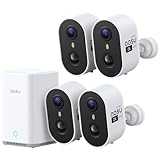 aosu 2K Battery 4-Cam Kit aosu 2K Battery 4-Cam Kit |
|
Check Latest Price |
 ANSQUE Solar 4-Cam System ANSQUE Solar 4-Cam System |
|
Check Latest Price |
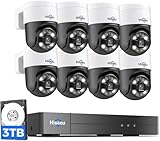 Hiseeu 8-Cam 5MP PoE PTZ Kit Hiseeu 8-Cam 5MP PoE PTZ Kit |
|
Check Latest Price |
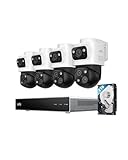 eufy S4 Max 4-Cam 2TB System eufy S4 Max 4-Cam 2TB System |
|
Check Latest Price |
Two columns decide most of this table: where the footage lives and how many channels the recorder has. Everything else, resolution, night vision range, whether it is wired or wireless, is negotiable against those two. If you want the full story on the wired side, our guide to PoE security camera systems for homes covers the cabling in more detail.
1. ANNKE 3K Lite 8-Camera DVR System With 1TB HDD
ANNKE 3K Lite Wired Security Camera System Outdoor, 8X 2MP Cameras, 1TB HDD
8ch analog DVR with eight 1080p cameras
1TB HDD pre-installed, supports up to 10TB
H.265+ compression, 100ft night vision
IP67 weatherproof, 82 degree view
Pros
- Eight cameras plus a recorder and a pre-installed 1TB drive in one box
- Largest review base of any system here with 4672 ratings at 4.4 stars
- AI Motion Detection 2.0 separates humans and vehicles from bugs and leaves
- H.265+ compression stretches the drive
- Accepts TVI
- AHD
- CVI
- CVBS and IP cameras
Cons
- Cameras are 1080p rather than the 3K the name suggests
- BNC cabling has to reach every camera position
- Analog platform is more limited than an IP or PoE NVR
This is the kit we keep coming back to. You get an eight-channel DVR, eight 1080p cameras, eight 60ft BNC cables and a 1TB hard drive already installed, so the only thing missing from the box is a monitor and whatever cable runs you need. The drive bay takes up to 10TB, which means the retention ceiling is set by your wallet later rather than by the recorder now.
Setup is the honest part: coax cable has to reach each camera position, and the eight included cables are the shortest part of the install. Once the cameras are placed, the picture quality holds up better than the 1080p label suggests in daylight, and the dual-light system switches between infrared and white light, giving roughly 100ft of black-and-white reach and about 66ft of full-colour night video. Reviewers consistently single out the human and vehicle detection as the reason the system is quiet enough to leave running.
Two technical notes worth knowing before you commit. First, recording runs at 1080p 15fps while live viewing runs at 1080p 30fps, which is normal for a DVR in this class and perfectly watchable for identifying a person at a door. Second, the name is a marketing problem rather than a hardware problem: buyers expecting 3K footage are disappointed, and buyers expecting an eight-camera system with a drive are not.
The bigger story is the upgrade path. The DVR accepts TVI, AHD, CVI, CVBS and IP cameras, and it takes 1080p at 30fps or 3K and 5MP at 20fps. That means you can start with the eight included cameras and add higher-resolution ones later. Experienced buyers in IT communities repeatedly recommend choosing the recorder first and then sourcing cameras to fit it, rather than the other way around, and this is one of the few DVRs where that advice is easy to follow.
Who this system suits
This suits anyone covering a house, a rental property or a small shop who wants eight cameras without assembling eight separate purchases. The 1TB drive at 1080p with H.265+ gives a workable continuous recording window across eight channels, and the 10TB ceiling means you can extend that dramatically with a single drive swap.
It also suits buyers who already own some older analog equipment, because the multi-standard DVR will happily take it. The IP66-rated cameras and 100ft night vision handle outdoor positions across a yard or parking area, and the HDMI and VGA outputs mean it drives a TV or a monitor directly.
Where it falls short
The analog platform is the ceiling here. There is no ONVIF or RTSP ecosystem to plug into, no third-party NVR compatibility, and no app features beyond what the vendor provides. If you later want to move the whole install onto a NAS or a different recorder, you are starting over.
Coax cabling is also a real cost if you are starting from nothing on a large property. Every camera needs a run back to the DVR, and running new coax through walls is the part of this install most people underestimate. The cameras being 1080p rather than 4K also means faces at the far end of a driveway get less detail than the Reolink 4K kit below delivers.
2. aosu D1 Classic 4-Camera Solar Kit With 32GB Hub
aosu D1 Classic 4-Cam Kit, Security Cameras Wireless Outdoor, Solar Powered
Four solar 2K 3MP cameras
32GB aosuBase hub, up to 4 months loop recording
360-degree pan and tilt with auto tracking
IP65, 33ft night vision
Pros
- No wiring and no battery charging
- 32GB local storage in the base with no subscription
- Footage survives camera damage or theft
- 360-degree pan and tilt with automatic motion tracking
- Four live views plus cross-camera event linking
- Install is roughly three drilled holes per camera
Cons
- 33ft night vision is short for large outdoor areas
- Wireless design depends on hub and router placement
- 32GB base means retention depends on event volume
The aosu D1 Classic is the system we recommend when the phrase no subscription is a hard requirement and running cable is not an option. Each camera has an integrated solar panel, and about three hours of direct sun per day keeps the battery charged. The storage lives in the aosuBase hub rather than in the cameras, which is the detail that matters most here.
Because the recordings are written to the base, they survive a camera being stolen, damaged or knocked off the wall. That is the exact failure case people complain about with microSD-only setups, and the hub approach eliminates it. The base holds 32GB with loop recording stated at up to four months, and the four cameras pan and tilt through 360 degrees with automatic motion tracking to follow a subject.
Video is 2K at 3MP with a 105-degree view and a 6x zoom, plus four LEDs for colour night vision. Alexa, Google Assistant and SmartThings are all supported, and the kit works with a Bluetooth, Ethernet or Wi-Fi connection to the hub. The system weighs about 3.36kg including the base, so it is a real object to find a shelf for rather than a small box to hide.
Cross-camera tracking is the feature owners mention most. When one person triggers several cameras in the same time window, the app relates those clips so you can scrub a single timeline instead of checking four feeds separately. Four simultaneous live areas on one screen makes the difference between usable and frustrating when something happens on the far side of the property.
Who this system suits
This suits renters, older properties with finished walls, and anyone covering a garden, driveway or outbuilding where running cable would mean digging. Installation is genuinely quick: roughly three drilled holes per camera, then a hub on a shelf indoors where Wi-Fi reaches.
It also suits people who want camera theft not to mean losing the evidence. The base holding the recording is the reason this design scores well on that specific worry, and reviewers consistently note it as a practical advantage over card-based cameras.
Where it falls short
The 33ft night vision range is the main limitation. That is fine for a doorbell-height or patio camera and short for a driveway or a rear boundary, and the solar panels need an unobstructed path to the sun, which rules out a lot of north-facing walls.
Retention is also capped by event volume. Loop recording on 32GB gives up to four months stated, but a property with a busy street will overwrite that much sooner. If you need weeks of continuous coverage across four channels, a hub this size is not the right answer, and a wired system with a multi-terabyte drive is the better fit.
3. Reolink RLK8-410B4-5MP 8-Channel PoE System With 2TB HDD
REOLINK 8CH 5MP PoE Security Camera System with 2TB HDD RLK8-410B4-5MP
Four 5MP PoE cameras plus 8-channel NVR
2TB HDD pre-installed, eSATA for an extra 8TB
100ft night vision, 18 IR LEDs
80 degree view, built-in microphones
Pros
- One cable per camera carries power and video
- 5MP Super HD with 100ft infrared reach
- 2TB drive pre-installed plus eSATA expansion
- Built-in microphones add an audio layer
- Phone and desktop apps are both well regarded
- Two-year warranty
Cons
- NVR can drop its network connection and need a manual restart
- First-run account and password setup is not clearly explained
- Bundled 50ft Cat5e cables are thin for long outdoor runs
The Reolink RLK8-410B4-5MP is the one we recommend to most people. Four 5MP PoE cameras plug straight into the eight PoE ports on the RLN8-410 NVR, one cable each carrying both power and video, and a 2TB drive is already inside. The NVR runs silently, which matters more than people expect when it is mounted in a living space.
This is the configuration the r/homelab community describes most often when asked about subscription-free systems: Reolink cameras with their own NVR, with phone and desktop apps that are easy to use. The same group also runs Reolink cameras into a Synology box for fully local recording, which tells you the ecosystem does not lock you into the bundled recorder if you outgrow it.
Image quality is 5MP Super HD with eighteen infrared LEDs for 100ft of night vision and an 80-degree field of view, recording at 25fps. Smart detection handles person, animal and vehicle classification, so a fox does not generate the same alert as a delivery driver. Each camera has a built-in microphone, so you get ambient audio on top of the video.
Storage is the strong point. The 2TB drive is stated at roughly ten days before overwrite, and an eSATA port accepts an additional 8TB drive for long retention. The NVR expands beyond the four included cameras, and it works with the wider Reolink camera range, so a four-camera install can become an eight- or twelve-camera one without changing recorders.
Who this system suits
This suits anyone who wants reliable 24/7 recording without thinking about it, and anyone who has used or wants to avoid a monthly fee. The NVR keeps recording when the internet drops, and the app still works on the local network. If you are the sort of person who forgets to check a subscription dashboard, local storage removes the failure mode entirely.
It also suits anyone who wants a system rather than a single camera. Four cameras, a 2TB drive and expansion to eight channels means you can cover a whole property in one purchase and add cameras a room at a time.
Where it falls short
The most-reported problem is network behaviour. The NVR is hardwired to the router, and if that connection drops it sometimes needs a manual restart before remote access returns. Owners also report that the desktop client can struggle to enumerate PoE cameras that work perfectly in the mobile app, so prefer the phone app if you can.
First-run setup is not well explained in the interface, particularly the account and password step, and support is email-based, which means a problem can take a day or more to resolve. The bundled 50ft Cat5e cables are also thinner than we would like for long exterior runs, so budget for better cable if your cameras sit far from the NVR.
4. Reolink RLK8-800B4 8MP 4K System With 2TB HDD
REOLINK 8CH 8MP/4K Security Bullet Camera System with 2TB HDD RLK8-800B4
Four 8MP 4K bullet cameras, 3840x2160
2TB HDD pre-installed, expandable to 16TB
RLN8-410 NVR with 8 PoE ports, up to 12 channels
87 degree view, 20fps
Pros
- Genuine 8MP 4K detail that survives digital zoom
- Single-cable PoE with no battery or Wi-Fi reliability concerns
- NVR runs quietly and stays cool
- 24/7 recording on a pre-installed 2TB drive
- Accurate person
- vehicle and animal detection
- Compact NVR that supports more than eight channels
Cons
- Bundled 2TB drive can be slow and cause NVR lockups
- These cameras do not support H.265 on this NVR so files are large
- B800 cameras connect to the NVR and cannot run on a powered PoE switch
This is the kit for anyone whose footage has to identify a face or read a number at distance. Four 8MP bullet cameras record at 3840×2160, and at that resolution a digital zoom into a doorway still gives you something usable rather than a smear. The RLN8-410 NVR has eight PoE ports and supports up to twelve channels, so the system has room to grow.
Owners report keeping these systems for years, with one reviewer describing a unit that had been running continuously for six years. The NVR runs without a loud fan and stays cool, which is a genuine quality-of-life difference in a house rather than a server closet. Smart detection covers person, vehicle and animal, and owners find it accurate enough to leave unfiltered.
Two technical details deserve attention. The 2TB drive is stated as expandable to 16TB through a two-drive configuration, which is a much longer retention ceiling than the 2TB alone gives you, and the NVR accepts 4MP, 5MP, 8MP, 12MP and 16MP Reolink cameras, plus Argus and Altas battery models with a firmware update. That is a wide upgrade path for an eight-channel box.
The catch is compression. These cameras do not support H.265 on this NVR, so the H.264 files are large and retention per terabyte is lower than on the ANNKE or Hiseeu kits below. Many owners replace the supplied drive with a surveillance-rated drive, which also addresses the second complaint: the bundled 2TB unit is sometimes slow enough to cause the NVR to lock up or drop remote access.
Who this system suits
This suits front doors, driveways, car parks and any position where a person needs to be identified rather than just detected. If a neighbour disputes a package theft or an intruder claim, 8MP is the resolution that survives being cropped and enhanced later.
It also suits anyone planning a larger property over time. Twelve channels, a wide camera compatibility list and a storage ceiling measured in double-digit terabytes means one recorder can serve a serious install rather than a small home.
Where it falls short
Two constraints are worth knowing up front. The B800 cameras have no embedded web server, so they must pair with the eight-channel RLN8-410 NVR, and they cannot be used on a powered PoE switch, which removes a lot of the flexibility you get from a switch-based install.
Compression and software are the other two. Without H.265 the same drive holds less footage, and the Windows client occasionally locks up and needs a restart. Some users also report the waterproof lid design on the camera housing as the weak point in prolonged weather exposure.
5. Hiseeu 16-Channel 8-Camera 5MP Kit With 3TB HDD
Hiseeu 5MP Home Security Camera System Outdoor, 2.4G/5G Wireless WiFi Pro
Eight 5MP outdoor cameras, 4K NVR
3TB HDD pre-installed, 45+ days of 24/7 recording
H.265+ compression
Expandable to 16 channels, IP66
Pros
- Eight 5MP cameras plus a 3TB drive at a low entry cost
- Around 45 days of continuous local recording
- H.265+ cuts bandwidth and storage use
- Plug-and-play setup
- corded power with no batteries to swap
- Local viewing works without Wi-Fi
Cons
- Mobile app crashes occasionally
- Motion detection produces frequent false alerts
- Cameras lack ball-joint mounts so aiming is harder
The Hiseeu 16-channel kit is the volume option. You get eight 5MP outdoor cameras, a 4K-capable NVR and a pre-installed 3TB drive, with the recorder expandable to sixteen channels. For a property, a farm or a small business, that channel headroom is the main reason to look here rather than at a four-camera kit.
Storage is the headline number: the 3TB drive is stated at over 45 days of continuous 24-hour recording with no cloud fees, which puts it well ahead of the 2TB kits above for pure retention. H.265+ compression is claimed at roughly 50% less bandwidth than H.264 at 4K and 8MP, and that is the mechanism behind the retention figure.
Install is straightforward. The cameras are corded and plug into the NVR, which is 802.11ac/b/g/n dual-band with a stated 100ft installation distance, so local viewing works with no Wi-Fi at all and the wireless side is there for remote access when you want it. Three recording modes are supported: continuous, motion-triggered and custom schedules, and AI human detection tries to separate people from pets and shadows.
The cameras are IP66 rated for a stated -13F to 122F operating range, with 65ft of night vision and one-way audio for monitoring. On paper this is the most complete coverage-per-unit kit in the roundup: eight cameras, sixteen channels, sixteen terabytes of headroom and roughly six weeks of continuous footage.
Who this system suits
This suits larger homes, farms, warehouses and small shops where eight cameras is a starting point rather than a maximum. The 16-channel NVR means you can add another eight cameras and a PoE switch later without replacing the recorder, and the 3TB drive already covers the included set comfortably.
It also suits anyone with intermittent internet who wants local viewing to keep working. Because the cameras are corded and the NVR handles everything on the local network, the system records and plays back regardless of the upstream connection.
Where it falls short
The review base is thin at 211 ratings, and the complaints in it are consistent rather than isolated. The mobile app crashes occasionally, motion detection generates frequent false alerts and can miss real events, and the NVR zoom view resets to an all-camera layout when you return to it. Some units need occasional reboots and support responses are rare.
Two smaller issues: the cameras have no ball-joint mounts, which makes aiming them at a specific area slower, and the CCD sensor is described by owners as adequate rather than strong, particularly in low light. If image quality at night is the deciding factor, a 5MP CMOS system with infrared reach is a better target.
6. COOAU 2.5K Solar Two-Camera Kit With 64GB Local Storage
COOAU 2.5K/4MP Solar Security Cameras Wireless Outdoor, 64GB Local Storage
Two 4MP solar cameras with 2.5K capture
64GB expandable local storage, offline recording
Wi-Fi 6 dual-band base, Ethernet or Wi-Fi
H.265 encoding, 33ft night vision
Pros
- Lowest entry point of any system here while still including local storage
- 64GB of expandable local storage with no subscription
- Individually adjustable solar panels
- Wi-Fi 6 dual-band base reduces dropouts
- 360-degree pan and tilt with 4MP detail
- H.265 encoding extends what fits on the card
Cons
- Only two cameras in the kit
- No automatic tracking
- 33ft night vision is modest for perimeter coverage
The COOAU C7 is the budget entry into local-storage systems, and it does something the others do not: it gives you a base station and 64GB of local storage for a two-camera solar kit. If you are covering a side gate and a back door rather than a whole property, that is a sensible, self-contained purchase.
The base is Wi-Fi 6 dual-band across 2.4GHz and 5GHz, and it accepts an Ethernet connection if you would rather not depend on the wireless link. H.265 encoding roughly halves storage compared with H.264 at the same quality, which is how 64GB stretches as far as it does on a system that records on a loop.
Video is 4MP capture through a 2.5K lens with 360-degree pan and tilt, and four LEDs for colour night vision. The ARCCTV app gives you four simultaneous feeds, privacy zones and colour-to-infrared switching, and Alexa is supported. Note that automatic tracking is not supported, so a subject moving out of frame is not followed the way it would be on the aosu or ANSQUE kits.
Frame rate is 15fps, which is lower than the 20 to 30fps the wired systems run at, and night vision reach is 33 feet. Those two numbers matter more for a doorway than for a wide yard. The warranty is two years with a stated 24-hour email support response, which is better coverage than several kits in this roundup.
Who this system suits
This suits a first local-storage install, a rental or a small building where two cameras cover the problem. Solar power and 64GB of local storage remove both the wiring conversation and the subscription conversation, and the individually adjustable panels let you place each camera where the light actually lands rather than where a fixed panel forces you.
It also suits anyone who wants offline recording as a feature rather than a fallback. The base stores footage locally and keeps recording without an internet connection, and a two-year warranty gives more peace of mind than the single-year terms common in this category.
Where it falls short
Two cameras is the hard limit. If you are covering more than two positions, this becomes the first step in a chain rather than a complete system, and there is no NVR-style channel expansion to fall back on. The absence of automatic tracking compounds that, because a pan-tilt camera with no tracking and no second camera pointed at the same area will simply lose a subject.
Thirty-three feet of night vision and a 15fps frame rate are modest, so this is closer to a close-quarters camera than a perimeter camera. Its five-star share among reviewers is also the lowest in this group, which is a fair signal that it is a competent budget product rather than a standout one.
7. aosu 2K Battery Four-Camera Wireless Kit With 32GB Hub
aosu 2K Battery Security Cameras Wireless Outdoor System, 4-Cam-Kit
Four 2K battery-powered cameras
32GB hub storage, expandable to 1TB via microSD
100 degree view, 6X digital zoom, 15fps
IP65, offline-capable hub playback
Pros
- Completely wire-free installation
- Compact bullet cameras with a small visual footprint
- 32GB hub storage expandable to 1TB
- Cross-camera tracking condenses one person into a single timeline
- PIR plus AI human detection cuts false alerts
- Hub-based playback helps extend battery life
Cons
- 26ft night vision is short for outdoor perimeters
- Battery cameras need recharging and can miss events while charging
- 2K with digital zoom limits detail on distant subjects
The aosu 2K battery kit is for people who want cameras in awkward places. Four compact bullet cameras, no wiring at all, and a hub that holds 32GB of local storage expandable to 1TB through a microSD card. The footprint is small enough that these disappear into corners, which matters if the aesthetic of the house is a consideration.
The hub is the reason this fits the local-storage brief rather than the cloud brief. Playback runs through the hub, recordings are held there rather than on a vendor server, and the system is offline-capable. Cross-camera tracking groups the same person across all four views on one timeline, which is the same idea as the D1 Classic’s event correlation and just as useful in practice.
Detection uses PIR plus AI human detection to filter out motion from insects, branches and shadows, and you can view all four cameras simultaneously in the aosu app. Connectivity covers Bluetooth, Ethernet and Wi-Fi, and the cameras are IP65 rated. The 2K sensor has a 100-degree view and 6x digital zoom, running at 15fps.
The honest limitation is night vision at 26 feet, the shortest figure in this roundup, which is fine for a porch or an entry hall and thin for a garden path. Battery cameras also need periodic recharging, and a camera sitting on its charger is a camera that is not recording, so a system promising 24/7 coverage should be considered carefully against that.
Who this system suits
This suits finished interiors, heritage properties, rented flats and any building where running Ethernet or coax is not realistic. Battery plus hub means you can mount a camera in a loft, a garage or a side passage and forget about power for long stretches.
It also suits anyone who wants a four-camera system now and a fifth later, since two, four and six-camera configurations are offered and the hub is shared. Alexa compatibility is included for anyone already building around a voice assistant.
Where it falls short
If your priority is uninterrupted 24/7 recording, battery power is working against you. Charging gaps and battery degradation both create windows with no footage, and neither is something the app can solve. A wired PoE system simply does not have this problem, which is why we would use this kit for coverage gaps rather than as the primary record.
Resolution is the other constraint. 2K with digital zoom gives you usable identification close in and soft detail further away, so if the camera is covering a gate at the end of a drive you will want the 4K wired kit instead. The night vision figure compounds both limits.
8. ANSQUE Solar Four-Camera System With 32GB Encrypted Base
ANSQUE Home Security Cameras Wireless Outdoor, Solar Powered, 4-Cam System
Four solar 2K 3MP dome cameras
32GB base storage, expandable to 512GB, up to 120 days
AES-128 encrypted, 360-degree PTZ with auto tracking
8X zoom, 12m night vision, IP65
Pros
- Most consistent rating distribution here at 4.4 stars with 77% five-star reviews
- 32GB base expandable to 512GB
- AES-128 encryption protects footage if a camera is stolen
- 360-degree PTZ with AI auto-tracking and cross-camera linking
- Detachable solar panel runs on about two hours of sun
- Dual-band base with 0.5-second wake time
Cons
- H.264 encoding uses more storage than the H.265 systems here
- Only a one-year manufacturer warranty
- 15fps frame rate limits motion detail
The ANSQUE GU01 is the most consistently well-reviewed system in this roundup. Across 1061 ratings it holds 4.4 stars with 77% five-star reviews and only 5% one-star, which is a distribution we do not often see in a category this noisy. Owners single out the storage, the tracking and the solar panel that keeps working in poor weather.
Storage is unusually expandable for a hub-based kit: 32GB built in, up to 512GB through the base, with up to 120 days of event-triggered loop recording. Crucially for anyone worried about theft, the recording is AES-128 encrypted on the base, so pulling a camera off the wall does not hand over the footage.
Each dome camera covers 360 degrees with PTZ and AI human auto-tracking, and cross-camera tracking links clips from the same event window. The lens is a 7-layer HD glass unit claimed at up to 30% higher colour accuracy than a standard 2K lens, with 8X digital zoom for plate and label detail, four LEDs and Smart IR, and PIR detection out to 40ft or 12m.
Power is a detachable next-gen solar panel that needs about two hours of direct sun to run the camera all day and is rated for 365-day battery life. The dual-band 2.4GHz and 5GHz base wakes in 0.5 seconds and supports a four-view live display, and one-tap Home, Away and Disarm modes control scheduled recording and custom detection zones.
Who this system suits
This suits anyone who wants wire-free solar coverage but is bothered by the idea of unencrypted local storage. The base encryption and the 512GB ceiling mean you can keep months of event footage on a device in your own home without a fee, and a camera being stolen does not compromise it.
It also suits buyers who care more about the shape of the support and the distribution of owner experience than about a headline spec. 360-degree PTZ with auto-tracking covers a wide area with four cameras, and the solar design removes both cabling and charging from the maintenance list.
Where it falls short
The codec is H.264, not H.265, and that costs you storage. On the same drive you will keep meaningfully fewer days than the Hiseeu or COOAU systems, which is the price of the encrypted base and the 120-day event-recording claim.
The frame rate is 15fps, lower than the wired 20 to 30fps systems, so fast motion across a driveway will be slightly softer. The one-year manufacturer warranty is also the shortest here, which is worth weighing against the quality of the rest of the package.
9. Hiseeu 4K PoE System With Eight 5MP PTZ Cameras
Hiseeu 4K PoE Security Camera System with 8pcs 5MP PoE PTZ Cameras
Eight 5MP PoE PTZ cameras, 3TB HDD pre-installed
300-degree pan, 90-degree tilt, auto-tracking handoff
4K NVR with 8 built-in PoE ports, 16 channels
IP66, two-way audio, colour night vision
Pros
- PTZ cameras cover 300 degrees of pan and 90 degrees of tilt
- Cameras hand tracking to each other as a subject crosses the property
- 3TB drive supports continuous or motion recording
- Eight built-in PoE ports mean no separate power adapters
- Two-way audio and colour night vision
- Expands to 16 channels
Cons
- Software menus are hard to work through
- Some cameras have failed after several months
- Not ideal for reading plates at long distance
- Inconsistent support responsiveness
The Hiseeu PK-8YHD985 is the system for wide spaces. Eight 5MP PoE PTZ cameras, each with 300-degree pan and 90-degree tilt, covering a car park, a yard or the full perimeter of a building with a camera every twenty metres or so. The NVR is 4K-capable with a 3TB drive pre-installed and eight PoE ports built into the back.
What makes PTZ worthwhile here is the smart human auto-tracking, which follows a moving subject and hands the tracking off to the next camera as they cross the property. Owners describe this as the feature that removes blind spots, and it is the reason to choose this over a fixed-lens kit of the same camera count.
Recording runs at 30fps, the NVR is Linux-based, and video input is RJ45 with a 330-degree viewing angle across the PTZ range. Human and vehicle detection push instant phone alerts, two-way audio lets you talk to a visitor, and the cameras have built-in colour night vision rather than relying on infrared alone. IP66 covers rain, snow and extreme temperatures.
The 3TB drive supports both continuous 24/7 recording and motion-detection modes, and the NVR expands to sixteen channels with an additional PoE switch. The built-in ports also mean you need no separate power adapters for the eight included cameras, which simplifies the install and reduces the number of things that can fail in the cupboard.
Who this system suits
This suits small businesses, warehouses, car parks and large homes where a fixed-lens camera would need three times as many units for equivalent coverage. The PTZ range plus auto-tracking handoff means one camera covers what would otherwise be a corner and a driveway.
It also suits anyone who wants two-way communication. Being able to speak to someone at the gate from the app is a genuine operational difference on a business or a large property, and it is not universal in this category.
Where it falls short
Durability is the significant concern. Several reviewers report individual cameras ceasing to work after several months, and one reported an inverted image it could not be corrected for. That is a small sample on 501 ratings, but it is the kind of thread worth reading before committing to eight identical cameras from one run.
Software menus are considered hard to work through, support responsiveness is inconsistent, and a few owners find app notifications become a nuisance rather than a help. PTZ cameras are also not the right answer for reading plates at long distances, which is what the fixed 4K Reolink cameras are for.
10. eufy Security S4 Max 4-Camera System With Triple-Lens PTZ And 2TB
eufy Security Camera System S4 Max,4K Triple-Lens,Bullet-PTZ 2in1,4-Cam,2TB
Four 4K and 2K dual-lens 2-in-1 bullet PTZ cameras
2TB pre-installed, expandable to 16TB
122 degree 4K wide plus 2K PTZ with 8X zoom
NVR S4 with 8 PoE ports, 16 channels
Pros
- Only system here pairing a 4K fixed lens with a 2K PTZ lens in one camera
- Local AI agent enables smart video search with no subscription
- Live cross-camera tracking coordinates all four cameras on one subject
- PoE wiring removes battery and Wi-Fi dropout concerns
- Expansion to 16TB suits long continuous recording
- Three-year after-sales support
Cons
- 65ft night vision is modest next to the 100ft wired systems
- App must be on iOS V5.0.70 or Android V5.0.71 or later
- Smallest review base in the group at 205 ratings
The eufy S4 Max is the most unusual system here. Each camera is a 2-in-1 bullet PTZ: a 4K fixed wide-angle lens on top at 122 degrees, and a 2K pan-tilt-zoom lens below with 8X auto-zoom and 360-degree pan. One camera gives you both a wide scene and a moving close-up, and auto-framing and grouping lock the PTZ onto subjects from up to 164ft away.
Cross-camera tracking is live rather than post-event, so one camera’s detection steers the others onto the same subject. The NVR S4 has eight PoE ports and supports up to sixteen channels, and it also pulls in eufy battery cameras, video doorbells and sensors so a mixed ecosystem can share one recorder.
The local AI agent is the part that matters most for the local-storage brief. On-device processing with 6T and 8-core capacity drives threat analysis, no-go zones and alerts, and smart video search works without a subscription, which is a differentiator from most ecosystems that paywall search. Recording supports 24/7, motion and schedule modes on a pre-installed drive.
Support is unusually long: three years of after-sales cover plus three years of EU spare parts availability. The IP65 weatherproofing and AI noise reduction on two-way talk both land well. One housekeeping note: the listing states 2TB in the specification section and 4TB in the feature list, so confirm the shipped capacity with the seller before relying on it for sizing.
Who this system suits
This suits anyone covering a wide space who does not want to stack a wide camera and a zoom camera at every position. The dual-lens design is genuinely useful in a front yard or a car park, where the fixed lens frames the scene and the PTZ lens isolates a face or a plate without a second unit.
It also suits buyers who want one recorder for a mixed eufy setup. If you already run eufy doorbells, battery cameras or sensors, the S4 NVR gives those devices local storage and NVR features, which is the ecosystem consolidation that forum users describe as an advantage of the HomeBase approach.
Where it falls short
Night vision is 65ft, which is a modest figure next to the 100ft reach of the wired Reolink and ANNKE systems. If your priority is a long driveway or a rear boundary in darkness, the 4K wired kits give you more.
The app dependency is real: two-way talk and everything else runs through the eufy app, and it needs iOS V5.0.70 or Android V5.0.71 or later. The review base is also the smallest here at 205 ratings, so you are buying on a thinner record of long-term reliability than the four-camera Reolink or ANNKE kits offer.
How to Choose a Local Storage Security Camera System
Storage architecture first, everything else second. Whether the drive sits in an NVR, a hub or a camera changes your retention, your privacy and your exposure to subscription pricing, and those three things outrank resolution in nearly every scenario we tested. Use the guide below to narrow the field, then pick a camera count that matches the property rather than the largest bundle you can find.
NVR vs DVR: which recorder should you buy?
The short version: buy an NVR for any new digital or PoE install, and buy a DVR only when you have legacy analog coax cabling or a genuinely tight budget. An NVR records digital IP video, which means higher resolutions, better compression options and a camera ecosystem that can be expanded or mixed. A DVR records analog video over coax, which means cheaper cable, very reliable long runs and a lower ceiling on what you can add later.
Do you need an NVR at all? If your camera count is one or two and you only need a few days of footage, a camera with a microSD slot is enough. The moment you want four or more cameras recording 24/7, or you want weeks of retention, a recorder with a multi-terabyte drive becomes the cheapest option per camera by a wide margin.
PoE vs Wi-Fi: cable or wireless
PoE is worth it whenever you can run the cable. One Ethernet run per camera carries both power and video, so there is no battery to charge, no Wi-Fi dropout to chase and no frequency congestion in a house full of devices. The penalty is installation: you need a run back to the NVR for every camera position, and the cable matters. The bundled 50ft Cat5e on the Reolink kit is thin for long exterior runs, so plan for solid outdoor-rated cable.
Wireless is worth it when you cannot cable, when the property is larger than your appetite for a weekend of drilling, or when the cameras are on solar panels. The trade is that wireless systems depend on hub placement and signal strength, and battery cameras have gaps while charging. Our general rule: PoE for the core coverage, wireless or solar for the awkward positions. The outdoor wireless camera systems guide covers the second half of that pairing.
How much local storage do you actually need?
Retention is a simple multiplication: bitrate times hours per day times camera count times the number of days you want. H.264 systems eat roughly twice the space of H.265 systems for equivalent quality, and 4K eats several times what 1080p does. Two anchors from systems in this roundup make the scale concrete: Reolink states that its 2TB drive holds roughly ten days of recording for a four-camera 5MP system, and Hiseeu states that a 3TB drive gives over 45 days of continuous recording for eight cameras using H.265+.
The practical rule is to size for the cameras you have, not the channels the recorder supports. Four 4K cameras writing H.264 will exhaust a 2TB drive long before four 1080p cameras writing H.265+ do, which is why the Reolink 4K kit is expandable to 16TB while a 1TB drive is a reasonable starting point on the 1080p ANNKE kit. If you need a week-plus of continuous coverage on eight high-resolution channels, budget for a 4TB or larger surveillance-rated drive from day one.
For microSD cards, the arithmetic is less forgiving. A 128GB card in a single camera recording 24/7 at a high bitrate gives you a handful of days before the oldest footage is overwritten, and a camera with motion-only recording stretches that considerably further. Cards are also the component most likely to fail silently, so keep the recording where the hub or NVR is rather than in the camera.
HDD vs SSD, and which drive to buy
For a surveillance NVR, a surveillance-rated spinning drive is the right answer. Drives designed for continuous 24/7 workloads run cooler, tolerate constant write cycles and are usually warranted for surveillance use, whereas a desktop drive in the same bay is a gamble on how quickly the write workload wears it out. Several owners of the Reolink 4K kit report replacing the supplied drive with a WD Purple or Seagate SkyHawk for exactly this reason.
SSDs are faster and silent, and they are the better choice when you are running a NAS-based install or an NVR that supports solid-state media. They cost more per terabyte, and the advantage is small for continuous recording, where sustained write speed matters far more than random access.
Will the system keep working without internet?
On a local system, yes. An NVR or a hub keeps recording to its drive when the internet drops, keeps serving live view over your own network, and keeps sending local alerts. What you lose is remote access from outside the building, because the phone app needs a route to reach your recorder.
There is a trap worth naming, and it is the one that undercuts the privacy argument. Some ecosystems record locally and still route remote viewing through the vendor’s servers, so the footage stays on your drive but the path to view it runs through someone else’s cloud. That is a reasonable design choice for convenience, but if keeping your video off third-party infrastructure is the point of buying local storage, read what the app does before you commit.
Can you use a NAS or a third-party NVR instead?
Frequently, and this is where experienced buyers get ahead. The pattern that comes up most in forums is to choose the recorder first and then source cameras that fit it, rather than buying cameras and discovering later that the ecosystem is proprietary. The warning about proprietary-only systems is the single most repeated piece of advice in the IT communities we read.
Reolink is the most common example: users run Reolink cameras into a Synology box, record entirely locally and still get motion detection. QNAP and Synology both ship NVR-style camera software for this purpose. The trade is that you need to configure camera feeds, ONVIF or RTSP support and the NAS software yourself, and vendor features like AI detection may not carry over.
What local storage costs over five years
Cloud-only brands charge per camera per month for anything beyond a short clip library, and that fee recurs whether or not you use the footage. A local system converts that recurring cost into a one-time purchase plus a drive you already own. Over a five-year horizon, even a modest monthly plan on four cameras adds up to more than a complete eight-camera DVR kit with a 1TB drive.
The other recurring cost is the drive. Budget for one replacement during the life of the system, because consumer drives are not rated to write continuously forever, and treat a two-terabyte surveillance drive as a five-year purchase rather than a permanent one. Both of those costs are known in advance, which is the real appeal: no surprises on a statement you did not see coming.
Brands we excluded and why
Ring, Arlo, Blink and Google Nest are absent from this list for a consistent reason rather than a quality judgement. Their hardware is often good, but their core storage model puts the footage on vendor servers and gates meaningful access or retention behind a monthly plan, so they fail the local-storage test the head query sets. A camera without local storage is not a better system; it is a different product.
Wyze sits in a similar position, with local storage available on some models but core features such as rich notifications and detection history gated behind paid plans. If a system lets you record locally but paywalls the alerts that tell you the recording happened, the subscription has simply moved rather than disappeared. If you are still weighing those brands, our roundup of home security systems for large homes covers the whole-home angle where they tend to be compared.
Frequently Asked Questions
What does local storage mean for a security camera system?
Local storage means recordings are saved to a device you own, such as a hard drive inside an NVR or DVR, a base station hub, a microSD card in each camera, or a USB drive, instead of being uploaded to the manufacturer’s cloud servers. Because footage never leaves the building, you can keep 24/7 recordings for weeks and still pay no monthly subscription.
Is NVR or DVR better for security cameras?
An NVR is better for any new digital or PoE install, because it records IP camera video, supports higher resolutions and better compression, and lets you mix camera types as you expand. A DVR is the right choice only when you already have analog coax cabling or you are working to the tightest possible budget. For a new four-camera or larger system, choose an NVR.
Will an NVR work without internet?
Yes. An NVR keeps recording to its internal hard drive and keeps serving live view and alerts across your own local network when the internet connection drops. What you lose is remote access from outside the building, because the phone app needs a route back to the recorder. Recording, playback and local notifications are unaffected.
How long does a 1TB hard drive last on security cameras?
It depends on resolution, codec and camera count. Reolink states roughly ten days of recording on its 2TB drive for a four-camera 5MP system, and Hiseeu states over 45 days of continuous recording on a 3TB drive for eight cameras using H.265+. H.264 systems use about twice the space of H.265 for equivalent quality, so 1TB holds considerably less at 4K than at 1080p.
What is the best NVR camera system for the home?
For most people the Reolink RLK8-410B4-5MP is the strongest fit, with four 5MP PoE cameras, a pre-installed 2TB drive, eSATA expansion to 8TB and phone and desktop apps that are well regarded. For the widest coverage per purchase, the ANNKE eight-camera DVR kit with a 1TB drive supports up to 10TB. For wiring-free installs, the aosu D1 Classic solar kit stores locally on a 32GB hub.
Final Word: Which Local Storage System Should You Buy?
Start with the ANNKE 8-camera DVR kit if you want the most cameras and the most owner history for a single purchase, and it is our pick as the best security camera system with local storage overall. Its 1TB drive expands to 10TB, the eight included cameras are IP67-rated with 100ft night vision, and 4672 ratings at 4.4 stars give you more evidence than any other system in this guide.
Buy the Reolink RLK8-410B4-5MP if you want 5MP PoE video, a silent NVR and room to grow, and the Reolink RLK8-800B4 if identifying faces at distance is the point. Buy the aosu D1 Classic or the ANSQUE solar kit if running cable is off the table, and the Hiseeu 16-channel set if eight cameras is a starting point rather than a maximum.
Whichever you choose, decide the recorder first, size the drive for the cameras you are actually installing, and remember that the whole point is that you own the storage and nothing is billed to you every month. We will keep updating this roundup through 2026 as new systems land.
1 thought on “10 Best Security Camera Systems with Local Storage (October 2026) Trusted Reviews”