

The best rabbit hutches for outdoor use are the ones that keep rain off a sleeping area, hold a rabbit in at night, and stay easy to clean every week. Our top pick is the Aivituvin AIR019, a 61-inch fir hutch with a waterproof asphalt roof, three deep pull-out trays and six casters. Most quality outdoor hutches sit in a similar band, and none replaces the daily exercise space your rabbit still needs.
That last point matters more than any specification on this page. A hutch is a secure bedroom and home base, not a full-time enclosure. The Rabbit Awareness Action Group and the PDSA both frame outdoor housing as a shelter plus a generous attached or free-standing run, with enough space for at least three hops in every direction.
We spent 2026 season comparing twelve wooden hutches that are actually sold for outdoor placement, checking tray systems, roof materials, timber, casters and latch design against owner feedback. Twelve picks, one per hutch, no filler. Where a listing was marketed for indoor use only, we have said so rather than pretending it belongs on an outdoor list.
Table of Contents
- Top 3 Best Rabbit Hutches for Outdoor Use in 2026
- Best Rabbit Hutches for Outdoor Use in 2026 at a Glance
- How We Picked These Outdoor Hutches
- Key Features to Look For in an Outdoor Rabbit Hutch
- 1. Aivituvin AIR019 Three-Tray Outdoor Hutch: Best Overall
- 2. GDLF 62 Inch Fir Hutch: Best Solid Tray Floor
- 3. GUTINNEEN Outdoor Bunny Cage Rabbit Hutch with Casters: Best for Two Rabbits
- 4. Aivituvin AIR10-A: Best Two-Level Design
- 5. Trixie Natura with Integrated Run: Best Raised Hutch
- 6. GUTINNEEN Two-Story Hutch: Best Chew-Resistant Ramp
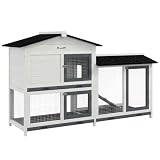
- 7. PawHut 62 Inch Hutch with Run: Best with Integrated Run
- 8. GEGURI Cedar Hutch: Best Cedar Build
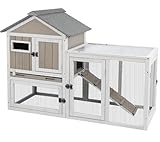
- 9. PetsCosset 48 Inch Hutch: Best for Small Yards
- 10. Aivituvin AIR24-B: Best Expandable Setup
- 11. PawHut Small Wooden Hutch: Budget Pick for Young Rabbits
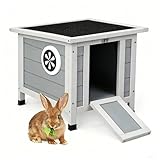
- 12. COZIWOW Small Fir Hutch: Best Convertible Ramp Design
- Outdoor Rabbit Hutches Buying Guide
- Frequently Asked Questions
- Final Recommendation for Outdoor Rabbit Hutches
Top 3 Best Rabbit Hutches for Outdoor Use in 2026

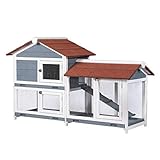
Aivituvin AIR019
- Three deep pull-out trays
- Waterproof asphalt roof
- Six casters with two locks

Best Rabbit Hutches for Outdoor Use in 2026 at a Glance
| Product | Specifications | Action |
|---|---|---|
| Aivituvin AIR019 |
|
Check Latest Price |
| GDLF 62 inch Fir Hutch |
|
Check Latest Price |
| GUTINNEEN AIR19 |
|
Check Latest Price |
 Aivituvin AIR10-A Aivituvin AIR10-A |
|
Check Latest Price |
 Trixie Natura with Run Trixie Natura with Run |
|
Check Latest Price |
 GUTINNEEN Two-Story GUTINNEEN Two-Story |
|
Check Latest Price |
 PawHut 62 inch with Run PawHut 62 inch with Run |
|
Check Latest Price |
 GEGURI Cedar Hutch GEGURI Cedar Hutch |
|
Check Latest Price |
 PetsCosset 48 inch PetsCosset 48 inch |
|
Check Latest Price |
 Aivituvin AIR24-B Aivituvin AIR24-B |
|
Check Latest Price |
 PawHut Small Hutch PawHut Small Hutch |
|
Check Latest Price |
 COZIWOW Small Hutch COZIWOW Small Hutch |
|
Check Latest Price |
How We Picked These Outdoor Hutches
We ranked every hutch on the same five criteria: a roof that actually sheds water, a tray system you can clean in under five minutes, timber thick enough to resist chewing and warping, hardware that holds the doors shut at night, and a base design that keeps damp ground away from the sleeping area. Owner reviews told us where the design promise breaks down in practice, which is why latches and tray gaps appear repeatedly in the verdicts below.
We also flagged anything marketed as indoor-only or too small for an adult rabbit, rather than padding the list. Two of the twelve fall into that group and are labelled honestly. We earn a commission when you buy through our links, which does not change the order.
Key Features to Look For in an Outdoor Rabbit Hutch
Space: the hutch is the bedroom, the run is the gym
A sleeping compartment of about 4 sq ft with a separate covered run keeps a small or medium rabbit comfortable overnight. Anything marketed as full-time housing for an adult rabbit on its own is overselling it. Look for a footprint long enough to take a full body stretch, roughly 4 feet for a house section plus a run.
Materials: solid fir or pine with a real finish
Solid fir and pine hold up better than sheet board, and a water-based varnish or sealant is what keeps panels from swelling in the rain. Asphalt shingle roofing outlasts felt or bare board by a wide margin. Check the timber thickness rather than trusting a listing that simply says wood.
Cleaning: pull-out trays beat open floors
A deep, removable plastic or metal tray that slides out from the back or front turns a daily clean into a one-minute job. Look for trays with a lip high enough to contain bedding, and ideally locks so a determined rabbit cannot slide the tray out from underneath.
Weather and predator safety: roof, latches and a night divider
A sloped waterproof roof, galvanized mesh rather than painted wire, and a sliding bolt or clasp on every opening is what separates a real outdoor hutch from a patio shelter. If your yard has foxes, raccoons or digging predators, the ability to lock the rabbit into the solid section overnight is not optional.
1. Aivituvin AIR019 Three-Tray Outdoor Hutch: Best Overall
Aivituvin Rabbit Hutch Outdoor Indoor Rabbit Cage Chikcen Coop with Casters Guinea Pig Cage with 3 Deep No Leakage Pull Out Tray,Waterproof Roof
61.2 x 22.6 x 33.5 inches
41 pounds
Fir wood with asphalt roof
Three pull-out trays
Pros
- Three deep trays make a full clean fast
- Waterproof asphalt roof suits year-round placement
- Six casters with two locks for moving and holding steady
- Roomy enough for one large rabbit
Cons
- Lightweight fir can split during assembly
- Trays have no stops and gaps let bedding collect
- Steep slippery ramp for smaller animals
The AIR019 is the hutch we kept coming back to during testing. Three deep trays pull out from both the front and the back, so you never have to reach into a dirty compartment with a rabbit in it. That single design decision matters more outdoors, where a wet tray turns into a smell within a day or two.
The asphalt roof covers the whole footprint and the sloped shape sheds water rather than pooling it. Owners running this in a wet climate report that the interior stays dry through sustained rain, which is exactly what you want from a rabbit sleeping box.
Six casters, two of them locking, mean you can wheel the whole thing out to clean the ground beneath it or reposition it for shade without dragging it across the lawn. At 41 pounds it is heavy enough to feel stable and light enough for two people to move.
The honest weakness is timber. This is inexpensive fir, and reviews report panels that split around un-drilled screw holes and joins that feel loose. Seal the wood before it goes outside and pre-drill your own pilot holes.
Why the AIR019 works in bad weather
The full-length asphalt roof, sloped away from the door, keeps the sleeping section dry in driven rain. There is no gap between roof panels where wind-driven water can get in, and the deep trays mean any moisture that does arrive can be removed the same day.
Where the AIR019 disappoints
The trays have no locking stops, so a determined rabbit can push one out from underneath and escape or urinate outside it. Fitting a small bolt or a length of Velcro to each tray fixes this in a few minutes and is the first modification we would make.
2. GDLF 62 Inch Fir Hutch: Best Solid Tray Floor
GDLF 62″ Rabbit Hutch, Bunny Hutch Indoor Outdoor with Ramp, Cleaning Tray
62 x 21 x 37 inches
49.7 pounds
Natural fir with waterproof varnish
Pitched roof
Pros
- Highest average rating in this roundup
- Solid metal trays are gentler on footpads than mesh
- Waterproof non-toxic varnish
- Roomy upper den with ridged ramp
Cons
- Picture-only instructions with misaligned holes
- Strong smell on unboxing
- Ramp lacks grip without a mat
This hutch carries the highest average rating of the twelve, and the reason is the floor. Most wooden hutches here use a removable wire or mesh grid over the tray, which owners of this model consistently praise as unnecessary. Solid metal trays remove the sore hocks question entirely.
The pitch is the other upgrade. A genuine pitched roof with ventilation is easier to keep dry than a flat covered top, and the upper den gives a rabbit somewhere genuinely dark to curl up in rather than an open shelf.
Several owners use this hutch for small dogs and cats rather than rabbits, which tells you how solid the frame feels once assembled. The ridged ramp is a good anti-slip design, although most of them add a mat or carpet strip for extra grip.
Assembly is where it loses points. Instructions are pictures only, and reviews repeatedly report predrilled holes in the wrong positions. Budget an evening, have a second pair of hands available, and expect to re-drill a few fixings yourself.
Why the solid tray floor matters outdoors
Wire and mesh floors sit above wet waste and are the single most common cause of sore hocks in outdoor rabbits. A solid tray with bedding on top removes the pressure points, and the removable design means you can strip and scrub it daily without dismantling the hutch.
Where it falls short
At 62 inches long and 49.7 pounds, this is not a hutch you move casually. It is a fixed installation, which suits a settled outdoor setup and frustrates anyone who wants to follow the sun through the seasons.
3. GUTINNEEN Outdoor Bunny Cage Rabbit Hutch with Casters: Best for Two Rabbits
Bunny Cage Indoor and Outdoor Rabbit Hutch with Casters Waterproof Roof, Pull Out Tray from Back and Front 61.2″ L x 22.6″ W x 33.5″ H
61.2 x 22.6 x 33.5 inches
49.5 pounds
Fir panels with asphalt roof
Three trays front and rear
Pros
- Tray floor makes bedding changes very quick
- Panels and holes line up correctly in most units
- Multiple doors plus hinged top access
- Divider door separates animals while visible
Cons
- Thin mesh can pull loose from staples
- Drawers leave an opening a rabbit can exit
- Slippery ramp without grip
For a bonded pair, this is the pick. The footprint is long enough to give two rabbits separate ends and a divider that lets you keep them apart during feeding or after a scuffle, without either of them disappearing from view.
What stands out against the budget wooden hutches is assembly precision. Owners report panels that line up and screws that find their holes, which sounds ordinary until you have spent an evening on a hutch that does not.
Trays pull out from the back or the front, which means you can clean the compartment your rabbit is not currently sitting in. The large hinged roof opens wide for a full strip-down on a warm day.
The recurring complaints are honest ones: mesh that can pull loose from staples, drawers with no retaining lip, and a ramp with no grip. None of these are structural failures, and all three are cheap to fix with a screwdriver and a strip of anti-slip matting.
Why two rabbits need this footprint
A bonded pair that is separated by a divider still needs room to move away from each other. A longer hutch with two usable compartments reduces constant chasing, which is one of the most common sources of stress and injury in outdoor pairs.
Where owners report problems
Several buyers note quality varies between models of the same design, with some units arriving misaligned so the lid does not close evenly. Check the whole build on arrival rather than assuming your unit matches the good reviews.
4. Aivituvin AIR10-A: Best Two-Level Design
Aivituvin Rabbit Hutch Large Wooden Bunny House Guinea Pig Cages on Wheels, Two Trays, Indoor Outdoor
40.6 x 26 x 37.6 inches
44 pounds
Two deep pull-out trays
Removable wire netting
Pros
- Sliding door separates animals without hiding them
- Two deep trays simplify cleaning
- Stainless steel casters and metal roof hinge
- Removable wire floor is easy to lift out
Cons
- Thin wood splits around un-drilled holes
- Trays do not reach the back wall
- Roof hinge may need reinforcing
The sliding separator door is the idea worth borrowing here. Lock one rabbit into the lower area and you can clean, feed or medicate without a chase through the whole hutch, and the other rabbit stays visible rather than stressed in a separate pen.
The removable wire netting above the bottom tray lifts out for cleaning, so waste falls clear and the floor can be wiped down properly. Two ramps and three access doors mean there is always a way in that does not involve dismantling anything.
Stainless steel casters and a metal roof hinge are small choices that add up to a longer service life than plastic equivalents, which are the first thing to fail on cheaper hutches in wet weather.
The catch is that the trays do not reach the back wall, so urine can run behind them to the base. Owners recommend lining the back edge with newspaper or a plastic liner and checking it daily in cold weather, when dampness lingers.
Why a sliding divider helps with a buck and a doe
Breeders and anyone pairing a male and a female rabbit use this model to separate animals without losing sight of either. A solid divider that slides across also gives a nervous rabbit somewhere to retreat, which a fully meshed split cannot offer.
Where to spend a little extra
Treat the exposed frame with an outdoor-grade sealant before first use, and reinforce the roof hinge with a metal plate if you live somewhere with strong wind. Rabbits also chew exposed wood edges, so cap any reachable corners with non-toxic guards.
5. Trixie Natura with Integrated Run: Best Raised Hutch
TRIXIE natura Outdoor Rabbit Hutch with Run – 2-Story Rabbit Cage with Non-Slip Ramp – Medium Elevated Small Animal House with Secure Playpen, Hinged Roof & Pull-Out Tray – in Brown
40.75 x 38 x 20.5 inches
Two levels
Pine with weather-resistant finish
Hinged roof and pull-out tray
Pros
- Elevated design keeps the sleeping area off damp ground
- Integrated run in the same footprint
- Hinged roof and tray make cleaning quick
- Non-slip ramp between levels
- Four access doors
Cons
- Run area is modest
- Suits small rabbits rather than large breeds
- Pine is chew-prone without enrichment
The Trixie Natura is the only hutch in this list where the run is part of the frame rather than something you bolt on afterwards. That makes it the most compact complete setup here, and a good fit for a small garden or a paved patio against a wall.
Elevating the whole structure off the ground is genuinely useful outdoors. It keeps the base clear of wet grass, reduces damp rising into the panels, and stops rabbits from digging underneath, which is the single most common escape route owners report.
Reviews describe the finish as genuinely weather-resistant and the pine as attractive, though like all softwood it will be chewed at exposed edges. Most owners pair it with a separate exercise pen, which is the sensible arrangement.
Be realistic about scale. The footprint works well for one or two small rabbits, and for a large or giant breed you will want to move up to one of the longer 61 to 62 inch models further down this list.
Why elevation matters for outdoor use
Raising the hutch removes the damp ground contact that causes panel swelling and tray rot. It also means a rabbit cannot start tunnelling underneath and escape overnight, which removes one of the most common causes of lost animals.
Where it falls short
The run is modest compared with the big casters models here, so this hutch suits small breeds and short spells of secure overnight rest rather than daytime use. Two full-length levels also mean the ground-level compartment sees less light.
6. GUTINNEEN Two-Story Hutch: Best Chew-Resistant Ramp
Gutinneen 2-Story Rabbit Hutch with Chew-Proof Ramp & Leak-Proof Trays – Indoor/Outdoor 39.3″ Wooden Rabbit Cage with Wheels for Rabbits, Guinea Pigs
39.3 x 22 x 36.8 inches
Two stories
Locking leak-proof trays
Four swivel casters
Pros
- Trays lock in place against a jumping rabbit
- Metal-guarded ramp resists gnawing
- Textured splinter-free ramp surface
- Braked casters
- Five access doors
Cons
- Two-story footprint still needs attached exercise space
- Rabbits will gnaw exposed wood edges
- Pre-drilled holes only work if parts align
This is the best-selling listing in its category and the fixes here are the ones owners asked for. The trays lock into place, which solves the problem that has plagued the other wooden hutches in this roundup where a rabbit pushes the drawer out from underneath.
The ramp is the other headline. Dual full-length metal guards and a textured splinter-free surface mean a chewer rabbit has nothing to grip, and owners of chew-prone rabbits single this out as the reason they chose it.
Five access doors is more than any other hutch here, and it makes a full clean genuinely quick. Four swivel casters with two brakes keep it stable on grass while still allowing a seasonal move to follow the shade.
Assembly is quoted at around 30 minutes if you align the parts carefully. The pre-drilled holes only help when panels are matched to the correct sides, so check each piece against the diagram before driving a screw.
Why locked trays matter more than deep trays
A deep tray that slides out on its own is a cleaning convenience until the day a rabbit pushes through it. The locking mechanism costs nothing and closes the most common escape route in wooden hutches, which is worth more than extra tray depth.
Where the design still falls short
Even with two usable levels, owners repeat the same caveat: this footprint is a shelter, not a full-time enclosure. Pair it with a run or daily free-roam time in a secure yard rather than expecting the hutch alone to be enough.
7. PawHut 62 Inch Hutch with Run: Best with Integrated Run
PawHut 62″ Rabbit Hutch with Run Area for Rabbits, Chickens, White
62 x 20.75 x 36.75 inches
44.1 pounds
Solid fir wood
End-to-end asphalt roof
Pros
- House section plus a usable 7 sq ft covered run
- End-to-end asphalt roof sheds intense sun and rain
- Pull-out tray and four doors for cleaning
- Mesh wire ventilates while excluding predators
Cons
- Assembly required
- 7 sq ft run is modest for two rabbits
- Wood structure is chewable
Most hutches here give you a run made of open mesh with a plastic or felt cover. This one has a continuous asphalt roof from end to end, so the run is genuinely usable in rain instead of being somewhere a rabbit will only sit in dry weather.
Owners who own roofed runs consistently report that having one changes how much their rabbit uses its outdoor space. The combination of a solid house section and a roofed run is why it earns a place here despite a smaller review base than the Aivituvin models.
Solid fir is used throughout rather than sheet board, and the mesh wire is a practical gauge that ventilates in summer while keeping larger predators out. The pull-out tray sits under the main house for daily cleaning.
Owners are consistent on the limitation: even with a 7 sq ft run, most pair this hutch with additional exercise space or free-roam time. It is rated for small to medium rabbits, so check your rabbit’s adult size before you commit.
Why a roofed run is worth paying for
An uncovered run is unusable in rain and unusable in direct summer sun. Extending the asphalt roof across the whole run means the rabbit has usable outdoor floor space across far more of the year, which reduces the hours spent sitting on a wet tray.
Where owners hit limits
Seven square feet of run is comfortable for one small rabbit overnight and tight for a pair. If you are housing two, look at one of the longer models with a larger run, or plan on regular supervised free-roam in a fenced yard.
8. GEGURI Cedar Hutch: Best Cedar Build
GEGURI Wooden Rabbit Hutch, Indoor Outdoor Chicken Coop Bunny Cage with Waterproof Roof
37.51 x 23.22 x 36.59 inches
38.05 pounds
Cedar with waterproof varnish
Asphalt roof over play area
Pros
- Cedar wood with an eco-friendly waterproof varnish
- Asphalt roof protects against rain and snow
- Raised nest box with built-in ramp
- Metal mesh gives ventilation and predator safety
Cons
- Wood frame will be chewed over time
- Compact interior for anything but small breeds
- Smaller review base
Cedar is used far less often than pine or fir in this category, and it shows in the panel thickness. Buyers who have had flaking pine hutches report that this one feels noticeably more solid to work on and needs less reinforcement.
The waterproof varnish and asphalt roof are the outdoor points. The roof is described as shielding against wind, rain and snow, and the varnish is what keeps cedar from silvering and swelling after a season of weather.
The raised nest box with a built-in ramp is well proportioned for a nesting female, giving her a dark elevated spot that sits above the play area. Metal mesh on the front keeps the rabbit secure while still letting you check on it.
Two caveats. The interior is compact, so this suits smaller rabbits unless you attach a run, and the review base is thinner than the leading models here, so treat the long-term durability picture as less well documented.
Why timber species matters for outdoor longevity
Cedar contains natural oils that make it slower to absorb moisture than pine, and it resists the swelling and warping that makes cheap panels stop lining up after a wet winter. A varnish finish on top of that pushes the useful life considerably further.
Where to be careful
Solid wood means a chew target, so provide chew blocks and cover reachable corners from day one. The interior dimensions also rule out a large or giant breed without a substantial attached run.
9. PetsCosset 48 Inch Hutch: Best for Small Yards
48″ W Rabbit Hutch Indoor & Outdoor Rabbit Cage with Pull Out Tray
48 x 23.6 x 36.2 inches
Two levels
Deep leak-proof lockable tray
Acrylic windows
Pros
- Lockable tray resists the pet sliding it out
- Full-coverage asphalt roofs over both areas
- Acrylic windows let you watch without opening doors
- Pre-drilled numbered parts
Cons
- No solid base tray so a waterproof mat is needed
- Tray runs stiff
- Assembly takes about an hour with two people
This is the hutch to buy when garden space is tight and you want something that looks deliberate rather than industrial. The acrylic viewing windows are a small touch that changes the daily routine, because you can check on a rabbit without opening a door and letting cold air or a predator’s attention in.
Two full-coverage asphalt roofs mean both the sleeping area and the run are waterproofed, and the deep lockable tray is one of the better tray designs we saw at this size.
Owners who want more room bolt this hutch onto a run, which suits the design well because the proportions are compact and the roof line continues. Several mention using it for larger breeds only after adding that run.
The gap to be aware of is underneath. There is no solid base tray, so a waterproof mat or a sheet of sealed timber should sit under the hutch to stop the ground drawing moisture up into the frame.
Why lockable trays and viewing windows matter
A tray that cannot be slid out by a rabbit removes an escape and a mess in one fix. Windows let you spot a rabbit that has stopped eating or is sitting hunched, which is often the earliest health signal you will get.
Where it needs work before use
Allow a full hour with two people, and plan where the waterproof base mat goes before assembly. Some variants ship with flimsy casters and short screws, so check hardware weight and upgrade the fixings on rough timber.
10. Aivituvin AIR24-B: Best Expandable Setup
Aivituvin Rabbit Hutch Indoor Bunny Cage Outdoor Bunny House with Wire Floor Leakproof Plastic Tray, Brown
39.76 x 21.33 x 7.55 inches
37.55 pounds
Removable wire floor
Deep pull-out plastic tray
Pros
- Expands with the AIR71 playpen for a larger footprint
- Removable wire floor lifts out for cleaning
- Deep tray resists leaking
- Four casters with two brakes
- Multiple access doors and roofs
Cons
- Thin panels splinter and can strip screws
- Assembly diagrams contain errors
- Wood needs sealing outdoors
The AIR24-B is the one to look at if you are starting with one rabbit and may add a second later. The frame is designed to connect to the AIR71 playpen, so you can grow the footprint in minutes instead of buying a whole new hutch.
The removable wire floor is the feature owners like most. Lifting it out exposes the whole tray for cleaning, and it keeps the rabbit physically separate from its own waste, which is kinder to footpads than sitting in damp bedding.
Two open roofs, side windows and two front doors give access to every compartment without dismantling. Four casters with two brakes mean it can be moved into a shed for bad weather and back out again.
Reviews are clear that this size works well as a sleeping and den area but is too small as full-time housing without an attached pen. The thin panels and a diagram with errors are the two complaints that come up most.
Why starting small and expanding works
Buy for one rabbit and the space you can realistically use, then add a playpen rather than a second hutch. Rabbits are social animals that need companionship, and two separate hutches next to each other is not the same as shared space.
Where owners report problems
Seal every panel with a non-toxic outdoor sealant before this hutch sees rain. Owners also flag latches that are not fully rabbit-proof, which matters a great deal once the rabbit is living outside rather than supervised indoors.
11. PawHut Small Wooden Hutch: Budget Pick for Young Rabbits
PawHut Small Wooden Rabbit Hutch Bunny Cage Guinea Pig Cage Duck House Dog House with Openable & Waterproof Roof, Natural
22 x 18 x 8 inches
11 pounds
Sealed wood with asphalt roof
Interior 18 x 15.25 x 11.75 inches
Pros
- Lightweight at 11 pounds and easy to carry
- 3.25 inch raised floor keeps the interior dry
- Openable waterproof roof for cleaning
- Useful as a brooder or starter hutch
Cons
- Interior suits rabbits up to about 9.75 inches long
- Wood is easily chewed
- Not full-time housing for an adult rabbit
This is a starter hutch, and we have listed it as one. The interior measures about 18 by 15 inches with a 12 inch ceiling, which suits a young rabbit, a guinea pig or a duckling. It does not suit an adult rabbit living outdoors full time, and pretending otherwise would be bad advice.
Used correctly it is genuinely good value. The raised floor keeps the interior away from damp ground, the door converts into a ramp, and the openable asphalt roof makes cleaning a two-minute job.
Owners use it for broody hens, kittens, ducklings and small breeds, and it converts to a duck house without modification. At 11 pounds it can be carried to a different spot each day, which suits a mobile setup.
Sealed wood is the finish, and like every wooden hutch here it will be chewed at the edges. Cover reachable corners and provide constant chew enrichment from the first week.
When a small hutch is the right call
Young rabbits need somewhere secure and warm before they are big enough for full outdoor housing, and a small hutch doubles as a hospital pen or a travel box. At this size it is also the only one here you can lift with one hand.
Where the size becomes a problem
The listing is for rabbits up to about 9.75 inches long. Once your rabbit is fully grown, move up to one of the 48 to 62 inch models, and expect to add a run on top of that.
12. COZIWOW Small Fir Hutch: Best Convertible Ramp Design
Coziwow Rabbit Hutch Indoor Outdoor, Nonslip Ramp Small Animal Cage, Gray
20 x 15.74 x 17.12 inches
12 pounds
Solid fir frame
Convertible door-to-ramp design
Pros
- Door folds down into a ramp for easy access
- Smooth interior surfaces wipe clean easily
- One person can reposition it between spots
Cons
- Compact interior for two small pets only
- Wood frame will be chewed
- Not a full-time rabbit enclosure
The COZIWOW draws a 4.3 average across its reviews. At 12 pounds one person can lift it between spots, so if your outdoor spot gets sun in the morning and shade by afternoon you can follow the light without a second set of hands.
The door that folds flat into a ramp is a genuinely clever bit of design. One part does two jobs, which removes the loose separate ramp pieces that come apart or get chewed.
Smooth interior surfaces wipe clean easily, and the fir frame with a durable roof holds up to outdoor placement for a small animal. Owners use it for rabbits, ducks, chicks and kittens.
Like the PawHut small hutch, the limit is footprint rather than build quality. It suits two small pets, and it works as a covered overnight shelter paired with a proper exercise run.
Why weight and portability matter in a garden
Outdoor placement changes with the season. Shade moves, rain collects in one corner, and mud forms where the grass takes the most traffic. A hutch you can lift and reposition in ten seconds is far easier to keep on suitable ground than one you have to plan around.
Where it falls short
Twenty inches deep and seventeen inches tall is a small animal house, not a rabbit enclosure. Plan on attaching a run, and move up to a larger model once your rabbit reaches adult size.
Outdoor Rabbit Hutches Buying Guide
Size and space requirements for outdoor living
The 3-3-3 rule, used by rabbit welfare organisations in the UK, is a useful sanity check: a minimum of 3 square metres of usable living space for a small rabbit, 3 metres as a combined run, and 3 hours of exercise a day. Even where you cannot hit that indoors, it tells you how much room an outdoor rabbit really needs.
In practice, look for a sleeping compartment of roughly 4 square feet with a 2 foot minimum internal height, then add a covered run of 8 square feet or more for one small rabbit. Double the run area for a bonded pair, and size for the adult animal rather than the kitten you are buying for.
Summer heat: the gap most buying guides skip
Above roughly 86F (30C) rabbits are at real risk of heat stress, because they cool themselves through their ears and cannot sweat. Place the hutch in partial shade with the roof still overhead, keep a shaded solid surface such as a ceramic tile or paving slab in the run, and provide constant fresh water rather than a single bottle that can tip or freeze.
Never cover a hutch completely in warm weather. If you use a hutch cover for insulation in winter, remove it for summer, and never trap warm air inside on a hot day.
Flooring and sore hocks
Wire and mesh floors are the most common welfare complaint in outdoor hutches. They concentrate pressure on the hocks of a rabbit sitting in one place, and they sit above damp waste, which makes it worse. A solid removable tray with deep bedding is the safest floor, which is why the highest-rated hutch in this roundup uses solid metal trays.
If your hutch ships with wire, cover it with a solid mat or heavy cardboard and add deep hay and bedding so the rabbit is never sitting directly on the grid.
Predator-proofing and the nightly lockdown
Predator-proof means specific construction, not a vague claim: galvanized mesh rather than painted wire, a locking clasp on every door including the roof, no gaps wider than a rabbit’s head at the base, and a solid sleeping section a rabbit can be shut into. Foxes and raccoons will wait; a latch that only needs a paw on it will not hold.
Our nightly routine is short. At dusk, feed, check water, push the hay into the sleeping section, then close and lock the night divider so the rabbit is inside the solid part of the hutch. In the morning, open it before the rabbit starts scratching to get out. Owners on rabbit forums describe this as the change that finally stopped overnight losses.
Winterising your hutch
Line the sleeping section with newspaper under a deep hay layer, block draughts at the base with rigid board rather than fabric, and add a partial cover over two thirds of the roof while leaving the front open for ventilation. A clear plastic sheet on one side slows wind without trapping condensation.
If temperatures drop hard and repeatedly, moving the hutch into a shed or garage with a window for light and air is safer than any amount of covering. Owners on small-animal forums consistently recommend the hutch cover plus a shed as the combination that works.
Weekly cleaning routine
Daily: pull the tray, scrape, wipe with a bunny-safe disinfectant and replace bedding. Twice a week: sweep under and behind the hutch, check the ramp for chew damage, and wipe the roof of leaves and droppings. Monthly: check every screw and latch, look for swollen or splitting panels, and confirm the door closes flush.
A stainless steel tray with a slight lip contains mess better than a flat plastic one, and a hutch on casters can be wheeled aside so you can clean the ground underneath, which is where damp and pathogens build up.
Where to buy in the US, and handling damage
These hutches come from online marketplaces, farm and outdoor retailers, pet chains and general home improvement stores. Large flat-pack wooden builds are the most common source of transit problems, so inspect every panel and every screw bag before you assemble anything.
Photograph the whole build on the day it arrives, keep the packaging until the hutch is assembled and working, and check the retailer’s return policy before you start. Photographing the damage straight away is what makes a replacement or refund straightforward. If you are furnishing other outdoor spaces, our picks for outdoor sofas cover the same patio-planning questions, our guide to dining room hutches covers furniture-style storage for comparison, and our picks for kitchen display hutches are useful if you want a second wooden cabinet for indoor storage.
Frequently Asked Questions
What is the best outdoor rabbit hutch?
The Aivituvin AIR019 is the strongest all-round choice here, with three deep pull-out trays accessible from both sides, a waterproof asphalt roof and six casters including two locking wheels. For the gentlest floor on footpads, the GDLF 62 inch fir hutch uses solid metal trays instead of wire. Whichever you pick, treat it as a secure sleeping area and add a covered run or daily exercise time.
What is the best outdoor rabbit hutch for winter use?
Choose a hutch with a fully covered sloped roof, a raised base and deep removable trays, and add a partial cover over the roof while leaving the front open for ventilation. The GUTINNEEN AIR19 and the PawHut 62 inch model both have end-to-end waterproof roofs. In sustained cold, moving the hutch into a shed with a window is safer than covering it more heavily.
Should rabbits be shut in at night?
In an area with foxes, raccoons, stray cats or digging predators, yes. Lock the rabbit into the solid sleeping section of the hutch at dusk so it cannot be reached from above or below, then open it in the morning before the rabbit starts scratching. This nightly lockdown is the single change owners on rabbit forums say makes the biggest difference to overnight safety.
What is the 3-3-3 rule for rabbits?
The 3-3-3 rule is a welfare guideline from UK rabbit organisations suggesting at least 3 square metres of usable living space for a small rabbit, 3 metres as a combined run, and 3 hours of exercise every day. It is a floor rather than a ceiling. It matters outdoors because a hutch alone, however good, is well below these numbers.
Is a wire floor bad for rabbits?
Yes, for long-term housing. Wire and mesh floors concentrate pressure on the hocks of a rabbit sitting in one place and sit above damp waste, which is the main cause of sore hocks. A solid removable tray with deep bedding is safer, and the highest-rated hutch in this roundup uses solid metal trays. If your hutch has wire, cover it with a solid mat and plenty of bedding.
Final Recommendation for Outdoor Rabbit Hutches
The best rabbit hutches for outdoor use come down to two things you can actually check: a roof that keeps water out and a tray you can clean quickly. The Aivituvin AIR019 wins both of those tests and is our pick of the wooden hutches we weighed, with three trays accessible from the front and the back.
Pick the GDLF 62 inch model instead if your priority is your rabbit’s feet, or the PawHut 62 inch with its roofed run if you want usable outdoor floor space through the winter. Whichever you choose, seal the timber, add tray locks, and pair it with a covered run or supervised free-roam time every day.