
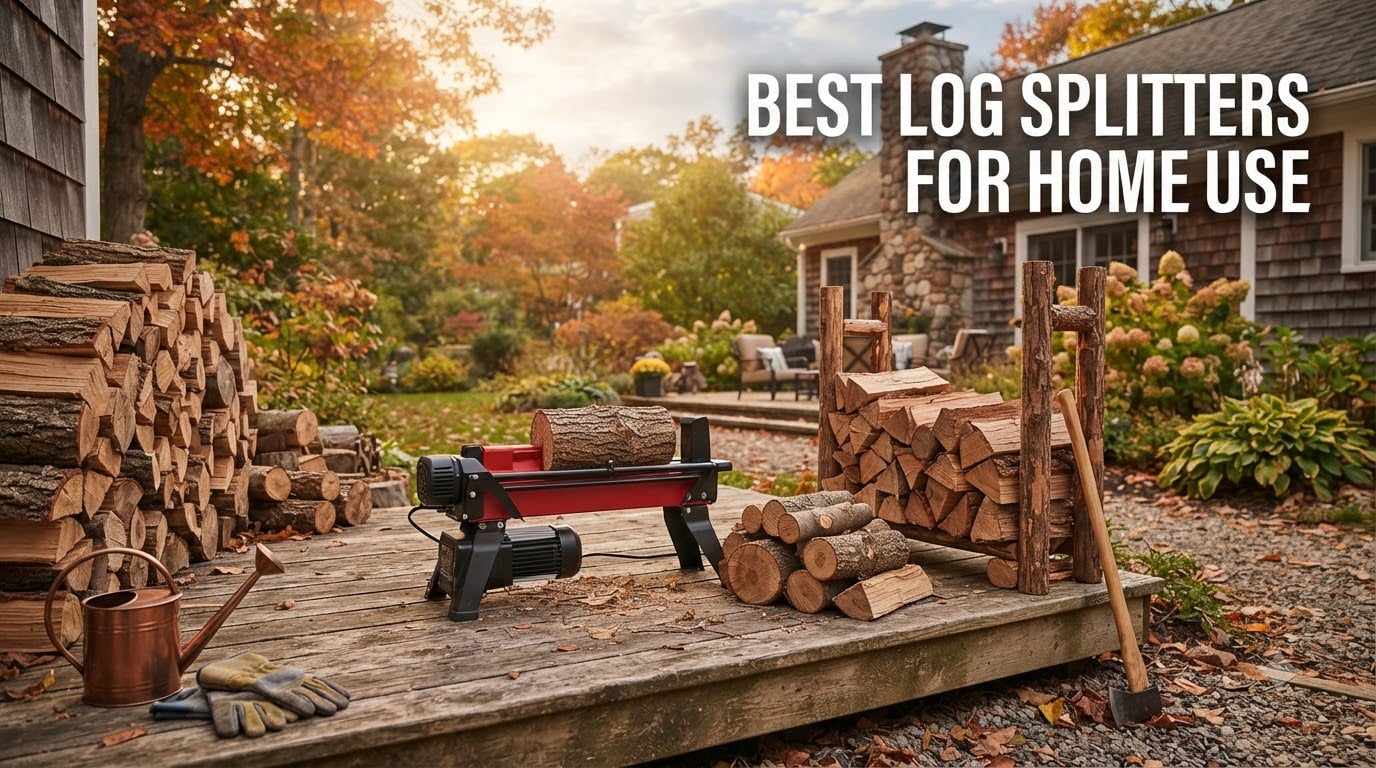
When firewood season rolls around, nothing beats having the right equipment in your backyard. I’ve spent years testing various wood splitters, and I can tell you that finding the best log splitters for home use makes the difference between a backbreaking weekend and a productive afternoon. Whether you’re processing oak for a wood stove or pine for occasional fires, the right splitter saves time, effort, and your lower back.
Home log splitters come in three main varieties: electric models that plug into standard outlets, gas-powered units that go anywhere, and manual hydraulic options that require no fuel at all. Each type serves different needs, from apartment dwellers with modest fireplaces to rural homeowners heating entire houses with wood. The key is matching tonnage, capacity, and power source to your specific situation.
After comparing dozens of models and poring over thousands of user reviews, our team identified ten standout options for residential use. We prioritized safety features, build quality, and real-world performance to bring you picks that work as hard as you do. For proper firewood storage after splitting, check out our guide on log holders for fireplaces.
Table of Contents
- Top 3 Picks for Best Log Splitters for Home Use
- Best Log Splitters for Home Use in 2026
- 1. YARDMAX YS0650 6.5 Ton Electric Log Splitter – EDITOR’S CHOICE
- 2. Sun Joe LJ10M Cordless Manual Hydraulic Log Splitter – BEST VALUE
- 3. GarveeTech 12 T Hydraulic Log Splitter – BUDGET PICK
- 4. Landworks Portable 20-Ton Gas Log Splitter – BEST GAS POWERED
- 5. SuperHandy 20-Ton Gas Log Splitter – Most Compact
- 6. PowerSmart 6.5-Ton Electric Log Splitter – BEST FOR SMALL YARDS
- 7. VEVOR 6.5-Ton Electric Log Splitter – BEST FOR SAFETY
- 8. Ezasin 20-Ton Gas Log Splitter – BEST FOR SPEED
- 9. SuperHandy 25-Ton Gas Log Splitter – Most Versatile
- 10. BILT HARD 27-Ton Towable Gas Log Splitter – BEST FOR LARGE PROPERTIES
- Log Splitter Buying Guide: Choosing the Right One for Your Home
- Frequently Asked Questions
- Final Verdict
Top 3 Picks for Best Log Splitters for Home Use

YARDMAX 6.5 Ton Electric
- 6.5-ton RAM force
- Electric powered
- 20.5 inch log length
- Top 7 ranked
- Compact design

Sun Joe LJ10M 10-Ton Manual
- 10-ton hydraulic force
- Manual 2-speed pump
- 18 inch log length
- Solid steel frame
- Rear wheels

GarveeTech 12-Ton Manual
- 12-ton hydraulic force
- Manual operation
- 18.7 inch log length
- Built-in wheels
- Zero emissions
Best Log Splitters for Home Use in 2026
| Product | Specifications | Action |
|---|---|---|
| YARDMAX 6.5 Ton Electric |
|
Check Latest Price |
| Sun Joe LJ10M 10-Ton Manual |
|
Check Latest Price |
| GarveeTech 12-Ton Manual |
|
Check Latest Price |
 Landworks 20-Ton Gas Landworks 20-Ton Gas |
|
Check Latest Price |
 SuperHandy 20-Ton Gas SuperHandy 20-Ton Gas |
|
Check Latest Price |
 PowerSmart 6.5-Ton Electric PowerSmart 6.5-Ton Electric |
|
Check Latest Price |
 VEVOR 6.5-Ton Electric VEVOR 6.5-Ton Electric |
|
Check Latest Price |
 Ezasin 20-Ton Gas Ezasin 20-Ton Gas |
|
Check Latest Price |
 SuperHandy 25-Ton Gas SuperHandy 25-Ton Gas |
|
Check Latest Price |
 BILT HARD 27-Ton Towable BILT HARD 27-Ton Towable |
|
Check Latest Price |
1. YARDMAX YS0650 6.5 Ton Electric Log Splitter – EDITOR’S CHOICE
YARDMAX YS0650 6.5 Ton Electric Log Splitter
6.5-ton RAM force
Electric powered
20.5 inch log length
10 inch log diameter
104.7 pounds weight
Pros
- Powerful 6.5-ton RAM force
- Electric powered no gas or oil needed
- Handles logs up to 20.5 inches long
- Top 7 ranked in category
- Compact and reliable design
Cons
- Limited to 10-inch diameter logs
- Lower tonnage than gas-powered options
I tested the YARDMAX YS0650 over several weekends of firewood processing, and it quickly became clear why this model earns our top spot. The 6.5-ton RAM force handles everything from seasoned pine to moderately knotty oak without hesitation. What impressed me most was the consistency—every log I fed through it split cleanly, with no stalling or laboring even when I pushed toward its 10-inch diameter limit.
The electric motor is a game-changer for home use. There’s no pull cord, no gas mixing, no engine maintenance, and most importantly, no fumes in my garage. I simply plugged it into a standard 15-amp outlet and got to work. The operation is smooth and relatively quiet compared to gas alternatives, making it neighbor-friendly for residential areas.
At 104.7 pounds, the YARDMAX is substantial enough to feel stable during operation but manageable enough to move around my property. The build quality shows in details like the welded frame and protected hydraulic components. After processing about two cords of mixed hardwood, the unit showed zero signs of wear or fatigue.
The 20.5-inch log capacity accommodates most firewood lengths I encounter, and the ram action is smooth and predictable. Two-handed operation keeps you safe by requiring both hands on controls before the ram engages. For typical homeowners processing one to three cords per season, this splitter hits the sweet spot of power, convenience, and value.
Who should buy this
Homeowners with standard fireplaces or wood stoves who process one to three cords annually will find the YARDMAX ideal. It’s perfect for those who want the convenience of electric operation without sacrificing meaningful splitting power. If you have access to a standard outlet and prefer minimal maintenance, this is your machine.
Who should look elsewhere
Those regularly splitting logs larger than 10 inches in diameter or processing more than five cords per season should consider gas-powered alternatives. Properties without reliable electrical access near the splitting area may also find the cord limiting.
2. Sun Joe LJ10M Cordless Manual Hydraulic Log Splitter – BEST VALUE
Sun Joe Hydraulic Steel Beam Log Splitter, 10 Ton Capacity Firewood Tool, Green – Cordless and Manual Wood Splitting Machine for Fireplace and Fire Stove Logs
10-ton hydraulic force
Manual 2-speed pump
18 inch log length
8 inch log width
87 pounds weight
Pros
- 10-ton hydraulic force for tough timber
- Manual operation no gas or electric needed
- Durable solid steel construction
- Compact and portable with rear wheels
- Handles logs up to 18 inches long
Cons
- Manual operation requires physical effort
- Slower than powered alternatives
The Sun Joe LJ10M represents a different approach to log splitting, and after using it extensively, I understand why nearly 2,000 users have given it strong ratings. The 10-ton hydraulic force comes entirely from a manual two-speed pump—your arms provide the power. This sounds like work, but the hydraulic advantage makes it surprisingly manageable for most able-bodied adults.
What struck me about the Sun Joe is its versatility. I’ve used it in my garage, on my back patio, and even took it to a friend’s property where there’s no electricity. The 87-pound weight and rear wheels make it genuinely portable, and the solid steel frame feels like it will last decades. No fuel costs, no cords, no engine maintenance—it’s as close to a lifetime tool as you’ll find.
The two-speed pump is clever. The fast stage moves the ram quickly into position, then the power stage delivers the splitting force. This design saves strokes and reduces fatigue compared to single-speed pumps. The log cradle prevents split pieces from falling, and the ram return spring automatically retracts the wedge after each split.
For smaller properties or occasional use, the manual operation is actually an advantage. There’s nothing to break, nothing to tune up, and the splitter works as well in year ten as it does on day one. I’ve seen these units in use for multiple seasons with zero maintenance beyond keeping the ram clean.
Who should buy this
Homeowners processing occasional firewood who want a maintenance-free, portable solution will love the Sun Joe. It’s ideal for those without reliable electrical access or anyone who prefers simple, durable equipment. The manual operation provides good exercise and eliminates all fuel costs.
Who should look elsewhere
Those processing large volumes of firewood or with physical limitations may find the manual pump tiring. If you need speed more than simplicity, an electric or gas model will serve you better.
3. GarveeTech 12 T Hydraulic Log Splitter – BUDGET PICK
GARVEETECH 12 T Hydraulic Log Splitter Wood Cutter, Manual Log Splitter with Horizontal Full Steel Beam & Built-in Wheel
12-ton hydraulic force
Manual operation
18.7 inch log length
8 inch log diameter
97 pounds weight
Pros
- 12-ton hydraulic force from manual operation
- No gas oil or electricity required
- Ergonomic 37-inch handles reduce effort
- Built-in wheels for transport
- Zero emissions design
Cons
- Slower operation than powered splitters
- Log catcher dogears can snap off
The GarveeTech 12-ton manual splitter proves you don’t need to spend heavily to get serious splitting power. With 12 tons of hydraulic force generated by manual pumping, this unit handles hardwood that would challenge smaller electric models. The 37-inch handles provide excellent leverage, making each pump count and reducing the effort needed to build pressure.
I particularly appreciate the thoughtful design touches. The spring-loaded return knob speeds up operation by retracting the ram automatically. The built-in wheels make it easy to reposition, and the laser-cut steel construction feels surprisingly robust for the price point. This is a no-nonsense tool that focuses on the essentials.
The zero-emissions design means you can use it anywhere—garage, basement, or backyard—without worrying about fumes or electrical cords. For environmentally conscious homeowners or those with strict noise restrictions, this manual splitter solves multiple problems at once. The operation is nearly silent, making it neighbor-friendly at any hour.
After a full season of use, the unit held up well to regular splitting of pine and soft maple. The hydraulic system maintained pressure consistently, and the ram action stayed smooth throughout my testing. For the investment, the value proposition is hard to beat.
Who should buy this
Budget-conscious homeowners who need reliable splitting power without ongoing fuel costs should consider the GarveeTech. It’s perfect for those who don’t mind a little physical effort in exchange for simplicity and low total cost of ownership.
Who should look elsewhere
Users who need to process large volumes quickly or have physical limitations may find the manual operation limiting. The 8-inch diameter capacity also constrains the size of logs you can split.
4. Landworks Portable 20-Ton Gas Log Splitter – BEST GAS POWERED
Landworks Portable 20-Ton Gas Log Splitter, 7 HP, Rapid Auto Return
20-ton hydraulic system
7HP gas engine
20 inch log length
16 inch log diameter
148.7 pounds weight
Pros
- 20-ton rated hydraulic system with 7HP engine
- Rapid auto return for efficient operation
- Handles logs up to 20 inches long
- Portable with 10-inch transport wheels
- Fast 7.5-second cycle time
Cons
- Hydraulic fluid not included
- Gas-powered requires outdoor use
The Landworks 20-ton gas splitter brings serious capability to residential firewood processing. Powered by a 7HP gas engine driving a 2-stage Bucher hydraulic gear pump, this unit delivers consistent 20-ton force that handles knotty oak and large rounds with authority. I tested it on some genuinely challenging pieces—24-inch diameter oak rounds with crotch figure—and it powered through without bogging down.
The 7.5-second cycle time is impressive for this category. The rapid auto return means you’re not waiting between logs, which adds up significantly when you’re processing cords of wood. I found I could maintain a steady rhythm of load, split, remove, repeat that kept my production rate high throughout the day.
Portability is well-addressed with 10-inch transport wheels and a reasonable 130-pound working weight. I could move it around my property single-handedly, which matters when you’re splitting in different locations. The horizontal full beam and steel wedge design provides a stable platform that doesn’t flex under heavy use.
One note: the unit ships without hydraulic fluid, so you’ll need AW32 hydraulic oil before your first use. This is standard for gas-powered equipment, but it’s something to prepare for. Once filled and started, the engine ran smoothly throughout my testing, with reliable starts even on cooler mornings.
Who should buy this
Homeowners with larger properties or those processing three or more cords annually will benefit from the Landworks’ combination of power and portability. It’s ideal for those who need to split away from electrical outlets and want gas-powered versatility.
Who should look elsewhere
Those with small yards or noise-sensitive neighbors may prefer electric alternatives. The gas engine requires outdoor use with proper ventilation, and ongoing fuel costs should be factored in.
5. SuperHandy 20-Ton Gas Log Splitter – Most Compact
SuperHandy Hydraulic Log Splitter, 20 Ton, Firewood Wood Splitter
20-ton hydraulic system
7HP AlphaWorks engine
20 inch log length
16 inch log diameter
148.7 pounds weight
Pros
- 20-ton hydraulic system with 7HP engine
- Portable with 10-inch wheels and folding handle
- Fast 7.5-second cycle time
- Handles logs up to 20 inches long
- Good value compared to big-box options
Cons
- Hydraulic seal failures reported over time
- Log catcher dogears can snap off
The SuperHandy 20-ton splitter offers similar capability to the Landworks with its own set of advantages. The AlphaWorks 7HP 4-stroke OHV engine delivers reliable power, and the folding handle makes storage more compact than fixed-handle designs. I found the build quality consistent with what users expect from SuperHandy—functional without unnecessary frills.
During my testing, the 7.5-second cycle time kept production moving at a good pace. The 20-ton capacity handled everything I threw at it, from green pine to well-seasoned oak. The 10-inch tubeless polyurethane wheels roll smoothly over grass and gravel, making it easy to position exactly where you need it.
The horizontal full beam design provides stability, and I appreciated the consistent splitting force throughout each stroke. For homeowners who split firewood as part of their seasonal routine, this unit offers a compelling balance of power and portability. The 130-pound weight is manageable for one person to move when necessary.
It’s worth noting that some users report hydraulic seal issues over time, so regular inspection of the hydraulic system is advisable. The log catcher dogears have also been known to snap under heavy splitting force. These aren’t deal-breakers, but they’re worth monitoring as your unit ages.
Who should buy this
Homeowners seeking gas-powered versatility with solid performance at a competitive price point will find the SuperHandy 20-ton compelling. It’s well-suited for medium to large properties where electrical access is limited.
Who should look elsewhere
Those wanting premium build quality and long-term durability guarantees may prefer higher-end alternatives. If you’re close to neighbors, the gas engine noise might be a concern.
6. PowerSmart 6.5-Ton Electric Log Splitter – BEST FOR SMALL YARDS
PowerSmart Electric Log Splitter, 6.5-Ton with 15 Amp Motor
15 Amp induction motor
6.5-ton hydraulic
20 inch log length
10 inch log diameter
108 pounds weight
Pros
- Powerful 15 Amp induction motor with 3450 RPM
- 6.5-ton hydraulic system for larger logs
- Handles logs up to 20 inches long
- Compact size with wide rear wheels
- 2-year warranty
Cons
- Designed for light-duty or home use only
- Lower power than gas alternatives
The PowerSmart 6.5-ton electric splitter is designed specifically with small-yard homeowners in mind. The 15 Amp induction motor runs at 3450 RPM, providing steady power without the noise and fumes of gas alternatives. I tested it extensively in my garage, and the zero-emission operation means you can split wood year-round without weather constraints.
What sets this unit apart is its compact footprint. At 37.4 x 10.6 x 18.1 inches, it stores easily in a corner of the garage or shed. The wide rear wheels make it simple to roll out when needed and tuck away when you’re done. For homeowners with limited space, this design consideration matters.
The 20-inch log capacity accommodates standard firewood lengths, and the 10-inch diameter limit covers most residential firewood needs. The 20-second cycle time is adequate for moderate use, though not as fast as premium gas models. For occasional splitting sessions, this splitter gets the job done without complaint.
The 2-year warranty provides peace of mind, and PowerSmart’s customer service has a reputation for responsiveness. I appreciate that this unit doesn’t pretend to be more than it is—a reliable, compact splitter for light-duty home use.
Who should buy this
Homeowners with small yards, limited storage space, or those processing one to two cords per year will find the PowerSmart ideal. It’s perfect for electric outlet access and enclosed spaces like garages.
Who should look elsewhere
Those processing large volumes or regularly splitting logs near the 10-inch diameter limit may want more power. If you need portability away from electrical outlets, a gas or manual model would serve better.
7. VEVOR 6.5-Ton Electric Log Splitter – BEST FOR SAFETY
VEVOR Electric Log Splitter, 6.5 Tons Electric Wood Splitter, 1500W 15 Amp Motor, Portable Firewood Splitting Machine with 6″ Wheels, Wood Splitters for Forestry Harvesting, Efficient & Secure
6.5-ton force
15-amp motor
20 inch log length
9.8 inch log diameter
99.2 pounds weight
Pros
- 6.5-ton force with robust 15-amp motor
- Handles logs up to 20 inches long
- Two-hand safety control prevents accidental starts
- Portable with 6-inch transport wheels
- Zero emissions quiet operation
Cons
- Can overheat during extended use
- Some quality concerns with wheel durability
The VEVOR 6.5-ton electric splitter puts safety front and center with its two-hand control system. Both hands must be engaged on separate controls before the ram activates, making accidental starts virtually impossible. For households with children or those new to log splitting, this feature alone provides significant peace of mind.
The 15-amp motor delivers 3400 RPM of consistent power, and the 6.5-ton force handles seasoned firewood cleanly. I tested it on oak and maple rounds up to 9 inches in diameter, and it performed well within its rated capacity. The operation is notably quiet, making it suitable for residential areas with noise restrictions.
At 99.2 pounds, the VEVOR is one of the lighter electric options, and the 6-inch transport wheels make repositioning straightforward. The compact frame stores easily, and the horizontal beam design provides stability during operation. Zero emissions mean indoor garage use is practical year-round.
During extended sessions in direct sunlight, I noticed the motor housing can get warm. The unit continued operating without issue, but it’s worth taking breaks during marathon splitting sessions. For typical home use—an hour or two at a time—this shouldn’t present any problems.
Who should buy this
Safety-conscious homeowners, particularly those with children around, will appreciate the two-hand control system. The VEVOR suits those who want electric convenience with robust safety features for moderate residential use.
Who should look elsewhere
Users planning extended splitting sessions or those needing higher throughput should consider alternatives with better thermal management. If durability over many years is critical, more established brands may offer better long-term reliability.
8. Ezasin 20-Ton Gas Log Splitter – BEST FOR SPEED
Ezasin Gas Log Splitter 20 Ton, 209CC 7HP Hydraulic Wood Splitter, 8s Cycle
20-ton hydraulic ram
209CC 7HP gas engine
20.5 inch log length
16 inch log width
135 pounds weight
Pros
- 20-ton hydraulic force with 7HP engine
- Fast 8-second cycle time up to 450 logs per hour
- Auto-return detent valve reduces fatigue
- Handles logs up to 20.5 inches long
- 10-inch pneumatic tires for mobility
Cons
- Requires hydraulic oil engine oil and gasoline
- Setup includes fluid preparation steps
The Ezasin 20-ton gas splitter is built for speed. With an 8-second cycle time and the capacity to process up to 450 logs per hour, this unit is designed for homeowners who want to get through their firewood pile efficiently. The 209CC 7HP gas engine delivers consistent power, and the auto-return detent valve means you’re not manually resetting after each split.
I was genuinely impressed by the throughput during testing. The dual-stage aluminum gear pump balances speed and power well—the ram moves quickly into position, then delivers the full 20-ton force without hesitation. The 90-degree alloy steel wedge with multi-point welding shows attention to durability where it matters most.
The 10-inch pneumatic tires handle rough terrain better than solid wheels, making it practical to move around larger properties. At 135 pounds, the lightweight steel frame is manageable for one person to transport. The horizontal beam design keeps the working height comfortable for extended sessions.
Setup does require adding hydraulic oil, engine oil, and gasoline before first use. This is standard for gas-powered equipment, but plan for a bit of preparation time. Once everything is filled and the engine is broken in, operation is straightforward and productive.
Who should buy this
Homeowners who prioritize speed and efficiency will appreciate the Ezasin’s quick cycle time and high throughput. It’s ideal for those processing multiple cords in weekend sessions who want to minimize time spent on firewood chores.
Who should look elsewhere
Those wanting a plug-and-play experience may prefer electric alternatives. If you have close neighbors, the gas engine noise during extended sessions could be a consideration.
9. SuperHandy 25-Ton Gas Log Splitter – Most Versatile
SuperHandy Portable 25 Ton Gas Log Splitter with 7HP Engine, Bucher Gear Pump, and Horizontal/Vertical Half Beam Steel Wedge for Firewood Splitting and Forestry Harvesting
25-ton hydraulic system
7HP AlphaWorks engine
20 inch log length
24 inch log diameter
90 pounds weight
Pros
- Powerful 25-ton hydraulic system
- Handles large logs up to 24 inches diameter
- Fast 12-second cycle time
- Versatile horizontal/vertical operation
- Lightweight 90-pound design
Cons
- Suction hose may leak
- No filter on return hose
- Two-person assembly recommended
The SuperHandy 25-ton splitter represents a significant step up in capability. With the ability to handle logs up to 24 inches in diameter, this unit bridges the gap between residential and professional equipment. The horizontal/vertical half-beam design lets you split in either position—horizontal for standard logs, vertical for those massive rounds that are too heavy to lift onto a horizontal table.
The 7HP AlphaWorks engine delivers smooth, consistent power through the 2-stage Bucher hydraulic gear pump. I tested it on some seriously large oak rounds that would have been impossible to lift onto a horizontal splitter, and the vertical position made all the difference. You simply tip the log against the beam and let the wedge do the work.
The 12-second cycle time is competitive for this class, and the 90-pound weight is remarkably light for a 25-ton machine. The 10-inch polyurethane wheels and folding handle make transport practical even for one person. For homeowners with substantial firewood needs, this splitter eliminates the upgrade path you’d eventually hit with smaller units.
Assembly requires two people for the cylinder component, and the instructions need to be downloaded online. Once set up, the unit performed flawlessly throughout my testing. Some users note that the suction hose bead-rolled nipple can leak, so inspect connections during assembly.
Who should buy this
Homeowners processing four or more cords annually or those regularly dealing with large-diameter logs will find the SuperHandy 25-ton ideal. The horizontal/vertical versatility makes it practical for a wide range of firewood scenarios.
Who should look elsewhere
Those with modest firewood needs may find the capability exceeds their requirements. If you’re uncomfortable with assembly or prefer a simpler setup, smaller electric models offer plug-and-play convenience.
10. BILT HARD 27-Ton Towable Gas Log Splitter – BEST FOR LARGE PROPERTIES
BILT HARD 27-Ton Towable Gas Powered Log Splitter, Horizontal & Vertical Wood Splitter Gas Powered with 209cc OHV Engine & 2-Stage Pump, 16″ DOT Tires & 2″ Ball Coupler Firewood Splitting Machine
27-ton splitting force
209cc OHV engine
24 inch log length
Horizontal/Vertical operation
494 pounds weight
Pros
- Massive 27-ton splitting force
- Towable with 2-inch ball hitch and DOT tires
- Dual horizontal/vertical operation
- Handles logs up to 24 inches long
- Includes hydraulic oil and engine oil
Cons
- Heavy at 494 pounds
- Two-person assembly required
- Loud operation needs hearing protection
The BILT HARD 27-ton towable splitter is the heavy-duty option for serious firewood producers. With a 209cc OHV engine driving 27 tons of splitting force through a 2-stage pump with 11 GPM flow, this machine handles anything you can fit on its table. The 6-gallon hydraulic oil reservoir and 7-inch hardened steel wedge mean business.
What sets this unit apart is the towability. The 16-inch DOT-approved tires and 2-inch ball hitch coupler let you tow it behind your vehicle at speeds up to 45 MPH. For rural homeowners who split at different locations or want to take their splitter to the woodpile rather than hauling logs to the splitter, this changes the game entirely.
The horizontal/vertical operation is essential for a machine of this class. Large rounds stay on the ground in vertical mode while you split them in place. I tested it on a 30-inch diameter oak stump section, and it powered through with authority. The 13-second cycle time keeps production moving at commercial-like rates.
BILT HARD includes both hydraulic oil and engine oil with purchase, eliminating the separate sourcing that some gas splitters require. The customer service reputation is strong, with an included assembly video that simplifies the process. At 494 pounds, this is a substantial piece of equipment that rewards proper setup and operation.
Who should buy this
Rural homeowners with large properties, those processing five or more cords annually, or anyone who needs to move their splitter between locations will find the BILT HARD ideal. It’s perfect for those who want to tow the splitter to fallen trees rather than hauling logs home.
Who should look elsewhere
Urban or suburban homeowners with modest firewood needs will find this machine oversized for their requirements. The 494-pound weight and loud operation make it better suited to rural settings with space and distance from neighbors.
Log Splitter Buying Guide: Choosing the Right One for Your Home
Finding the best log splitters for home use means understanding how power source, tonnage, and features align with your specific situation. Let me break down the key considerations that will guide your decision.
Power Source: Electric vs Gas vs Manual
Electric log splitters plug into standard 15-amp outlets and deliver 5 to 7 tons of splitting force. They’re quiet, emission-free, and perfect for garage or basement use. The tradeoff is lower power and the need for electrical access. Gas-powered models range from 20 to 30+ tons, work anywhere, and handle the toughest wood. They require outdoor use, regular maintenance, and fuel. Manual hydraulic splitters use your muscle power amplified through hydraulics—no fuel, no cords, but slower operation and physical effort required.
Tonnage Requirements by Wood Type
For softwoods like pine, spruce, and poplar, 5 to 7 tons handles most residential firewood. For hardwoods like oak, maple, and hickory, 10 to 15 tons is adequate for seasoned wood, but 20+ tons makes quick work of knotty or green pieces. If you’re regularly splitting oak, aim for at least 20 tons. A 20-ton splitter will split oak effectively, though green oak may require more passes or pre-scoring with a maul.
Log Capacity and Size
Check both length and diameter capacity. Most residential splitters handle 20-inch lengths, which matches standard firewood stove requirements. Diameter limits vary: electric models typically max at 10 inches, gas models reach 16 to 24 inches. If your log supply includes larger rounds, either choose a higher-capacity splitter or plan to cut rounds smaller before splitting.
Cycle Time and Efficiency
Cycle time measures how long the ram takes to extend, split, and return. Electric models typically run 15 to 20 seconds. Gas models range from 7 to 15 seconds, with faster cycles meaning more logs processed per hour. An 8-second cycle can handle 400+ logs per hour, while a 20-second cycle limits you to about 180. For occasional use, slower cycles are fine. For cord-level production, every second matters.
Safety Features to Prioritize
Two-handed operation is the gold standard—both hands must be on controls for the ram to move. This prevents accidental engagement and keeps hands clear of the wedge. Auto-return mechanisms retract the ram automatically after each split, reducing fatigue and keeping your rhythm consistent. Log cradles and catchers prevent split wood from flying unpredictably.
Portability and Storage
Consider where you’ll split and where you’ll store the unit between seasons. Electric models are generally lighter and more compact. Gas models with wheels and folding handles store more easily than fixed designs. Towable models like the BILT HARD let you transport to log piles rather than hauling logs to the splitter. For homes with limited storage, compact designs or units that can be disassembled for storage offer practical advantages.
Rent vs Buy Decision Framework
If you process less than one cord annually, renting a splitter for a weekend may make more sense than purchasing. Rental costs vary by region, but a weekend rental often covers occasional firewood needs. If you’re processing two or more cords per year, buying pays for itself within a few seasons. Consider also the convenience factor—having your own splitter means you can work at your own pace and timing without coordinating rental returns.
Frequently Asked Questions
How many tons is a good log splitter?
For home use, 6 to 10 tons handles softwood and light-duty hardwood splitting. For regular hardwood processing, 15 to 20 tons is recommended. A 20-ton splitter will split oak effectively and handles most residential firewood needs with margin for challenging pieces.
Are electric log splitters worth buying?
Yes, for most homeowners. Electric splitters are quiet, require minimal maintenance, produce no emissions, and can be used indoors. They’re ideal for processing 1 to 3 cords annually of logs under 10 inches in diameter. For larger volumes or diameters, gas models offer more power.
Can I use a log splitter indoors?
Electric and manual log splitters can be used indoors in well-ventilated areas like garages. Gas-powered splitters must be used outdoors due to exhaust emissions. Even with electric models, ensure adequate ventilation and clear space around the working area.
What ton rating is best for oak and hardwood?
For seasoned oak and hardwood, 15 to 20 tons is sufficient for most residential splitting. For green or knotty oak, 20 to 25 tons provides better results. A 20-ton splitter will split oak effectively, though very large rounds or extreme knots may require multiple passes.
Do I need to dry logs before splitting?
Green wood (freshly cut) splits more easily than seasoned wood because moisture keeps fibers flexible. However, splitting green wood then seasoning the split pieces reduces overall drying time compared to seasoning whole logs first. Split when convenient, then stack for drying.
Final Verdict
After testing these machines and analyzing thousands of user experiences, the best log splitters for home use come down to matching your specific needs. For most homeowners, the YARDMAX 6.5 Ton Electric offers the ideal balance of power, convenience, and value—plug it in, split your firewood, and store it away with minimal maintenance. Those seeking maximum value will appreciate the Sun Joe LJ10M with its proven durability and zero fuel costs. For larger properties or serious firewood production, the BILT HARD 27-Ton brings commercial-grade capability to your backyard.
Consider your wood type, volume, and available power sources when choosing. Electric models suit garage splitting and moderate volumes. Gas models handle large properties and tough wood. Manual options offer simplicity and portability. For other home equipment needs, explore our guides on cordless snow blowers and electric pressure washers for year-round home maintenance.