

The best lenses for street photography sit between 28mm and 50mm on a full-frame body, with 35mm as the default answer most working street photographers land on. That focal length gives you context and proximity at the same time: enough of the scene to tell the story, tight enough that you are not standing inside the subject’s personal space.
Below I explain the focal-length bands first, because that decision matters more than the badge on the barrel, and then name the exact lens for each camera system. Twelve lenses made the cut, covering Canon EF, Canon RF, Nikon Z, Sony E, Fujifilm X and Micro Four Thirds. Every weight, aperture and minimum focus distance in this guide comes straight from the manufacturer specification for that model.
One more note before we start. The lenses people argue about online are rarely about sharpness. They are about whether a lens announces you when you raise it. If you print your street frames large, the oversized black and white print guide covers the output side.
Table of Contents
- Top 3 Street Lenses in 2026
- All 12 Lenses at a Glance
- 1. Canon EF 50mm f/1.8 STM: Best All-Rounder for Street
- 2. Sigma 30mm f/1.4 DC DN: Best for Sony APS-C Low Light
- 3. Sigma 16mm f/1.4 DC DN: Best Wide-Angle Prime
- 4. Panasonic LUMIX G 25mm f/1.7: Best for Micro Four Thirds
- 5. NIKKOR Z 50mm f/1.8 S: Most Versatile for Full-Frame Nikon
- 6. Fujinon XF35mmF2 R WR: Best for Discreet Street Work
- 7. Fujifilm XF35mmF1.4 R: Best for Manual-Focus Street
- 8. Canon RF35mm F1.8 IS STM Macro: Best for Canon RF
- 9. NIKKOR Z 40mm f/2: Best for Travel and Walk-Around
- 10. VILTROX AF 35mm f/1.7 Air: Budget Pick for Sony E
- 11. M.Zuiko Digital 17mm f/1.8: Lightest Option and Only Focus Scale Here
- 12. Tamron 35mm f/2.8 Di III OSD: Best Full-Frame Starter Prime
- How to Choose a Street Photography Lens
- Frequently Asked Questions
- Is 50mm or 85mm better for street photography?
- Which lens is better for street photography, 24mm or 35mm?
- Is 28mm or 35mm lens better for street photography?
- What type of lens is best for street photography?
- Which prime lens should I buy?
- What are 35mm lenses good for?
- What is the 20-60-20 rule in photography?
- What is the best analog camera?
- Final Verdict
Top 3 Street Lenses in 2026
These three cover the most common situations: a fast standard prime you can carry all day, a bright lens for evening work, and a wide option for cramped streets.
All 12 Lenses at a Glance
Every lens below appears once in the table and once in the numbered reviews, so you can match the focal length to your camera body before reading further.
| Product | Specifications | Action |
|---|---|---|
 Canon EF 50mm f/1.8 STM Canon EF 50mm f/1.8 STM |
|
Check Latest Price |
 Sigma 30mm f/1.4 DC DN Sigma 30mm f/1.4 DC DN |
|
Check Latest Price |
 Sigma 16mm f/1.4 DC DN Sigma 16mm f/1.4 DC DN |
|
Check Latest Price |
 Panasonic LUMIX G 25mm f/1.7 Panasonic LUMIX G 25mm f/1.7 |
|
Check Latest Price |
 NIKKOR Z 50mm f/1.8 S NIKKOR Z 50mm f/1.8 S |
|
Check Latest Price |
 Fujinon XF35mmF2 R WR Fujinon XF35mmF2 R WR |
|
Check Latest Price |
 Fujifilm XF35mmF1.4 R Fujifilm XF35mmF1.4 R |
|
Check Latest Price |
 Canon RF35mm F1.8 IS STM Macro Canon RF35mm F1.8 IS STM Macro |
|
Check Latest Price |
 NIKKOR Z 40mm f/2 NIKKOR Z 40mm f/2 |
|
Check Latest Price |
 VILTROX AF 35mm f/1.7 Air VILTROX AF 35mm f/1.7 Air |
|
Check Latest Price |
 M.Zuiko Digital 17mm f/1.8 M.Zuiko Digital 17mm f/1.8 |
|
Check Latest Price |
 Tamron 35mm f/2.8 Di III OSD Tamron 35mm f/2.8 Di III OSD |
|
Check Latest Price |
1. Canon EF 50mm f/1.8 STM: Best All-Rounder for Street
Canon EF 50mm f/1.8 STM Lens, Black, Compatible with Canon EOS DSLR Cameras
50mm prime
f/1.8 max aperture
0.35 m min focus
5.6 oz body
Canon EF mount
Pros
- Sharp centre wide open with round seven-blade bokeh
- Quiet STM autofocus for stills and video
- 5.6 oz body that disappears in a bag
- Closer 0.35 m minimum focus than older 50mm primes
Cons
- Corners soften at f/1.8 on full frame
- Focus-by-wire manual focus lacks precision
- No stabilization or weather sealing
This is the lens I hand people who ask what to buy first, and the reason is dull but true: nothing else in this list is smaller. At 5.6 ounces it is a genuine always-on lens, and at f/1.8 it still gives you three stops more light than a typical kit zoom at its slowest point.
On a full-frame body it gives the classic normal view. On an APS-C Canon DSLR the same lens behaves like an 80mm, which is tight for candid work but flattering for environmental portraits across a street.
Reviewers report excellent centre sharpness wide open and smooth, round bokeh from the seven rounded blades. Minimum focus is 0.35 metres with 0.21x magnification, closer than the classic nifty fifty, so you can fill the frame with a hand or a coffee cup without changing lenses.
The compromises are real and worth naming. Corners are noticeably soft at f/1.8 on full frame, the manual focus ring is electronic rather than mechanical, and there is no stabilization or weather sealing anywhere in the design. None of that stops it being the best lens for street photography on a tight budget.
When this lens makes sense
If you shoot on a Canon DSLR and you want one prime that never leaves the bag, this is it. The STM motor is quiet enough for video and smooth enough for stills, and the aperture range from f/1.8 to f/22 gives you room to stop down for depth of field in daylight.
When it is the wrong choice
Skip it if you need a weather-sealed body for rain and snow work, or if you plan to zone focus on a distance scale. A focus-by-wire ring with no markings will not support pre-focus shooting, and no image stabilization means shutter speeds must stay high in dim light.
2. Sigma 30mm f/1.4 DC DN: Best for Sony APS-C Low Light
Sigma 30mm F1.4 Contemporary DC DN Lens for Sony E
30mm APS-C prime
f/1.4 max aperture
52 mm filter thread
9.28 oz
Sony E mount
Pros
- f/1.4 aperture with strong subject separation
- Compact and light for an f/1.4 prime
- Smooth stepping motor autofocus
- 9 rounded blades render smooth bokeh
- Sharp well-corrected optics
Cons
- APS-C only so full-frame users get too tight a view
- No stabilization in the lens
- Not weather resistant
This lens gives about a 45mm full-frame field of view on an APS-C Sony body, which lands in the sweet spot between classic normal and short telephoto. For evening street work the f/1.4 aperture is the whole argument: you can hold 1/125s in poor light and still get a clean exposure.
At 9.28 ounces it is one of the lightest f/1.4 primes available for any mount, and the angle of view is listed at 50.7 degrees. Sigma includes a lens hood plus front and rear caps in the box.
The rendering is the draw here. Nine rounded aperture blades produce smooth background blur, and owners describe the stepping motor as smooth and consistent. A four-year warranty comes with the lens.
The catch is mount coverage. This is an APS-C design, so fitting it to a full-frame Sony body leaves you with a narrow view that many street framings will not support. There is also no optical stabilization in the lens and no weather resistance.
When this lens makes sense
Choose it if you shoot a Sony APS-C body and your street work happens after dark. The wide maximum aperture and light weight combine in a way few primes manage, and the rounded blades keep highlights from turning into hard shapes.
When it is the wrong choice
Pass if you want a documented distance scale for zone focusing, or if you work in rain without a cover. If your body is full frame, choose a lens designed for that flange distance instead of adapting around the crop.
3. Sigma 16mm f/1.4 DC DN: Best Wide-Angle Prime
Sigma 16mm f/1.4 DC DN Contemporary Lens for Sony E (402965) Black
16mm APS-C prime
f/1.4 max aperture
67 mm filter thread
14.3 oz
Weather resistant
Pros
- Exceptionally bright f/1.4 aperture in a compact 16mm prime
- Very sharp wide open with rounded bokeh
- Weather resistant construction
- Strong low-light capability on APS-C Sony
Cons
- Four diaphragm blades make highlights polygonal
- No built-in optical stabilization
- 16mm can feel loose for candid framings
On an APS-C Sony body this gives roughly a 24mm full-frame equivalent, which is the wide end of the street range. That wider view lets you hold two or three people in frame without walking backwards, and it handles tight interiors and stairwells where a 35mm would not fit.
The price of that view is edge distortion and a lot of very close near elements. Reviewers describe 16mm as feeling loose for candid work once you get used to normal focal lengths. The angle of view is listed at 83.2 degrees.
Everything else about this lens is unusually good for the class. It is sharp wide open, has weather resistant construction, supports Fast Hybrid AF, and carries a four-year warranty. The filter thread is 67 mm and the weight is 14.3 ounces, which is the heaviest of the three Sigma primes here but still a normal street lens.
Two honest weaknesses: only four diaphragm blades, so out-of-focus point lights render as visible polygons, and no optical stabilization, so your shutter speed has to hold it up. The weather sealing does not extend to the included hood.
When this lens makes sense
It suits photographers who work in dense cities, at markets, on stairwells, and who want environmental frames with a large amount of context. The f/1.4 aperture also makes it a strong low-light option on APS-C.
When it is the wrong choice
Choose something between 35mm and 50mm equivalent if you dislike distorted edges or work mostly on faces. Four blades are also a poor match if you shoot bright night signage and want smooth highlight discs.
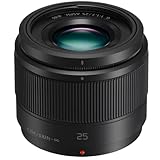
4. Panasonic LUMIX G 25mm f/1.7: Best for Micro Four Thirds
Panasonic LUMIX G Lens, 25mm, F1.7 ASPH, Mirrorless Micro Four Thirds, H-H025K (USA Black)
25mm Micro Four Thirds
f/1.7 max aperture
46 mm filter thread
125 g
8 elements in 7 groups
Pros
- Natural 50mm equivalent view on Micro Four Thirds
- Bright f/1.7 aperture with pleasing background blur
- Very small and light at 125 g
- Quiet stepping motor autofocus
- Nano surface coating reduces flare
Cons
- No image stabilization in the lens
- Not weather sealed
- Micro Four Thirds mount only
The 25mm on a Micro Four Thirds body gives a 50mm equivalent view, and the whole lens weighs 125 grams and measures 2.05 inches long. Paired with a compact body it disappears in a jacket pocket, which is exactly what street work rewards.
At f/1.7 you get background separation without the depth of field collapse of an f/1.2, which many candid shooters prefer because more of the scene stays readable. Seven diaphragm blades and nano surface coating handle flare well.
Owners consistently praise the pocketability, the quiet focusing and the blur quality. The optical design is 8 elements in 7 groups including 2 aspherical elements and 1 ultra-high refractive element, with a 47 degree angle of view and a 46 mm filter thread.
What you give up is durability and stabilization. There is no image stabilization in the lens, so you need a body with in-body stabilization or a fast enough shutter speed. It is also not weather sealed, which rules it out for sustained rain work.
When this lens makes sense
This is the one for Micro Four Thirds shooters who want a normal field of view in the smallest possible package. The quiet stepping motor also makes it a sensible choice if you record video between street frames.
When it is the wrong choice
Pass if you need weather sealing, or if you shoot without body stabilization in low light. The 50mm equivalent view also means you cannot get a layered wide composition without stepping back.
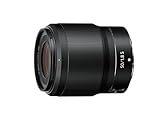
5. NIKKOR Z 50mm f/1.8 S: Most Versatile for Full-Frame Nikon
Nikon NIKKOR Z 50mm f/1.8 S | Premium Large Aperture Prime Lens (nifty Fifty) for Series mirrorless Cameras | USA Model, Black
50mm full frame prime
f/1.8 max aperture
62 mm filter thread
14.56 oz
Weather resistant
Pros
- Exceptional sharpness that holds up across the frame
- Fast accurate and quiet autofocus with eye detection
- Weather-sealed metal build
- Good flare resistance and controlled fringing
- Beautiful creamy background blur
Cons
- Larger and heavier than typical 50mm primes
- Cat's-eye bokeh toward the frame edges wide open
- Long lens hood adds bulk
- Relies on body VR for stabilization
This is the modern benchmark normal prime for the Z mount. Reviewers describe sharpness that holds across the frame and across apertures, plus distortion that is virtually absent, which matters when you are shooting architecture straight-on from across a street.
At 14.56 ounces it is not a pocket lens, and the long hood adds further length. What you get in return is a weather-sealed metal barrel with a 46.8 degree angle of view and a 62 mm filter thread.
The autofocus is the standout feature in real use. It uses an ultra-quiet stepping motor, and owners pair it with reliable eye detection for candid work, which is the modern equivalent of pre-focusing. Five-axis VR is supplied by the camera body rather than the lens.
Reported drawbacks are size and rendering at the edges: mild cat’s-eye bokeh wide open, and a hood that makes the lens look bigger than its numbers suggest. It also works with F-mount NIKKOR lenses through the FTZ adapter, which broadens your options considerably.
When this lens makes sense
Pick it if you own a full-frame Nikon Z body, shoot in changeable weather, and want one lens that never disappoints optically. The quiet motor and eye detection make it excellent for faces in crowds.
When it is the wrong choice
It is too heavy if your priority is discretion and long walking days. If you want the smallest possible lens, or if you need stabilization built into the lens for video on a body without in-body stabilization, look elsewhere in this list.
6. Fujinon XF35mmF2 R WR: Best for Discreet Street Work
Fujifilm Fujinon XF35mmF2 R WR – Silver
35mm Fujifilm X
f/2 max aperture
43 mm filter thread
0.17 kg
8 sealing points
Pros
- Classic 35mm view in a small discreet body
- Very fast 0.08 second autofocus
- Weather resistant with 8 sealing points
- 9 rounded blades for smooth circular bokeh
- Nano-GI coating controls flare
Cons
- f/2 is slow for very low light
- No optical image stabilization
- Focusing ring is very narrow
The 35mm on Fujifilm X is a real 35mm equivalent view, and this lens is the smallest full-frame-style focal length in the Fujifilm range. Reviewers routinely name it as the best street photography lens for that system, and the reason is proportion rather than aperture.
Weather resistant sealing runs to 8 points and is rated to minus 10 degrees, so it holds up in conditions that would worry an unsealed compact prime. Inner focus keeps the front element from rotating while focusing.
The autofocus is startlingly quick at 0.08 seconds and near silent, which is unusual at this price class and size. Nano-GI coating suppresses ghosting and flare when you are shooting into shop windows or street lighting, and the 9-blade aperture gives circular bokeh with a 44.2 degree angle of view.
The trade is aperture and handling. f/2 is a stop slower than the fast primes in this list, so evening work needs higher ISO. There is no optical stabilization, and the manual focus ring is narrow enough that some users find it awkward.
When this lens makes sense
It suits Fujifilm X owners who work in rain and cold and who need a lens that will not draw attention when raised. The fast autofocus and silent operation make it good for quick candid sequences with people.
When it is the wrong choice
Choose the f/1.4 Fujifilm prime if night street work is your main activity, or this one if you need a wider view. Minimum working distance is about 13 inches, so very close detail work is limited.
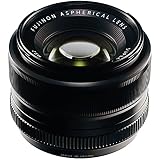
7. Fujifilm XF35mmF1.4 R: Best for Manual-Focus Street
Fujifilm XF35mmF1.4 R
35mm Fujifilm X
f/1.4 max aperture
52 mm filter thread
187 g
Manual focus
Pros
- Characterful bokeh rendering wide open
- Classic 35mm view for street and environmental portraits
- Sharp metal barrel with solid manual focus feel
- Distortion and vignetting well controlled
Cons
- Manual focus only
- Not weather resistant
- 187 g is heavy for its size
- Slower to refocus when subjects move
This is the deliberate choice. There is no autofocus at all, and if you have decided you want to focus yourself you get an f/1.4 aperture, a 35mm equivalent view and a metal barrel that feels properly machined in the hand.
The optical design is 8 elements in 6 groups including 1 aspherical element, with a 44.2 degree angle of view and a 52 mm filter thread. Aperture runs from f/1.4 to f/16 across 7 diaphragm blades.
Owners buy it for the rendering. Bokeh wide open is described as creamy and characterful, and distortion and vignetting are both well controlled, which keeps straight architectural lines straight. Manual focus feel is the solid part of the manual focus experience.
Be clear about what you are accepting: no autofocus, no stabilization, no weather resistance, and 187 grams, which is heavy for a lens this small. Refocusing is slower than an autofocus motor when a subject crosses your frame quickly.
When this lens makes sense
It fits photographers who shoot deliberately at a slower pace, who like shallow depth of field portraits in daylight or shade, and who value a mechanical focus ring over speed. Working at f/5.6 to f/8 with focus set once is a natural fit for it.
When it is the wrong choice
Pass if you need to catch fleeting gestures, shoot video, or work in rain without protection. For a Fujifilm X body where you want speed and discretion in a small package, the 35mm f/2 covers that better.
8. Canon RF35mm F1.8 IS STM Macro: Best for Canon RF
Canon RF35mm F1.8 is Macro STM Lens
35mm full frame
f/1.8 max aperture
5-stop IS
0.17 m min focus
10.88 oz
Pros
- Sharp and contrasty wide open with 5-stop stabilization
- 0.5x macro magnification at 0.17 m minimum focus
- Fast and quiet STM autofocus
- Small and light for an RF prime
- 12 pin communication with control ring
Cons
- Autofocus behaviour varies between copies
- Control ring and focus ring look identical
- Some purple fringing wide open
- Not weather resistant
Built-in stabilization is the headline. Five stops of optical image stabilization inside a 35mm f/1.8 prime is unusual, and it means you can hold slower shutter speeds in evening street light than the aperture alone would allow.
The macro capability is a genuine second use. At 0.5x magnification and a 0.17 m minimum focus distance you can shoot half-life-size close-ups of hands, signage textures and shop displays without swapping glass. It is compatible with Canon Macro Twin and Macro Ring Lites.
Optically, owners rate the sharpness and contrast as matching higher-tier lenses wide open. The STM autofocus is fast and quiet, and at 10.88 ounces the lens is small next to other RF primes. The angle of view is listed at 63.43 degrees with a 52 mm filter thread.
The main complaint theme is autofocus consistency. Some owners report hunting and a slight focus shift wide open on their copy, and some worked around it by focusing manually for critical frames. Wide-open high-contrast edges also show a bit of purple fringing, and there is no weather sealing.
When this lens makes sense
It is the strongest all-round street lens on the Canon RF mount, especially for evening work and for photographers who also make close-up images. The 12 pin communication system adds a control ring for aperture or exposure adjustment.
When it is the wrong choice
Test autofocus on your own body before committing if you rely on fast, silent acquisition of moving subjects. If you work in sustained rain, or if you want a wider view than 35mm, this focal length will feel restrictive.
9. NIKKOR Z 40mm f/2: Best for Travel and Walk-Around
Nikon NIKKOR Z 40mm f/2 | Large Aperture 40mm Prime Lens for Z Series mirrorless Cameras | Nikon USA Model
40mm full frame
f/2 max aperture
52 mm filter thread
6.08 oz
9 rounded blades
Pros
- Exceptionally small and light at 6.08 oz
- 9 rounded blades produce natural bokeh
- Quick quiet autofocus with very little focus breathing
- Custom click-less control ring for exposure changes
- f/2 balances isolation with usable depth of field
Cons
- Plastic mount and housing feel less refined
- Sharpness sits below S-Line primes
- No optical image stabilization
Forty millimetres on full frame sits between the classic 35mm and the intimate 50mm, and it forces you to compose rather than survey. Owners describe exactly that effect: a fixed focal length that makes you move your feet instead of turning a zoom ring.
At 6.08 ounces this is the second lightest lens in this guide, with a 38 degree angle of view and a 52 mm filter thread. It works on both FX and DX bodies, where the DX field of view is equivalent to 60mm.
Two features make it feel current. The custom click-less control ring can be assigned to aperture, ISO or exposure compensation, which lets you change exposure without taking your eye off the subject. Focus breathing is well suppressed, so reframing after focus does not shift your framing.
The honest drawback is build and rendering. The plastic mount and housing feel a step below Nikon’s S-Line bodies, and sharpness sits slightly under premium primes. There is no optical stabilization, so you need body stabilization or a fast shutter speed.
When this lens makes sense
It is built for carrying all day on a trip where weight compounds, and for photographers who want their street frames tighter than a 35mm gives. The control ring speeds up exposure changes in bright sun.
When it is the wrong choice
Choose a metal-barrelled prime if you shoot in harsh weather or want maximum sharpness. If you need a documented distance scale for zone focusing, this lens does not provide one.
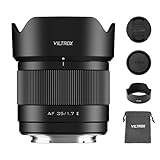
10. VILTROX AF 35mm f/1.7 Air: Budget Pick for Sony E
VILTROX AF 35mm F1.7 Air E Lens for Sony E Mount, f/1.7 Large Aperture APS-C Auto Focus Prime Lens Compatible with Sony E-Mount Mirrorless Cameras ZV-E10 II EV10 a6700 a6600 a6400 a7c ii a7rv a7iii
35mm APS-C prime
f/1.7 max aperture
0.33 m min focus
180 g
11 elements in 9 groups
Pros
- Very lightweight and pocketable at 180 g
- f/1.7 aperture with 9 blades for large smooth bokeh
- Silent STM autofocus with eye and face detection
- Good chromatic aberration correction for the class
- Sharp and essentially distortion free
Cons
- No optical image stabilization
- Not weather resistant
- Newer third-party design with a smaller support base
Note the equivalence first: this is a 35mm on an APS-C sensor, so the field of view is about a 53mm full-frame equivalent. That places it as an intimate standard lens rather than a classic wide street view, and it changes who should buy it.
What you get for the money is a fast f/1.7 aperture, 9 aperture blades, and a body weighing 180 grams with an approximate 0.33 m minimum focus. The optical design lists 11 elements in 9 groups with 1 ED element, 1 aspherical and 2 high refractive index elements.
Buyers highlight value most. Autofocus is silent STM with eye and face detection support, which means you can run the same face-detection street setup that Fujifilm and Sony bodies favour. HD nano coating is applied to suppress flare and ghosting, and owners report crisp, essentially distortion-free results.
The limitations are consistent across third-party primes at this level: no optical image stabilization, no weather resistance, and a newer design with a smaller support base than first-party lenses. In-body stabilization on your body will need to carry the burden in dim light.
When this lens makes sense
It suits Sony E APS-C shooters on a budget who want a bright lens with subject separation for street portraits. Eye and face detection makes it practical for quick candid sequences.
When it is the wrong choice
Pass if you want a true 35mm field of view, since the crop factor narrows it to a 53mm equivalent. Also skip it for outdoor work in bad weather or for video that depends on smooth, quiet focus transitions.
11. M.Zuiko Digital 17mm f/1.8: Lightest Option and Only Focus Scale Here
OM SYSTEM Olympus M.Zuiko Digital 17mm F1.8 Silver for Micro Four Thirds System Camera, Compact Design, Beautiful Bokeh, Bright
17mm Micro Four Thirds
f/1.8 max aperture
120 g metal body
Distance scale clutch
46 mm filter thread
Pros
- Exceptionally small and light at 120 g
- Snapshot Focus clutch with a distance scale for zone focusing
- Fast near-instant micromotor autofocus
- Low flare and controlled colour fringing
- Discreet styling that keeps you unnoticed
Cons
- Corners stay soft when stopped down
- Limited close focusing distance
- Focus clutch can clash with some body settings
- Not weather sealed and no hood included
This is the only lens in the entire guide with a physical distance scale, and that single fact makes it the one to buy if you have ever wanted to try zone focusing with a mirrorless body. The Snapshot Focus clutch pulls back to expose a scale and a damped manual focus throw.
At 17mm on Micro Four Thirds you get a 34mm equivalent view, which is the closest thing in this list to the classic street framing on the smallest possible system. The body is 120 grams of metal with a 46 mm filter thread.
Autofocus uses a micromotor that owners describe as fast and near-instant, including in low light. Image quality shows good centre sharpness wide open with low flare and well controlled colour fringing, and the low profile helps you stay unnoticed.
The trade-offs are consistent. Corners are soft wide open and do not improve dramatically when you stop down, close focusing is limited, and the manual clutch can feel awkward on bodies where certain settings disable focusing assists. It is not weather sealed, no hood is included, and reviewers question the price against what the sensor resolves.
When this lens makes sense
Buy it if you shoot Micro Four Thirds and want to learn pre-focus shooting rather than chasing autofocus. The scale plus a small aperture gives you a repeatable zone, and the weight is negligible in a bag.
When it is the wrong choice
Skip it if edge-to-edge sharpness matters more than pocketability, or if you need weather protection. If you want the same system with a wider aperture and no focus scale, the Panasonic 25mm f/1.7 is the calmer alternative.
12. Tamron 35mm f/2.8 Di III OSD: Best Full-Frame Starter Prime
Tamron 35mm f/2.8 Di III OSD M1:2 Lens for Sony Full Frame/APS-C E-Mount
35mm full frame
f/2.8 constant aperture
1:2 macro focus
7.4 oz
Moisture resistant
Pros
- Sharp across the frame with almost no visible fringing
- Very compact and light at 7.4 oz
- 1:2 macro close focus for detail shots
- Smooth consistent bokeh at all apertures
- Six year Tamron USA warranty
Cons
- Autofocus is slow and can hunt on moving subjects
- No optical image stabilization
- Constant f/2.8 needs higher ISO indoors
- Not fully weather sealed
A true 35mm on full frame, 7.4 ounces, moisture resistant and backed by a six year Tamron USA warranty. Owners routinely describe the optics as the best in this class at this level of cost, and the 63 degree angle of view is a generous street framing.
The 1:2 macro close focus ratio is a nice extra for detail work, and bokeh is reported as smooth and consistent at every aperture rather than only wide open. High MTF performance is the phrase reviewers use most often.
The autofocus is the known compromise. It is described as slow and noisy, and it can lose focus or rack focus on moving subjects, which matters most for video and for pedestrians crossing quickly. It still acquires focus on static or slowly moving subjects.
There is no optical image stabilization despite some listings suggesting otherwise, so confirm with the body. The constant f/2.8 aperture needs higher ISO or slower shutter speeds indoors, and the construction is moisture resistant rather than fully weather sealed.
When this lens makes sense
It suits full-frame Sony shooters who want a genuine 35mm at minimal weight and who mostly work in daylight or good light. The close focus ratio is useful for texture and detail frames alongside street images.
When it is the wrong choice
Choose a faster lens if you photograph at night, and choose one with better autofocus behaviour if you chase movement. If you need full weather sealing for all-weather work, this one is not the answer.
How to Choose a Street Photography Lens
Pick the focal length band first
Start with the band, then worry about the brand. Here is how the main options behave on the street.
24mm equivalent fits layered groups and cramped interiors into the frame and exaggerates perspective, but you have to step close and edges bend.
28mm equivalent is the wide-angle workhorse: enough context, less distortion than 24mm, still light enough for all-day walking.
35mm equivalent is the classic. It balances context against proximity and keeps you at a comfortable distance from strangers.
40mm equivalent is the sweet spot. You lose peripheral incident and gain a tighter, more deliberate composition.
50mm equivalent is the intimate standard. Subject separation is strong, but you will be filtering people out of the frame as often as you isolate them.
Convert crop sensor numbers before you shop
This is where most beginners get stuck. Multiply the stated focal length by the crop factor to get the full-frame equivalent: APS-C is a 1.5x crop on Sony, Nikon, Canon and Fujifilm, and a 2x crop on Micro Four Thirds. So a 23mm on Fujifilm X gives roughly a 35mm view, a 30mm on Sony APS-C gives about 45mm, a 25mm on Micro Four Thirds gives 50mm, and a 17mm on Micro Four Thirds gives about 34mm.
Decide whether you will zone focus
Zone focusing is the technique street photographers use to stop focusing per frame: set focus to a distance, choose an aperture that gives adequate depth of field, raise the camera and shoot without refocusing. Forum consensus is that a 35mm lens at 6 feet and f/11 gives roughly an 8-foot zone.
Modern autofocus primes rarely carry a distance scale or depth of field markings, which is why the technique feels unavailable. Of the twelve lenses here, the M.Zuiko Digital 17mm f/1.8 is the one with a physical distance scale and a manual focus clutch. Everything else assumes you will use autofocus or a focus peaking display instead.
Choose between a prime and a zoom
Primes are smaller, quieter to carry, and force you to commit to a framing. A zoom saves the moments when a subject appears at 24mm while you are set up for 35mm, at the cost of bulk and weight. My experience is that one lens you always carry beats two you leave behind, which is why every pick above is a prime.
Match the lens to the body and the weather
Two questions settle most remaining choices. Does your body have in-body image stabilization? If not, prioritize lenses with optical stabilization, which here means the Canon RF35mm F1.8 IS STM Macro. And do you shoot in rain and cold? If yes, restrict your shortlist to weather-sealed glass: the Sigma 16mm, the NIKKOR Z 50mm f/1.8 S and the Fujinon XF35mmF2 R WR.
A short note on shooting in public
Photographing in public places is generally permitted where there is no expectation of privacy, but expectations differ by country and by situation. Be discreet with children and avoid photographing people in private spaces such as through windows or inside venues that restrict photography. Being polite costs nothing and protects your access to these places.
How we chose these twelve
I weighted compactness and weight heavily, because a lens you leave in the bag is a lens that never takes a photograph. Then focal length band, then maximum aperture for low-light work, then focus behaviour, and finally build and weather sealing. The weights in this guide come from manufacturer specifications, and the pros and cons reflect what reviewers report about using them.
Frequently Asked Questions
Is 50mm or 85mm better for street photography?
Neither is the default choice, though both work. A 50mm equivalent gives a normal view that isolates subjects but filters out much of the surrounding scene, so you will often miss layers of the street. An 85mm equivalent lets you shoot undetected from across the road, which is powerful for portraits and for candid moments, but it demands a wide aperture, a longer body and more distance between you and strangers. Most working street photographers start at 35mm and add one longer lens later.
Which lens is better for street photography, 24mm or 35mm?
Choose 35mm for most people. It includes enough of the environment to explain the scene while keeping you at a comfortable distance, and it distorts faces less than a wide angle. Choose 24mm equivalent when you need several people in frame, when you are shooting in tight interiors or stairwells, or when you want dramatic foreground and background separation with exaggerated perspective. The cost of 24mm is that edges bend and you must stand closer to your subject.
Is 28mm or 35mm lens better for street photography?
35mm is the more balanced default and the most common street focal length on full frame. 28mm equivalent gives you noticeably more room in frame and handles crowded markets or narrow lanes better, at the cost of more edge distortion and more people falling outside your composition. If you can only carry one lens, take 35mm. If you already own one and want more coverage, 28mm equivalent is the natural second lens.
What type of lens is best for street photography?
A compact fast prime between 28mm and 50mm on a full-frame equivalent basis. Street work rewards lenses that are light enough to carry for hours, small enough not to announce themselves, and wide enough to react instantly. Most photographers choose a prime rather than a zoom because weight compounds over a long walk, and a maximum aperture of f/1.8 to f/2.8 gives enough light for evening work without pushing ISO very high.
Which prime lens should I buy?
Match the answer to your mount and your body size. Canon EF DSLR and APS-C Canon owners have the EF 50mm f/1.8 STM. Canon RF shooters have the RF35mm F1.8 IS STM Macro with built-in stabilization. Nikon Z users can take the 40mm f/2 for travel weight or the 50mm f/1.8 S for maximum sharpness. Sony E full frame suits the Tamron 35mm f/2.8, while Sony APS-C suits the Sigma 30mm f/1.4. Fujifilm X shooters have the 35mm f/2 or the manual-focus 35mm f/1.4, and Micro Four Thirds users have the OM 17mm f/1.8 or the Panasonic 25mm f/1.7.
What are 35mm lenses good for?
A 35mm gives a natural, undistorted view that feels close to human perspective, which makes it the standard focal length for street, documentary and travel work. On full frame it frames a person with some environment around them. On APS-C it is roughly a 53mm equivalent and behaves more like a short telephoto, and on Micro Four Thirds a 17mm behaves like about a 34mm equivalent. The same view also suits environmental portraits, food, travel and everyday photography.
What is the 20-60-20 rule in photography?
It is a composition guideline rather than a lens rule. Place your subject near 20 percent of the frame from one edge, near 60 percent, or near 80 percent, and let the remaining space create negative space and direction. Photographers use it to stop centring every subject and to give images breathing room. For street work it pairs well with a fixed prime, because the fixed framing encourages you to move until the subject lands on a third rather than the centre.
What is the best analog camera?
For street work the classic answer is a small 35mm rangefinder with a fixed 35mm or 40mm lens, such as a Contax T or T2, or an Olympus 35 RC. The fixed lens removes the temptation to change glass mid-shoot and keeps you discreet. Fujifilm X100-series digital cameras with fixed 23mm and 33mm lenses borrow the same idea, and the Fujinon XF35mmF1.4 R in this guide brings a manual-focus 35mm view to a modern body.
Final Verdict
After working through all twelve, the best lenses for street photography resolve into a short list of four decisions. Buy the Canon EF 50mm f/1.8 STM if you want the smallest, lightest prime that still works at f/1.8. Buy the NIKKOR Z 50mm f/1.8 S if you want the sharpest and best-sealed option and can carry the weight. Buy the Canon RF35mm F1.8 IS STM Macro if stabilization and close focus matter to your work. Buy the Fujinon XF35mmF2 R WR if you want a true 35mm view that stays discreet in bad weather.
For anyone still unsure, start with your mount, check whether your body has in-body stabilization, and pick the lightest lens in the band you want to shoot. If you want a broader view of how optics get used, our guide to Barlow lenses for planetary viewing covers the other end of the focal length range.