

Lake paddling is the easiest place to start kayaking and the fastest place to find out that you picked the wrong boat. There is no current to fight, no tide table to read, and a bad fit still shows up on the second trip instead of the tenth.
After working through spec sheets, warranty terms and thousands of owner reviews across ten boats, these are the best kayaks for lakes in 2026 for the money most people actually spend on a first or second kayak. We weighted stability and tracking first, then carry weight, because a boat you cannot get to the water is a boat you stop using.
- Best Overall: Intex Explorer K2 – stable tandem platform, 400 lb rating, folds to a bag that fits most cars.
- Best Hard Shell: Pelican Argo 100X – 10 ft multi-chine sit-in at 36 lb with a dry cockpit.
- Best Inflatable for Fishing: Intex Excursion Pro K2 – rigid inflatable with rod holders, tackle space and twin skegs.
- Best Value: Intex Challenger – the lowest-cost way into kayaking, with a 400 lb tandem rating.
- Best Hard Shell for Fishing: Lifetime Tamarack Angler 100 – 10 ft HDPE with three rod holders and a 5-year warranty.
- Best for Beginners: Perception Tribe 9.5 – sit-on-top entry, framed seat, 300 lb capacity.
- Best for Tandem Families: Lifetime Kokanee 10 ft 6 in – converts from solo to two-up with quick-release seats.
- Best for Larger Paddlers: Perception Flash 9.5 – 325 lb rating in a 41 lb sit-in.
One note before the picks: this list is built from manufacturer specifications and owner review patterns, not from a season of our own float miles. Where we quote a spec, it comes from the manufacturer listing. Where we describe how a boat feels, we are summarizing what owners report in reviews. We mark the difference as we go.
Table of Contents
- Top 3 Picks for Lake Kayaking in 2026
- All 10 Best Kayaks for Lakes Compared in 2026
- How We Evaluated These Lake Kayaks
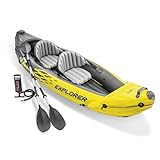
- 1. Intex Explorer K2 Inflatable Tandem Kayak – Best Overall Lake Kayak
- 2. Intex Challenger Inflatable Kayak – Best Value Entry Boat
- 3. Intex Excursion Pro K2 Inflatable – Best Inflatable for Anglers
- 4. Lifetime Tamarack Angler 100 Fishing Kayak – Best Hard Shell for Fishing
- 5. Pelican Sentinel 100X Sit-On-Top Angler – Most Comfortable Small Fishing Kayak
- 6. Pelican Argo 100X Recreational Sit-In Kayak – Best Hard Shell Sit-In
- 7. Perception Flash 9.5 Sit-In Fishing Kayak – Best for Larger Paddlers
- 8. Perception Tribe 9.5 Sit-On-Top Kayak – Best for Families and Beginners
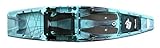
- 9. Perception Outlaw 11.5 Sit-On-Top Fishing Kayak – Best Big-Water Angler Boat
- 10. Lifetime Kokanee 10 ft 6 in Sit-On-Top – Best Tandem Sit-On-Top
- Hard Shell vs Inflatable Kayaks for Lakes
- How to Choose a Kayak for Lake Paddling
- Lake Kayaking Safety: PFDs, the 120 Rule and Cold Water
- Frequently Asked Questions
- Final Verdict: Which Lake Kayak Should You Buy?
Top 3 Picks for Lake Kayaking in 2026
These three cover the most common lake-paddling situations: a full-featured inflatable, a hard-shell sit-in, and a no-fuss budget inflatable.

All 10 Best Kayaks for Lakes Compared in 2026
Every boat below is listed with its real length, carry weight and capacity rating so you can match it to your lake and your back.
| Product | Specifications | Action |
|---|---|---|
| Intex Explorer K2 Inflatable Tandem |
|
Check Latest Price |
 Intex Challenger Inflatable Intex Challenger Inflatable |
|
Check Latest Price |
 Intex Excursion Pro K2 Inflatable Intex Excursion Pro K2 Inflatable |
|
Check Latest Price |
 Lifetime Tamarack Angler 100 Fishing Kayak Lifetime Tamarack Angler 100 Fishing Kayak |
|
Check Latest Price |
 Pelican Sentinel 100X Sit-On-Top Angler Pelican Sentinel 100X Sit-On-Top Angler |
|
Check Latest Price |
| Pelican Argo 100X Recreational Sit-In |
|
Check Latest Price |
 Perception Flash 9.5 Sit-In Fishing Kayak Perception Flash 9.5 Sit-In Fishing Kayak |
|
Check Latest Price |
 Perception Tribe 9.5 Sit-On-Top Perception Tribe 9.5 Sit-On-Top |
|
Check Latest Price |
 Perception Outlaw 11.5 Sit-On-Top Angler Perception Outlaw 11.5 Sit-On-Top Angler |
|
Check Latest Price |
 Lifetime Kokanee 10 ft 6 in Sit-On-Top Lifetime Kokanee 10 ft 6 in Sit-On-Top |
|
Check Latest Price |
How We Evaluated These Lake Kayaks
We read this category the way a buyer should: manufacturer specifications first, owner reviews second, forum patterns last as a sanity check.
Specifications decide the objective stuff. Length, beam, carry weight, capacity rating, hull material, seat style and warranty length come straight from the manufacturer listing, and those numbers decide whether a boat fits your vehicle, your garage and your body.
Owner reviews decide everything subjective. With more than 50k reviews across this group, patterns are easy to spot: the same tracking complaints show up on wide sit-on-tops, the same short-paddle complaints show up on every inflatable, and the same seat-clip failure gets repeated on molded plastic fishing rigs.
Our honest limit: nobody here logged a season of float miles on these boats. Where we say a boat feels stable or slow, that is an owner consensus, not our own measured reading. We have tried to keep every claim traceable to a spec or a review pattern, and we list the drawbacks for every pick instead of only the good parts.
1. Intex Explorer K2 Inflatable Tandem Kayak – Best Overall Lake Kayak
INTEX Explorer Inflatable Kayak 2-Person Portable Set with Paddles and Pump
10 ft 3 in tandem inflatable
35 lb packed
400 lb capacity
Removable skeg
Pros
- Inflates in about 5-10 minutes and folds to a bag most cars can swallow
- I-beam floor with high-buoyancy side chambers handles light chop
- Removable skeg keeps it tracking straighter than most cheap inflatables
- Air seats with adjustable backrests stay comfortable on longer sessions
- Handles rocks and brush without damage
Cons
- Included 86 inch paddles feel cheap and run short for the beam
- Tandem seat spacing interferes for smaller paddlers
- Tracking is slower than any hard shell
- Vinyl hull can split along seams if dragged over rock
The Explorer K2 is the one I keep coming back to because it makes the fewest compromises in the places that matter on a lake. The inflated size is 10 ft 3 in by 3 ft, which is wide enough to feel planted and short enough to turn in a cove.
Stability is the headline. The I-beam floor and high-buoyancy side chambers mean a small child can shift around in the bow without the boat starting to tip, and owners consistently describe it as calmer than the price suggests.
The removable skeg matters more than people expect. Lake paddlers on r/Kayaking repeatedly point out that a boat without directional control makes the bow wag back and forth stroke by stroke, and the skeg is the cheapest fix for that complaint.
Transport is the other half of the deal. At 35 lb packed, deflating into the carry bag and walking it from the car is a realistic solo routine, and Boston valves mean owners are paddling within about 5 to 10 minutes of unpacking.
Who this boat suits
A couple, a family with a kid in the bow, or one paddler who wants room for a cooler and a dog in the back. The 400 lb rating covers two adults plus a full day of gear, which is more than the boat’s own dimensions suggest.
It also suits anyone whose storage situation rules out a hard shell on a wall or in a garage rack. If your boat lives in a closet between outings, this is the realistic option.
Who should pass on it
Anyone who cares about glide or wants to cover distance fast. Inflatable PVC simply does not track or glide like a rigid hull, and owners say so directly.
Also skip it if you plan to drag the boat across gravel. The vinyl hull is vulnerable to heat and can split along a seam, and the warranty is a 90-day limited one rather than a multi-year hull warranty.
2. Intex Challenger Inflatable Kayak – Best Value Entry Boat
INTEX Challenger Inflatable Kayak Series: Includes Deluxe 86in Kayak Paddles and High-Output Pump – SuperStrong PVC – Adjustable Seat with Backrest – Removable Skeg – Cargo Storage Net
11 ft 6 in inflatable
32.7 lb packed
400 lb capacity
Removable skeg
Pros
- Quick inflation gets you on the water within about 15 minutes
- Lightest packed weight in this group at 32.7 lb
- Folds small enough to carry to the launch without a roof rack
- SuperStrong PVC tolerates rocks and shallow rapids
- Front and rear cargo nets for a day of gear
Cons
- Seats have almost no back support and are poorly shaped
- Flat bottom gives up lateral and directional stability
- Included paddles are flexible and basic
- Water collects in the hull and is awkward to drain
- Quality control varies and the skeg is sometimes missing
The Challenger is the boat people buy when the question is whether kayaking is something they want to do at all. Owners frame it as a rental substitute that pays for itself after a handful of outings, and at 32.7 lb packed it is also the easiest boat here to walk to a launch.
At 11 ft 6 in it is longer than most of the inflatables in this list, which helps it move in a straight line better than its price suggests. The removable skeg adds more control still.
The compromise shows up in the cockpit. The flat bottom and narrow 2 ft 6 in beam feel twitchier in wind or chop than the Explorer K2, and reviewers describe the seats as barely-there pads with rear straps instead of real backrests.
There is also the practical matter of the paddles. Every Intex inflatable here ships with short, flexible 86 inch oars, and owners almost universally replace them after a season. Budget for that before you budget for anything else.
Who this boat suits
A first-time paddler on a calm inland lake who wants zero storage commitment. The 400 lb capacity and cargo nets mean you can carry a child, a dog or a cooler without switching boats.
It also suits cold-shore launch sites and apartment dwellers. Everything fits in a trunk, and a bad weather day costs you nothing but a deflate.
Who should pass on it
Paddlers who want to feel the water through the hull, or who plan long distances. This is a float-and-paddle boat, not a touring boat.
Pass if you are buying for someone who will fuss over seat comfort for six-hour days. The 90-day limited warranty also means defects need to surface early, so inspect the boat carefully the day it arrives.
3. Intex Excursion Pro K2 Inflatable – Best Inflatable for Anglers
INTEX Excursion Pro K2 Inflatable Kayak 2-Person Set with Paddles & Pump
12 ft 7 in fishing inflatable
44.7 lb packed
400 lb capacity
Twin skegs
Pros
- 3-ply laminate and high-pressure inflation give real rigidity
- Two removable skegs let you tune for deep or shallow water
- Stainless D-rings and extra bow and stern storage hold a full day of gear
- Stable enough to carry two adults plus a child
- Rod holders and a phone mount are included
Cons
- Included paddles are the weakest part of the package
- Seat backrest offers little lumbar support on long days
- Bundled rod holders are shallow and barely functional
- 44.7 lb is a heavy solo carry
- Occasional seam and baffle leaks on early units
The Excursion Pro K2 is the most kayak-like inflatable in this group, and owners say exactly that. The 3-ply SuperStrong PVC laminate and spring-loaded high-pressure valves give it a rigidity that separates it from the cheaper models here.
Angling is the design centre. It measures 12 ft 7 in long, carries stainless steel D-rings, detachable rod holders and a phone or camera mount, and has extra storage in both the bow and stern.
The twin removable skegs are the sleeper feature. Fit the large skeg on open water for tracking, switch to the small one in shallow coves and weed beds, which is the exact problem inflatable anglers hit every spring.
Tracking is the best of the three inflatables here. Owners report moving at a genuinely usable pace once the boat is inflated to full pressure, and the wide 37 in beam stays planted with a second person aboard.
Who this boat suits
Anglers who want a fishing setup without a trailer or a roof rack system. Pack the boat, the rod holders and the cooler into a small SUV and launch from a public ramp.
It also suits paddlers who want a tandem hull for family trips but plan to fish solo much of the time, since the boat works fine in either configuration.
Who should pass on it
Anyone who has to carry their boat far from a vehicle. At 44.7 lb it is the heaviest packed inflatable here, and it is a real load over a soft shoreline.
Skip it if you need a genuinely comfortable seat for ten-hour sessions. The backrest is thin, and the included rod holders are decorative more than functional, so plan on aftermarket ones. If you are weighing hard-shell fishing rigs instead, our fishing kayak picks for rivers go deeper on the moving-water trade-offs.
4. Lifetime Tamarack Angler 100 Fishing Kayak – Best Hard Shell for Fishing
Lifetime Muskie Angler Sit-On-Top Kayak with Paddle, Tan, 120″
10 ft HDPE fishing kayak
51 lb carry weight
275 lb capacity
Skeg and rod holders
Pros
- Stable flat bottom holds a course in chop and open water
- Light enough at about 51 lb for a solo roof-rack load
- Short enough to fit in a trunk when other boats will not
- Flush rod holders and two storage compartments cover the basics
- Durable HDPE shrugs off being dragged and stacked
Cons
- Drifts to one side when you stop paddling
- Included plastic paddle is flimsy and short
- Molded seat-mount clips bend under load
- Storage compartments need cup inserts that are not included
- Bottom plastic scuffs on ramps without a keel guard
The Tamarack Angler 100 is the boat you buy when you want a hard shell without buying a fishing kayak with a pedestal. The UV-protected HDPE hull is simple, cheap to replace, and 10 ft long, which is the sweet spot for lake fishing.
It is stable in a way anglers notice. The flat bottom with deep hull tracking channels and a sharp bow holds a line across open water, and the skeg helps when the wind picks up.
Storage is where it separates from the inflatable rivals. Two 6-inch compartments in the rear and centre take a tackle box and a small cooler, and the front and rear T-handles make solo loading reasonable at 51 lb.
The 5-year limited warranty is a genuine upgrade over the 90-day coverage on the Intex inflatables, and Lifetime hardware is easy to source when something breaks.
Who this boat suits
Anglers on budget who already have a paddle plan and want durability. It also suits anyone with a garage wall who finds the inflatable route too slow to set up for a quick evening trip.
Because it is 10 ft, it fits in a trunk. That is a real advantage over the 11 ft and 12 ft fishing boats when the parking is a hundred yards from the water.
Who should pass on it
Anyone who wants to stand and cast from the boat. This is a seated platform, and the listing does not include a standing deck.
Pass if you weigh more than 275 lb, or if you are fussy about tracking. Owners report the boat veering when you stop paddling, and the seat clips on the plastic seat mount are the most-reported failure on the whole boat.
5. Pelican Sentinel 100X Sit-On-Top Angler – Most Comfortable Small Fishing Kayak
Pelican Sentinel 100X – Angler Sit on top Fishing Kayak – Forest Mist – Lightweight – Ergolounge™ Seating System – 10 ft, Sentinel 100X Angler Fishing Kayak
9 ft 6 in sit-on-top
44.6 lb carry weight
275 lb capacity
ExoPak storage
Pros
- Ergolounge seat and high padded backrest are unusually comfortable
- ExoPak storage box can be packed at home and dropped in at the ramp
- Four rod holders give real multi-rod capability out of the box
- Under 10 ft and 44.6 lb so it stores and carries easily
- Molded-in side handles make solo transport simple
Cons
- Lighter polyethylene shell is less impact-resistant than premium rotomolded hulls
- 275 lb capacity is modest for its class
- Removable box storage holds bulky gear less securely than a tankwell
The Sentinel 100X solves the sit-on-top seating problem. Most boats this size give you a plastic chair, and the Ergolounge system here adds extra-thick cushioning plus a high, wide padded backrest, which reviewers single out as the feature that sets this hull apart on a sub-10-foot angler boat.
At 9 ft 6 in and 44.6 lb, it is also one of the easiest hard shells here to move. It stores against a wall, fits in most garages, and carries to a launch solo.
The ExoPak storage compartment is a genuinely clever design. You pack your gear at home, latch the box into the hull, and drop the whole thing in at the ramp instead of kneeling on gravel with a tackle bag.
Four rod holders come standard, two flush-mounted in the hull and two vertical in the ExoPak, which is enough for a real multi-rod setup without buying racks.
Who this boat suits
Anglers who sit for hours and who feel every hard plastic seat after two trips. It also suits paddlers with a small vehicle, a long carry, or no garage space for a 12 ft hull.
It is a good first fishing kayak for anyone who does not need to stand up and cast, and the lifetime limited hull warranty covers manufacturer defects for as long as you own it.
Who should pass on it
Paddlers over 275 lb. The capacity rating is lower than several similarly sized boats, and there is no way to adjust it.
Pass if you haul your hull over rocks regularly. This is a lighter polyethylene rather than rotomolded premium material, and reviewers note it marks and dents more readily. Bulky loose gear is also less secure in a removable box than in a moulded tankwell.
6. Pelican Argo 100X Recreational Sit-In Kayak – Best Hard Shell Sit-In
Pelican Argo 100X – Recreational Sit-in Kayak – 10 ft – Fade Deep Blue/White
10 ft sit-in
RAM-X polyethylene
36 lb carry weight
275 lb capacity
Pros
- Twin-arched multi-chine hull is exceptionally stable and easy to enter
- Lightest hard shell here at 36 lb so one adult can carry it
- Comfortable adjustable footrests that do not fatigue the legs
- Glides well and tracks where it is pointed
- Front hatch and rear tank fit a small cooler and tackle box
Cons
- Paddle is sold separately and must be added to the cost
- Tracking is only average in tight waterways
- Front hatch is small and awkward to reach
- Seat comfort fades after three or four hours
- A spray skirt is needed for open water or cold conditions
The Argo 100X is the boat we would put at the top of a shortlist for someone who wants to start paddling seriously rather than occasionally. It is a 10 ft sit-in with a twin-arched multi-chine hull, and that hull shape is why it feels planted in a way most entry-level boats do not.
Owners report that it refuses to tip even when a moving paddleboard clips the beam, which is the kind of stability that lets a beginner relax instead of holding on.
Carry weight is the quiet headline. At 36 lb this is the lightest rigid hull in the group, and a single adult can lift it onto a roof rack or walk it to a launch without planning the day around the portage.
Storage is properly designed too. The listed package includes adjustable footrests, an adjustable ERGOFORM padded backrest and seat cushion, a front storage hatch, bungee cords, a rear tank with a mesh cover, a cockpit table and bottle holders.
Who this boat suits
Solo paddlers on calm lakes who want a dry cockpit and a boat that tracks. The internal foam blocks and flatter hull add flotation, which is a small comfort when you are far from shore.
It also suits anyone moving up from an inflatable and noticing that PVC boats flex and wander. The difference in glide and tracking is the reason most owners stop upgrading after this one.
Who should pass on it
Budget buyers working from a strict number, because the paddle is not included. That is the single most-cited drawback in reviews and it is an easy one to walk into unknowingly.
Also pass if you need a boat for narrow, twisty waterways, since tracking and manoeuvrability are only average. The 275 lb rating is modest, and the seat is comfortable for three or four hours rather than a full day.
7. Perception Flash 9.5 Sit-In Fishing Kayak – Best for Larger Paddlers
Perception Kayaks Flash 9.5 | Sit Inside Kayak for Fishing and Fun | Two Rod Holders | Multi-Function Dash | 9′ 6″ | Sunset
9 ft 6 in sit-in
41 lb carry weight
325 lb capacity
Built-in rod holders
Pros
- 325 lb capacity gives real headroom for a bigger paddler or extra gear
- 41 lb is light enough for a single paddler to lift into a small vehicle
- Under-deck storage adds leg room that owners with bad knees specifically praise
- Short length turns quickly in shallow water and tight coves
- Built-in rod holders and rear storage make it a usable fishing boat
Cons
- Seat gets uncomfortable on long outings without a cushion
- Foot braces feel flimsy and are flagged as a possible failure point
- Tracking degrades noticeably in strong wind and chop
- Fits tightly between dashboard and tailgate in a small SUV
The Flash 9.5 exists for a problem a lot of buyers hit quietly: they outgrew a 275 lb kayak. Its 325 lb rating is the highest in this group of sit-ins, and it does not cost you the light weight that usually comes with extra capacity.
At 41 lb it still goes on a roof rack solo, which matters because the alternative answer to a capacity problem is usually a heavier boat you cannot lift.
The under-deck storage is worth understanding before you buy. By pushing the volume down under your feet, the hull gives you noticeably more leg room, and paddlers with knee problems call that out as the feature that made the boat work for them.
It is also a legitimate fishing boat, with built-in rod holders, a rear compartment and adjustable foot braces, so you are not choosing between a touring seat and angler features.
Who this boat suits
Paddlers over the 250 to 300 lb range who have been squeezed in other boats, and anyone carrying heavy gear such as a trolling motor battery or a camera kit.
It also suits people who fish shallow coves, because 9 ft 6 in turns tightly and will not drive its bow through a shallow pocket of water.
Who should pass on it
Anyone planning to paddle in wind. Reviewers call out a clear drop in tracking once wind and chop build, so a sheltered lake suits it far better than a big open one.
Pass if your trips run past three hours and you already know you dislike thin backrests, or if your vehicle has a short cargo area, since the hull is a tight fit in a small SUV.
8. Perception Tribe 9.5 Sit-On-Top Kayak – Best for Families and Beginners
Perception Kayaks – Tribe 9.5 – Sit on Top Kayak – Large Rear Storage with Tie Downs – 9.5 – Dapper
9 ft 6 in sit-on-top
46 lb carry weight
300 lb capacity
Frame seat
Pros
- Stable
- forgiving sit-on-top platform that suits beginners and families
- High-back frame seat with adjustable recline is far more supportive than a basic sit-on seat
- 5-year hull and deck warranty and made in the USA
- Generous rear storage with durable tie-downs for a full day
- Handles mild chop as comfortably as flat water
Cons
- Slower and less efficient than a sit-in kayak of the same length
- Wide beam means more spray in wind or chop
- Frame seat and tie-down hardware add weight and bulk
The Tribe 9.5 is the sit-on-top answer for people who will never sit in a wet cockpit. Getting in and out from a dock or a shallow beach takes seconds, and the wide 31.5 in beam is very hard to tip.
Most sit-on-tops give you a flat plastic seat and a sore back by the second hour. This one has a high-back frame seat with adjustable recline positions, which is the single biggest reason reviewers rate it well above its class.
It is not just a pool toy. At 9 ft 6 in, 46 lb and 300 lb capacity, with rear storage under tie-downs and a 5-year hull and deck warranty, it handles full days of gear and light open-water chop.
For families, the practical benefit is the entry height. Nobody has to hoist themselves over a cockpit rim, and a dog can usually climb aboard and settle without being lifted.
Who this boat suits
Beginners, families, and paddlers with any back or hip limitation that makes a low sit-in cockpit painful. It is also a good boat for wildlife watching and picnicking, where being able to stop and hold position matters.
Anyone who wants an American-made boat with a real multi-year warranty will like that this one is built by Confluence Outdoors and backed for five years on the hull and deck.
Who should pass on it
Paddlers who care about speed. Sit-on-top hulls of this length are wider and slower, and reviewers treat that as a straight trade rather than a flaw.
Skip it on a windy day when staying dry matters, since the wide beam throws more spray your way, and expect a wet cockpit in chop. The frame seat and tie-downs also add bulk to a hull that is otherwise light.
9. Perception Outlaw 11.5 Sit-On-Top Fishing Kayak – Best Big-Water Angler Boat
Perception Kayaks – Outlaw 11.5 Fishing Kayak – Sit on Top – Fold Away Lawn Chair Seat – 4 Rod Holders – Integrated Tackle Trays – 11.5 ft – Dapper
11 ft 6 in sit-on-top angler
425 lb capacity
4 rod holders
Tackle trays
Pros
- 425 lb rating gives a stable platform that supports standing casts
- Large rear tankwell plus front storage swallows a cooler and crates
- Fold-away frame seat beats a plain sit-on-top seat over long days
- Four integrated rod holders support multi-rod fishing with no racks
- Integrated tackle trays keep lures within arm's reach
Cons
- At 11 ft 6 in it is heavy and awkward for one paddler to carry
- Long hull tracks straight but turns slowly for tight shoreline work
- Premium price point for a fishing kayak
The Outlaw 11.5 is the most fishing-capable boat here, and the reason is the 425 lb rating. That much capacity on an 11 ft 6 in hull is a wide, rigid platform, and it is stable enough to stand and cast from rather than casting from a seated perch.
Storage is the other half of the argument. The large rear tankwell and front storage area take a cooler or a crate, and integrated tackle trays mean you are not digging through a bag while a fish is on.
The fold-away frame seat matters for long days. Compared with the flat plastic seats on most sit-on-top fishing boats, reviewers describe the difference as the feature that keeps them comfortable through a full afternoon.
Four integrated rod holders come as part of the hull, so a multi-rod setup does not require buying racks and drilling anything.
Who this boat suits
Serious anglers on open water who fish standing, carry serious gear, and have a cart or a second person at the ramp. It is also a good boat for fishing with a larger paddler aboard.
If you fish coves and shorelines where you need to pivot quickly, think twice, because this hull is built for covering water rather than working close in.
Who should pass on it
Solo paddlers without a cart. At 11 ft 6 in with a 35 in beam this is a two-person carry for most people, and manufacturer weight figures are not published for it.
Pass for beginners on small weedy lakes, where the turning radius is wrong and you will spend more time paddling around things than fishing. Our fishing kayak guide covers the lighter, more agile setups if that describes you.
10. Lifetime Kokanee 10 ft 6 in Sit-On-Top – Best Tandem Sit-On-Top
Lifetime Kokanee Sit-On-Top Kayak, Lime, 10’6″
10 ft 6 in sit-on-top
76 lb carry weight
425 lb capacity
Solo or tandem
Pros
- Tandem-capable hull with an unusually high 425 lb rating
- Wide stable platform that suits beginners and families
- Two quick-release seat backs with adjustable straps
- UV-protected HDPE with a 5-year limited warranty
- Multiple footrest positions for different paddler sizes
Cons
- At 76 lb it is the heaviest boat in this group and needs a cart or two people
- Large open cockpit catches spray and takes on water in chop
- Limited storage with one 6-inch hatch and a bungee system
The Kokanee is the odd one out here in a useful way. A 10 ft 6 in sit-on-top with a 425 lb capacity rating, it handles two adults with gear or a full day of equipment, and the quick-release seat backs let you run it solo without carrying a second seat around.
Multiple footrest positions mean a shorter paddler and a taller paddler can both set up in the same boat, which is a small thing that makes family use much less of a compromise.
The wide, open deck is stable and forgiving, which is why it turns up as a first boat for parents paddling with older children.
It is also a two-boats-in-one answer. Solo for a quiet morning, tandem for an afternoon with another paddler, with the seat backs clipping in and out without tools.
Who this boat suits
Families and couples who want one hull that handles both solo and tandem days, and anyone who wants a high capacity rating in a boat that is not 12 ft long.
It suits buyers with a proper storage space and a cart, since the platform is worth carrying if you can wheel it to the water rather than drag it.
Who should pass on it
Anyone who will be carrying the boat alone from a parking space. At 76 lb it is the heaviest hull in this group by a wide margin, and soft shorelines make that worse.
Pass on open cockpit comfort in chop, because the large open deck takes on water and sprays you. Storage is also limited to one 6-inch hatch plus bungee cords, so a full day of gear needs a dry bag on deck.
Hard Shell vs Inflatable Kayaks for Lakes
Hard shell wins on performance and lifespan. Inflatable wins on storage, transport and price. That single fork decides most lake-kayak purchases before any other feature matters.
The recurring advice across paddling forums is blunt: a hard shell glides faster and lasts considerably longer, but only if you can store and transport it. If your boat has to live in a hallway, a hard shell is a theory, not a plan.
Choose a hard shell if you have a garage wall, a roof rack and a habit of getting to the launch. Choose an inflatable if you carry solo, walk from a distant car park, or store in a small flat.
Inflatables have also matured. High-pressure drop-stitch and multi-ply laminate boats like the Excursion Pro K2 track close enough to a hard shell for flat lake use, which was not true a decade ago. What they still cannot do is match the glide of a 36 lb polyethylene sit-in.
How to Choose a Kayak for Lake Paddling
Six decisions account for almost every regret: hull type, length, hull shape, carry weight, capacity and storage. Get these right and the rest is preference.
Sit-Inside vs Sit-On-Top vs Inflatable
A sit-in keeps you dry, tracks better and suits touring. A sit-on-top is easier to enter, harder to tip and accepts wet feet. An inflatable is the most portable and the least fast.
For lakes specifically, a multi-chine sit-in is the most efficient choice on a calm day, and a sit-on-top is the most forgiving on an unpredictable one. Anglers usually land on a sit-on-top for standing casts, and families usually land on a tandem inflatable.
How Long Should a Lake Kayak Be?
Choose 10 to 12 ft for lakes. Below 8 ft the bow wanders stroke to stroke; on a rigid hull, past 12 ft the tracking gain is outweighed by carry weight and storage problems.
The rule of thumb that holds up: small sheltered lakes and coves favour 9 to 10 ft, while large open lakes with wind and current favour 11 to 12 ft. Ten feet is the safe middle for a first boat, and 12 feet only pays off if you paddle distance rather than circles.
Stability and Tracking on Flat Water
Stability is beam width and hull flatness. Tracking is waterline length, a keel extension or a skeg. On flat lakes you need both, because a stable boat that wanders is tiring within an hour.
Multi-chine and wide pontoon-style hulls give primary stability for beginners. A removable skeg, which appears on most of the boats in this list, fixes the wandering and costs nothing to carry.
Carry Weight, Capacity and Storage
Count carry weight twice, because you lift it onto the car and off again. Above about 50 lb you need a cart, and above 70 lb you need a second person at the launch.
Capacity covers you, your gear and a margin. Buy for paddler weight plus roughly 50 lb of gear, and check that a 275 lb rating is not what you are actually sitting inside every trip.
Ask what is in the box before you budget. The Pelican Argo 100X and the Perception Flash 9.5 come without a paddle, and the Lifetime and Intex boats include a basic one that owners replace. Inflatable packages include paddles, a pump and a repair patch.
Do You Need a Touring or Sea Kayak for a Lake?
You can use a sea kayak on a lake, and on a calm day it will feel fast and precise. You do not need one unless you plan long days with gear, and the width will feel twitchy to a beginner.
Conversely, a wide recreational hull is a poor choice on a big open lake in a spring breeze. Match the boat to the largest water you realistically paddle, not the calmest day of the year.
Lake Kayaking Safety: PFDs, the 120 Rule and Cold Water
Drowning, not hypothermia or trauma, is the leading cause of death for kayakers, and it almost always happens to people who did not wear a personal flotation device. Wear a PFD every trip, no exceptions.
The 120 rule is the sizing shortcut: an adult PFD should provide about 120 percent of your body weight in buoyancy, so a 150 lb paddler wants roughly 18 lb of buoyancy and a 200 lb paddler wants about 24 lb. If it does not zip, it is not the right one.
Cold water is the other half of the equation. Water below 60 F can incapacitate a paddler in about an hour, which is why a dry suit or layered clothing matters as soon as the temperature drops and a sit-in beats a sit-on-top.
A whistle, a paddle leash, a bail of water and a plan shared with someone ashore cover most of the rest. Leashes are debated on moving water, but on a lake they are useful, and a whistle is the cheapest safety gear you will ever buy.
Before launching, check the weather, tell someone your route and return time, and pick a landing point you can reach from shore. A kayak cart saves your back and gets you further from a soft, weedy shoreline at the end of the paddle.
Frequently Asked Questions
What type of kayak is best for lakes?
A 10 to 12 ft recreational sit-in hard shell or a rigid-floor inflatable is the best all-round answer for lakes. A multi-chine hull keeps a sit-in stable, a skeg keeps it tracking straight, and both sit-on-tops and inflatables are easier to climb into and store.
Is a 10 foot or 12 foot kayak better?
Choose 10 ft for small sheltered lakes, tight coves and solo carrying, and 11 to 12 ft for larger open lakes where wind and current matter. Under 8 ft the bow wanders with every stroke, and past 12 ft a rigid hull gains tracking at the cost of carry weight and storage.
Which kayak is the most stable in water?
The widest boats with the flattest bottoms are the most stable, which is why sit-on-top fishing kayaks feel planted. Among the hard shells reviewed here, the Perception Outlaw 11.5 and the Lifetime Kokanee give you wide 35 to 36 in platforms, while the Pelican Argo 100X stands out among sit-ins for its twin-arched multi-chine hull.
What is the 120 rule in kayaking and how does it work?
The 120 rule means your personal flotation device should provide about 120 percent of your body weight in buoyancy. A 150 lb paddler needs roughly 18 lb of buoyancy and a 200 lb paddler about 24 lb. Buoyancy is printed on the PFD label, so check it before you buy and confirm the PFD zips before every launch.
What is the leading cause of death for kayakers?
Drowning is the leading cause of death for kayakers, and it usually follows a capsize or an unrecovered swim in someone who was not wearing a PFD. A PFD, a whistle, a paddle leash and telling someone your route are the four steps that prevent most of these deaths.
Do sit-on-top kayaks flip easily?
No. A wide sit-on-top is the least likely boat in this list to flip, since the width and flat deck create a large stable platform. The trade-off is that the open cockpit fills with water in chop, so the disadvantages are wet feet, more spray in wind and slower speed rather than instability.
Final Verdict: Which Lake Kayak Should You Buy?
The Intex Explorer K2 is our pick for the best kayaks for lakes in 2026 because it makes the fewest compromises across the things that actually stop people paddling: it is stable, it tracks straight enough with its skeg, it packs into most cars, and its 400 lb rating covers a tandem day with gear.
Buy the Pelican Argo 100X if you have storage and want the real thing, adding a paddle to the cost. Buy the Lifetime Tamarack Angler 100 for hard-shell fishing on a budget, the Perception Flash 9.5 if you weigh over 275 lb, and the Perception Tribe 9.5 if you want easy entry and never want to get wet.
Whatever you choose, budget for the paddle, a PFD sized to the 120 rule, a whistle and a dry bag. Most owners discover those costs after the kayak is already at home.
1 thought on “10 Best Kayaks for Lakes (October 2026) Expert Picks”