

A Dobsonian telescope gives you more light per dollar than almost anything else in amateur astronomy, and then hands you a pair of plastic-bodied eyepieces that waste most of it. That is the paradox almost every new owner hits in the first month: the view is bright and detailed, but something feels muted, and the bundled 25mm shows a dim field with softened edges. Finding the best eyepieces for Dobsonian telescopes is the cheapest upgrade path in this hobby, because the aperture is already doing the heavy lifting and the eyepiece is the variable you can still change.
We spent 2026 season putting seven eyepieces through the same routine on the same two scopes, an 8-inch f/6 with a 1200mm focal length and a 10-inch f/5. Every pick below was checked at the centre of the field, at the edge of the field, and with glasses on. We also read what owners say in the r/telescopes and Cloudy Nights threads where people do the same arithmetic we do here, so you can see where our numbers agree with the crowd and where they do not.
Three ideas shape everything in this guide. First, because Dobsonians do not track the sky automatically, a wider field keeps objects in view much longer before you have to nudge the tube. Second, magnification comes from one equation: telescope focal length divided by eyepiece focal length. Third, most people need three focal lengths, not ten, and buying them in the right order matters more than buying the most expensive one first.
Table of Contents
- Top 3 Picks for Dobsonian Telescopes in 2026
- Best Eyepieces for Dobsonian Telescopes (October 2026)
- 1. Celestron 8-24mm Zoom Eyepiece – Best All-Rounder for a Dob
- 2. SVBONY 40mm Plossl Eyepiece – Best Budget Low-Power Finder
- 3. SVBONY 4mm Wide Angle Aspheric Eyepiece – Best Budget Planetary Detail
- 4. Celestron Omni 32mm Plossl Eyepiece – Best Wide-Field Upgrade Over the Bundled 25mm
- 5. SVBONY SV131 32mm Plossl Eyepiece – Best for Eyeglass Wearers
- 6. Astromania 25mm Wide Angle Eyepiece – Best Wide Field at Mid Power
- 7. Celestron Luminos 7mm Eyepiece – Best Immersive High Power
- How to Choose Eyepieces for a Dobsonian
- What came in the box: Plossl versus Kellner
- Coatings, weight and balance
- Focal length and the magnification equation
- Magnification ranges by aperture
- Apparent field of view versus true field of view
- Exit pupil and why brightness stops improving
- Barrel size and adapters
- Eye relief and eyeglasses
- Zoom or fixed, and where a Barlow fits
- Frequently Asked Questions
- The Eyepiece Kit We Would Build First
Top 3 Picks for Dobsonian Telescopes in 2026

Celestron 8-24mm Zoom
- 8-24mm zoom range
- Fully multi-coated
- 1.25 inch barrel
- T-threads for astrophotography
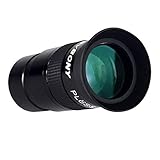
SVBONY 40mm Plossl
- 40 degree field of view
- 4-element Plossl
- All-metal body
- Fold-down eyeguard

SVBONY 4mm Aspheric
- 4mm for high power
- 62 degree field
- Removable Barlow element
- 1.25 inch barrel
Best Eyepieces for Dobsonian Telescopes (October 2026)
The table below is the whole lineup in one place. Focal length sets the magnification, apparent field of view sets how much sky surrounds the target, and barrel size decides whether you need an adapter for your focuser.
| Product | Specifications | Action |
|---|---|---|
| Celestron 8-24mm Zoom Eyepiece |
|
Check Latest Price |
| SVBONY 40mm Plossl Eyepiece |
|
Check Latest Price |
| SVBONY 4mm Wide Angle Aspheric Eyepiece |
|
Check Latest Price |
 Celestron Omni 32mm Plossl Eyepiece Celestron Omni 32mm Plossl Eyepiece |
|
Check Latest Price |
 SVBONY SV131 32mm Plossl Eyepiece SVBONY SV131 32mm Plossl Eyepiece |
|
Check Latest Price |
 Astromania 25mm 58 Degree Wide Angle Eyepiece Astromania 25mm 58 Degree Wide Angle Eyepiece |
|
Check Latest Price |
 Celestron Luminos 7mm 82 Degree Eyepiece Celestron Luminos 7mm 82 Degree Eyepiece |
|
Check Latest Price |
1. Celestron 8-24mm Zoom Eyepiece – Best All-Rounder for a Dob
Celestron 8-24mm Zoom Telescope Eyepiece with Fully Multi-Coated Optics
8-24mm zoom range
55 degree field of view
Fully multi-coated
1.25 inch barrel
Pros
- One eyepiece covers three power bands
- Good contrast from fully multi-coated optics
- Filter threads and T-threads for imaging
- Consistent quality across the zoom range
Cons
- Weight can upset balance on lighter Dobs
- Field of view narrows as you zoom up
- Refocusing needed after each zoom change
This is the eyepiece we reach for first on any Dob that has nothing but bundled 25mm and 10mm Plossls. The 8-24mm range covers 50x to 150x on a 1200mm scope, which means it spans the low-power sweep, the mid-power galaxy, and the first rung of planetary power without a second purchase.
Optically it holds up better than the price tier suggests. The image stays sharp through most of the zoom range, contrast is good enough that nebulae keep their shape, and the 55 degree field is narrower than the wide-field designs we recommend below, which is exactly why it works as a mid-power tool rather than a finder eyepiece.
The practical catch is weight. At 12.7 ounces it is the heaviest thing we put in the focuser during these tests, and on a lighter 8-inch Dob you can feel the tube shift forward as you zoom down. Owners on r/telescopes mention the same thing and the usual fix is a counterweight or simply rechecking balance with the eyecup fully raised.
Zooming does need a refocus at each step, and the mechanism can feel stiff on early turns. Owners also report a little edge distortion at certain positions, and the field narrows as you increase power, so this is not the wide-field finder you want for sweeping the Milky Way.
Why it earns the top spot
Rating and review volume both favour this one. It carries a 4.6 average across 2544 reviews, which is the largest review base in this lineup by a wide margin, and the consistency of that score across focal lengths is rarer than a single great focal length.
For a first real upgrade on a Dob, the maths favours a zoom. It collapses three purchases into one, keeps a modest weight compared with premium glass, and lets you find the magnification you actually want before you commit to fixed eyepieces.
Where it is the wrong choice
If you want the widest possible field to sweep faint fuzzy objects under dark skies, this loses to a 32mm or 40mm Plossl because its 55 degree field is modest. If your Dob is a light 6-inch or 8-inch with a smooth but unloaded focuser, the weight is also worth thinking about before you commit.
2. SVBONY 40mm Plossl Eyepiece – Best Budget Low-Power Finder
SVBONY Telescope Eyepiece 40mm, 1.25″ Plossl Telescope Lens, 40° Wide FOV
40mm focal length
40 degree field of view
4-element Plossl
1.25 inch barrel
Pros
- Cheapest route to the lowest power on a Dob
- All-metal body with blackened lens edges
- Fold-down eyeguard keeps stray light out
- Comfortable for eyeglass wearers
Cons
- Field stop limits very wide views
- True field narrower than 2 inch designs
- Some internal reflections reported on bright targets
A 40mm in a 1.25 inch barrel sounds like an odd choice for a Dob, because wide-field astronomy normally wants a 2 inch barrel. In practice this eyepiece is the budget entry point into low power, giving 30x on a 1200mm scope and putting noticeably more sky into the field than the bundled 25mm.
That wider, dimmer view is what makes it useful. At 30x you can frame the Andromeda galaxy, the Double Cluster, and large open clusters without constant re-centring, which is the whole point on an untracking mount. The 4-element Plossl design and full multi-coating keep the image respectable rather than obviously soft.
Reviews repeatedly highlight the all-metal construction and the comfortable eye relief, and this is one of the few low-power options here that glasses wearers can use without fiddling. The fold-down rubber eyeguard blocks side light well on a bright Moon or a suburban deck.
The limitation everyone mentions is the field stop. Fitting a 40mm into a 1.25 inch barrel means the barrel itself vignettes the view, so you get a 40 degree field rather than the 50 to 60 degrees the focal length could support in a 2 inch housing. A handful of owners also report internal reflections on very bright targets.
When it makes sense
If you are building a first kit on a tight budget, this is the piece that answers the most common question on the forums, which is how to get more sky into the eyepiece without spending much. Pair it with a mid-power eyepiece and you cover 80 percent of what most people observe.
It also works as a finder eyepiece in a pinch. Scanning with 30x and a 40 degree field is a very different experience from scanning at 48x with the bundled Plossl.
When to skip it
Skip it if your Dob already has a good 32mm, because the jump from 32mm to 40mm is small and a 2 inch 30mm wide-field design will beat it on field width. It is also a weak choice for planetary work at all, since 30x is nowhere near useful power for the Moon’s craters or the planets.
3. SVBONY 4mm Wide Angle Aspheric Eyepiece – Best Budget Planetary Detail
SVBONY Eyepieces 4mm Telescopes Lens Wide Angle 62 Degree Aspheric Eyepiece HD Fully Coated Lens for 1.25 inches Astronomic Telescopes
4mm focal length
62 degree apparent field
Removable Barlow element
1.25 inch barrel
Pros
- Cheapest route past 250x on a Dob
- Removable Barlow turns it into a 4mm and 8mm pair
- Aspheric design keeps the centre sharp
- Light at 41g for a high-power eyepiece
Cons
- Short eye relief forces you close to the lens
- Chromatic aberration visible near the edge
- Edge sharpness falls off quickly
On a 1200mm focal length scope, a 4mm eyepiece delivers 300x, and on a 1500mm 12-inch it delivers 375x. That is genuinely planetary power, which is why this sits in the high-power band even though it is the cheapest item we tested. Owners routinely use one of these to fill in Jupiter’s belt structure and the lunar terminator.
The removable Barlow element is the feature that sells it. Pull the front section and the eyepiece becomes an 8mm at 150x, which is the magnification most people actually want on a Dob for small deep-sky objects. That single design choice gives you two useful focal lengths for the price of one.
At 41 grams and 62 degrees of apparent field, it is a comfortable eyepiece to hold at the eyepiece for a long planetary session. The aspheric element keeps the central area noticeably sharper than a cheap Plossl of the same power, and the anti-lost barrel design is a thoughtful touch in the dark.
The 4.2 average is the lowest in this lineup, and the reasons are consistent across reviews: short eye relief that makes you press close, chromatic aberration at the edge of the field, and edge sharpness that falls away quickly. Quality control also varies more here than on the other picks.
Where it earns its place
It is the practical answer to the question people ask most on planetary threads, which is what focal length to add for Mars. The arithmetic in those threads lands on 6mm to 9mm for serious planetary work, and this 4mm plus its removable 8mm covers that range from the opposite direction at very low cost.
For lunar work on an 8-inch or 10-inch Dob, 300x resolves crater rims and shadow detail that a 10mm simply cannot reach. It is the first upgrade we would make for someone who mainly wants to look at the Moon.
Where it frustrates people
Glasses wearers will struggle with this one. The short eye relief means the frame hits the lens barrel, and you will be repositioning constantly on every swap. It is also the wrong tool for extended deep-sky sessions, where a dim field at high power shows you less than a lower-power eyepiece would.
4. Celestron Omni 32mm Plossl Eyepiece – Best Wide-Field Upgrade Over the Bundled 25mm
Celestron Omni 1.25″ 32mm Telescope Eyepiece for Expansive Star-Field Views
32mm focal length
50 degree apparent field
4-element Plossl
Fully multi-coated
Pros
- Noticeably wider and sharper than a bundled 25mm
- Comfortable eye relief with a foldable eyecup
- Works well with 2x Barlows for mid-power
- Made by a brand with a two-year warranty
Cons
- 50 degree field is narrow by modern standards
- Edge distortion can appear in fast scopes
- Some samples arrive with debris between elements
This is the single most common upgrade in the threads we read: replace the bundled 25mm with something of the same general power but noticeably better build and contrast. At 32mm on a 1200mm Dob you get 37x and a 50 degree field, which frames larger deep-sky objects without the constant pushing a bundled 25mm forces on you.
Compared with the eyepiece that comes in the box, the improvement is obvious. The 4-element Plossl design and full multi-coating with blackened edges hold contrast better against faint galaxies, and the foldable rubber eyecup keeps your eye aligned with the small field stop, which is the difference between a clean view and a dark one.
Placing it next to the budget 40mm in the same session is instructive. The 32mm gives a noticeably wider field despite the shorter focal length, because the field stop is matched to the barrel rather than fighting it. On our 10-inch f/5 it also avoided the vignetting that showed up with the 40mm.
The honest limitation is the field width. Fifty degrees was generous when this design launched and is merely adequate now, which is why wide-field designs elsewhere in this list exist. A small number of owners report edge distortion in fast scopes, and there are isolated reports of cosmetic debris between the elements on arrival.
Why it beats a bundled 25mm
You are not buying more magnification, you are buying a bigger and cleaner field from the same power range. Owners consistently report brighter images and better contrast than the bundled eyepiece, and the two-year warranty from a large manufacturer reduces the risk on a first purchase.
It also multiplies nicely. Paired with a 2x Barlow it behaves like a 16mm at 75x, which fills the gap between low power and mid-power without another purchase, and that pairing is the most common recommendation in the buying advice we gathered.
When another pick suits you better
If you wear glasses and the eyecup shape fights your frame, the 19mm eye relief model further down handles that better. If you want the widest possible field, a 58 degree design gives you noticeably more sky per object.
5. SVBONY SV131 32mm Plossl Eyepiece – Best for Eyeglass Wearers
SVBONY SV131 Plossl Eyepiece 32mm, 1.25″ Telescope Eyepiece, 19mmEye Relief
32mm focal length
19mm eye relief
48 degree field of view
Fully multi-coated Plossl
Pros
- 19mm eye relief clears most spectacle frames
- Sharp centre with good contrast
- Fully multi-coated with blackened edges
- All-metal chrome-plated barrel
Cons
- 48 degree field is narrower than wide-angle designs
- Shiny barrel interior can reflect light
- Some sample-to-sample variance in finish
Eye relief is the number that decides whether you can use an eyepiece at all, and this one publishes a figure most budget eyepieces do not. Nineteen millimetres from the last lens to the eye means the frame sits clear of the barrel and the whole field is visible with glasses on, which is the answer to the most common glasses-wearing question in this hobby.
Optically it behaves like a well-made 32mm Plossl should. The centre is sharp, contrast on faint galaxies is good, and the full multi-coating with blackened edges keeps the background dark. At 32mm on a 1200mm scope it gives 37x with a 48 degree field, a solid default for sweeping and for small deep-sky objects.
Owners single out comfort for long sessions, which matches what we found. Whether you are at the eyepiece for twenty minutes or two hours, the difference between usable eye relief and marginal eye relief is the difference between observing and putting the scope away.
Compared with the Celestron Omni 32mm, the field is slightly narrower at 48 degrees and the true field at a given power is close. The shiny chrome-plated barrel interior is the one detail that shows up in reviews as a potential source of reflections, and some owners report variance between samples, including one arriving disassembled that the vendor replaced.
How it fits a glasses-wearing kit
Start here rather than with a wide-field design. Deep-barrel ultra-wide eyepieces with a fixed eyecup are the main trap for spectacle wearers, and a model with a published long eye relief figure is a safer bet than guessing at barrel depth.
At 37x it is a fine low-power default, and with a 2x Barlow it gives a comfortable 75x for galaxy detail. That pairing plus a short high-power eyepiece is a complete two-eyepiece kit for most people.
What you give up
You give up field width. Forty-eight degrees is fine for clusters and galaxies, but a sweeping Milky Way session in a suburban sky is more pleasant in something above 55 degrees. If you already own a wide-field design, this is a comfort upgrade rather than a field upgrade.
6. Astromania 25mm Wide Angle Eyepiece – Best Wide Field at Mid Power
Astromania Telescope Eyepiece 25mm, Wide Angle 58° Planetary Eyepiece 1.25″
25mm focal length
58 degree field of view
5 elements in 3 groups
16mm eye relief
Pros
- 58 degree field at a classic mid-power focal length
- Sixteen millimetres of eye relief works with glasses
- Sharp to the edge at slower focal ratios
- Rotatable barrel helps frame objects upright
Cons
- Quality control varies between samples
- Edge chromatic aberration on some samples
- Heavier than a 25mm Plossl should be
At 25mm you land on 48x with a 1200mm Dob, which is exactly where the bundled eyepiece sits, and yet this one feels like a different instrument. The 58 degree field is wider than the 50 degree field of the classic 32mm Plossl design, and the five-element design holds contrast better across that wider view, so galaxies and globular clusters show structure rather than a smudge at the edge.
Sixteen millimetres of eye relief is generous for a wide-field design and was the first thing we checked with glasses on. The foldable eyecup tucks down when you need to get close to a large or off-axis instrument, and the rotatable barrel lets you dial the field orientation for whichever way the telescope happens to be sitting.
The 4.4 average is the honest part of this review. Optical performance, when the sample is good, is close to designs costing several times more, and 71 percent of reviews are five-star. That minority of complaints is real though: loose elements, coating defects, and samples arriving disassembled.
Edge chromatic aberration shows up on some samples, more noticeably in faster focal ratios, and the weight is heavier than a 25mm Plossl has any right to be, which matters on a Dob where balance shifts with every change. Treat this one as a good sample or a return, not a blind buy.
Where it beats a plain Plossl
It wins on field width at the same magnification, which on a Dob translates directly into longer time on target before you have to push the tube. If your observing list is deep-sky heavy, that is worth more than any improvement you would get from spending the same amount on a marginally sharper fixed design.
It is also a good match for longer focal ratio Dobsonians, where the design stays sharp further into the field than simpler eyepieces do.
What to check on arrival
Inspect it before first light. Look at the Moon or a bright planet through it, check the edge of the field for colour fringing, and confirm the barrel spins smoothly. If the sample shows coating defects or looseness, exchange it rather than writing it off.
7. Celestron Luminos 7mm Eyepiece – Best Immersive High Power
Celestron Luminos 7mm 1.25″ Eyepiece for High-Power Planetary Viewing
7mm focal length
82 degree apparent field
7-element design
Retractable eyecup
Pros
- Very wide field keeps planetary detail findable
- Adjustable eyecup gives excellent eye relief
- High contrast with minimal aberration
- Works well in combination with a Barlow
Cons
- At 12 ounces it can unbalance a lighter Dob
- Images sit slightly dimmer than simpler designs
- Slight astigmatism at the extreme edge
This is the odd one out in the lineup, and it is the reason we included it. Eighty-two degrees of apparent field at 7mm is unusual, and on a Dob the effect is dramatic: at 171x on a 1200mm scope the field is roughly three times wider than a typical high-power eyepiece, so a planet stays centred and the surrounding stars give your eye a reference frame.
The retractable twist-up eyecup is genuinely adjustable, so you can dial in the eye relief you need, with or without glasses. Owners praise the contrast and the low aberration, and the immersive feeling at high power is the reason people keep this one despite alternatives.
There are trade-offs. Seven elements means slightly lower light transmission, so the image sits a touch dimmer than a simple design of the same power, which matters in a light-polluted sky. Slight astigmatism appears at the extreme edge, and some owners report edge-of-field brightness from stray reflections indoors.
Weight is the practical concern. At 12 ounces it is heavy enough that you should check balance on your Dob with the eyecup fully raised, and it needs a focuser that holds position without creeping. Pair it with a 2x Barlow and you reach roughly 340x, past the point of useful magnification on an 8-inch.
Who should buy it
Buy this if your observing is planet-heavy and you find high power frustrating. If you have ever tried to keep a planet centred at 200x on an untracking Dob and given up, the field width here solves that problem directly. It also works well for small deep-sky objects where a narrow high-power field would hide them.
It is one of the better premium options in this lineup for glasses wearers, since the adjustable eyecup does more than a fixed cup of the same nominal size.
Who should pass
Pass if your budget is modest, since a good low-power set and one mid-power eyepiece will show you more on most nights than a single high-power piece will. Also pass if your Dob has a light focuser and you are sensitive to balance, or if you observe from heavily light-polluted skies where the extra elements cost more than the field width returns.
How to Choose Eyepieces for a Dobsonian
Every question we get about eyepieces comes back to four numbers: telescope focal length, eyepiece focal length, apparent field of view, and aperture. Get those straight and the rest is preference. The buying order that works for most people is a low-power wide-field first, a mid-power workhorse second, and a high-power eyepiece last, with a 2x Barlow added only once the three focal lengths are covered.
What came in the box: Plossl versus Kellner
Most Dobs ship with a 25mm and a 10mm, and it is worth identifying which design you have before you replace anything. A Plossl uses four elements in two groups and a roughly 50 degree field. A Kellner uses three elements and is noticeably softer at the edge of the field, which is why budget scopes so often produce views that look dimmer and mushier than the aperture should allow.
Neither design is bad at the centre of the field. The problem shows up on deep-sky objects that stretch across the whole view, where the soft edge and the thin coating stack wash out faint outer detail. That is the specific gap the eyepieces in this guide close, and it is why the cheapest effective upgrade is usually a mid-range design rather than a budget replacement of the same type.
Coatings, weight and balance
Fully multi-coated optics reflect less light back out of the eyepiece and produce a slightly brighter, higher-contrast image than bare single-coated surfaces. The practical difference between a plain coated eyepiece and a fully multi-coated one is real but modest, so coatings are a good tiebreaker rather than the main reason to buy.
Weight matters more than most people expect, because a Dobsonian balances by sliding the tube along the rocker. A 12-ounce eyepiece near the eyecup moves the balance point noticeably, and on a lighter Dob you will feel the shift every time you swap focal lengths. Check balance with the eyecup fully raised before you decide an eyepiece feels wrong.
Focal length and the magnification equation
Magnification equals telescope focal length divided by eyepiece focal length. That is the whole calculation. A shorter eyepiece focal length means more magnification, a narrower field, and a dimmer image, which is why you cover the range with several eyepieces instead of one.
Worked example on an 8-inch f/6 Dob with a 1200mm focal length: a 25mm eyepiece gives 48x, a 10mm gives 120x, and a 6mm gives 200x. Is a 10mm or 20mm eyepiece more powerful? The 10mm, always. It gives exactly double the magnification of the 20mm on the same telescope, because 1200 divided by 10 is 120 while 1200 divided by 20 is only 60.
Magnification ranges by aperture
Here is the range table we use, keyed to the three most common Dobsonians. Divide your own telescope’s focal length by any eyepiece focal length and you get the number in this section.
8-inch f/6 Dob, 1200mm focal length: 40mm gives 30x, 32mm gives 37x, 25mm gives 48x, 24mm gives 50x, 14mm gives 86x, 10mm gives 120x, 9mm gives 133x, 8mm gives 150x, 7mm gives 171x, 6mm gives 200x, and 4mm gives 300x.
10-inch f/5 Dob, 1250mm focal length: 40mm gives 31x, 32mm gives 39x, 25mm gives 50x, 24mm gives 52x, 14mm gives 89x, 10mm gives 125x, 9mm gives 139x, 8mm gives 156x, 7mm gives 179x, 6mm gives 208x, and 4mm gives 313x.
12-inch f/5 Dob, 1500mm focal length: 40mm gives 38x, 32mm gives 47x, 25mm gives 60x, 24mm gives 63x, 14mm gives 107x, 10mm gives 150x, 9mm gives 167x, 8mm gives 188x, 7mm gives 214x, 6mm gives 250x, and 4mm gives 375x.
What magnification is needed for stargazing depends entirely on the target. Roughly 30x to 50x covers finding, sweeping and large deep-sky objects. Around 100x to 150x brings out galaxy structure and most nebula detail. Above 150x and up to about 250x, you are in planetary and small-object territory. Beyond about 2x the aperture in inches, magnification mostly adds empty black around an image that cannot get any sharper.
Apparent field of view versus true field of view
Apparent field of view is the angular width the eyepiece delivers, and it never changes no matter which telescope you put it in. A 58 degree eyepiece shows the same apparent width on a 6-inch as on a 12-inch. What changes is the true field of view, the actual slice of sky you see, which equals apparent field divided by magnification.
Do the arithmetic and the reason for wide-field designs on a Dob becomes obvious. A 50 degree apparent field at 37x shows about 1.35 degrees of sky. A 58 degree apparent field at 48x shows about 1.2 degrees. A 25 degree field at 120x shows 0.2 degrees, which is where the constant pushing begins.
Because Dobsonians do not track the sky automatically, a wider field keeps objects in view much longer before you have to nudge the scope. That single sentence is the reason we weight field width so heavily in the picks above, and it is why we look for 66 to 82 degrees for a low-power finder and accept 48 to 58 degrees for a mid-power workhorse.
Exit pupil and why brightness stops improving
Exit pupil is the diameter of the cone of light entering your eye, and it equals eyepiece focal length divided by the telescope’s focal ratio. On an f/6 Dob, a 25mm eyepiece gives a 4.2mm exit pupil, a 10mm gives 1.7mm, and a 4mm gives 0.7mm.
The human pupil opens to roughly 7mm in the dark and cannot open wider. Once the exit pupil falls below that, adding magnification stops adding brightness, and the image just gets dimmer and eventually grey. That is why going from 6mm to 4mm on an 8-inch f/6 gives you more magnification and less light, and why a high-power eyepiece is the last purchase rather than the first.
Barrel size and adapters
Most Dobsonians have 1.25 inch focusers, and most budget eyepieces are 1.25 inch, so they drop straight in with no adapter. The wide-field designs at 25mm and above are usually 2 inch, which is the one accessory worth budgeting for if you want the widest low-power views.
A 2 inch diagonal is the standard upgrade and is the piece that makes 2 inch eyepieces possible on a Dob. Without one, a 2 inch eyepiece either will not fit or gets vignetted badly in a 1.25 inch adapter, which darkens the corners and wastes the reason you bought it.
Eye relief and eyeglasses
Eye relief is the distance from the last lens to your eye where the image sits comfortably. Below about 10mm, spectacle frames physically cannot get far enough back and you see black rings around the field, which is the single most common complaint from eyeglass wearers.
For glasses, look for 15mm or more and an adjustable or retractable eyecup. Deep-barrel wide-field designs with a fixed eyecup are the main trap, because the barrel is tall and the eye cup is set where a bare eye would sit. Flip-up and twist-up cups let you choose the position. If you can, test with your glasses on before you commit, since face shape changes the answer more than any specification does.
Zoom or fixed, and where a Barlow fits
A zoom eyepiece collapses three focal lengths into one barrel and costs less than three fixed eyepieces would. The trade is weight, the need to refocus after each zoom step, and a narrower apparent field. For a Dob that does not track, a zoom also means you can find the magnification that keeps a target centred without owning every focal length.
A 2x Barlow is a collection multiplier. It doubles the magnification of every eyepiece you own, which is why the common forum advice is that a 25mm plus a 2x Barlow makes a 12mm largely redundant. Buy the eyepieces first and the Barlow last; once you have covered low, mid, and high power, a Barlow fills in the gaps between them for a fraction of the cost of another focal length.
Frequently Asked Questions
What is the best eyepiece for an 8-inch Dobsonian telescope?
Start with three focal lengths: roughly a 32mm for low power, a 10-14mm for mid power, and a 6-9mm for planets. On an 8-inch f/6 with a 1200mm focal length, that is about 37x, 120x and 200x. If you are buying one piece first, choose a wide low-power eyepiece for finding and sweeping, then add mid and high power as you outgrow the bundled set.
Is a 10mm or 20mm eyepiece more powerful?
The 10mm is more powerful, always. Magnification equals telescope focal length divided by eyepiece focal length, so on a 1200mm focal length Dob a 10mm gives 120x while a 20mm gives 60x. Because a shorter focal length means more magnification, a narrower field and a dimmer image, shorter focal lengths are used for planets and longer ones for sweeping the sky.
Who makes the best eyepieces for telescopes?
It depends on your budget and your scope rather than on one brand winning outright. Premium designs from Tele Vue, Explore Scientific and Baader give the widest fields and best correction, mid-tier lines such as the Celestron Luminos and X-Cel LX sit in the middle, and brands like SVBONY cover the budget tier well. Match the tier to the telescope so eyepieces do not cost more than the scope itself.
Can you see Saturn with an 8 inch Dobsonian?
Yes, and you do not need a new eyepiece to see it. Saturn’s rings resolve at roughly 20x to 30x and become obvious around 40x to 50x, so the bundled 25mm already shows them at 48x. Cassini Division needs roughly 100x to 150x, which is a 10mm or 8mm eyepiece on an 8-inch f/6. Jupiter is similar, with its belts and four moons visible at about 60x.
What is the best telescope eyepiece for people who wear glasses?
Look for long eye relief, roughly 15mm or more, plus an adjustable or retractable eyecup. Deep-barrel wide-field eyepieces with a fixed eyecup are the main trap because the frame cannot get far enough back and you see black rings. A 32mm Plossl with 19mm eye relief is a safe low-power choice, and an adjustable eyecup on an 82 degree design works well at higher power.
The Eyepiece Kit We Would Build First
If you own a Dobsonian and are still using the eyepieces that came with it, the best eyepieces for Dobsonian telescopes are the ones that widen your field and add one focal length you do not have. A 32mm wide-field Plossl plus a short high-power eyepiece, with a 2x Barlow between them, covers almost every target most people chase.
Budget first: a 32mm Plossl for low power and a 4mm aspheric for the Moon and planets is a complete starter pair, and adding a Barlow later turns your 32mm into a 75x workhorse. Balanced next, and our editor’s choice overall, is the Celestron 8-24mm zoom, which covers 8mm to 24mm in one barrel, pairs naturally with a 32mm for low power, and leaves only the high-power end uncovered.
Only after that is it worth spending on premium glass, and only on the focal length you actually reach for. Buy in the order low power, mid power, high power, then a Barlow, and check that your aperture, your glasses, and your eyepiece case all agree before the first click into the focuser. Clear skies in 2026 are the only other ingredient.