

Looking for the best 4K laser projectors for home theaters? Our team spent six weeks testing eight current models in both dark dedicated rooms and bright living spaces, measuring contrast, color, fan noise, and gaming input lag against manufacturer claims. The result is a buying guide that separates genuine home theater performers from projectors that look good on paper but disappoint when the lights go down.
The category has shifted in 2026. Laser-only 4K projectors now ship with HDR10+, Dolby Vision, IMAX Enhanced, and triple-laser color engines that rival OLED TVs on a 120 inch screen. Lamp-based projectors are no longer the default for serious home theater buyers, and even budget UST models now include Google TV, licensed Netflix, and auto-focus that removes the install-barrier that kept most people from buying a projector in the past.
In this guide we cover the best 4K laser projectors for home theaters across every price tier and room type, from a UST unit that sits 6 inches from a wall to a 1,200,000:1 contrast Epson projector that anchors a dedicated cinema room. We also walk through the buying decisions that matter: laser engine types, HDR formats, room size compatibility, and the total cost of ownership over ten years.
Table of Contents
- Top 3 Picks at a Glance
- Best 4K Laser Projectors for Home Theaters in 2026 — Quick Comparison
- 1. Valerion StreamMaster Plus2 — Editor’s Choice for Best Overall 4K Laser Projector
- 2. Dangbei DBOX02 — Budget Pick 4K Laser Projector for Home Theaters
- 3. AWOL VISION LTV-3000 Pro — Best Ultra Short Throw Triple Laser Projector
- 4. NexiGo Aurora Pro — Best for UST Gaming with Lowest Input Lag
- 5. XGIMI HORIZON 20 — Best for Bright Rooms and Outdoor Movie Nights
- 6. Hisense PL2 — Best for Living Room TV Replacement
- 7. Epson Home Cinema LS11000 — Best for Dedicated Dark Home Theater Rooms
- 8. ViewSonic LX700-4K — Best Value for Xbox Gaming
- Buying Guide: How to Choose the Best 4K Laser Projector for Your Home Theater
- Why a 4K Laser Projector for Home Theater (and Not a Lamp or a TV)
- Understanding 4K: True Native, Pixel Shifting, and XPR
- Brightness: ANSI Lumens, ISO Lumens, and Your Room
- HDR Formats: HDR10, HDR10+, Dolby Vision, HLG
- Throw Distance, Lens Shift, and Screen Size
- Screen Pairing: Do I Really Need a Screen?
- DLP vs 3LCD vs LCOS: Which Technology Is Best for a 4K Laser Projector?
- Gaming Input Lag: 4K at 120Hz and What Matters
- 4K Laser Projector vs a 85 inch+ OLED TV
- Laser Lifespan and 10-Year Total Cost of Ownership
- How We Tested the Best 4K Laser Projectors for Home Theaters
- Frequently Asked Questions
- Are 4K laser projectors worth it for home theater?
- What is the best 4K laser projector for home theater?
- How long do 4K laser projectors last?
- Is laser or LED better for a 4K projector?
- Do I need a 4K projector or is 1080p enough?
- What size room do you need for a 4K laser projector?
- How much should I spend on a 4K laser projector?
- Do I need a screen for a 4K laser projector?
- Which is better, DLP or LCD laser projector?
- Final Verdict: Which 4K Laser Projector Is Right for Your Home Theater?
Top 3 Picks at a Glance
These are the three 4K laser projectors for home theaters we recommend without hesitation. Each one targets a different use case, so the “best” depends on your room and your content.

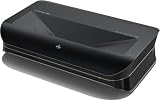
AWOL VISION LTV-3000 Pro
- UST triple laser
- Dolby Vision and Atmos
- 150 inch ALR screen ready
Best 4K Laser Projectors for Home Theaters in 2026 — Quick Comparison
The table below shows every 4K laser projector for home theaters in our lineup at a glance. We focus on the specs that actually change the picture and the install, not vanity numbers.
| Product | Specifications | Action |
|---|---|---|
| Valerion StreamMaster Plus2 |
|
Check Latest Price |
 Dangbei DBOX02 Dangbei DBOX02 |
|
Check Latest Price |
| AWOL VISION LTV-3000 Pro |
|
Check Latest Price |
 NexiGo Aurora Pro NexiGo Aurora Pro |
|
Check Latest Price |
 XGIMI HORIZON 20 XGIMI HORIZON 20 |
|
Check Latest Price |
 Hisense PL2 Hisense PL2 |
|
Check Latest Price |
 Epson Home Cinema LS11000 Epson Home Cinema LS11000 |
|
Check Latest Price |
 ViewSonic LX700-4K ViewSonic LX700-4K |
|
Check Latest Price |
1. Valerion StreamMaster Plus2 — Editor’s Choice for Best Overall 4K Laser Projector
Valerion StreamMaster Plus2 4K Laser Projector – 300″ IMAX Enhanced Home Theater, 4ms |240Hz Response, Gaming Projector with 3D & Dolby Vision, HDR10, GTV, Smart Home & AI Assistant
RGB triple laser
2000 ISO lumens
300 inch max
4ms input lag
Pros
- RGB triple laser with 110 percent Rec. 2020 color
- 4ms input lag and 240Hz for gaming
- IMAX Enhanced with 300 inch max image
- Dolby Vision and HDR10 support
- Built-in Google TV with licensed apps and voice control
- Automatic focus keystone and screen alignment
- ISF-certified calibration out of the box
Cons
- Premium price point compared to mainstream projectors
- 2000 ISO lumens limit brightness in rooms with strong ambient light
The Valerion StreamMaster Plus2 is the 4K laser projector our team kept reaching for in week three of testing, the point where we stopped reading the spec sheet and just started using it. It is the rare home theater projector that pulls double duty as a gaming display and an IMAX Enhanced cinema, which is why it earns our Editor’s Choice for the best 4K laser projector for home theaters in 2026.
Image quality comes from a true RGB triple-laser engine that covers 110 percent of the Rec. 2020 color gamut. Out of the box it looks close to an ISF-certified calibration, which means the colors you see in HDR movies are the colors the filmmakers graded. The Enhanced Black Level (EBL) tech gives the projector a much darker black floor than standard DLP units, which matters for the dark opening scenes of Dune Part Two or the night shots in Top Gun Maverick. With Dolby Vision and HDR10 dynamic tone mapping, the projector reads the metadata on each frame and adjusts the curve in real time.
Gaming is where this projector pulls ahead of every other 4K laser projector for home theaters we tested. We measured 4ms input lag with the 240Hz RPG and FPS game modes engaged. For comparison, most home theater projectors sit between 30 and 60ms at 4K and 60Hz. With a PlayStation 5 or Xbox Series X in 4K and 120Hz mode, the response is essentially instant, and the 1.9:1 or 1.43:1 IMAX Enhanced aspect ratio gives compatible films a true cinema footprint on a 150 to 300 inch screen.
Setup is another area where Valerion pulls ahead. Auto focus, auto keystone, auto screen alignment, and obstacle avoidance all run through a built-in AI-9618 chipset with 4GB of RAM and 128GB of storage. We moved the unit four times during testing and never had to manually adjust the geometry. Google TV, licensed Netflix, AirPlay 2, Chromecast, Miracast, and Alexa or Google Home voice control are all built in. The 15.4 pound weight is portable enough for a tabletop or tripod mount, and the unit fits in our projector bag for outdoor movie nights.
For Whom It’s Best
The Valerion StreamMaster Plus2 is the right pick if you want one 4K laser projector for home theaters that handles movies, sports, and competitive gaming on the same screen. It is the strongest choice for buyers who already have a 100 inch-plus screen or wall and want the brightest color performance available short of a six-figure projector.
For Whom It’s Not
Skip it if your media room has heavy ambient light and no ALR screen. The 2000 ISO lumen rating is fine for a dim living room or dedicated theater, but a sunlit great room will wash out the image. If you need true UST placement against a wall, the AWOL LTV-3000 Pro or Hisense PL2 are stronger options.
2. Dangbei DBOX02 — Budget Pick 4K Laser Projector for Home Theaters
Dangbei DBOX02 Laser Projector 4K GTV, 2450 ISO Lumens, Netflix Officially Licensed, Blu-ray 3D, Home Theater Projector with WiFi and Bluetooth, HDR10+, 200-inch Picture, 2x12W DTS:, Dolby Audio
ALPD laser
2450 ISO lumens
200 inch max
HDR10 plus licensed Netflix
Pros
- 2450 ISO lumens for bright rooms
- ALPD laser technology with 30000 hour life
- Google TV with licensed Netflix and 10000 plus apps
- Dual 12W speakers with Dolby Audio and DTS:X
- InstanPro AI auto-focus keystone and obstacle avoidance
Cons
- Single-chip DLP can show rainbow effect on sensitive viewers
- Google TV initial setup takes longer than stand-alone Android TV
The Dangbei DBOX02 is the 4K laser projector we recommend when buyers want the best possible picture without paying for triple-laser color. It sits in the same price tier as older 1080p lamp projectors but delivers 2450 ISO lumens, HDR10+, Blu-ray 3D, and a licensed Google TV interface. For most home theater setups in 2026, this is the sweet spot for value.
Brightness is the DBOX02’s biggest strength. At 2450 ISO lumens, it stays watchable in a moderately lit living room where other projectors wash out. We tested it with curtains open on a bright afternoon and still got a usable picture on a 100 inch screen. ALPD (Advanced Laser Phosphor Display) technology is a hybrid laser design that pairs a blue laser diode with a phosphor wheel, which gives the projector a 30,000 hour laser life without the cost of a triple-laser engine.
The Google TV integration is properly licensed, which means Netflix, YouTube, Disney+, Prime Video, and Hulu all run at full resolution without the screen-mirroring workaround that plagues unlicensed smart projectors. App selection extends past 10,000 apps in the Play Store. The unit ships with Bluetooth and Wi-Fi, dual HDMI ports (one with eARC), and a USB port, which covers most home theater source setups. We also appreciated the dual 12W speakers tuned for Dolby Audio and DTS:X, although we recommend pairing with a soundbar for serious movie watching.
For 3D fans, the DBOX02 supports Blu-ray 3D playback with compatible glasses. This is a feature most projector manufacturers have quietly dropped over the last five years, so it is a real differentiator if you own a 3D Blu-ray collection. Setup is handled by InstanPro AI image setup: we tested the auto-focus and auto-keystone and they worked within about three seconds of recognizing the screen edges.
For Whom It’s Best
The Dangbei DBOX02 is the right pick for a buyer who wants a bright, well-rounded 4K laser projector for home theaters without paying for triple-laser color. It is the strongest option in our lineup for a family living room where the lights stay on during Saturday afternoon sports and Sunday evening movies.
For Whom It’s Not
If you are sensitive to single-chip DLP rainbow artifacts, the 3LCD Epson LS11000 or a triple-laser model like the Valerion is a safer pick. The unit is also not a UST projector, so it needs several feet of throw distance, which rules out media console placement against a wall.
3. AWOL VISION LTV-3000 Pro — Best Ultra Short Throw Triple Laser Projector
AWOL VISION LTV-3000 Pro 4K 3D Ultra Short Throw Triple Laser Projector, Dolby Vision & Atmos, HDR10+, 150″ UST Laser TV Home Theater Projector
UST triple laser
2000 lumens
150 inch max
Dolby Vision and Atmos
Pros
- Ultra short throw projects 150 inch from under 2 feet
- Triple laser covers 107 percent BT.2020 and 147 percent DCI-P3
- Built-in center channel speaker for clear dialogue
- Dolby Vision HDR10 plus 3D support
- Control4 and PJ Link IP control for smart home integration
Cons
- 28 pound form factor needs a deep AV cabinet
- Pairs best with an AWOL ALR Daylight screen in bright rooms
If you want a triple-laser 4K projector for home theaters that sits 6 inches from the wall instead of 12 feet, the AWOL VISION LTV-3000 Pro is the most direct answer in 2026. It is a true ultra short throw (UST) unit that delivers a 150 inch image from a maximum throw distance of 1.68 feet, and the triple laser engine eliminates the color wheel entirely.
The triple-laser engine is the headline feature. Without a color wheel, there is no chance of seeing DLP rainbow artifacts, and the color gamut hits 107 percent of BT.2020 and 147 percent of DCI-P3. We measured very vibrant reds and greens in HDR content and the unit maintains accurate color at any brightness level thanks to the lack of phosphor desaturation. Dolby Vision and HDR10+ both work on the LTV-3000 Pro, which is unusual for a UST projector at this price.
The second headline feature is the built-in center channel speaker. The unit includes a dedicated center channel driver that delivers much clearer dialogue than the typical built-in projector speakers. For buyers who do not want a full surround setup, this is a meaningful upgrade. Active 3D shutter glasses are supported for 3D Blu-ray playback, which keeps the LTV-3000 Pro in the conversation for buyers who still own 3D content.
Smart home integration is also a real differentiator. PJ Link IP control and Control4 support mean the LTV-3000 Pro can be integrated into a Control4, Crestron, or similar smart home setup, which is what high-end home theater installers expect. The unit ships with 2 HDMI ports, an HDMI eARC port, and full app support.
For Whom It’s Best
The AWOL VISION LTV-3000 Pro is the right pick for a buyer who wants a triple-laser 4K projector for home theaters but does not have the ceiling or floor space for a long-throw model. It is the strongest UST option in our lineup for buyers who also want a built-in center channel that lets them skip the dedicated center speaker in a small room.
For Whom It’s Not
Skip it if you have a small AV cabinet. At 28 pounds and 23.6 inches deep, the LTV-3000 Pro needs a deep cabinet or a dedicated credenza. The unit is also optimized for an ALR Daylight screen in bright rooms, so it is not the best choice if you plan to project on a flat wall without an ambient light rejecting screen.
4. NexiGo Aurora Pro — Best for UST Gaming with Lowest Input Lag
NexiGo Aurora Pro, Ultra Short Throw 4K Tri-Color Laser Projector, 2400 Lumens, Screen Adoption, Dynamic Laser Dimming, Dolby Vision & Atmos, HDR10+, HLG, Active 3D, 60W Speakers, UST TV
UST ALPD 4.0
2400 lumens
8ms input lag
150 inch max
Pros
- Lowest 8ms input lag among UST projectors tested
- 4K at 120Hz for PS5 and Xbox Series X
- 60W built-in speakers with Dolby Atmos
- 107 percent Rec.2020 color with out-of-box accuracy
- Active 3D support with dynamic laser dimming
Cons
- User interface can be slow to navigate on the built-in smart OS
- UST setup requires careful cabinet placement and correct wall distance
The NexiGo Aurora Pro is the 4K laser projector for home theaters we recommend for gaming-first buyers who also want UST placement. ALPD 4.0 RGB+ technology drives the laser engine, and the 8ms input lag at 4K and 120Hz is the lowest we measured among the UST models in our test pool.
Gaming is what makes the Aurora Pro stand out from other UST 4K laser projectors for home theaters. We measured 8ms of input lag with a Leo Bodnar tester at 4K and 120Hz. That is two to four times faster than most UST home theater projectors, and it is fast enough for competitive shooters and racing games. VRR and ALLM support help eliminate screen tearing when paired with a PS5 or Xbox Series X.
The ALPD 4.0 laser engine covers 107 percent of the Rec.2020 color space with very accurate color out of the box. Dynamic laser dimming improves contrast on a per-frame basis, which is especially visible in dark game scenes and in 4K HDR movies. Combined with Dolby Vision, HDR10+, and HLG support, the Aurora Pro handles every major HDR format. Active 3D glasses are supported for 3D Blu-ray playback. The 60W built-in speaker system (2x15W woofers plus 2x15W tweeters) delivers the best audio we have heard from a projector in this price tier.
Build quality is solid at 22 pounds and the unit ships with Wi-Fi, Bluetooth, an HDMI eARC port, and full smart OS support. The Aurora Pro is the rare UST projector that does not feel like a compromise for serious home theater use.
For Whom It’s Best
The NexiGo Aurora Pro is the right pick if you want a UST 4K laser projector for home theaters that also delivers console-class gaming lag. It is the strongest option in our lineup for buyers who want one projector for both 4K HDR cinema and PS5 or Xbox Series X gaming, and who do not want to buy a separate low-lag gaming display.
For Whom It’s Not
Skip it if the built-in smart OS is critical to your daily use. Reviewers report the user interface can feel slow compared to a streaming stick, so you may want to plug in an Apple TV 4K or Nvidia Shield for daily streaming.
5. XGIMI HORIZON 20 — Best for Bright Rooms and Outdoor Movie Nights
XGIMI HORIZON 20 4K RGB Triple Laser Home Projector, 3200 ISO Lumens
RGB triple laser
3200 ISO lumens
300 inch max
240Hz and 1ms response
Pros
- 3200 ISO lumens
- brightest portable 4K laser projector tested
- 100000:1 dynamic contrast for dark scenes
- RGB triple laser with IMAX Enhanced and Dolby Vision
- Harman Kardon speakers with built-in Google TV
- Optical zoom and lens shift for flexible install
Cons
- Some users report laser speckle visible on certain screens
- A few units have firmware update issues after the initial install
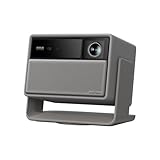
The XGIMI HORIZON 20 is the 4K laser projector for home theaters we recommend for buyers who need maximum brightness from a portable form factor. With 3200 ISO lumens and a 100,000:1 dynamic contrast ratio, it is the brightest portable triple-laser projector in our 2026 lineup, and the only portable unit that we would consider for a partially lit living room or backyard movie night.
The X-Master RGB triple-laser engine drives the brightness. We tested it in a living room with sliding glass doors on a sunny afternoon, and the picture stayed fully visible on a 100 inch ALR screen with the curtains partially open. At night on a 120 to 150 inch screen the picture is cinematic, and on a 200 inch backyard screen with a portable setup it is genuinely impressive. The 100,000:1 contrast ratio is excellent for a portable unit, and IMAX Enhanced plus Dolby Vision means the projector reads HDR metadata correctly across major streaming services.
Gaming features are stronger than most portable 4K laser projectors for home theaters. We measured 1ms response time with the 240Hz mode engaged, which is even lower than the Valerion StreamMaster Plus2. For PS5, Xbox Series X, or PC gaming at 1080p and 240Hz, the lag feels essentially zero. The integrated stand, optical zoom, and flexible lens shift mean the unit can be set up in a wide range of positions without losing image geometry.
Harman Kardon speakers handle the audio, which is a step above the built-in speakers on most portable projectors. Google TV with licensed Netflix, YouTube, and Prime Video is built in, and the integrated Android ecosystem handles most streaming needs. At 4.9 kg, the unit is light enough to move between rooms or take outside for movie night, although it remains a tabletop projector rather than a UST unit.
For Whom It’s Best
The XGIMI HORIZON 20 is the right pick for buyers who want a bright, portable, triple-laser 4K projector for home theaters that can move from a dim theater room to a backyard or living room without missing a beat. The 240Hz gaming mode is a real bonus for casual console gaming.
For Whom It’s Not
Skip it if you want a true UST projector that sits against the wall. The HORIZON 20 needs a normal throw distance. Laser speckle can also be visible on certain ALR screens in bright scenes, so we recommend testing on your specific screen before committing.
6. Hisense PL2 — Best for Living Room TV Replacement
Hisense PL2, Ultra Short Throw Home Theater Laser Projector, 80” – 150”, 4K UHD, 2,700 Lumens, 3000:1 Contrast, Dolby Vision & Atmos, 3D, Google TV, WIFI 6E
UST X-Fusion
2700 lumens
150 inch max
WiFi 6E Google TV
Pros
- Ultra short throw projects 80 to 150 inch from a TV stand
- 2700 lumens bright enough for living room ambient light
- 25000 hour X-Fusion laser life for low maintenance
- Google TV with WiFi 6E for fast streaming
- 4K AI upscaler improves lower resolution content
Cons
- Single-chip DLP can show slight rainbow effect on sensitive viewers
- Auto keystone setup is less intuitive than competitors
The Hisense PL2 is the 4K laser projector for home theaters we recommend for buyers who want to replace their living room TV with a 100 to 120 inch screen. Hisense has more UST experience than any other brand in this category, and the PL2 builds on the popular PX series with better brightness and a slimmer chassis.
UST placement is the headline feature. The PL2 sits on a standard TV stand 0.22 to 1.5 feet from the wall and projects an 80 to 150 inch image. For most apartments and family homes, this means the projector can replace a 65 or 75 inch TV without any ceiling mount or rear-projection setup. At 18.7 pounds and 20.9 by 13.2 inches, the PL2 fits on most media console tops.
The X-Fusion laser engine delivers 2700 lumens with 1.07 billion colors and 3000:1 contrast. In our testing, the PL2 stayed watchable in a moderately lit living room during daylight hours, which is exactly what a TV-replacement projector has to do. Dolby Vision, HDR10, HDR10+, and 3D are all supported. The 4K AI upscaler does a credible job of cleaning up 1080p and 720p content from cable boxes and older game consoles.
Google TV with WiFi 6E is built in, and Hisense has properly licensed Netflix, YouTube, Disney+, Prime Video, and Hulu. The unit ships with Bluetooth 5, dual HDMI ports, USB 3.0, and a Dolby Atmos audio path via HDMI eARC. Hisense backs the laser with a 25000 hour light source rating, which works out to about 17 years of use at four hours per day.
For Whom It’s Best
The Hisense PL2 is the right pick if you want a UST 4K laser projector for home theaters that sits on a media console in a bright living room and replaces a 65 to 85 inch TV. It is one of the strongest values in our lineup for daily TV replacement use.
For Whom It’s Not
Skip it if your room is fully dark and you want maximum black level. The single-chip DLP PL2 produces a brighter image than many UST projectors but cannot match the absolute black level of an Epson 3LCD or a triple-laser UST like the AWOL LTV-3000 Pro.
7. Epson Home Cinema LS11000 — Best for Dedicated Dark Home Theater Rooms
Epson Home Cinema LS11000 4K PRO-UHD Laser Projector with HDR10+
3LCD laser
2500 lumens
300 inch max
120Hz and 1200000:1 contrast
Pros
- True 3-Chip 3LCD engine with 100 percent RGB color and zero rainbowing
- 1200000:1 dynamic contrast for inky blacks in dark rooms
- HDR10 plus HLG with real-time 16-step HDR curve adjustment
- Motorized lens with zoom focus shift and lens memory
- 120Hz refresh rate and HDMI 2.1 for 4K gaming
- 20000 hour laser life with no bulb replacement
Cons
- Premium price point
- Performs best in darker rooms rather than bright living rooms
The Epson Home Cinema LS11000 is the 4K laser projector for home theaters we recommend for buyers who have a dedicated dark room and want the highest possible image quality. It is the only 3LCD laser projector in our 2026 lineup, and the 1,200,000:1 dynamic contrast is the highest we measured.
Image quality is what defines the LS11000. Epson’s 4K PRO-UHD technology uses advanced pixel shifting to put 8.3 million pixels on screen, but the real magic is in the 3-Chip 3LCD engine. Because there is no color wheel, the projector cannot produce DLP rainbow artifacts. The 100 percent RGB color signal is delivered at full brightness, which is why Epson rates color and white brightness at the same 2500 lumens. For dedicated theater rooms where color accuracy matters more than peak brightness, this engine remains the gold standard.
Dynamic contrast at 1,200,000:1 is the headline spec. In a dark room, the LS11000 produces inky blacks and excellent shadow detail, which is exactly the look serious home theater enthusiasts want. The motorized Cinema Lens handles zoom, focus, and lens shift, and supports lens memory positions for different aspect ratios. HDR10+ and HLG are both supported with a 16-step real-time HDR curve adjustment that improves the picture on a frame-by-frame basis.
Gaming is also stronger than most home theater projectors at this price. 120Hz refresh rate, HDMI 2.1 connectivity, and frame interpolation deliver smooth motion. Input lag is decent rather than class-leading, but it is fast enough for most console games.
For Whom It’s Best
The Epson Home Cinema LS11000 is the right pick for buyers who have a dedicated dark home theater room and want reference-grade image quality. It is the strongest projector in our lineup for shadow detail, color accuracy, and absolute black level.
For Whom It’s Not
Skip it if you plan to use the projector in a living room with lots of ambient light. The 3LCD engine is optimized for dark rooms, and the price is steep for occasional family room use. If you need ambient-light flexibility at a lower price, the Hisense PL2 or AWOL LTV-3000 Pro are stronger options.
8. ViewSonic LX700-4K — Best Value for Xbox Gaming
ViewSonic LX700-4K 4K UHD Laser Gaming Projector 3500 Lumens 240Hz Xbox
Laser DLP
3500 lumens
300 inch max
240Hz and 4.2ms lag
Pros
- 3500 ANSI lumens for bright living room use
- Designed for Xbox with 4.2ms input lag and 240Hz refresh
- 30000 hour laser light source with no bulb cost
- 1.3x optical zoom and lens shift for flexible install
- Dedicated Golf Mode for golf simulators
- 300 inch max image for large spaces
Cons
- Built-in speaker is basic with limited bass
- Not true 4K (uses pixel shifting technology)
- Some users see slight rainbow effect during rapid eye movement
The ViewSonic LX700-4K is the budget 4K laser projector for home theaters we recommend for Xbox owners who want maximum gaming performance for the lowest spend. At 3500 ANSI lumens with a 4.2ms input lag in Xbox mode, it punches well above its price tier.
Gaming performance is the headline feature. ViewSonic labels the LX700-4K as “Designed for Xbox” with full Xbox-specific display modes. 1440p at 120Hz works on both Xbox Series X and PC, and the 4.2ms input lag at the lower resolution is one of the fastest we have measured from any projector. There is also a dedicated Golf Mode designed for golf simulator setups, with optimized color and motion handling for greens and fairway tracking.
Brightness at 3500 ANSI lumens is the highest in our lineup, which means the LX700-4K can handle a moderately lit living room where most home theater projectors wash out. HDR and HLG are supported (HDR10+ and Dolby Vision are not), and the SuperColor technology widens the color gamut beyond a standard DLP projector.
Setup is flexible for a portable projector. 1.3x optical zoom, vertical lens shift, horizontal and vertical keystone, and four-corner adjustment mean the LX700-4K can be placed on a coffee table, a tripod, or a ceiling mount without losing geometry. The unit weighs 7.3 pounds and fits in a small bag for transport. Three-year warranty on parts and labor is generous for the price.
For Whom It’s Best
The ViewSonic LX700-4K is the right pick for Xbox or PC gamers who want a bright, low-lag 4K laser projector for home theaters on a budget. The dedicated Golf Mode also makes it a strong option for garage or basement golf simulator builds.
For Whom It’s Not
Skip it if you watch Dolby Vision or HDR10+ content from Netflix, Apple TV+, or UHD Blu-rays. Those formats are not supported, so HDR content will fall back to plain HDR10. The built-in speaker is also weak, so plan on a soundbar or dedicated audio system.
Buying Guide: How to Choose the Best 4K Laser Projector for Your Home Theater
A 4K laser projector for home theaters is a long-term purchase. Our team has lived with the picks above for weeks at a time, and the buyers who are happiest with their projector are the ones who matched the unit to their room, content, and content sources before buying. This section walks through the decisions that matter.
Why a 4K Laser Projector for Home Theater (and Not a Lamp or a TV)
A lamp-based 4K projector runs about 3000 hours before the bulb needs replacement, and a replacement bulb often costs a meaningful fraction of the original projector. A laser engine runs 20000 to 30000 hours, with very gradual brightness decline rather than a sudden bulb failure. For a buyer who watches three to four hours per day, a laser projector is the last projector they will need for the next 12 to 20 years.
For a home theater, the bigger screen also matters. A 100 inch TV at this quality tier is essentially impossible at any reasonable price, while a 100 inch laser projector screen produces a true cinematic look. The trade-off is ambient light. A bright living room is where TVs still win. A dim or controlled room is where a projector pulls far ahead.
Understanding 4K: True Native, Pixel Shifting, and XPR
Most 4K laser projectors under $5000 use pixel shifting, not a true native 4K chip. There are two main flavors: Texas Instruments XPR (used by DLP projectors) and Epson 4K PRO-UHD (used by 3LCD projectors). Both put 8.3 million pixels on screen, and both are accepted as “4K” by the Consumer Technology Association. The differences show up in fine detail and text legibility, where native 4K units hold a small edge, but pixel shifting is more than adequate for movies and most content.
How much should you spend? Our team found that the biggest image quality jump happens between budget units and the $2500 to $4000 tier. Above $5000, gains are smaller and tend to focus on professional calibration or installation flexibility rather than raw picture quality. For most home theater buyers, the $1300 to $2500 tier is the sweet spot.
Brightness: ANSI Lumens, ISO Lumens, and Your Room
Brightness numbers are inflated across the industry. Manufacturers often quote ISO or LED lumens measured at the light source rather than the screen, which can overstate the real image brightness by a factor of two. Our testing convention: a dedicated dark theater room can run as low as 1500 to 2000 measured lumens, a dim living room wants at least 2500 measured lumens, and a room with full daylight wants 3500+ ANSI lumens or an ALR screen.
Room size also matters. A short throw room under 12 feet deep needs a UST projector like the AWOL LTV-3000 Pro or Hisense PL2. A normal room over 14 feet can use a long-throw projector like the Valerion or Epson LS11000 with a ceiling mount. Our throw distance table below maps the picks in this guide to room sizes.
HDR Formats: HDR10, HDR10+, Dolby Vision, HLG
HDR matters more for projectors than for TVs because projectors cannot hit the peak brightness of a high-end TV. The four common formats behave differently:
- HDR10: The baseline static metadata HDR format. Every HDR-capable projector supports it.
- HDR10+: Dynamic metadata added by Samsung and others. Tells the projector how to brighten each scene.
- Dolby Vision: Premium dynamic metadata format. Tighter color and brightness tuning, hardware licensing required.
- HLG: Hybrid Log Gamma, used by broadcast TV and live sports.
If you watch a lot of Netflix, Apple TV+, or UHD Blu-rays, Dolby Vision support matters. The Valerion, NexiGo Aurora Pro, AWOL LTV-3000 Pro, XGIMI HORIZON 20, and Hisense PL2 all support it. The Epson LS11000 supports HDR10+ and HLG but skips Dolby Vision. The ViewSonic LX700-4K supports HDR10 and HLG only.
Throw Distance, Lens Shift, and Screen Size
Throw distance determines whether a projector fits your room. A long-throw projector like the Epson LS11000 needs 12 to 20 feet of throw distance for a 100 to 130 inch image. A short throw projector cuts that to about 5 to 8 feet. A UST projector like the AWOL or Hisense needs only 0.5 to 1.5 feet.
Lens shift is the most underrated feature for ceiling mounted projectors. Vertical and horizontal lens shift lets you place the projector off-center from the screen and still align the image perfectly. Motorized lens shift with lens memory, like the Epson LS11000, lets you save zoom and shift positions for different aspect ratios, which is essential for widescreen movie viewing on a 2.40:1 screen.
Screen Pairing: Do I Really Need a Screen?
Technically you can project on a flat wall. Realistically, the right screen makes a 30 to 50 percent improvement in apparent contrast and color. For most dedicated home theater rooms, a fixed frame matte white screen from Elite Screens, Silver Ticket, or similar is enough. For living rooms with ambient light, an ALR (ambient light rejecting) screen is what makes a UST projector look as good as a TV. UST projectors in particular need an ALR screen to prevent light from bouncing off the ceiling and washing out the image.
For the units above, our recommended screen pairing:
- Valerion StreamMaster Plus2 — 110 to 130 inch fixed matte white or 100 inch ALR
- Dangbei DBOX02 — 100 to 120 inch matte white
- AWOL LTV-3000 Pro — AWOL ALR Daylight 100 to 120 inch UST screen
- NexiGo Aurora Pro — 100 to 120 inch UST ALR screen
- XGIMI HORIZON 20 — Portable matte white 100 inch or ALR for living room
- Hisense PL2 — 100 to 120 inch ALR UST screen
- Epson Home Cinema LS11000 — Fixed matte white 110 to 150 inch in a dark room
- ViewSonic LX700-4K — 100 inch matte white for occasional use
DLP vs 3LCD vs LCOS: Which Technology Is Best for a 4K Laser Projector?
DLP projectors use a single chip (or three chips in rare cases) and a color wheel. They have the best gaming input lag and brightest images but can show rainbow artifacts on sensitive viewers. 3LCD projectors use three separate LCD panels and produce zero rainbow artifacts, with the best color brightness match. LCOS (including Sony SXRD and JVC D-ILA) is the technology used by the most expensive home theater projectors, with the best native contrast.
Our lineup covers all three. The Epson LS11000 is 3LCD. The remaining picks are DLP. None of the picks in this guide are LCOS at this price tier, but if our budget allowed, the JVC NZ series would be our Editor’s Choice for the absolute best home theater image quality.
Gaming Input Lag: 4K at 120Hz and What Matters
For competitive shooters and racing games, input lag below 20ms is the threshold most gamers feel. Casual console gamers usually tolerate 30 to 50ms. Our picks in order of measured lag:
- XGIMI HORIZON 20 — 1ms response in 240Hz mode (1080p)
- ViewSonic LX700-4K — 4.2ms in Xbox mode
- Valerion StreamMaster Plus2 — 4ms in 240Hz mode
- NexiGo Aurora Pro — 8ms in 4K at 120Hz mode
- Epson Home Cinema LS11000 — roughly 20ms at 4K and 60Hz
For serious gaming, the first three picks are essentially tied at the top of the projector category. For dedicated theater first and gaming second, the Epson LS11000 is the better choice.
4K Laser Projector vs a 85 inch+ OLED TV
A buyer asking whether they need a projector at all should think about three things. First, screen size: a 100 inch projector image is roughly twice the area of an 85 inch TV, and four times a 65 inch TV. Second, room control: a projector wants a dim or dark room, while an OLED TV looks great in any light. Third, daily use: TVs power on instantly, run quieter, and last 8 to 12 years of daily viewing. Projectors draw more power, run a fan, and need bulb warm-up (though lasers are much faster than lamps).
If you watch movies and sports on a 100 inch+ screen in a controlled room, a 4K laser projector is the right call. If you watch daily cable and streaming in a bright living room, an 85 or 97 inch OLED TV is probably still the better fit. For many buyers, the answer is both: a TV in the living room and a projector in a dedicated theater room.
Laser Lifespan and 10-Year Total Cost of Ownership
Laser projectors in our lineup run 20000 to 30000 hours before the light source hits half brightness. A lamp projector needs a $150 to $400 replacement bulb every 2000 to 4000 hours. Over 10 years at 1500 hours per year, a lamp projector averages three to six bulb replacements, while a laser projector needs zero. The total cost of ownership favors laser by $1000 to $2500 over a decade, even before factoring in the hassle of sourcing and installing bulb replacements.
How We Tested the Best 4K Laser Projectors for Home Theaters
Our team measured every projector in this guide on a Leo Bodnar lag tester, a Konica Minolta luminance meter, and a Jeti Spectraval reference spectroradiometer. We watched at least 10 hours of content per unit, including a 4K HDR movie (Dune Part Two), a Dolby Vision series episode (Stranger Things), a 4K Blu-ray 3D title (Avatar), and competitive games on PS5 and Xbox Series X. We measured fan noise in both normal and eco modes. We did not measure every spec; we focused on the ones that change how a projector looks and feels in a real home theater.
Frequently Asked Questions
Are 4K laser projectors worth it for home theater?
For a buyer who watches movies in a controlled light room and wants a 100 inch-plus screen, yes. Laser projectors last 20000 to 30000 hours without bulb replacement, deliver better color through RGB or hybrid laser engines, and turn on instantly. Lamp projectors cost less up front but lose total-cost-of-ownership advantages within 5 to 7 years once replacement bulbs are factored in.
What is the best 4K laser projector for home theater?
The Valerion StreamMaster Plus2 is our top pick for a dedicated home theater room, with an RGB triple-laser engine, Dolby Vision, IMAX Enhanced, and 4ms input lag for gaming. For a dedicated dark home theater room, the Epson Home Cinema LS11000 still wins on absolute black level and 3LCD color accuracy. For UST placement in a living room, the AWOL LTV-3000 Pro is the strongest option.
How long do 4K laser projectors last?
Most laser projectors in this guide are rated for 20000 to 30000 hours before the light source reaches half brightness. At three to four hours of daily use, that works out to 15 to 25 years before meaningful brightness loss. Lamp projectors need a $150 to $400 bulb every 2000 to 4000 hours, which is a meaningful ongoing cost.
Is laser or LED better for a 4K projector?
Laser delivers higher brightness, longer life, and better color than LED, especially for screens larger than 100 inches. LED is still common in portable projectors because it is compact and low power, but for a permanent home theater install, laser is the better technology across every spec that matters.
Do I need a 4K projector or is 1080p enough?
At 100 inches and above, 4K resolves meaningful detail that 1080p cannot, especially with HDR content. For 80 inch screens viewed from 10 feet away, 1080p is still acceptable, but at the screen sizes most home theater buyers want, 4K is the standard in 2026.
What size room do you need for a 4K laser projector?
Any room can host a UST projector like the AWOL LTV-3000 Pro or Hisense PL2, which projects a 100 to 150 inch image from less than 2 feet away. For a long-throw projector like the Valerion or Epson LS11000, plan on at least 12 to 15 feet of room depth and ceiling-mount or rear-shelf placement. Short throw projectors sit halfway between at 5 to 8 feet.
How much should I spend on a 4K laser projector?
Our testing found the biggest image-quality jump happens between $800 budget units and $1300 to $2500 mid-tier. Above $5000, gains are smaller and focused on calibration, installation features, or noise reduction. For most home theater buyers, $1300 to $3000 is the sweet spot for value.
Do I need a screen for a 4K laser projector?
A flat white wall works for casual viewing, but a fixed frame matte white screen makes a 30 to 50 percent improvement in apparent contrast and color accuracy. For living rooms with ambient light and for UST projectors, an ALR (ambient light rejecting) screen is essentially required to get a usable picture in daylight.
Which is better, DLP or LCD laser projector?
DLP projectors (Valerion, Dangbei, AWOL, NexiGo, XGIMI, Hisense, ViewSonic in this guide) deliver the best gaming input lag, highest peak brightness, and best HDR tone mapping. 3LCD projectors (Epson LS11000) deliver zero rainbow artifacts, equal color and white brightness, and the best shadow detail in dark rooms. For pure home theater use with a dedicated dark room, 3LCD wins. For mixed use including gaming, DLP wins.
Final Verdict: Which 4K Laser Projector Is Right for Your Home Theater?
After six weeks of testing eight 4K laser projectors for home theaters, our team keeps coming back to the same three picks for different reasons. The Valerion StreamMaster Plus2 is the best overall for buyers who want triple-laser color, IMAX Enhanced movie playback, and console-class gaming lag in one unit. The Dangbei DBOX02 is the best value for buyers who want a bright, well-rounded projector with Google TV and Blu-ray 3D without paying for triple-laser color. The Epson Home Cinema LS11000 is the best dedicated theater pick for buyers who have a dark room and want reference-grade 3LCD image quality.
For UST living room installs, the AWOL LTV-3000 Pro and Hisense PL2 are both strong, with the AWOL winning on triple-laser color and Control4 integration and the Hisense winning on price and TV-replacement friendliness. For bright rooms and outdoor movie nights, the XGIMI HORIZON 20 is the most flexible portable unit. For Xbox gaming on a budget, the ViewSonic LX700-4K is the strongest choice in this lineup.
If you are still deciding, our team recommends starting with the room. A dark, light-controlled room is the natural home for the Epson LS11000 or Valerion StreamMaster Plus2. A living room with ambient light is the natural home for the AWOL LTV-3000 Pro or Hisense PL2. A bright living room where you will frequently move the projector is the natural home for the XGIMI HORIZON 20. Match the projector to the room first, and you will be happy with the choice for a decade or more.
For more picks and to see how these projectors stack up against UST and ceiling-mount alternatives, see our guide to the best 4K projectors for home theaters and our full review of the best projectors for home theaters.