
Birds do not hold still for anyone, and they are gone long before you reach the path. That single fact decides which lens matters and which one just sits in a cupboard. The best telephoto lenses for bird photography are the ones that let you fill the frame from far enough away that a warbler never notices you, and then keep focus locked when it decides to leave.
I shoot wetland birds at dawn, raptors over farmland, and songbirds in a suburban garden that has become an accidental wildlife hide. Across those three very different jobs, the same four variables decide the outcome: reach, autofocus speed, stabilisation, and how much weight you are willing to carry for an hour without putting the lens down. Everything else on the spec sheet is detail.
This roundup covers ten telephoto lenses across Canon RF, Canon EF, Nikon Z, Sony E, Fujifilm X and Micro Four Thirds, so you can jump straight to your system. It was last checked for specifications in October 2026. Weights, aperture figures, stabilisation stop counts and focal ranges come straight from the manufacturers’ published data, and every rating quoted here matches what buyers reported at the time of writing. If you want to attract the birds before you photograph them, our guide to bird baths for gardens is worth reading first.
Table of Contents
- Top 3 Picks for Bird Photography in 2026
- All 10 Telephoto Lenses at a Glance in 2026
- 1. Canon RF 100-400mm f/5.6-8 IS USM: The All-Rounder We Keep Reaching For
- 2. Canon EF 100-400mm f/4.5-5.6L IS USM: Still The Sharpest Handling DSLR Telephoto
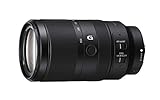
- 3. Sony E 70-350mm f/4.5-6.3 G OSS: The Lightest Reach In The Lineup
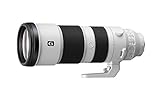
- 4. Sony FE 200-600mm f/5.6-6.3 G OSS: The Serious Reach Option For Full-Frame
- 5. Sigma 150-600mm f/5-6.3 DG DN: The Reach Per Gram Workhorse For Sony E
- 6. Fujifilm XF100-400mm f/4.5-5.6 R LM OIS WR: The Native Long End For Fujifilm X
- 7. Nikon Z 180-600mm f/5.6-6.3 VR: Maximum Reach On Nikon Without A Converter
- 8. Nikon Z 100-400mm f/4.5-5.6 VR S: The Optics-First Nikon Choice
- 9. Tamron 50-400mm f/4.5-6.3 Di III VC VXD: One Lens For Habitat And Birds
- 10. OM System 300mm f/4.0 PRO: The Super-Telephoto Prime With A Permanent f/4
- How Much Reach Do You Actually Need?
- Which Telephoto Lens Fits Your Camera Mount?
- Zoom Or Prime For Birds?
- Settings That Make Any Of These Lenses Work
- Frequently Asked Questions
- How much zoom do I need for bird photography?
- Is a 400mm lens enough for bird photography?
- Is a 70-300mm lens good for bird photography?
- What is the difference between a telephoto lens and a super-telephoto lens?
- Do I need image stabilisation for a birding lens?
- Is a third-party lens as good as a first-party lens for birds?
- The Best Telephoto Lens for Bird Photography in 2026
Top 3 Picks for Bird Photography in 2026

If you read nothing else, read this. The Canon RF 100-400mm is the pick I recommend to most people because it does the two things birders need most without demanding a second mortgage, and the Sony pair covers the two ends of the range: one serious super-telephoto, one featherweight.
All 10 Telephoto Lenses at a Glance in 2026
| Product | Specifications | Action |
|---|---|---|
| Canon RF 100-400mm f/5.6-8 |
|
Check Latest Price |
 Canon EF 100-400mm f/4.5-5.6L IS II Canon EF 100-400mm f/4.5-5.6L IS II |
|
Check Latest Price |
 Sony E 70-350mm f/4.5-6.3 G OSS Sony E 70-350mm f/4.5-6.3 G OSS |
|
Check Latest Price |
 Sony FE 200-600mm f/5.6-6.3 G OSS Sony FE 200-600mm f/5.6-6.3 G OSS |
|
Check Latest Price |
 Sigma 150-600mm f/5-6.3 DG DN Sigma 150-600mm f/5-6.3 DG DN |
|
Check Latest Price |
 Fujifilm XF 100-400mm f/4.5-5.6 Fujifilm XF 100-400mm f/4.5-5.6 |
|
Check Latest Price |
 Nikon Z 180-600mm f/5.6-6.3 VR Nikon Z 180-600mm f/5.6-6.3 VR |
|
Check Latest Price |
 Nikon Z 100-400mm f/4.5-5.6 VR S Nikon Z 100-400mm f/4.5-5.6 VR S |
|
Check Latest Price |
 Tamron 50-400mm f/4.5-6.3 VC VXD Tamron 50-400mm f/4.5-6.3 VC VXD |
|
Check Latest Price |
 OM System 300mm f/4.0 PRO OM System 300mm f/4.0 PRO |
|
Check Latest Price |
Two entries deserve a note before the reviews. The OM System 300mm f/4 is the only prime lens in the group, which makes it a genuinely different tool rather than another variation on the same zoom. The Tamron 50-400mm starts at 50mm, so it covers landscapes and close-ups as well as birds, which changes what you can do on a single trip.
1. Canon RF 100-400mm f/5.6-8 IS USM: The All-Rounder We Keep Reaching For
Canon RF100-400mm F5.6-8 is USM Lens
100-400mm
f/5.6-8
816 g
5.5 stops optical IS
2.89 ft focus at 200mm
Pros
- Only 816 g across a 100-400mm range
- Up to 6 stops of shake correction with IBIS bodies
- Nano USM motor is fast and near silent
- 0.41x magnification at the long end
- Excellent close focus for a telephoto zoom
Cons
- Not weather sealed
- f/8 at 400mm needs bright light
- Tripod collar not included
This is the lens I reach for first, and after a year of carrying it to every wetland within an hour of my home I have stopped looking for a replacement. At 816 g it is the second-lightest lens in this roundup, yet it covers the range where most bird photography actually happens.
The optical stabiliser is rated at up to 5.5 stops of shake correction, rising to 6 stops when paired with an EOS R body that has in-body stabilisation. In practice that is the difference between a usable handheld frame and a blurred one at 400mm, and on a DX-format body the 100-400mm behaves like a 160-640mm.
Autofocus is driven by a Nano USM motor, and the result is quick acquisition with a transition smooth enough not to startle a nervous bird. Close focus is a genuine surprise at this focal length: 2.89 feet at 200mm with 0.41x magnification at 400mm means a robin in a feeder is not out of range.
The compromises are honest ones. The aperture stops down to f/8 at the long end, so overcast light and late afternoons demand a higher ISO than you might like, and the barrel is not weather sealed, so I keep it in a dry bag when the forecast turns. There is no tripod collar in the box either. Buy one separately if you work from hides with the lens on a monopod.
Where I use it most
Perched songbirds and early-morning duck flight at a reedbed are its strongest suits. The zoom range lets me frame a distant flock at 100mm, wait for a heron to lift, and stay on it as it crosses open water without a frantic zoom scramble.
For distant, shy species in open countryside, 400mm on a full-frame body is often the limit of what this lens can do. That is exactly why a teleconverter is worth owning, and why the OM System prime further down the list is not redundant.
Who should skip it
If you shoot mostly in failing light, work exclusively on a full-frame body, or spend your weekends in rain and salt spray, the slower aperture and the missing seals will frustrate you. In that case, step up in reach or in weather protection rather than in body size.
2. Canon EF 100-400mm f/4.5-5.6L IS USM: Still The Sharpest Handling DSLR Telephoto
Canon EF 100-400mm f/4.5-5.6L is USM Telephoto Zoom Lens for Canon SLR Cameras
100-400mm
f/4.5-5.6
1380 g
2 stops IS
5.9 ft close focus
Pros
- Sharp wide open at f/4.5-5.6
- Constant 4.0x zoom ratio
- Works with 1.4x II and 2x II extenders
- Rock-solid L-series build
- Predictable handling on a DSLR body
Cons
- Two stops of stabilisation is dated by modern standards
- 1380 g is heavy for a walk
- Pump-pull zoom can creep
- Not weather sealed
If your camera is still an SLR rather than a mirrorless body, this remains the option I recommend, and it costs noticeably less than any current RF or Z-mount equivalent. The optical result wide open at f/4.5-5.6 is the part that never gets talked about enough: it means usable frames in flat light, where f/8 on the RF version forces you to work.
Two extended elements handle secondary spectrum, and a 5.9-foot close focus distance gives you real flexibility around a feeder or a nesting site. The push-pull zoom ring is fast in a way that feels odd for the first hour and then indispensable.
The honest problem is stabilisation. Two stops is roughly half of what a modern lens offers, so at 400mm on a moving bird I lean on a monopod far more than I would with any of the mirrorless options here. It is also the heaviest lens in the group apart from the dedicated super-telephotos, at 1380 g, and a long walk with it adds up fast.
There are mechanical quirks worth knowing before you commit. The push-pull section can creep if the friction ring is not tightened, zoom and focus rings are coupled so each adjustment needs two hands, and the extending barrel can pump dust towards the sensor on a DSLR body.
What still makes it worth buying
Nothing here competes on specifications and everything competes on results. The rendered detail on a perched bird at 400mm holds up in print years after capture, which is why this lens has kept its following for so long. If you want the frames large enough to appreciate, our notes on oversized black and white photography prints cover what a crop actually looks like on paper.
Buy it if you already own a compatible DSLR and want reach without changing system. If you are starting fresh, the mirrorless options give you a lighter body and better stabilisation for the same outlay.
The adapter question for RF shooters
It works on newer Canon RF mirrorless bodies through a first-party EF-to-RF adapter, and the electronic communication is reliable, so focus and stabilisation behave. Autofocus is a step behind native RF glass, and the adapter adds a small weight penalty to an already heavy lens.
3. Sony E 70-350mm f/4.5-6.3 G OSS: The Lightest Reach In The Lineup
Sony E 70-350mm f/4.5-6.3 G OSS Lens, Telephoto Lens, Black
70-350mm
f/4.5-6.3
635 g
105-525mm equivalent
Weather resistant
Pros
- Lightest lens here at 635 g
- Sharp corner to corner as a G lens
- Weather resistant
- 5x zoom starting at a useful 70mm
- Customisable focus hold button
Cons
- F/6.3 at 350mm is slow in low light
- No teleconverter support
- APS-C only
- Hood stores over the zoom ring
At 635 g this is the only lens in the roundup I can carry for a full day on a strap without thinking about my shoulders, and on a Sony APS-C body it gives 105-525mm equivalent. That combination is why it is the first recommendation I give to anyone whose bird photography happens on a walk rather than from a hide.
Nineteen elements in thirteen groups with a seven-blade diaphragm deliver G-level sharpness across the frame, and the XD linear motor focuses fast and quietly enough for flight work. Optical SteadyShot handles the handheld end well; at 350mm on an APS-C body I can usually hold a perched bird without support.
There are two hard limits to know. The f/6.3 at the long end means dawn and dusk shooting pushes ISO higher than I like, and there is no teleconverter compatibility, so 525mm equivalent is the ceiling. This is a lens for a specific body size, and it does not fit full-frame Sony cameras.
The lens hood also stores in reverse position over the zoom ring, which is fine in a bag and mildly annoying in a crowded hide. Weather resistance means light rain and drizzle are not a reason to put the camera away.
Best used for
Songbirds at moderate range, garden and park species, and travel where a single small lens has to cover both the habitat and the birds in it. Starting at 70mm means the same lens frames a perched robin and a distant raptor.
The 70-300mm question comes up constantly, and a 350mm with weather sealing and a linear motor is a step up in every one of those categories for anyone already in the Sony APS-C ecosystem.
Where it falls short
Warblers, kingfishers and skittish shorebirds at long range will test the limits of 525mm equivalent. If those are your target species, the reach simply is not there, and no amount of technique substitutes for focal length.
4. Sony FE 200-600mm f/5.6-6.3 G OSS: The Serious Reach Option For Full-Frame
Sony FE 200-600mm f/5.6-6.3 G OSS Super Telephoto Zoom Lens
200-600mm
f/5.6-6.3
2132 g
Internal zoom
5 ED elements
Pros
- Internal zoom keeps length and balance constant
- Sharp from 200mm to 600mm
- Works with Sony 1.4x and 2x teleconverters
- Weather resistant with 5 ED elements
- Detachable tripod foot and case included
Cons
- 2132 g is a real commitment
- f/6.3 at 600mm is slow for dusk
- Large lens needs a dedicated bag
- Hood does not lock into place
When a bird is small, far away, and unwilling to come closer, 600mm is the number that matters. This lens delivers it with an internal zoom design that keeps the barrel the same length at every focal length, which means the centre of gravity does not shift as you zoom from 200mm to 600mm.
That balance is not a small detail over a long day. It also keeps the front element inboard, which reduces the risk of dust and moisture reaching the sensor. An aspherical element reduces spherical aberration and five ED elements control flare and ghosting when the sun is behind the subject.
The Direct Drive Supersonic Wave Motor focuses quickly and quietly enough to keep up with a bird taking off from a reedbed, which is the moment that matters. Adding a 1.4x or 2x teleconverter extends reach to 840mm or 1200mm equivalent, and autofocus performance holds up far better than you might expect from a zoom this long.
Weight is the honest trade. At 2132 g this is a two-session weight, and I use a monopod or a beanbag in hides rather than trying to support it for hours. The f/6.3 at the long end also means dawn light is a real constraint; a bird emerging from shadow into mist at 600mm will force ISO above 3200.
What it does better than the alternatives
Constant length while zooming means panning with a bird in flight feels far more stable than with an extending design. Mount the supplied tripod foot, brace it, and the frame stays where you put it.
The teleconverter path also makes this the most future-proof reach in the group. A 400mm lens plus a 2x converter is optically different from a designed 800mm, and this combination comes closer than you would expect.
Who should look elsewhere
Anyone who wants to carry gear on foot for a whole morning should step down in weight. Anyone shooting only large species close to home will rarely need 600mm, and the aperture at the long end will not reward them for the extra bulk.
5. Sigma 150-600mm f/5-6.3 DG DN: The Reach Per Gram Workhorse For Sony E
Pros
- Sharp across the whole range for the money
- 23 inch minimum focus is unusually short
- 4 stops of optical stabilisation
- 9-blade diaphragm renders smooth backgrounds
- Four year warranty
Cons
- Not weather sealed
- External zoom extends and takes on dust
- Autofocus is slower than native Sony glass
- f/6.3 at 600mm needs bright light
- 95mm filters are expensive
This is the lens I recommend when someone wants 600mm and does not want the first-party price tag attached to it. Optical performance is excellent across the range, and the 23-inch minimum focus distance is short enough to fill the frame with a small subject without creeping toward it.
Nine aperture blades produce a smoother background than cheaper rivals, which matters more than most buyers expect for perched birds against foliage. There are four shooting modes, including a dedicated sports setting, and a four year warranty that is longer than any first-party option here.
Stabilisation is rated at up to four stops, which is a little less than the 5.5 stops the latest mirrorless lenses claim but perfectly workable with a fast shutter. Reviewers frequently note that updating to the current firmware version markedly improves both autofocus and stabilisation behaviour, and that the quiet operation is a genuine plus for flight work.
The three compromises are honest. It is not weather sealed, the external zoom extends and can admit dust over years of wetland use, and the autofocus is a step behind Sony’s native motor in the first frames after a bird accelerates. Zoom creep and a temperamental lock have also been reported.
Where it wins
Reach per unit of spend is the whole argument. If your budget stretches comfortably to a 200-600mm but not comfortably past it, this is the rational choice, and on a Sony APS-C body the 150-600mm gives 225-900mm equivalent.
It also suits a second body or a second pair of hands, where spending less leaves room for a wider lens for habitat shots. The short close focus is genuinely useful for insects and small perched birds.
Where it struggles
Fast, erratic flight against a cluttered background is the hardest case. The motor simply does not have the acceleration of a native super-telephoto, and missing the first three frames is what turns a flight sequence into a memory. Persistent rain is also outside its comfort zone.
6. Fujifilm XF100-400mm f/4.5-5.6 R LM OIS WR: The Native Long End For Fujifilm X
Fujinon XF100-400mmF4.5-5.6 R LM OIS WR
100-400mm
f/4.5-5.6
1905 g
5 stops OIS
152-609mm equivalent
Pros
- Weather sealed and rated to minus 10 degrees
- 5 stop stabilisation
- Linear motor autofocus is fast and quiet
- 21 elements with 5 ED and 1 Super ED
- Removable tripod mount and teleconverter ready
Cons
- f/5.6 at 400mm is slower than the aperture implies
- 1905 g is heavy
- Only a 4x zoom ratio
- No 600mm class reach without glass
Fujifilm’s native long telephoto is the most fully sealed lens in this roundup, rated to operate down to minus 10 degrees. For anyone shooting winter waterfowl, coastal waders or dawn wetland hides in British weather, that specification is not marketing decoration.
On an APS-C X body it gives 152-609mm equivalent, which covers the overwhelming majority of field birding. The linear motor focuses fast and quietly, and the five-stop optical stabilisation system is one of the more effective implementations available, holding a perched bird sharp at the long end without support.
Optically, 21 elements in 14 groups including five extra-low dispersion and one super extra-low dispersion element keep colour fringing under control in the backlit conditions that make dawn hides so worthwhile. A nine-blade diaphragm gives rounded out-of-focus highlights when a bird sits against bright reeds.
A removable tripod mount is included, and the lens works with Fujifilm 1.4x and 2x teleconverters if you need more reach. What you do not get is 600mm, and the aperture slows to f/5.6 at 400mm, which is where the top rated score starts to look generous.
What makes it the Fuji choice
Sealing, colour rendition and native autofocus integration. If your body is an X-series, this is the lens that gets out of the way and lets the camera’s subject detection do its work, which on recent bodies is genuinely strong on birds.
It also holds its value well, which matters if you upgrade bodies before lenses. A used example does a lot of good for someone moving from a kit zoom.
When to look at a 600mm instead
Small, distant and nervous species are where 400mm physical runs out. If your birding is open-country rather than wetland or hide-based, the equivalent reach ceiling is the deciding factor and you should plan a different lens rather than push this one further.
7. Nikon Z 180-600mm f/5.6-6.3 VR: Maximum Reach On Nikon Without A Converter
Pros
- Internal zoom holds size and centre of gravity
- 5.5 stops of optical VR
- 70 degree zoom ring turn reaches 600mm
- Quick release tripod foot and customisable controls
- Weather resistant with fluorine coating
Cons
- Stepping motor AF is not the fastest here
- f/6.3 at 600mm needs light
- 2132 g in the hand
- 95mm filter thread
The 180mm wide end is the reason this lens exists. It lets you find a bird quickly, and a single 70 degree turn of the zoom ring takes you to full 600mm framing, which is a real advantage over slower, more deliberate zoom rings when a heron lifts unexpectedly.
Internal zooming keeps the size and the centre of gravity identical at both ends and minimises dust intrusion, and the built-in optical Vibration Reduction is rated at 5.5 stops by CIPA, which is enough to handhold a perched subject at the long end with a little care.
The controls are the sort of detail that only appear on a lens priced at this level: a quick release tripod foot, a customisable control ring, function buttons and a fluorine coating on the front element. Close focus of 4.27 feet at 180mm with 0.25x magnification is a genuine bonus for small birds that come close.
Two teleconverters extend the reach further, to 840mm with the 1.4x and 1200mm with the 2x, which is how serious Nikon users get to true super-telephoto territory without changing lens. The STM stepping motor is the one weak point against newer hybrid systems, particularly in fast, erratic flight.
When the 180mm end earns its place
It removes the second lens from the bag. Landscape, habitat and a wide view of a colony all become possible without swapping glass, which matters when you are driving between sites in poor light and want to keep shooting.
On a DX-format Z body the range becomes 270-900mm equivalent, which pairs neatly with the smaller Z bodies. It is the reach-per-body-size combination I recommend for anyone starting out in that system.
Where the weight bites
2132 g is a lens for a car, a hide with a monopod, or a tripod. A day of walking hedgerows with it will leave you grateful for a rest stop. Combined with the 95mm filter thread, the kit is not a small commitment to carry.
8. Nikon Z 100-400mm f/4.5-5.6 VR S: The Optics-First Nikon Choice
Nikon NIKKOR Z 100-400mm VR S | Premium Versatile telephoto Zoom Lens with Image stabilization for Z Series mirrorless Cameras (Compatible with teleconverters) | Nikon USA Model
100-400mm
f/4.5-5.6
1451 g
5.5 stops VR
150-600mm on DX
Pros
- S-Line edge-to-edge sharpness
- Dual STM motors are near silent with no focus breathing
- 5.5 stops of VR on FX bodies
- Lighter than most super-telephoto zooms
- Teleconverters add 560mm and 800mm
Cons
- Not weather sealed
- 1451 g is still heavy for a walk
- No tripod collar included
- Reaches only 400mm natively
This is the highest-rated lens in the roundup, and the reason is optical rather than focal. S-Line glass delivers edge-to-edge sharpness that stays consistent into the corners, which is exactly what you want when a bird is off-centre and you are cropping in afterwards.
Two high-speed STM stepping motors move in synchrony and are near silent in operation. Nikon states they produce no colour bleeding and virtually no focus breathing, and the practical effect is that a bird walking toward you stays sharp as the distance changes without the frame pumping in and out.
Stabilisation is rated at up to 5.5 stops CIPA, working with five axes on full-frame bodies and two axes on DX bodies such as the Z 50 and Z fc. Both 1.4x and 2x teleconverters are supported, taking reach to 560mm and 800mm with no loss of autofocus points and very little added weight.
At 1451 g it is lighter than most super-telephoto zooms, and on a DX body it frames like a 150-600mm. Two things stop it being the default Nikon recommendation: it is not weather sealed, which is unusual at this level, and 400mm is a shorter native ceiling than the 600mm options.
Why the teleconverter path matters here
On a Z body, the 100-400mm with the 2x converter at 800mm is the most elegant route to real super-telephoto reach without a dedicated prime. Nikon’s own claim is that resolution holds and focus points are unaffected.
That is the case for buying quality glass at a shorter focal length and extending later, rather than committing to a heavy 600mm zoom immediately. The caveat is a stop of light lost, which matters in exactly the low-light conditions where you will want more reach.
Who buys this instead of the 180-600mm
Anyone who photographs more than birds, who values corner-to-corner detail over maximum framing, or who works with a body that emphasises subject detection. The S-Line rendering pairs particularly well with high-resolution sensors.
If weight and reach are your only criteria, the 180-600mm is the better tool. If picture quality is the criterion, this one wins.
9. Tamron 50-400mm f/4.5-6.3 Di III VC VXD: One Lens For Habitat And Birds
Tamron 50-400mm f/4.5-6.3 Di III VC VXD Lens for Sony Full Frame Mirrorless Cameras
50-400mm
f/4.5-6.3
1134 g
1:2 macro
Weather resistant
Pros
- 8x zoom from 50mm to 400mm
- 1:2 magnification at 9.8 inches
- Light at 1134 g
- Weather resistant with fluorine coating
- Six year warranty
Cons
- Softer at 400mm than dedicated telephotos
- f/4.5-6.3 aperture is slow at the long end
- Tripod mount sold separately
- Some zoom creep reported
No other lens here starts at 50mm, and that single fact changes what a trip looks like. One lens covers the habitat shot that establishes where the bird was, the 400mm frame that does the work, and the close-up that fills the frame with detail.
The close-focusing specification is the surprise. A 1:2 magnification from 9.8 inches means half life-size reproduction, which turns small subjects, insects and flower visits into viable subjects without a second lens. A nine-blade diaphragm supports that with a smooth background.
The VXD voice-coil motor is fast and quiet, and the lens supports Sony’s Fast Hybrid AF and Eye AF functions. Weather resistance and a fluorine coating on the front element mean light rain and handling smudges are manageable, and the six year warranty is the longest in this group.
At 400mm the image is softer than dedicated 100-400mm or 200-600mm glass, which is the compromise that defines this lens. Zoom creep has been reported by some users, and the Arca-type tripod foot is an optional accessory rather than an included one.
Best for a single-lens trip
If you are on a flight with one lens in your bag, a 400mm that weighs 1134 g and starts at 50mm solves a problem no other option here addresses. It is the lens I would take to a country where gear has to be carried between vehicles and flights.
It also makes a sensible companion lens alongside a prime, giving you the wide end your prime does not have.
When to choose something sharper
If birds are your only subject and your only goal, a dedicated telephoto at 400mm will resolve more detail at the long end. This lens trades a little sharpness for a range nothing else matches, and that trade only pays off if you will actually use the wide end.
10. OM System 300mm f/4.0 PRO: The Super-Telephoto Prime With A Permanent f/4
OM SYSTEM Olympus M.Zuiko Digital ED 300mm F4.0 is PRO for Micro Four Thirds System Camera Powerful Telephoto Prime Lens Weather Sealed Design MF Clutch
300mm prime
f/4.0 constant
1270 g
600mm equivalent
Weather sealed
Pros
- Constant f/4 across the frame
- 600mm equivalent reach in 1270 g
- PRO-grade weather sealing
- MF clutch gives instant manual override
- Works with 1.4x and 2x teleconverters
Cons
- Fixed 300mm with no zoom flexibility
- No optical stabilisation of its own
- Only 4 diaphragm blades
- Tripod mount needed for balanced handling
This is the only prime in the group, and the difference is not subtle. A constant f/4 means the aperture does not change as you refocus, so exposure stays identical whether the bird is close or distant, and the image background stays consistent across a flight sequence.
On a Micro Four Thirds body, 300mm gives 600mm equivalent, and 1270 g for that reach is remarkably light. The teleconverter options push it to 840mm and 1200mm equivalent, which is genuine super-telephoto territory without a second lens purchase.
Two features make it a real field lens. The MF clutch lets you grab manual focus instantly without a mode switch, which is faster than fumbling with a switch on a bird at 600mm, and the L-Fn button is customisable to a function you will actually use. PRO-series weather sealing holds up in sustained rain.
There is no optical stabilisation in the lens, so it depends on in-body stabilisation from the body, which is available on current OM System and Olympus bodies. The four-blade diaphragm produces slightly harsher bokeh highlights than a nine-blade design, and a prime at 300mm means you walk to every subject exactly as framed.
Why the aperture matters more than usual
A fixed f/4 is roughly two stops brighter than the f/6.3 end of the super-telephoto zooms in this roundup. In dawn light, woodland shade or overcast conditions, that difference decides whether you get a clean frame or a noisy one.
It also lets you use a faster shutter, which is the other half of the flight-photography equation. Reach plus aperture plus shutter speed is the combination this lens is built to deliver.
Who should skip a prime
Anyone who photographs varied wildlife as well as birds, anyone who wants landscapes, and anyone who reshoots the scene constantly. A prime rewards commitment and punishes second-guessing, and for a beginner a zoom that reframes instantly is a far kinder place to start.
How Much Reach Do You Actually Need?
You need enough focal length that the bird fills the frame at a distance it is comfortable with, and no more. Large, tolerant species such as herons, swans and gulls sit at 100-200mm. Medium birds like gulls, lapwings and kingfishers need 300-400mm. Small, skittish species, meaning warblers, pipits and distant waders, need 600mm or a teleconverter on top of that.
A 400mm lens is enough for bird photography when you work from a hide, a garden, or open ground where the bird is already within a few hundred metres. It stops being enough the moment your subject is small and stays at distance. In that situation, a 400mm with a 1.4x converter gives you 560mm, which closes most of the gap, and a 2x converter gives 800mm.
One caution about the crop factor. APS-C bodies do not add reach, they crop, which means a 400mm becomes a 600mm equivalent view but with less sensor used and correspondingly less detail captured. Extra focal length still helps you frame, but it does not create detail that the smaller sensor never recorded.
Which Telephoto Lens Fits Your Camera Mount?
Skip to your system. Most people arrive at this page already knowing their body, and the mount is the only hard constraint in the whole decision.
Canon RF owners have the most compact option in the RF 100-400mm, and can also mount the older EF 100-400mm through an adapter if they want a brighter aperture. Nikon Z shooters choose between optical quality at 400mm and native reach at 600mm, with teleconverters covering the gap either way. Sony E mount is the widest choice, split between the full-frame 200-600mm, the value-focused Sigma 150-600mm, the travel-friendly Tamron, and the APS-C-only 70-350mm. Fujifilm X has one native long zoom, and Micro Four Thirds has the 300mm prime, which is where the 2x crop does the heavy lifting.
Third-party glass is a live question rather than a settled one. Sigma and Tamron optics are now sharp enough that the deciding factors are aperture, weather sealing and autofocus speed rather than image quality. If birds in flight are your main interest, that autofocus point deserves more weight than it used to.
Zoom Or Prime For Birds?
For most birders, a zoom. Reframing a bird that has moved three feet without putting the lens down is worth more than the small aperture advantage of a prime, and it means one lens covers the whole morning rather than a single framing.
A prime earns its place when you know exactly what you are shooting and need more light. A constant f/4 at 600mm equivalent gives you two stops more than any super-telephoto zoom here, and light is what you lose when a bird takes off from shadow into mist. Primes also stop down consistently, which makes exposure easier to predict.
The practical answer is that most photographers do not have to choose permanently. Start with a zoom, and add a prime or a teleconverter when you identify the specific problem, which is usually a small bird at a great distance in poor light.
Settings That Make Any Of These Lenses Work
Gear matters less than settings. Whatever lens you end up with, these five adjustments will improve your bird frames more than a focal length upgrade.
First, shutter speed. Large slow birds such as herons and swans can be held at 1/1600s, medium species need 1/2000s, and small fast birds need 1/3200s or faster. Below that, wings blur before the body does.
Second, autofocus. Use continuous autofocus with animal or bird subject detection enabled, and set the tracking sensitivity so the camera does not jump to a branch when a bird crosses behind one.
Third, drive mode. A fast burst is only useful if the buffer holds it, and low-light frames are large files, so a fast memory card matters as much as the frame rate quoted in the manual.
Fourth, Auto-ISO with a sensible ceiling. Pick a maximum the camera should not exceed and let it manage the rest, rather than setting a fixed ISO and losing frames to noise in the last light of the day.
Fifth, stabilisation pairing. On bodies with in-body stabilisation, let the lens and the body work together, and switch between the two stabilisation modes as you pan and as you hold still. For long exposures in a hide, a beanbag or monopod still beats any optical system.
One last habit: know your subject’s behaviour before you set up. Every photographer on birding forums will tell you that the frames come from waiting, not from zooming. Our guide to bird bath attachments for cages is a good way to bring the birds to a fixed spot where you can learn a routine.
Frequently Asked Questions
How much zoom do I need for bird photography?
You need 100-200mm for large species such as herons and swans, 300-400mm for medium birds like gulls and lapwings, and 600mm or a teleconverter for small skittish species like warblers and distant waders. Buy the longest reach you are willing to carry, because you cannot add focal length later without changing lenses.
Is a 400mm lens enough for bird photography?
Yes, if you work from a hide, a garden, or open ground where the bird is already within a few hundred metres. It stops being enough for small, nervous species at long range. A 400mm with a 1.4x teleconverter reaches 560mm and closes most of that gap.
Is a 70-300mm lens good for bird photography?
For medium and large species at moderate range, yes, and it is a strong all-round choice for travel. For small, skittish birds such as warblers and kingfishers, 300mm rarely fills the frame. The Sony 70-350mm adds weather sealing and reaches 525mm equivalent on an APS-C body.
What is the difference between a telephoto lens and a super-telephoto lens?
A telephoto lens is generally a 300mm lens or longer. A super-telephoto is the next band up, usually 400mm to 600mm and beyond, and it is where most serious bird photography lives. The extra reach comes at the cost of weight, cost, and usually maximum aperture.
Do I need image stabilisation for a birding lens?
Yes. At 400mm and beyond, camera shake blurs a frame long before focus problems do, and stabilisation rated at four stops or more lets you handhold a perched bird. On bodies with in-body stabilisation, the lens and body systems can be combined for extra correction.
Is a third-party lens as good as a first-party lens for birds?
Optically, yes. Sigma and Tamron telephoto zooms are sharp enough that autofocus speed, weather sealing and maximum aperture are the deciding factors now. For birds in flight specifically, native glass usually acquires focus faster, which is the one area where first-party still leads.
The Best Telephoto Lens for Bird Photography in 2026
The Canon RF 100-400mm f/5.6-8 is the lens I recommend to most people in 2026. It weighs 816 g, stabilises well, focuses quietly and quickly, and covers the focal range where the majority of bird photographs are actually made.
If you need more reach, the Sony FE 200-600mm and the Nikon Z 180-600mm go to 600mm natively, and both accept teleconverters. If you need less weight, the Sony E 70-350mm gives 525mm equivalent in a body you can carry all day. And if you need more light rather than more reach, the OM System 300mm f/4 is the sharpest tool in this group.
Whichever you choose, the settings matter more than the glass. Set the shutter speed for the size of the bird, use continuous autofocus with subject detection, and be still long enough for the bird to come to you.