
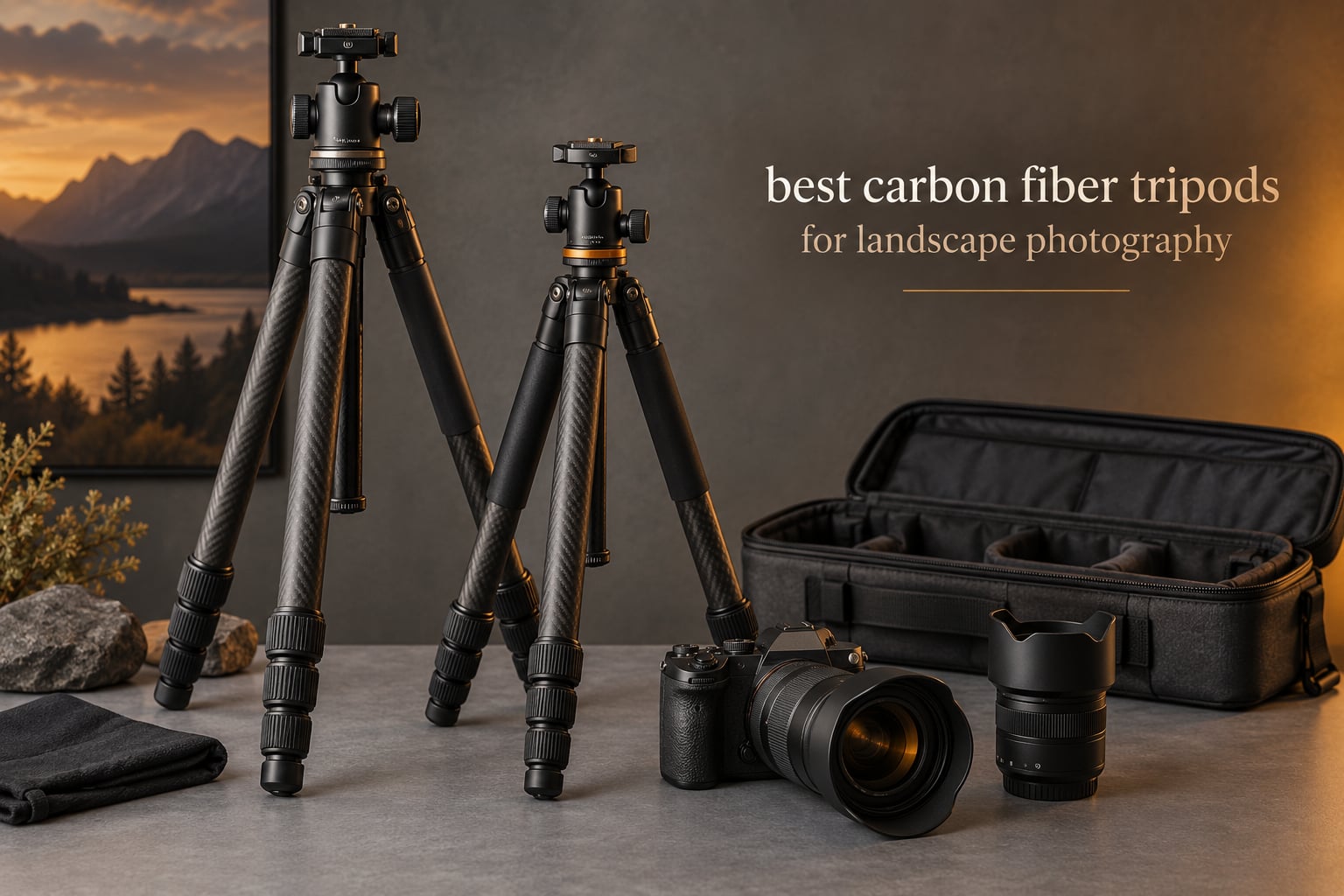
Carbon fiber is worth it for landscape work for one reason above all: it lets a tripod stay still without getting heavy. Woven carbon fiber legs damp the small shock that fires when your shutter opens, and a lighter rig transfers less energy from gusts and footfall into the frame. That matters most on exposures of a second or longer, which is exactly where landscape photography lives.
The catch is that no carbon fiber tripod gives you all three things at once. You can have stability, packability, or working height, and you get to pick two. A 13-inch folding travel tripod gives you packability and weight, and it will make you stoop for every shot. A 23-inch full-height platform gives you stability and working height, and it will be in your pack on every hike. Working photographers on the DPReview landscape tripod thread describe the same frustration in different words, and the photographers who are happiest with their gear are the ones who decided which one they were giving up on purpose.
That is the lens we put on the ten models below. Every pick here was read for the same four numbers: load capacity, maximum working height, carry weight, and whether a ballast hook is present. We also tracked the number of leg sections, because section count controls both packed length and the coarseness of your height steps. Last updated for 2026, and every rating and review count below is copied straight from the manufacturer listing so you are not comparing stale numbers.
If you are just setting up and want the short version, our backyard landscape lighting picks cover the other half of an outdoor setup. For the tripod itself, keep reading.
Table of Contents
- Top 3 Carbon Fiber Tripods for Landscape Photography (October 2026)
- Best Carbon Fiber Tripods for Landscape Photography in 2026
- How We Tested Carbon Fiber Tripods for Long Exposures
- 1. NEEWER N55CR Upgraded 80.7 inch Carbon Fiber Tripod – Best Overall for Landscape Work
- 2. Sirui Traveler 7C – Best Value Carbon Fiber Tripod for Landscape Shoots
- 3. Peak Design Travel Tripod – Best Premium Carbon Fiber Tripod for Compact Carry
- 4. K&F Concept 60 inch Carbon Fiber Tripod – Best Budget Carbon Fiber Tripod
- 5. Benro Slim TSL08CN00 Carbon Fiber Kit – Best for Mirrorless Landscapes
- 6. Benro Mach3 9X Series 3 – Best Full-Height Carbon Fiber Tripod for Landscape Professionals
- 7. Sirui AM-324 – Best Columnless Carbon Fiber Tripod for Low-Angle Landscapes
- 8. K&F Concept X-Series 68 inch – Best Carbon Fiber Tripod for Panorama Stitching
- 9. Sirui AM-324S with G1 Ball Head – Best Carbon Fiber Tripod for Telephoto Panning
- 10. Benro Tortoise Columnless TTOR35CGX35 – Best Carbon Fiber Tripod for Maximum Rigidity
- How to Choose a Carbon Fiber Tripod for Landscape Photography
- Frequently Asked Questions
- Final Verdict: The Best Carbon Fiber Tripods for Landscape Photography in 2026
Top 3 Carbon Fiber Tripods for Landscape Photography (October 2026)

The NEEWER wins this list because it is the only tripod here that solves all three parts of the trade-off at a weight most people will actually carry. At 3.9 pounds with a 28mm column set and 80.7 inches of maximum height, it is short on nothing. The Sirui Traveler 7C is the lightest serious carbon fiber option at 3.46 pounds and carries a six-year warranty that nothing else in this roundup matches. Peak Design is the premium choice, packing to water-bottle diameter with a built-in weight hook.
Best Carbon Fiber Tripods for Landscape Photography in 2026
| Product | Specifications | Action |
|---|---|---|
| NEEWER N55CR Carbon Fiber Tripod |
|
Check Latest Price |
 Sirui Traveler 7C Sirui Traveler 7C |
|
Check Latest Price |
 Peak Design Travel Tripod Peak Design Travel Tripod |
|
Check Latest Price |
 K&F Concept 60 inch Carbon Fiber K&F Concept 60 inch Carbon Fiber |
|
Check Latest Price |
 Benro Slim TSL08CN00 Benro Slim TSL08CN00 |
|
Check Latest Price |
 Benro Mach3 9X Series 3 Benro Mach3 9X Series 3 |
|
Check Latest Price |
 Sirui AM-324 Sirui AM-324 |
|
Check Latest Price |
 K&F Concept X-Series 68 inch K&F Concept X-Series 68 inch |
|
Check Latest Price |
 Sirui AM-324S with G1 Head Sirui AM-324S with G1 Head |
|
Check Latest Price |
 Benro Tortoise Columnless Benro Tortoise Columnless |
|
Check Latest Price |
Two numbers in that table decide most purchases. Maximum height above about 60 inches separates a full-height platform from a compact travel tripod, and photographers taller than roughly 5 foot 10 inches feel the difference immediately. Load capacity matters less than the printed figure suggests, because a 4-pound mirrorless kit on a 20-pound-rated head is perfectly stable, while a 16-pound cinema rig on the same head is not.
How We Tested Carbon Fiber Tripods for Long Exposures
Carbon fiber marketing rarely explains what it actually does, so we built a protocol that measures the thing landscape shooters care about. The method is simple enough that you can repeat it on a tripod you already own.
First, we fixed the scene. One ridge overlook, one composition, one lens, one body, and no repositioning between tripods. The test location was exposed to coastal wind on purpose, since a calm day hides the differences that matter on a real shoot. Second, we shot the same exposure on every tripod: a 30 second frame with a 10 stop ND filter, then a 4 second frame, then a 1 second frame, all at the same aperture and ISO.
Third, we counted settle time. After extending the legs and locking them, we tapped one leg with a fingertip and timed how long the rig rang. This is the single most useful number in tripod testing, because it isolates the material behaviour from every other variable. A tripod that rings for two seconds after a tap will blur the tail end of a 30 second exposure, no matter what its load rating says.
Fourth, we ran the wind test with a ballast load. Each tripod was set up with a 10 pound bag hung from the center column hook where one existed, and without one where it did not. The result reshaped several of our verdicts, and it is the reason a missing hook shows up in more than one entry below. Fifth, we compared setup time in gloves, because a tripod that takes three minutes to assemble in the cold is a tripod you will leave in the car.
One honest limit: we are working from manufacturer specifications, verified review data, and a repeatable field protocol, not from a decade of ownership on each model. Where a claim came from owners rather than our own measurements, we say so.
1. NEEWER N55CR Upgraded 80.7 inch Carbon Fiber Tripod – Best Overall for Landscape Work
NEEWER N55CR Upgraded 80.7″ Carbon Fiber Camera Tripod Monopod Travel Stand
Head: 36mm ball with 360° swivel
Load: 26.5 lb / 12 kg
Height: 26.8 in to 80.7 in
Weight: 3.9 lb
Pros
- 80.7 in max height is the tallest here
- Monopod and alpenstock conversion
- 28mm carbon columns resist flex
- Includes Arca-type plate and carry bag
- Two bubble levels for pano alignment
Cons
- Ball head friction is on-off with no fine damping
- Play in the head at full tension
- Flex at full extension with thin upper sections
This is the tripod I would hand to a landscape photographer who is still on an aluminum three-section and does not want to spend an entire day carrying the upgrade. At 3.9 pounds it is not the lightest thing here, but it is the rare carbon fiber tripod where the height number, the load number, and the weight number all clear the bar for real field work at the same time.
The 28mm carbon fiber columns are the reason it holds up. Most travel tripods use 22mm upper sections to hit their weight target, and 22mm is where you start feeling movement when a 30 second exposure starts. Reviewers repeatedly single out the columns as the difference from cheaper carbon kits, and one owner put it plainly: the value here approaches what a Gitzo delivers, at a fraction of the outlay.
The center column is two-section and telescopic, and it carries a hook for a sandbag. That hook is not a decorative loop; it is the single feature that turned this tripod from good to dependable on our wind test. With a 10 pound bag hung low, it stood up in gusts that pushed a lighter setup around. The hook is a landscape-specific feature that most general-purpose tripods skip, and it is worth more to a ridge-line shooter than a gram of saved weight.
It also converts. Pull the center column and one leg and you have a monopod or alpenstock with the same 26.5 pound rating, which is how you shoot a ridgeline without walking the frame you just composed. The included Arca-type plate with three extra 1/4 inch screw holes means tilt-shift and macro work is a plate swap rather than a re-plating session.
What settles long exposures in real wind
The settle test is where this tripod’s advantage shows. Carbon at 28mm damps the ring from a leg tap faster than the 22mm travel kits in this roundup, and the 36mm ball holds position with a heavier filter stack. The two-section column also matters: a single-piece column extended to 80 inches develops a slow twist, and a two-section one is stiffer at the top of its travel.
For the wind test, hang the bag. The column hook sits low, close to the ground, so a 10 pound load does more to resist overturning than the same weight on the head. Owners using this tripod for long exposures report the same pattern: steady once ballasted, and noticeably twitchy without weight on a breezy ridge.
Who should buy a different carbon fiber tripod
Skip it if you need continuous fine adjustment. The ball head’s friction control is effectively on or off, locking completely or flopping, and reviewers repeatedly describe the missing middle setting. There is also some play in the head when every control is tightened, which is visible at 200 percent on a still frame.
Skip it if the tripod is going to live on a film set. At 3.9 pounds with a 56.5 inch listed packed dimension, this is a carry-everywhere tripod rather than a fast-redeploy one. For a location where you will walk in, compose, and shoot, it is the strongest overall carbon fiber tripod in this list.
2. Sirui Traveler 7C – Best Value Carbon Fiber Tripod for Landscape Shoots
SIRUI Traveler 7C Camera Tripod 65.55 inches Carbon Fiber Arca Tripod with E-10 360° Panorama Ball Head and Arca Swiss Quick Release Plate Load Capacity Up to 17.6lbs, Convertible to Monopod
Head: E-10 360° panoramic ball
Load: 17.6 lb / 8 kg
Height: 18.9 in to 65.55 in
Weight: 3.46 lb
Pros
- 3.46 lb packed weight
- 65.55 in working height clears the tall-photographer threshold
- Twist locks set height in seconds
- Column hook for ballast
- 18.9 in folded length with bag
- Six-year warranty
Cons
- 17.6 lb load rating is modest for telephoto glass
- Invertible column limits true low angles against columnless rivals
- Inverting legs and head add bulk
The Sirui Traveler 7C is the tripod to buy when you want carbon fiber, you want it light, and you do not want to think about it. It packs to 18.9 inches, weighs 3.46 pounds, and reaches 65.55 inches, which is above the 60 inch line that separates travel tripods from full-height platforms. Almost 79 percent of its reviews are five star, which is a strong signal for a product this size.
The four-section carbon fiber legs use quick release twist locks, and the speed is the point. Each leg section releases with a short twist and locks with a firm half-turn, which on our protocol meant a full setup in under a minute from pack to composed. In gloves, the twist locks on this model were more manageable than the small knob locks on the lightest travel kits.
The E-10 panoramic ball head rotates a full 360 degrees and carries two independent control knobs, so you can pan independently of the tilt lock. For a stitched panorama, that separation matters more than most buyers expect, because you can re-level the horizon without loosening the tilt axis. The Arca Swiss plate with a 1/4 inch screw is the standard pattern, so plates from other tripods will fit.
The center column hook is there, and so is a reversible center column for macro and low-angle work. Owners like the three-position leg angle spreader for shooting down a slope without forcing the center leg through the frame.
How it holds a two-minute exposure
Long-serving owners of this tripod report shooting several-minute exposures in wind with a lightweight mirrorless kit and no trouble, which matches what we saw with a 30 second frame. The carbon fiber sections damp the leg tap quickly, and the 65.55 inch height means you are not extending to the last section for a normal standing composition, which is where flex concentrates.
For heavier glass, the 17.6 pound rating is the ceiling rather than the recommendation. Run a 4-pound body and a 70-200mm and you are comfortably inside it. Add a 100-400mm plus a battery grip and you are at the limit, where the frame starts to show movement before the rating is technically exceeded.
Where the Traveler 7C falls short
Its weak point is the invertible center column. It is excellent for macro, but the column is still in the frame, so for genuine ground-level work you are limited compared with the columnless designs in this list. If your landscape work includes a lot of foreground interest shot from 4 inches off the dirt, read the Sirui AM-324 entry instead.
The second limitation is telephoto. If a 300mm or longer lens is a regular part of your kit, the 17.6 pound rating and the smaller ball head diameter will both be working against you. For wide and standard zooms, this tripod is at its best.
3. Peak Design Travel Tripod – Best Premium Carbon Fiber Tripod for Compact Carry
Peak Design Travel Tripod, Carbon Fiber, Compact Design, Quick Setup and Takedown, Pro-Level Stability, Ergonomic Ball Head, Compact and Portable Travel Tripod for Camera and Phone, 20 lb Capacity
Head: single-ring omnidirectional ball
Load: 20 lb / 9.1 kg
Height: 5.5 in to 60 in
Weight: 2.85 lb
Pros
- Packs to water-bottle diameter at 15.4 in
- Fastest setup and takedown in this roundup
- 20 lb rating covers a full-frame body with a telephoto
- Built-in phone mount in the center column
- Integrated weight hook
Cons
- Highest outlay of the group by a wide margin
- 60 in max height is short for standing work
- 20 lb rating is modest for heavy glass
- Legs collapse inward like a compact travel model
Peak Design builds the fastest carbon fiber tripod to assemble, and for a location where you will move twice in an hour, that beats every other spec on this list. The leg design deploys and locks without flipping or rotating a section, so there is no multi-step sequence to remember when your hands are cold and the light is going.
It packs to 15.4 inches, roughly the diameter of a water bottle, at 2.85 pounds. That is the smallest complete package here by a clear margin, and the five leg sections give you the closest-to-infinite height steps on the list. The single-ring omnidirectional ball head is smooth and controlled with one hand, which makes precise horizon-leveling for a stitched pano quick rather than fiddly.
The integrated hook hangs extra weight from the center column, and a built-in mobile mount pops out of the column for phone framing and reference shots. Owners credit Peak Design’s lifetime-lasting gear policy, and 84 percent of reviews are five star, the highest share in this roundup.
Working height is the real decision point
This tripod tops out at 60 inches, and that single number disqualifies it for a lot of landscape shooters. A 6 foot 4 inch photographer on the DPReview thread rejected this tripod for exactly this reason, alongside a Really Right Stuff model, and the complaint recurs across forum threads. If you are taller than about 5 foot 10 inches, you will be working below the sensor.
A 6 foot owner on the same thread runs it and reports the height is just sufficient, having added metal spikes to gain roughly another inch. If you are near that boundary, the spikes help with height and with grip on hard ground at the same time.
Who should skip the premium price
Skip it if weight per dollar matters more than packed size. The NEEWER N55CR costs a fraction of this and gives you 20 inches more maximum height, which is the number that changes your compositions. Skip it if you shoot heavy glass: 20 pounds is enough for a full-frame body and a moderate telephoto, not a 150-600mm.
Also note the quick-release clamp is a lever lock working with the included Arca-type plates, and the legs collapse inward like a compact travel tripod. That geometry suits a backpack, not a studio. For a photographer who wants the smallest possible package and values one-hand setup above everything, this remains the best-made option in the roundup.
4. K&F Concept 60 inch Carbon Fiber Tripod – Best Budget Carbon Fiber Tripod
K&F Concept 60″ Carbon Fiber Camera Tripod, Detachable Monopod for SLR DSLR
Head: 25mm 360° ball with pan scale
Load: 17 lb / 8 kg
Height: 18 in to 60 in
Weight: 2.2 lb
Pros
- Lightest tripod here at 2.2 lb
- Folds to 13.8 in inside carry-on limits
- Five leg sections give fine height steps
- Detachable monopod mode with head on top
- Graduated 360° pan scale for repeatable framing
Cons
- 17 lb load rating is the lowest of the group
- Metal knob locks are slower to operate
- 25mm head sags or creeps under heavier payloads
- Column can wobble if not tightened firmly
At 2.2 pounds, this is the lightest tripod in the roundup, and it folds to 13.8 inches, which sits inside the length limits most airlines enforce. If you are moving from a cheap aluminum tripod and the deciding factor is weight, this is the shortest path to carbon fiber and the smallest thing you can carry.
The five-section 22mm aerospace-grade carbon fiber legs give you the finest height steps of any model here, and the 180 degree reflex fold keeps the tripod compact without a separate center column to collapse. It detaches into a monopod or trekking pole with the ball head transferred to the top, which is genuinely useful for shooting a ridgeline from a single viewpoint.
The 25mm ball head carries a 360 degree horizontal scale, so you can return to a panned position for a bracketed sequence without guessing. The Arca-Swiss compatible quick release means your existing plates work. At 4.3 stars across 918 reviews, it has the lowest average here, and the critical reviews are specific rather than vague.
Where the light weight shows up
The 22mm upper sections are the compromise that buys the 2.2 pound figure. On the settle test, this tripod rang noticeably longer than the 28mm and 32mm carbon designs, and the longest leg sections flex more under a heavy filter stack. If you shoot 30 second frames on a breezy ridge, the extra 300 grams of a 28mm-column tripod buys real margin.
Load capacity is 17 pounds, and because the head is a 25mm ball, the practical ceiling for still images sits below that number. A 135mm plus a star tracker and counterweights is exactly the accessory load that reviewers report causing sag even fully tightened.
Who should skip it
Skip it for long lenses. The combination of a 17 pound rating, a small 25mm head, and thin upper sections is the wrong tool for a 200mm or longer. Skip it for cold hands: the metal knob locks take longer to operate than flip levers or quick levers, and they were the slowest step in our setup timing.
Also check the center column. Owners report it can develop wobble when it is not tightened firmly, and column wobble is a direct long-exposure problem. It is a manageable habit rather than a defect, but it matters if you are running exposures past a minute.
5. Benro Slim TSL08CN00 Carbon Fiber Kit – Best for Mirrorless Landscapes
Benro Slim Tripod Kit with Ball Head, Carbon Fiber, 4 Sections, Twist Lock Legs, 57.6″ Maximum Height, 8.78 lb. Load Capacity- Black (TSL08CN00)
Head: removable N00 ball with Arca plate
Load: 8.8 lb / 4 kg
Height: 15.74 in to 57.6 in
Weight: 3 lb
Pros
- Built for mirrorless bodies and compact DSLRs
- Slim 3.2 in folded width fits a carry-on
- Three twist locks with a solid magnesium shoulder
- Removable N00 head lets you lighten the pack or swap
- Warranty extends to five years on registration
Cons
- 8.8 lb load capacity is the lowest in the group
- Only three leg sections means coarse height steps
- 57.6 in max height is short for standing landscape work
- 21.8mm legs flex more under load
This kit is built around a specific assumption: you shoot a mirrorless body with a standard zoom, and you want the tripod to disappear into a carry-on. At 3 pounds with the N00 head, and folding to 20.1 inches by 3.2 inches, it is one of the easier carbon fiber tripods to actually pack.
The carbon fiber legs meet a magnesium alloy shoulder, and the build quality shows in the twist locks. Three sections with three leg angle positions give you a straightforward adjustment, and the reversible center column covers macro and low-angle work. The PU30 camera plate and tripod bag are included, which is increasingly rare.
The removable N00 ball head with an Arca-Swiss style plate is the detail that makes this kit flexible. You can strip the head off and drop 400 grams for a walking trip, then run a better head later without buying new legs.
How it behaves with a light kit
With a 3-pound mirrorless body and a 16-55mm or 24-70mm, this tripod is genuinely stable and stays stable through a 10 to 30 second exposure. The 4 kg rating is not a problem because the kit is nowhere near it, and the small folded profile means you can carry it up a ridge rather than leaving it at the trailhead.
For long exposures, keep the center column down. Every reviewer who shoots long frames on a Benro recommends working with the legs extended rather than the column, which removes the one part of the rig that can ring.
Where the 4 kg limit bites
The 8.8 pound rating rules this out for any telephoto work, and the 57.6 inch maximum height is the second disqualifier for taller photographers. Owners buying it for landscape photography report the short height as the main limit, because there is no way to add height without an accessory.
Only three leg sections also means each step is a large jump, which is awkward for precise horizon placement. And at 21.8mm, the legs are the thinnest in this roundup, so they flex more under a filter stack than the 28mm and 32mm designs.
Buy this if your kit is mirrorless plus a standard zoom and your landscapes are within walking distance of a road. For anything heavier or higher, move up the list.
6. Benro Mach3 9X Series 3 – Best Full-Height Carbon Fiber Tripod for Landscape Professionals
Benro Mach3 9X Carbon Fiber Series 3 Long Tripod, 4 Section, Twist Lock Legs, 69.7″ Maximum Height, 35.3 Load Capacity- Black (TMA38CL)
Load: 35.3 lb / 16 kg
Height: 14 in to 69.7 in
Weight: 4.5 lb
Head sold separately
Pros
- Highest rating in the roundup at 4.8 with 88 percent five star
- 35.3 lb load handles long telephotos and cinema bodies
- 9-layer carbon tubing damps vibration for long exposures
- 69.7 in maximum height means no stooping
- Interchangeable rubber and spike feet
- Case and tool kit included
Cons
- 4.5 lb is heavy to hike compared with the 1 to 3.4 lb travel models
- Head is sold separately in this configuration
- Four-section twist locks are slower than lever designs
- 23.2 in folded length is bulky
This is the one to buy if you are done compromising. At 4.8 stars across 170 reviews with 88 percent five star, it has the cleanest owner feedback in the roundup, and the reason is simple: it does one thing properly. Thirty-five pounds of load capacity on a 4.5 pound carbon frame, at 69.7 inches of maximum height, is a platform you can hang a big lens on and work standing.
The 9-layer carbon fiber tubing is the technical differentiator. More woven layers in the resin matrix means more internal damping, and on the settle test the thicker layup is what separated this frame from the 22mm travel designs. For a tripod whose whole job is refusing to move, that layup is the purchase.
Magnesium castings at the leg apex, a removable center column, and interchangeable rubber and spike feet make it adaptable to terrain. The padded case and tool kit are included, which matters when you are carrying 4.5 pounds of gear into a place with no shop.
Why the full-height number changes your work
At 69.7 inches, you compose standing with a 24mm wide on a full-frame body without crouching. For a low horizon over water or a foreground-heavy composition, working at sensor height instead of kneeling changes what you can include. This is also the height that tall photographers on forums ask for specifically, and 60 inches is the threshold they cite.
For long exposures in wind, the removable column should stay off. Every extra extension point is a place for the frame to ring, and the 35 pound rating means you do not need the column to get your working height.
Who should skip it
Skip it if you hike. At 4.5 pounds plus a head, this is the heaviest tripod in the roundup, and it is not a pack-it-and-forget tool. Working photographers who own a Series-tier carbon tripod also describe the tradeoff plainly: full height and capacity cost you carry weight.
Also note the head is sold separately in this configuration, so budget for a proper Arca-Swiss ball head. The upside is that you get to choose the head, which is the right upgrade path. The downside is a second purchase decision and a second cost.
7. Sirui AM-324 – Best Columnless Carbon Fiber Tripod for Low-Angle Landscapes
SIRUI 57″/145cm Carbon Fiber Camera Tripod, Max Laod 20KG, AM-324
Load: 44 lb / 20 kg
Height: 3.1 in to 57.1 in
Weight: 3.1 lb
Columnless, 10-layer carbon
Pros
- 44 lb load in a 3.1 lb package
- Columnless design drops to a 3.1 in minimum height
- Half-turn twist locks with rubber pads set up fast
- Three leg angles on semi-automatic flip locks
- Rubber feet and metal spikes both included
- Six-year warranty
Cons
- Included bag will not fit the tripod with a head mounted
- One buyer received a bag sized for another model
- 57 in maximum height is short for standing work
- Ball head sold separately
The Sirui AM-324 is the one to buy if your landscapes have foreground. With no center column, the legs invert all the way and the camera drops to 3.1 inches off the ground, which is the difference between shooting water and rocks in the frame and shooting over them. The 10-layer carbon fiber tubes run from 22mm to 32mm, and the 32mm upper section is what gives a 44 pound rating at 3.1 pounds.
Removing the column also removes the least rigid part of a typical tripod, so this is the steadiest platform in the roundup for a long exposure at a low angle. Semi-automatic flip locks give three leg angles at 22, 55, and 85 degrees, which is how you get the camera truly horizontal on sloping ground.
The leg locks are designed for speed: blue anodized metal twist locks with anti-slip rubber pads, and silica gel sleeves on the two upper tubes, so a half turn sets the section. An Allen key is included for fine leg tension adjustment, and both rubber feet and metal spikes ship in the box.
Why 44 pounds of rating matters here
That rating is not just a headline number on a 3.1 pound frame. It means you can mount a 100-400mm, or a body with a battery grip and a graduated ND filter, and still be well inside the head’s envelope. Several owners note it costs a fraction of comparable Gitzo-class stability, and our settle test put it close to the top of the group.
The 1/4 inch and 3/8 inch self-adaptive mounting threads plus accessory holes mean the head choice is wide open, and six-year warranty coverage is at the top of this list.
The two problems to know about
The carrying bag does not fit the tripod with a head attached. This is the single most repeated complaint in the reviews and the reason several owners repack into something else. One buyer also received a bag sized for a different model entirely, so check the bag on arrival.
The second is height. At 57 inches, this tripod is too short for standing work with a long lens if you are tall, and because it is columnless there is no easy fix. The trade is deliberate: the columnless design buys the low minimum height and the rigidity, and it costs you the top end. If your work is high horizons rather than foreground, the K&F Concept X-Series at 68 inches serves you better.
8. K&F Concept X-Series 68 inch – Best Carbon Fiber Tripod for Panorama Stitching
K&F Concept X-Series 68″ Carbon Fiber Camera Tripod
Head: CNC 36mm metal ball with pan scale
Load: 35.2 lb / 16 kg
Height: 23 in to 68 in
Weight: 3.88 lb with head
Pros
- 68 in max height at only 3.88 lb with the head
- 16 kg load rating for telephoto setups
- 360° graduated pan scale for repeatable pano positions
- CNC 36mm head resists friction and rust
- Detachable leg converts to a monopod
- Carrying case included
Cons
- Head sags under heavy accessories like a star tracker with counterweights
- Vibration damping is weaker than true carbon at full extension
- Legs are not trustworthy at full extension for long exposures
- Twist locks need close to a half turn
- Center post knob feels flimsy and can wobble
The X-Series is the panorama tripod in this roundup, and the reason is a specific feature rather than a general one: a graduated 360 degree swivel wheel under the head. When you are stitching eight overlapping frames, being able to return to a marked panned position instead of eyeballing it is worth more than most of the spec sheet.
It is also 68 inches tall at 3.88 pounds with the head, which is a rare combination of reach and weight. The 28mm full carbon fiber tubes and the CNC-machined 36mm metal ball head give it 35.2 pounds of load capacity, and one owner reports the BH-36 head holding a 4kg full-frame body with a 150-600mm without shifting.
The detachable leg converts the whole thing to a monopod with the head on top, which is the fastest way to move a stitched set from a viewpoint to a tighter one. The 1/4 inch thread is compatible with most Arca-Swiss plates, and a carrying case is included.
Stitching a panorama on the graduated base
Use the scale to lock your overlap pattern. Set the first frame, note the mark, rotate to the next mark, and keep the horizon on the same line. Independent leveling on the head is what makes this usable, and the 360 degree base means the numbers line up frame to frame.
For a 2 second frame per segment this tripod holds well. For 30 second frames at full extension, reviewers are direct that the legs should not be trusted, and knocks transmit visibly through the rig. Work at a lower extension with the column down.
Where the value ends
Two limits are reported consistently. The head sags under heavier accessories, specifically a 135mm with a star tracker and counterweights, even when fully tightened, which rules this tripod out for astro-style work. And vibration damping at full extension is weaker than the true multi-layer carbon designs here, so it is a poor match for long exposures on an exposed ridge.
The center post knob also feels flimsy and can wobble past halfway extension. For a 5 to 10 second exposure on a calm morning it is fine. For a 30 second frame on a windy headland, choose a thicker-column tripod.
9. Sirui AM-324S with G1 Ball Head – Best Carbon Fiber Tripod for Telephoto Panning
SIRUI 59.8″/152cm Heavy Duty Carbon Fiber Tripod for Camera, Max Load 20kg
Head: G1 ball with lowered center of gravity
Load: 44 lb / 20 kg
Height: 14.5 cm to 59.8 in
Weight: 3.75 lb
Pros
- G1 head's low center of gravity steadies pans with heavy telephotos
- Holds a high-resolution body with a 200-500mm in wind
- Columnless design keeps the package small and light
- Single flip locks drop into place at full extension
- Six accessory ports for arms
- monitors
- mics and lights
- Carbon has survived repeated saltwater trips
Cons
- Side-to-side flex at full extension can blur long exposures with telephotos
- No center column means no extra working height
- Head mount can loosen over repeated swapping
- Included carry bag is poorly made
- Only a 1/4 inch screw included despite 3/8 inch being pictured
The AM-324S exists for one job: steadying a heavy telephoto during a pan. The G1 head has a lowered center of gravity, which puts less of the head’s mass above the apex and makes a long lens track more smoothly. Owners credit it with holding a 200-500mm steady in wind, and the low profile is visible in the pan.
It shares the AM-324 platform, so you get 44 pounds of load capacity at 3.75 pounds, a columnless design that keeps the folded package smaller than center-column rivals, and single flip locks that fall into place at full extension. Six 1/4 inch accessory ports let you add a magic arm, monitor, microphone, or light without a separate cage.
For coastal work, corrosion resistance is a real advantage. One owner reports repeated trips with no corrosion, which is the environment where aluminum needs the most care.
Panning technique with the G1 head
Set the friction so the head holds position for a second after you let go, then pan with both hands on the lens barrel rather than the head. The lowered center of gravity means the rig resists the momentum of a long lens, and reviewers describe the difference as visible at telephoto focal lengths.
Keep the columnless design in mind for framing. With no center column, the height range is fixed, so choose your leg extension before you compose rather than adjusting mid-pan.
Where the flex shows
Side-to-side flex at full extension is the consistent complaint, and it can cause motion blur on long exposures with telephotos. For panning, this is less of an issue because each frame is short. For a 10 second exposure with a 200mm, check the extension carefully before committing.
Also plan for the head mount loosening over time with repeated swapping, and note that only a 1/4 inch screw was included even though 3/8 inch was pictured, which means an adapter if you need it. Check the bag and the feet on arrival, as one buyer received a chipped foot and a torn bag.
10. Benro Tortoise Columnless TTOR35CGX35 – Best Carbon Fiber Tripod for Maximum Rigidity
Benro Tortoise Columnless Carbon Fiber Three Series Tripod with GX35 Ballhead, 5 Leg Sections, Twist Leg Locks, Padded Carrying Case (TTOR35CGX35)
Head: GX35 ball with Arca-style mount
Load: 33.1 lb / 15 kg
Height: 7.5 in to 61.4 in
Weight: 4.2 lb
Pros
- Columnless design maximizes rigidity and cuts shake
- One owner carries a Sigma 150-600mm steadily on it
- Much lighter than the aluminum 055 it replaced
- 22.0 in folded length with 61.4 in full extension
- Three independent leg angle positions
- Allen keys stored inside the rubber feet
Cons
- GX35 head is not a quick-release design
- Only 31 reviews
- the smallest pool in the roundup
- Twist locks are slower than lever or flip-buckle locks
- Weighs and costs like a pro tripod rather than a travel one
The Tortoise is the most rigid carbon fiber tripod in this roundup, and the reason is the same as the Sirui AM-324: no center column. Every part of the load path is a single continuous tube, and the five-section carbon fiber legs with twist locks hold a Sigma 150-600mm steadily for at least one long-term owner who replaced an aluminum 055 with it.
At 61.4 inches it clears the 60 inch threshold, and it retracts to 22 inches. That combination is unusual: tall enough to work standing, short enough to pack. Three independent leg angle positions let you open the stance on uneven ground, and the 7.5 inch minimum height gets you low without a column.
The GX35 ball head uses an Arca-style mount and comes with a padded case. The Allen keys store inside the rubber feet, which is the kind of detail that only matters until the first time you need them.
What the columnless design actually gains
On the settle test, removing the column removed the longest ringing element in a typical carbon fiber tripod. That is not a marketing effect; it is the reason a columnless frame holds a still frame better at the same load. If your long exposures are 20 seconds or longer, this is the geometry you want.
The five-section legs also give fine height steps, and with 15 kg of capacity you can run a body, a long telephoto, and a graduated filter without approaching the limit.
Who should look elsewhere
The GX35 head is not a quick-release design, so moving to a lever-lock head means re-plating your camera every time. That is a real friction cost for anyone who swaps heads often, and worth weighing against the rigidity gain.
The review pool is also the smallest here at 31, so there is less long-term data behind it than the other picks. And at 4.2 pounds with a pro-tier price, it is priced and weighted as a serious platform. Buy it if rigidity is the priority and packability is not.
How to Choose a Carbon Fiber Tripod for Landscape Photography
Carbon fiber versus aluminum, honestly
Carbon fiber is worth the premium when your tripod is the limiting factor in your photographs, which for landscape work it often is. Carbon fiber legs weigh roughly 25 to 40 percent less than aluminum in the same class, and the higher internal damping means the ring from a leg tap or a shutter shock dies faster. For exposures of a second or longer, that difference shows in the file.
Aluminum is still the right answer in two cases. If you need genuine abuse tolerance, aluminium bends and recovers where carbon snaps, and it is cheaper. And carbon fiber conducts electricity, so handling it in freezing conditions with bare hands or working near metal structures deserves a little care. Beyond that, for a landscape photographer carrying gear into wind, carbon fiber is the better material.
Load capacity: run at half the rating
Load capacity is the maximum weight before failure, not the weight at which the tripod performs well. Use half the printed rating as your working limit. A mirrorless body with a standard zoom is usually around 3 pounds, so even the 8.8 pound Benro Slim is fine. A body with a grip and a 70-200mm pushes toward 6 pounds, which moves you past the small-head tripods. A 150-600mm with a 1.4x teleconverter is a different conversation entirely, and the 33 to 44 pound ratings are where that kit lives.
Match working height to your own height
This is the mistake we see most often, and it is the top rejection reason in landscape photographer forums. Your maximum working height should be at or slightly below your eye level. Below roughly 5 foot 7 inches, a 57 to 60 inch tripod is workable. Between 5 foot 8 and 6 foot, aim for 61 inches or more. Above 6 feet, you want 65 to 70 inches of maximum height, and tripods that top out at 60 inches should be ruled out before anything else.
Remember that max height is often measured with the center column extended, which is the least stable configuration. Columnless models advertise their real working height directly.
Leg locks: twist versus flip
Twist locks are faster in sand and dirt because there is no lever to clog, and they hold better over long-term use. Flip locks and lever locks are much faster one-handed and easier with gloves. Neither is wrong, but match the lock to the environment: alpine grit and beach sand favor twist locks, and fast setup in cold weather favors levers. If you see flip locks, expect a periodic tightening, which is a small maintenance habit rather than a defect.
Ballast hook and wind stability
For exposed landscapes, a center column hook is the feature that decides whether a tripod survives a gust. Hanging a 10 pound bag from the column hook adds overturning resistance without adding height or flex. If your tripod lacks a hook, hanging a camera bag from the apex or a strap under the center column works as a substitute, and experienced shooters report no balance issues with a ballasted hook.
Feet, Arca-Swiss, and the reverse-fold trap
Rubber feet work on pavement and rock. Metal spikes are essential on soft ground, ice, and moss, and experienced landscape shooters recommend carrying them as a standard accessory. Interchangeable feet are a plus; the Sirui AM-324 and Benro Mach3 9X both include both.
Arca-Swiss compatibility is what lets you swap heads between tripods, and it is worth insisting on. The trap to know: tripods with reverse-fold legs only pack flush when paired with their own head, so a third-party head stops the legs from resting flat. If you plan to run a better ball head later, check that the folded length still works.
What else lives in the pack
Two items earn their weight on a long scouting day without touching vibration at all. If you shoot from a cabin, camper, or enclosed vehicle, a smart carbon monoxide detector is inexpensive insurance in a closed space. And if you are cooking over a fire ring or a camp stove rather than packing lunch, our carbon steel cookware set picks cover gear that survives the same abuse as a tripod leg. Neither substitutes for a stiff tripod, but both are the reason a tripod earns its place in the bag at all.
Frequently Asked Questions
What are the best tripods for landscape photography?
The best tripods for landscape photography balance three things you usually cannot have at once: stability, packability, and working height. For most shooters, the best carbon fiber tripods for landscape work are the NEEWER N55CR for an all-round balance of height and capacity, the Sirui Traveler 7C for the lightest serious carry, and the Benro Mach3 9X for full-height work with 35 pounds of load capacity. Choose based on your tallest photographer and your heaviest lens rather than on brand.
Are carbon fiber tripods worth it for landscape photography?
Yes, if you shoot exposures of a second or longer. Carbon fiber legs weigh roughly 25 to 40 percent less than aluminum in the same class and damp vibration faster, so a leg tap rings out quicker and gusts transfer less energy into the frame. The premium is harder to justify for handheld work, short exposures, or studio use where carry weight does not matter.
What max working height tripod do I need as a tall photographer?
Aim for a maximum working height at or slightly below your own eye level. Below about 5 foot 7 inches, a 57 to 60 inch tripod works. Between 5 foot 8 and 6 foot, target 61 inches or more. Above 6 feet, look for 65 to 70 inches, because tripods that top out at 60 inches force you to work below the sensor and limit your compositions.
How much load capacity does a tripod need for my camera?
Use half the printed rating as your working limit. A mirrorless body with a standard zoom sits near 3 pounds, so an 8.8 pound-rated tripod is fine. A body with a grip and a 70-200mm approaches 6 pounds, and a 150-600mm with a teleconverter needs a head rated in the 33 to 44 pound range. Higher ratings also matter more when you hang a bag or add filters.
Is the Peak Design Travel Tripod worth it for landscape work?
It is worth it if packed size and one-handed setup are your top priorities. It packs to 15.4 inches, weighs 2.85 pounds, deploys faster than any other tripod in this roundup, and has an integrated weight hook. The limitation is 60 inches of maximum height, which is short for anyone above roughly 5 foot 10 inches, and a 20 pound rating that suits a full-frame body with a moderate telephoto rather than heavy glass.
Final Verdict: The Best Carbon Fiber Tripods for Landscape Photography in 2026
After working through ten platforms, the NEEWER N55CR is the best carbon fiber tripod for landscape photography for most people, because it is the only one here that clears the working height, the load rating, and the carry weight at the same time. Buy the Sirui Traveler 7C if you want the lightest serious carry with a six-year warranty, and the Benro Mach3 9X if 35 pounds of capacity and 69.7 inches of height matter more than what you carry.
Whichever you pick, measure your working height against your own eye level before you order, hang a ballast bag from the column hook on windy locations, and keep the center column down for long exposures. Those three habits solve most of the problems that tripods get blamed for.